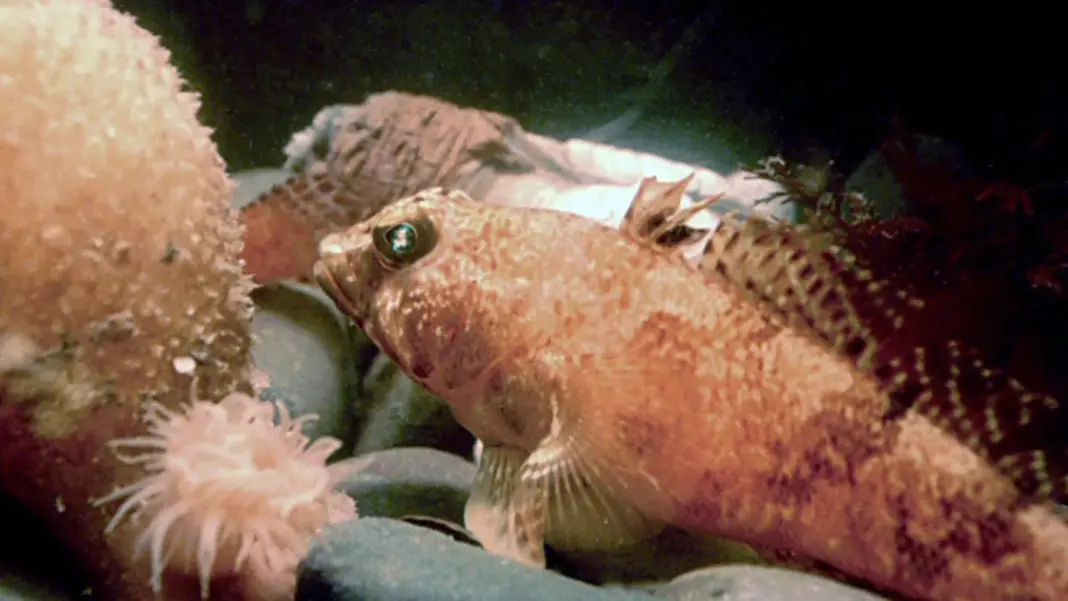
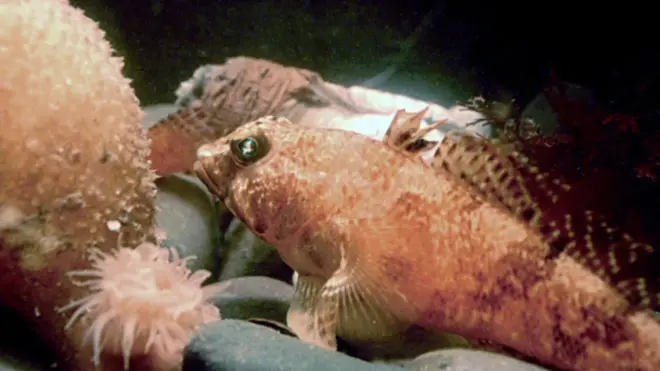
In 2019, an underwater robot camera exploring the seabed in part of the Antarctica’s Southern Ocean brought up footage of something no one suspected:a huge breeding ground of yellowfin rockcod fish.
You wouldn’t think that the freezing Arctic waters can sustain much life. One startling phenomenon is the greening of Antarctica due to climate change.The icy continent’s dim light, ever-present ice and extreme cold forbid human habitation and make research challenging.
The discovery occurred when the Larsen C ice shelf in the Wedell Sea calved; that is, an iceberg broke off the body of the ice shelf. Ice shelves play a large role in the rise and fall of global sea levels and contribute significantly to global ocean circulation and climate.
The research article published in 2020 states:
“The Weddell Sea, located within the Southern Ocean, is significant for its biological richness and its contribution to global ocean circulation and climate. It plays a critical role in forming water mass interactions that drive large-scale ocean currents, regulate global gas exchanges, and influence climate patterns. These interactions make the area a hotspot for biological productivity, activity, and abundance .”
The splitting off of the iceberg revealed part of the seabed that had been unaccessible until then. The opportunity to explore was there. A research team formed: the Weddell Sea Expedition 2019 onboard the SA Agulhas II.
In addition to studying conditions on the seabed, the research team hoped to locate the remains of the Endurance, a ship on an British exploration mission that sank in 1915 (the Endurance was found in 2020). Researchers dropped a camera robot dubbed “Lassie” into the sea.
The footage showed thousands of circular or oval shapes on the sea floor, arranged in a pattern covering hundreds of kilometers. They are fish egg nests, shallow forms scooped out of the sea bed, each with a protective raised edge of sediment packed around it. Parent fish keep guard, hovering over the eggs and fluttering their fins to keep them oxygenated.
The colonies are geometrically formed so that larger fish nest on the farther edges, while weaker, smaller fish, more vulnerable to predators, lay their eggs inside the pattern, preferably close to the shelter of rocks. When the eggs hatch, leaving empty nests, some fish even return and clear out debris that currents bring, to prepare for the next generation.
At first these shapes were a mystery. No one expected to find a vastfish colony thriving in one of Earth’s most extreme environments. Marine biologist Russ Connelly, of the University of Essex, England, said, “We weren’t actually sure what the videos were showing us at the time. We thought maybe it was a Weddell seal snout that was going down and bonking down into the seabed. Or that it was pockmarks from stones dropping from the ice and making craters.”
We already knew about diverse life form thriving in Antarctica. Penguins, seals, whales, seabirds, sponges, fish and squid are some, without even considering krill, the tiny crustaceans that almost everything else eats. The huge rockfish nurseries are a link in the wildlife food chain that came to light only after the Eclipse/Weddell Sea Expedition.
The Commission for the Conservation of Antarctic Marine Living Resources has proposed designating the Weddell Sea as a protected area. This would prevent international businesses with an eye on this huge fish nursery from mining the seabed and endangering the entire wildlife chain.
Thomas Desvignes, a fish biologist at the University of Alabama at Birmingham says, “A lot of Antarctic ecosystems are under pressure from different countries to be released for mining, fishing and basically exploitation of the environment. The new research offers one more reason why we should protect the Weddell Sea.”
Connelly adds, ““In general, we need to explore more of the oceans, because … we’re so surprised at every single time that we see life exists at these depths. We need to see what’s out there before species that we didn’t even know existed have been lost.”