

Asbestos is a fiber with a lifelong lifespan and is resistant to fire, heat, corrosion, severe mechanical forces, chemicals, and biological decomposition. It also does not evaporate and is not water-soluble. Industrialists used asbestos for thermal insulation, , and construction for over a century because of these distinctive properties and inexpensive costs.
However, asbestos is a hazardous chemical and a poisonous pollutant once airborne and which causes a rare kind of incurable cancer. Three primary types of cancer are linked to asbestos exposure include mesothelioma, lung cancer and laryngeal cancer. As a result, it was outlawed for use in manufacturing and trade in Israel and other Western nations.
Where is asbestos found?
Building Demolition
Asbestos is found naturally and asbestos production began in the Russian Empire in the 1880s, and the Alpine regions of Northern Italy, although this was soon replaced by the greater production levels from the Canadian mines.
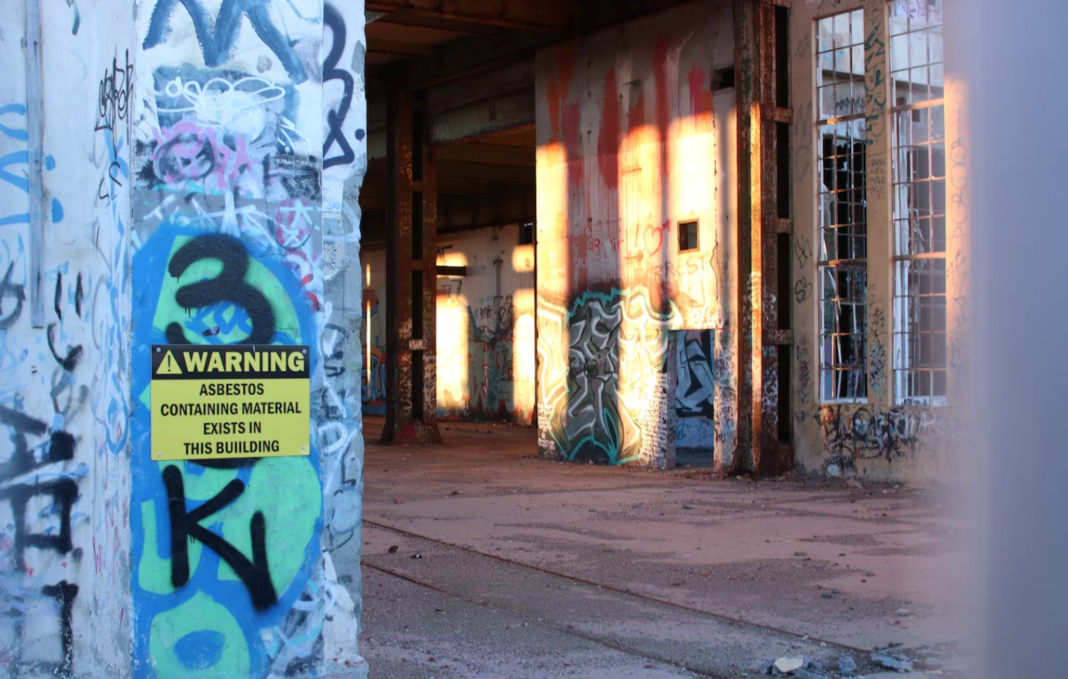
In Israel it is most likely to be found in buildings that are being demolished or renovated and in locations where asbestos debris is not adequately covered or protected from wind erosion. The amount of asbestos present in a residence depends on the condition of the asbestos. Damaged, worn, or crumbling asbestos has a higher chance of releasing fibers into the air.
In cities like Tel Aviv and Jaffa you can find it everywhere covering parking lots for shade or as a low cost thermal insulation on older low-rise buildings. It cracks off as it ages and it’s a health hazard.
Asbestos in the Soil
In the late 20th century, asbestos was widely used in the Western Galilee region of Israel after a cement plant called Eitanit opened in 1952. As a result, the soil became contaminated with a large amount of asbestos. In 2011, the Ministry of Environmental Protection started a project to find and remove the asbestos waste from the affected sites in Western Galilee.
Loose asbestos has been found in various locations in Western Galilee, such as parking lots, roads, and hiking trails.
How would I get exposed to asbestos?
Asbestos exposure primarily occurs through inhaling airborne asbestos fibers released in the air from asbestos products or damaged asbestos cement materials. Certain occupations, such as insulation workers, asbestos removal workers, IDF troops working with brakes, and personnel involved in asbestos product maintenance, are at risk of inhaling higher amounts of asbestos fibers if they work with asbestos without proper protection.
What are the health risks?

The International Agency for Research on Cancer (IARC) classifies all types of asbestos as human carcinogens, meaning they can cause lung cancer and other cancers affecting the lining of the lungs and other internal organs. According to the IARC, these diseases usually emerge several years after exposure and often result in fatality.
Most cases of asbestos-related health issues occur among people who have had jobs in asbestos mines, factories, or construction work involving asbestos cement for many years. However, individuals living near asbestos factories, having asbestos in their homes, or family members of asbestos workers, are also at risk of developing health problems due to exposure to asbestos in their environment.
It is important to note that asbestos-related diseases typically occur twenty or more years after inhaling asbestos fibers. Therefore, exposure to asbestos at an earlier age increases the risk of developing illnesses later in life.
What is the Israeli Government doing about asbestos?
In 2021, The Ministry of Environmental Protection permitted removing asbestos-cement roofs and installing solar panels as replacements. They allocated NIS 11 million from their cleaning budget for this initiative. Moreover, they set aside NIS 1 million ($250,000 USD) specifically for a “home contractor” responsible for safely removing and cleaning asbestos hazards.
The ministry estimates that the nation utilized around 85 million square meters of asbestos cement. Most of this asbestos cement was employed for roofing purposes in private homes, government buildings, businesses, farms, and military bases. The installation of many of these roofs occurred between 1960 and 1980. Gradually, these roofs have deteriorated and broken due to exposure to weather conditions and improper handling. You can find them everywhere in Israeli cities.
Laws established in 1964 aimed to ensure that workers exposed to talc, silicon dioxide, and asbestos dust received regular medical check-ups. The Occupational Hygiene and Health of Public and Workers Exposed to Hazardous Dust Regulations of 1984 specified rules for monitoring dust in workplaces and the environment and listed the compounds that were allowed or prohibited.
In 2011, the Prevention of Asbestos Hazards and Harmful Dust Law was enacted. Like other developed countries, this law prohibits using asbestos in new construction, which helps reduce asbestos exposure in the environment. By 2021, the law requires the gradual elimination of easily crumbled asbestos from commercial and public buildings. The law also mandates the need for permits and licenses for asbestos-related work, as well as proper maintenance of asbestos cement in public structures.
What is the difference between asbestos cement and friable asbestos?
Asbestos cement is a building material that contains a mixture of asbestos fibers (about 10%) and cement in a rigid state. It is used in industrial buildings, public buildings, agricultural buildings, and residential buildings. Asbestos cement sheets are usually flat or wavy panels that are used to cover roofs and walls, water and sewage pipes, gutters, chimneys, roof tiles, planters, and water tanks. It is estimated that Israel has more than 100 million square meters of asbestos cement panels.
Friable asbestos is a substance containing asbestos (more than 1% of the weight of the material) that, when dry, can be crumbled, crushed, or reduced to powder by manual pressure. Friable asbestos was used mainly for thermal and acoustic insulation, in vehicles, in IDF equipment, and in household products such as kerosene stoves, plates for use on stoves in both kitchens and laboratories, and fire-resistant blankets and gloves. Israeli law requires the removal of all friable asbestos from structures in Israel by the year 2021, and imposes strict restrictions on the continued use of any structure still containing friable asbestos, until it is removed.