
These glasses see microplastics on the farm

Plastics at the farm
Microplastics are inside everything. New research makes a set of glasses to see what’s lurking on farmland

Microplastics are now in our food, baby placentas, and in the brains of teens who use plastic aligners. They are blowing in the wind getting to our lungs, they are in the fish and plants and food we eat and the impact is just being noticed and understood in areas like cancer and dementia.

Microplastics are bits of plastic smaller than 5mm, and while we follow people like Boylan Slat and the Great Ocean Cleanup, the amount of plastics rolling around on farmland isn’t that well studied. These particles can disrupt soil structure, alter microbial communities that help transport soil nutrients to the plants, and even protect them. The plastic can be eaten by wheat and corn and beans, entering the food chain.
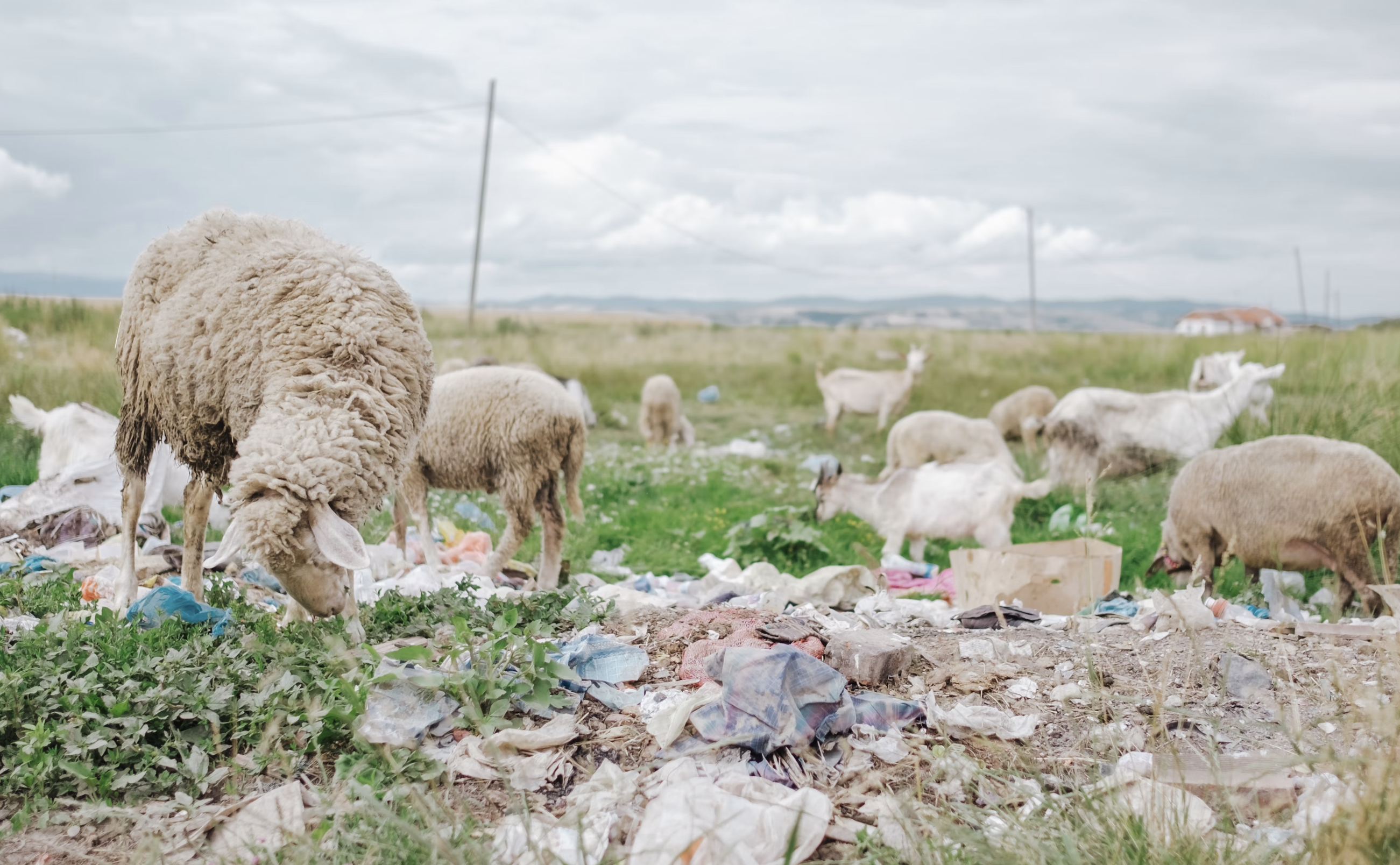
Sheep eat plastic, and you eat the sheep

Conventional detection methods, such as sample taken and looking under a microscope to count the bits is time-consuming, labor-intensive, and often ineffective at identifying small particles, making them impractical for large-scale monitoring.

But science to the rescue. Researchers at Clemson University and the USDA Agricultural Research Service have developed a new kind of space age glasses for seeing plastics in farms from above. The glasses “see” using what they call a hyperspectral imaging technique.
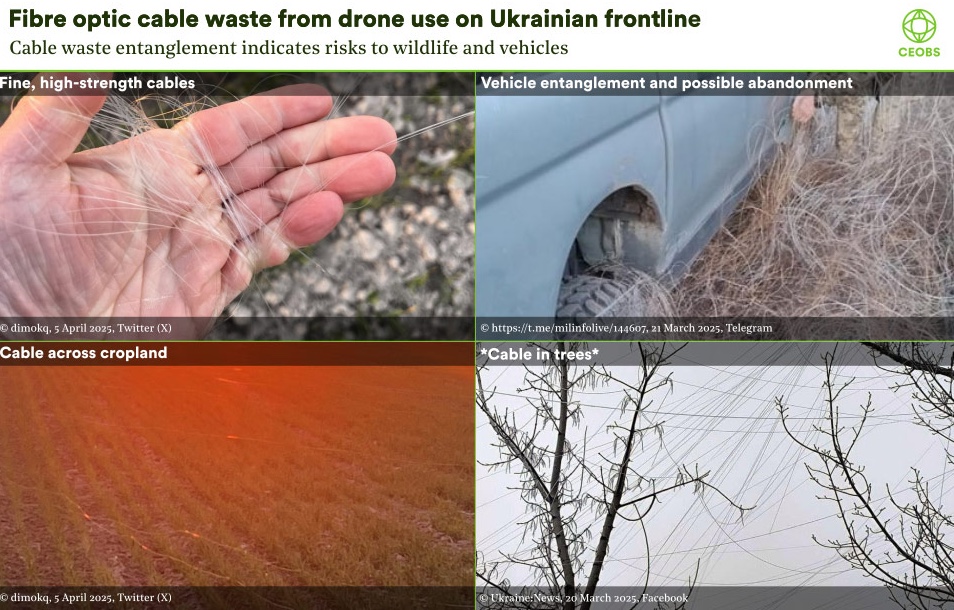
Plastic threads from warfare drones contaminate a farmer field in the Ukraine

The scientists study tested two types of short-wave infrared sensors on soil samples spiked with microplastics and evaluated their performance using advanced machine learning models. This system stood out for its ability to detect both polyethylene and polyamide particles – even at extremely low levels of 0.01-0.1% – offering a fast, accurate, and field-adaptable method for identifying soil microplastic contamination.

Why is this important? Many farmlands rely on mulch that is full of plastic. Think about the organic recycling programs that accept adult and baby diapers in the compost. This goes back to farming fields. Think about irrigation pipes and plastic sheets put on strawberry fields. Knowing what’s in the ground can help science and policy makers figure out how to stop negative effects.
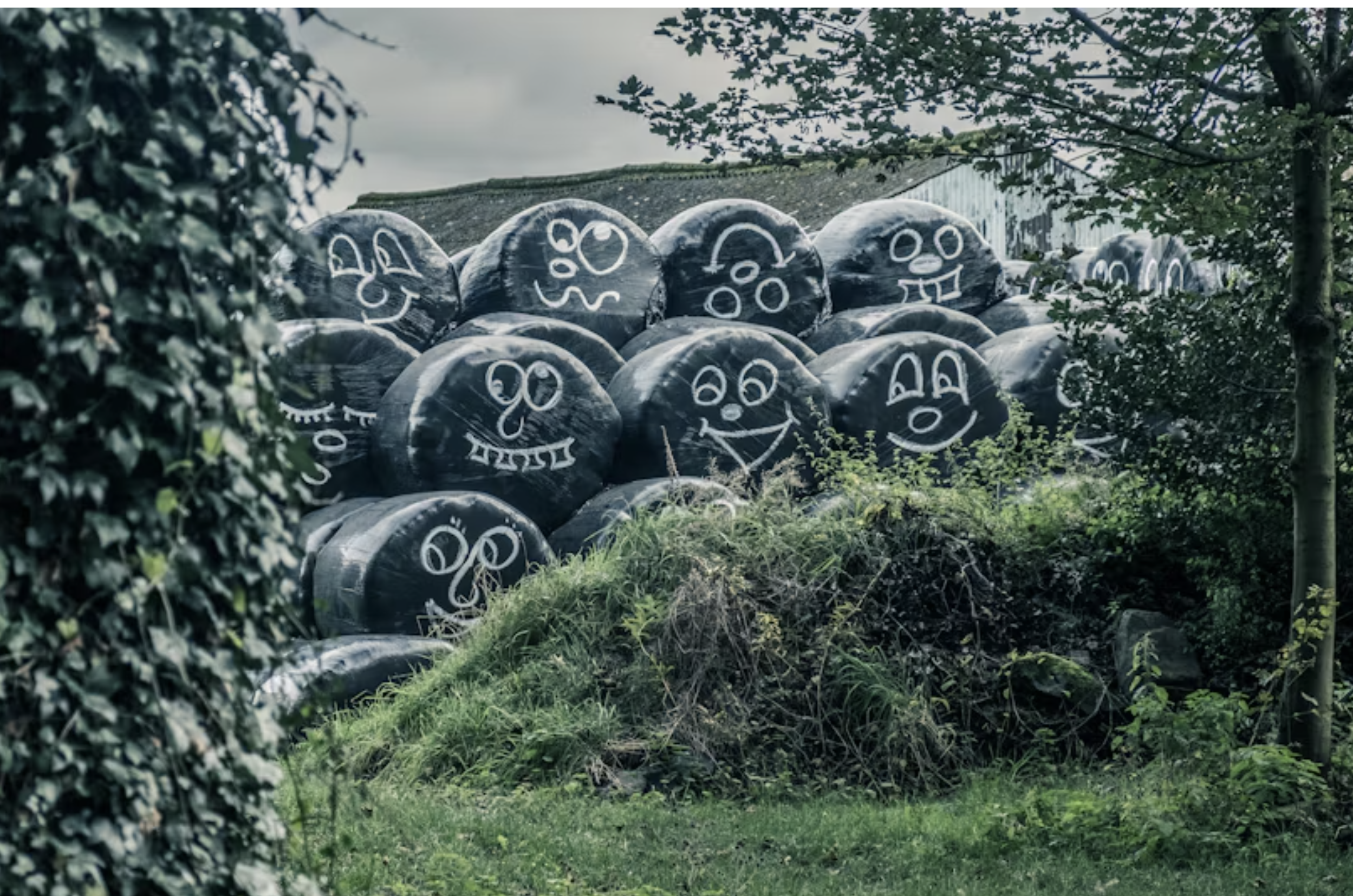
Plastic on every farm, even on bales of hay

“This study marks a significant advance in our ability to track microplastic contamination in terrestrial ecosystems,” said Dr. Bosoon Park, “The ability to screen soils quickly and non-destructively holds great promise for agricultural sustainability and environmental protection.”

TRENDING

Baby teeth read like tree rings paint a picture of toxins in early life

A new study from the Icahn School of Medicine at Mount Sinai in New York offers a striking insight into how the environments we are born into can quietly shape our brains years later. By analyzing naturally shed baby teeth, the ones tucked under pillows for the tooth fairy, researchers have reconstructed a detailed timeline of exposure to environmental metals during pregnancy and early infancy.

Monitoring farmers’ tillage patterns from space

Tillage is one of the clearest signals of how a farm treats its soil. Intensive plowing can degrade structure, release carbon, and increase erosion. Conservation practices—no-till, cover cropping, minimal disturbance—do the opposite. They build soil, retain water, and support biodiversity. But until now, measuring these practices at scale has been slow, expensive, and often self-reported.

Lululemon pants leech PFAS and plastics into bodies, Texas attorney general claims

Back in late 2025, Green Prophet began asking uncomfortable questions about what’s really inside your yoga pants, from transparency failures (yes, those infamous see-through leggings) to the less visible and scarier issue: Your sweat is unlocking microplastics and chemical coatings sitting in the most absorbent parts of the human body.

Is artificial turf bad for your health?

Artificial turf, the green plastic stuff that is supposed to look like grass, was sold to many home-owners as a clever compromise: a green-looking surface that makes you feel homey, but which needs no mowing. It survives heavy use, and in dry places like Middle East deserts, and in California or Texas, it can replace thirsty lawns. But it is toxic.

How plastics can increase food poisoning

Banerjee’s research team is among the first to examine the interactions between foodborne pathogens and plastic particles, thereby advancing this emerging field from a food safety perspective.

Nobul’s Regan McGee on Shareholder Value: “Complacency Is the Silent Killer” 

Why the governance framework designed to protect shareholders so...

Should You Invest in the Private Market?

startustartup Unlike public stock exchanges, which offer daily trading, strict...

How to build a 100-year-company

Kongō Gumi is a Japanese construction company, purportedly founded in 578 A.D., making it the world's oldest documented company. What can we learn about building sustainable businesses from them?

From Pilot Plant to Global Stage: How Aduro Clean Technologies’ 2026 Expansion Signals a Turning Point for Chemical Recycling Investors Like Yazan Al Homsi

The company's Next Generation Process (NGP) Pilot Plant in London, Ontario, has officially moved into initial operating campaigns, generating the kind of structured, repeatable data that separates laboratory promise from commercial viability.

How AI Helps SaaS Companies Reduce Repetitive Customer Support Work

SaaS products are designed for large numbers of users with different levels of experience, and also in renewable energy.

Pulling Water from the Air

Faced with water shortage in Amman, Laurie digs up...

Turning Your Energy Consultancy into an LLC: 4 Legal Steps for Founders in Texas

If you are starting a renewable energy business in Texas, learn how to start an LLC by the books.

Tracking the Impacts of a Hydroelectric Dam Along the Tigris River

For the next two months, I'll be taking a break from my usual Green Prophet posts to report on a transnational environmental issue: the Ilısu Dam currently under construction in Turkey, and the ways it will transform life along the Tigris River.

Related Articles

Popular Categories