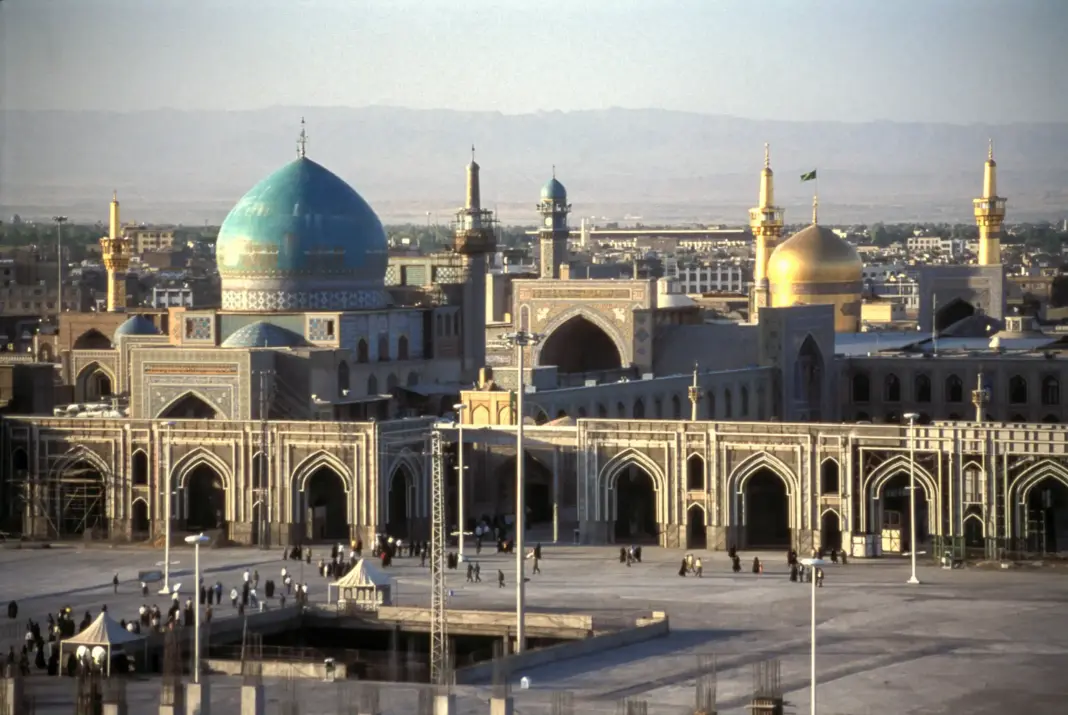
Iran’s holiest city about to run dry as terror chosen over water management

Mashhad
Water systems are on the verge of collage in Iran’s holiest city Mashhad, second in size only to Tehran

Iran’s second-largest city, Mashhad, is facing an acute water emergency after dam reservoirs feeding the city fell below three percent capacity, according to Iranian state and local media. Officials warn that without rainfall or improved inflows from neighboring Afghanistan, the city’s supply could soon collapse. It’s happened before that Iranian generals have accused Israel for stealing their clouds.

Iranians on X are talking about murdered bodies showing up in the dried sediment. “Reports that at least 74 bodies have been found in the Karaj Dam in Iran, all thought to be executed anti-regime dissidents,” says X commentator Nioh Berg.

“Because of the drought and lack of rain, this dam has dried up almost completely and revealed a MASS GRAVE. The victims had their hands and feet tied, and they were rolled into rugs, as well as wrapped in plastic. Their murderers didn’t account for the drought, and thought the bodies would never be found. This news story was published and then quickly deleted by regime media, after they realised it’s probably their own doing.”
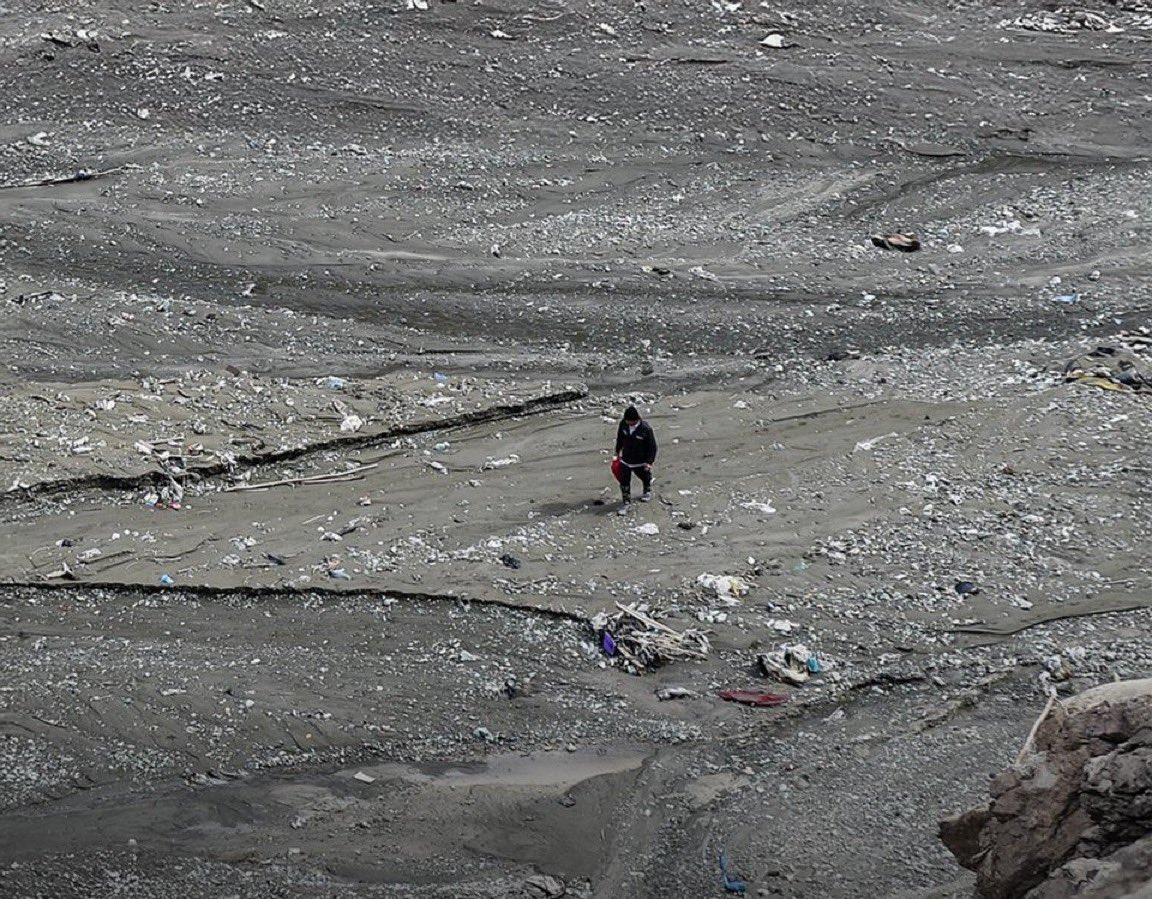
Dead bodies are being exposed in dried sediment of dams in Iran


“The water storage in Mashhad’s dams has now fallen to less than three percent,” Hossein Esmaeilian, the chief executive of the water company in Iran’s second largest city by population, tells ISNA news agency. He adds that “the current situation shows that managing water use is no longer merely a recommendation — it has become a necessity.”

Mashhad lies in Razavi Khorasan Province in northeastern Iran, a semi-arid region dependent on a small network of dams for drinking water, agriculture, and limited power generation. The most critical of these are the Doosti (Friendship) Dam, built jointly by Iran and Turkmenistan on the Hari (Harirud) River; and the smaller Kardeh and Torogh dams that directly supply the urban network.

The Doosti Dam, completed in 2004 near the Turkmen border, was designed to provide up to 60 % of Mashhad’s potable water. But its inflows have plummeted after Afghanistan’s Taliban government inaugurated the Pashdan Dam upstream on the Hari River near Herat earlier this year. Iranian officials accuse Kabul of violating cross-border water agreements and cutting off critical flows. The Iranian daily Jomhouri-e Eslami warned this week that the new Afghan dam “threatens the very survival” of Mashhad’s reservoirs.

qanat, qanat system, ancient water system, Persian qanat, Middle East irrigation, traditional irrigation, underground aqueduct, water channel, sustainable water management, desert irrigation, ancient engineering, qanat Iran, qanat Iraq, water conservation, historical water system, aquifer irrigation, traditional water technology, UNESCO qanat, old irrigation method, qanat architecture
An ancient Qanat system in Persia. Spread throughout the arid Middle East, these systems predated Roman aqueducts but the historical narrative isn’t told.

The Hari River — about 1,000 kilometers long — originates in Afghanistan’s central highlands, flows west through Herat into Iran, and ends in Turkmenistan’s Karakum Desert. Historically, its seasonal floods recharged aquifers and sustained farming along the Iranian border. But with multiple new Afghan dams under Taliban control, less water is reaching Iran’s northeastern provinces, even as rising temperatures and a prolonged regional drought accelerate evaporation.

Related: The Taliban kills Japanese water hero

Within Iran, years of poor water management compound the crisis. Kardeh and Torogh dams, both built in the 1970s, are now near “dead storage,” with barely enough volume for municipal use. Over-extraction of groundwater around Mashhad — home to more than three million people and millions of pilgrims annually — has further destabilized the system, causing land subsidence and salinization of wells.

Iran has also been spending billions normalizing terror by finding Palestinians to join Hamas, Lebanese to join the Hezbollah and for the Yemenites to become Houthis. Paying for conflict and not supporting your own people, comes with a high cost. The Iranian regime hates Saudi Arabia, the UAE and Israel so much that it will sacrifice anything in its global jihad.

Experts say the situation underscores both climate vulnerability and political risk in transboundary basins. Iran’s government is pressing for negotiations with the Taliban over shared water rights, as Afghanistan pulls the plug on its water by creating its own dams, but cooperation remains uncertain amid border skirmishes and mistrust.

Grand Ethiopian Renaissance Dam, GERD Ethiopia, Blue Nile hydroelectric project, Ethiopia Nile River dam, Africa’s largest dam, Ethiopian hydropower, GERD water security, Nile River dispute, Ethiopia Egypt Sudan water conflict, renewable energy Ethiopia
Grand Ethiopian Renaissance Dam (GERD) on the Blue Nile — Africa’s largest hydroelectric project reshaping East Africa’s power supply and sparking regional water security debates.

If inflows from Afghanistan remain restricted and rainfall fails again this winter, Mashhad could face mandatory rationing and long-term aquifer collapse — a warning sign for the entire region as climate change and geopolitics converge in Iran’s drying east. Could we see a bigger conflict between Iran and Afghanistan? A good possibility. Similar tensions have been brewing for years between Ethiopia building the GERD dam and Egypt which is being denied water upstream.

If you’ve ever travelled to cities like Amman, Jordan, the water-stressed city shows how life goes on with water stress. Some city folks get water piped in once a week, but because municipal supply is so limited, many households, businesses, and institutions buy extra water from private tanker trucks and store this in private reservoirs so they never run out.

Read More

TRENDING

Regenerative Wool or Greenwashing? Zentera Responds to Critics

Zentera responds to questions about ZQ wool, animal welfare, regenerative farming, ethical fashion and the fallout from PETA's New Zealand investigation.

Weston Higginbotham found dead in a Kyoto forest: is climate anxiety part of the story?

In some ways, Weston has become a symbol of a generation wrestling with environmental and technological anxiety. Friends and family described him as deeply concerned about environmental issues. Reports also noted that he questioned the growing role of artificial intelligence in daily life, even reportedly disagreeing with his mother about her use of AI.

Billie Eilish’s Mom Takes the Stage at Hollywood Climate Summit — But Does Hollywood Still Care About Climate Change?

Hollywood once promised to help save the planet. Leonardo DiCaprio warned of climate catastrophe from awards stages. Celebrities flew to climate conferences. Studios pledged greener productions. Streaming platforms rushed to commission environmental documentaries. But in 2026, with the aftermath of wildfires, heatwaves and floods becoming routine, a question lingers: Does Hollywood still care about climate change?

Can Scientists Predict Coral Bleaching Before It Happens?

Now researchers at the Woods Hole Oceanographic Institution (WHOI) in the US say they have developed a way to predict coral bleaching five to six months before it occurs, potentially giving reef managers enough time to intervene and save vulnerable corals.

10 Amazing Facts About the Sidr Tree

Most people in the West have never heard of the Sidr tree. That's strange when you think about it. This tough, thorny desert tree has fed people, bees, birds, and camels for thousands of years. It appears in Islamic tradition. Its honey sells for astonishing prices.

Locals From Rishon Fight IKEA

Big Box stores are a pretty new concept in Israel, and thank God that not every Israeli city wants them in their backyard. A word from someone who has see the beautiful farmland around her hometown Newmarket, Ontario stripped and converted into vulgar strip malls of big box shops: they have no place in a healthy and sustainable town or city.

The Jewish National Fund Meets An Inconvenient Truth

According to the JNF, it has transformed thousands of acres of barren land into green forests in Israel. They state that each person emits about 23 tons of carbon per year, estimating that each tree planted can absorb one ton of carbon in its lifetime. That's a whole lot of trees you'd need to be planting. Could so many fit in Israel?

How to quiet noise from construction in your office

Streets need to be resurfaced in New York but the humming and grinding noise is unsettling. Noise is environmental pollution. 

EarthX and a blueprint for sustainable investing

Trammell S. Crow, a Dallas-based businessman and father of four, is focusing his efforts on impact investing, and media that focuses on saving the planet through EarthX.

Mining Afghanistan’s Mineral Discoveries Similar to Avatar

Now that American forces in Afghanistan are commemorating the longest period of any war that America has been involved in, including the 1965-73 Vietnam War, the recent discoveries of large and extremely valuable mineral and metal deposits may finally bring to light a reason to continue the presence of US fighting forces in this war torn and backward country.

From Pilot Plant to Global Stage: How Aduro Clean Technologies’ 2026 Expansion Signals a Turning Point for Chemical Recycling Investors Like Yazan Al Homsi

The company's Next Generation Process (NGP) Pilot Plant in London, Ontario, has officially moved into initial operating campaigns, generating the kind of structured, repeatable data that separates laboratory promise from commercial viability.

Nobul’s Regan McGee on Shareholder Value: “Complacency Is the Silent Killer” 

Why the governance framework designed to protect shareholders so...

Should You Invest in the Private Market?

startustartup Unlike public stock exchanges, which offer daily trading, strict...

Popular Categories