Zoroastrianism from Iran is the world’s first eco-religion

yazd atash behram eternal flame, zoroastrian fire temple iran, sacred fire burning since 470 ad, faravahar symbol zoroastrianism, zoroastrian good thoughts good words good deeds, towers of silence zoroastrian burial, sky burial zoroastrian tradition, zoroastrian death rituals elements, badgir windcatcher yazd, ancient persian wind tower cooling, qanat underground water system iran, persian qanats unesco heritage, nowruz persian new year spring equinox, chaharshanbe suri fire festival iran, haft seen table symbolism, zoroastrianism ancient persian religion, zarathustra prophet of zoroastrianism, ancient persian empire religion, zoroastrian environmental ethics, world’s first eco religion

When Zarathustra started preaching around 1200 BCE in ancient Persia, which is known today as Iran, he wasn’t just founding a religion—he was creating the world’s first environmental protection movement. Good thoughts, good words, good deeds. But there was a mantra and words to live by: don’t pollute the earth, water, or fire. Ever.

Take Zoroastrian burial practices. We’ve covered the Towers of Silence here at Green Prophet before—those circular stone structures where bodies were placed on top for vultures to consume. Why did they do this? Because Zoroastrians believed dead bodies were contaminated with evil (druj) and could not touch the sacred elements: earth, water, or fire.

vultures pick on bones at the Tower of Silence in Iran
Vultures pick on bones at the Tower of Silence in Iran. An interesting eco tourism destination.

No burial (pollutes earth). No cremation (pollutes fire). No river disposal (pollutes water). Sky burial was the only option that honored nature. The body became food for birds, a final act of charity. Today most Zoroastrians use cement-lined coffins to prevent earth contamination, or they’ve moved to other methods as vulture populations crashed from human causes such as electrical shocks and poisoning. But the principle remains: respect the elements that sustain life.

Celebrating Nature’s Turning Points

yazd atash behram eternal flame, zoroastrian fire temple iran, sacred fire burning since 470 ad, faravahar symbol zoroastrianism, zoroastrian good thoughts good words good deeds, towers of silence zoroastrian burial, sky burial zoroastrian tradition, zoroastrian death rituals elements, badgir windcatcher yazd, ancient persian wind tower cooling, qanat underground water system iran, persian qanats unesco heritage, nowruz persian new year spring equinox, chaharshanbe suri fire festival iran, haft seen table symbolism, zoroastrianism ancient persian religion, zarathustra prophet of zoroastrianism, ancient persian empire religion, zoroastrian environmental ethics, world’s first eco religion
Fire jumping in Iran to celebrate Nowruz – Chaharshanbe Suri

Nowruz, the Persian New Year celebrated on the spring equinox, is perhaps Zoroastrianism’s most visible environmental legacy. As we’ve written about on Green Prophet, this isn’t just a cultural festival—it’s a celebration of nature reawakening. Families grow sabzeh (wheat or lentil sprouts) weeks before Nowruz, watching green life emerge from seeds.

Goldfish are a traditional symbol of life, renewal, and fortune on the Haft-Seen table for Nowruz, the Persian New Year, representing vitality and a prosperous year ahead, though animal welfare concerns have risen due to millions dying after being released into ponds, leading some to use edible alternatives like marzipan goldfish or sugar fish instead.

The holiday marks when day and night are equal, when light spreads evenly across hemispheres. Fire is lit. People jump over flames during Chaharshanbe Suri, singing “my yellowness is yours, your redness is mine”—asking fire to take weakness and give strength.  The whole celebration is about alignment with natural cycles. Spring cleaning before the new year. Visiting graves on the last Friday. Placing hyacinths and tulips in homes. Everything synchronized with the earth’s rhythm around the sun.

Engineering in Harmony with Nature

Ancient Persians didn’t just philosophize about respecting the elements—they engineered around them. As we’ve explored in previous Green Prophet articles, their architecture shows remarkable environmental sophistication.

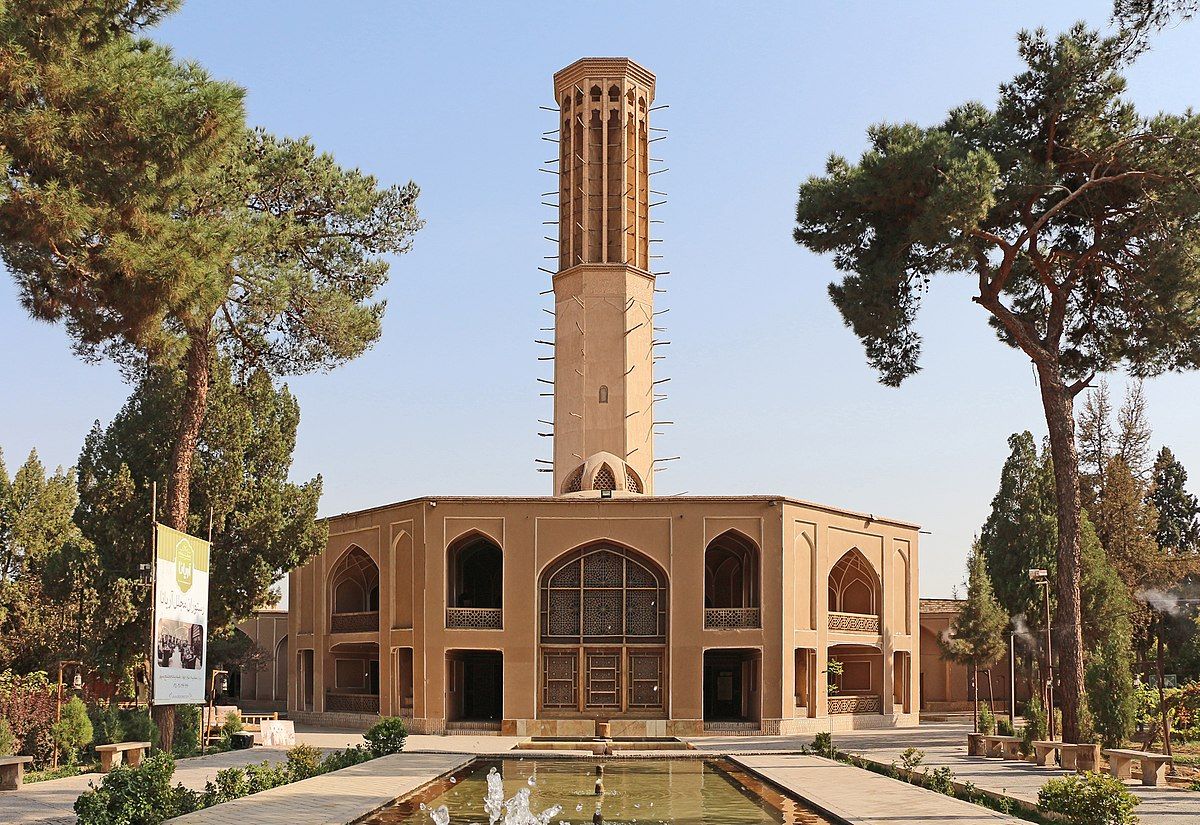
Wind catchers (badgir) in Yazd and other desert cities are essentially ancient air conditioning. These tall towers catch breezes and channel them down through buildings, sometimes over underground water channels called qanats. The Dolat Abad windcatcher in Yazd stands 34 meters tall—still the highest in Iran—and can drop indoor temperatures by 10 degrees without electricity.
yazd atash behram eternal flame, zoroastrian fire temple iran, sacred fire burning since 470 ad, faravahar symbol zoroastrianism, zoroastrian good thoughts good words good deeds, towers of silence zoroastrian burial, sky burial zoroastrian tradition, zoroastrian death rituals elements, badgir windcatcher yazd, ancient persian wind tower cooling, qanat underground water system iran, persian qanats unesco heritage, nowruz persian new year spring equinox, chaharshanbe suri fire festival iran, haft seen table symbolism, zoroastrianism ancient persian religion, zarathustra prophet of zoroastrianism, ancient persian empire religion, zoroastrian environmental ethics, world’s first eco religion
Dolat Abad windcatcher in Yazd

Qanats themselves are engineering marvels: underground channels that move water from mountain aquifers to desert cities without pumping. Some are still functioning after a thousand years. UNESCO recognizes them as world heritage because they represent “creative genius” in sustainable water management.

yazd atash behram eternal flame, zoroastrian fire temple iran, sacred fire burning since 470 ad, faravahar symbol zoroastrianism, zoroastrian good thoughts good words good deeds, towers of silence zoroastrian burial, sky burial zoroastrian tradition, zoroastrian death rituals elements, badgir windcatcher yazd, ancient persian wind tower cooling, qanat underground water system iran, persian qanats unesco heritage, nowruz persian new year spring equinox, chaharshanbe suri fire festival iran, haft seen table symbolism, zoroastrianism ancient persian religion, zarathustra prophet of zoroastrianism, ancient persian empire religion, zoroastrian environmental ethics, world’s first eco religion
Qanats in Iran

These weren’t just practical solutions to live by. They were Zorastrian expressions of a worldview that said: work with the elements, don’t violate them. Here’s what makes Zoroastrianism ecologically radical even today: it treats environmental degradation as moral corruption.

The world is a battlefield between truth (asha) and lies (druj). When you pollute water, you’re choosing druj. When you contaminate earth, you’re siding with evil. Every small choice—where you put your waste, how you use fire, whether you honor or desecrate water is a moral decision that tilts the cosmic balance.

You can’t separate ethics from ecology in this system because they are the same thing.

Modern environmentalism often frames nature protection as enlightened self-interest or future-oriented planning. Zoroastrianism says: the earth itself is holy. Polluting it is sacrilege. You don’t need utilitarian arguments. You need to not be an asshole to creation.

yazd atash behram eternal flame, zoroastrian fire temple iran, sacred fire burning since 470 ad, faravahar symbol zoroastrianism, zoroastrian good thoughts good words good deeds, towers of silence zoroastrian burial, sky burial zoroastrian tradition, zoroastrian death rituals elements, badgir windcatcher yazd, ancient persian wind tower cooling, qanat underground water system iran, persian qanats unesco heritage, nowruz persian new year spring equinox, chaharshanbe suri fire festival iran, haft seen table symbolism, zoroastrianism ancient persian religion, zarathustra prophet of zoroastrianism, ancient persian empire religion, zoroastrian environmental ethics, world’s first eco religion
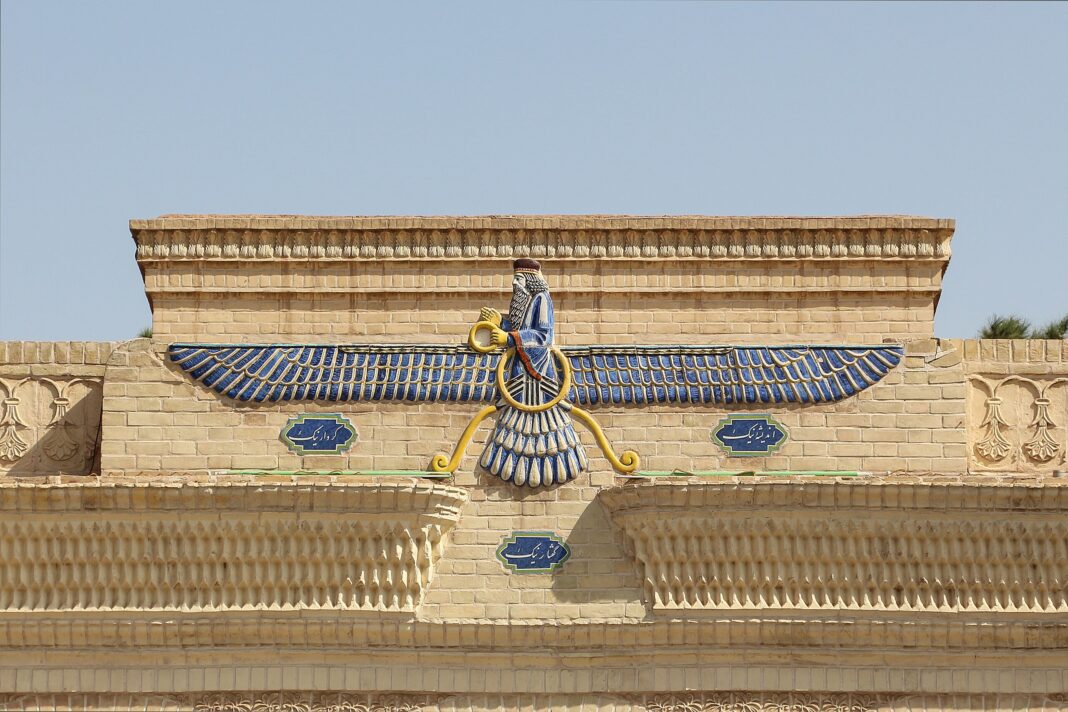
Faravahar symbol on Fire Temple of Yazd, Iran

There are maybe 100,000 to 200,000 Zoroastrians left worldwide, mostly in Iran and India (where they’re called Parsis).

Zoroastrianism introduced a radical idea for its time: that humans stand inside a moral universe. That our choices matter. Long before monotheism found its later forms, Zoroastrianism articulated heaven and hell, angels and judgment, free will and ethical responsibility. Judaism absorbed these ideas during the Persian period. Christianity and Islam carried them forward.
yazd atash behram eternal flame, zoroastrian fire temple iran, sacred fire burning since 470 ad, faravahar symbol zoroastrianism, zoroastrian good thoughts good words good deeds, towers of silence zoroastrian burial, sky burial zoroastrian tradition, zoroastrian death rituals elements, badgir windcatcher yazd, ancient persian wind tower cooling, qanat underground water system iran, persian qanats unesco heritage, nowruz persian new year spring equinox, chaharshanbe suri fire festival iran, haft seen table symbolism, zoroastrianism ancient persian religion, zarathustra prophet of zoroastrianism, ancient persian empire religion, zoroastrian environmental ethics, world’s first eco religion
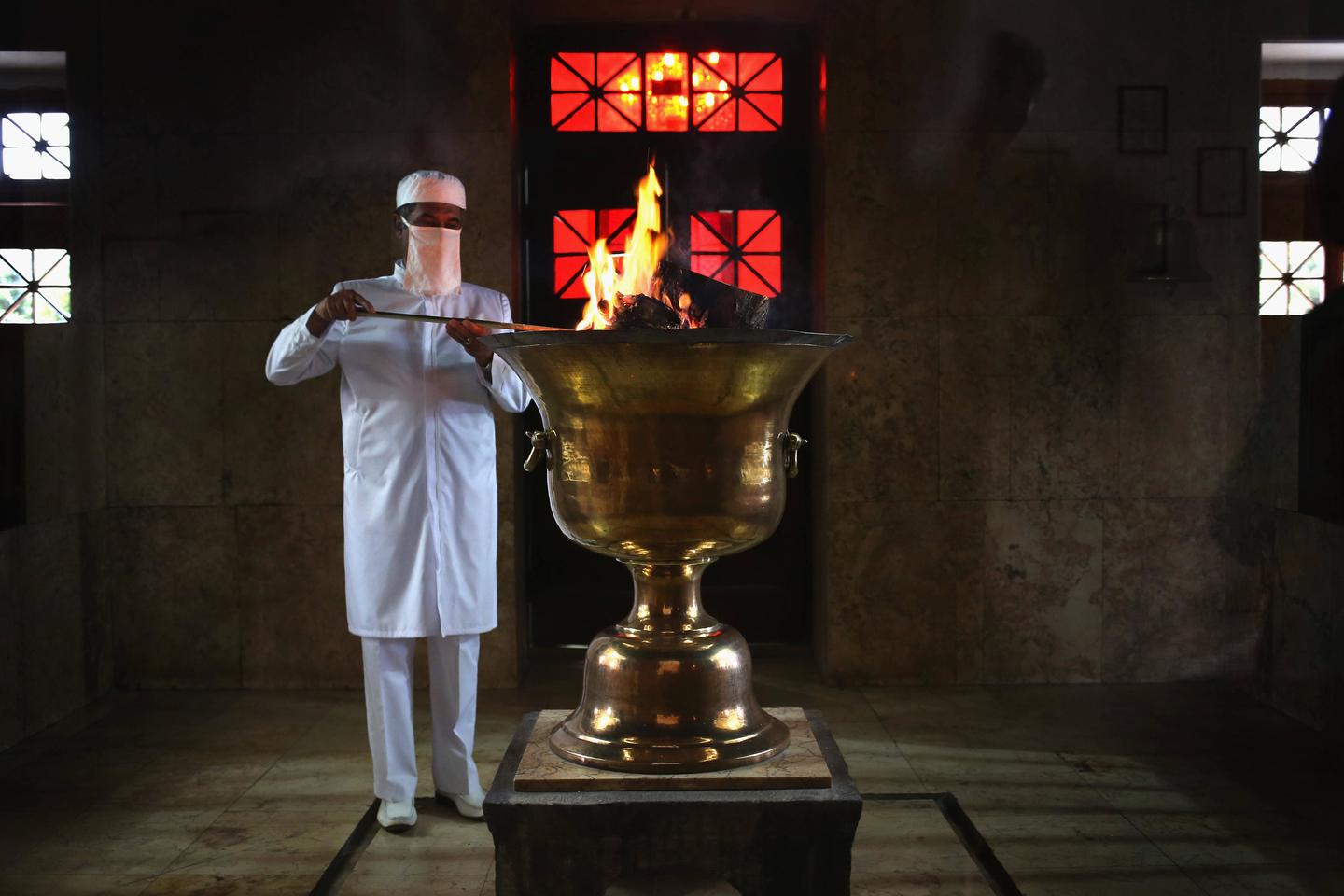
The eternal flame inside the Yazd Atash Behram

Today, Zoroastrians are not fighting for dominance. They are fighting for continuity. Intermarriage, migration, shrinking birth rates, and cultural dilution place constant pressure on a faith that does not proselytize and does not adapt easily. They don’t have a leader or a “Pope” figure making it difficult to create leadership.

Yet the ecological principles remain stubbornly relevant. In a world drowning in plastic, choking on emissions, and treating the planet like an expendable resource, Zoroastrianism’s insistence that nature is sacred, not because it’s useful to humans, but because it is sacred.
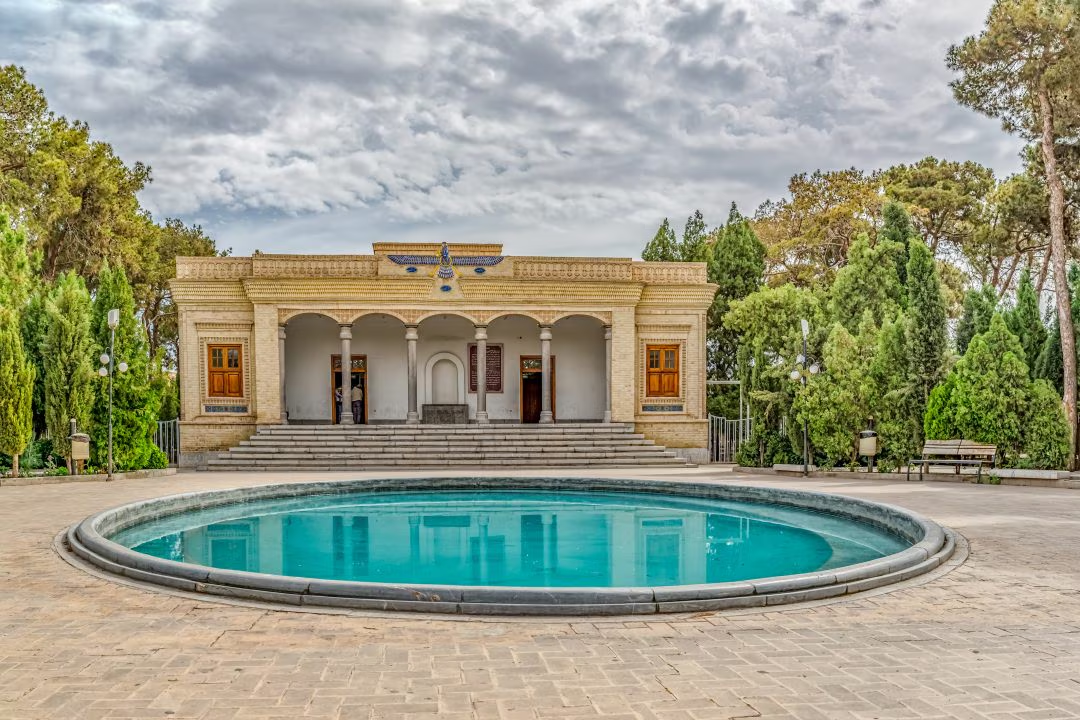
The Yazd Atash Behram

If Iran becomes free, consider visiting the eternal flame: The Yazd Atash Behram in Iran shelters one of the world’s oldest living flames — a sacred fire burning continuously since 470 AD. Though the temple itself was built in 1934, the “Victorious Fire” has survived centuries of exile, invasion, and careful guardianship, standing as a quiet, stubborn symbol of Zoroastrian endurance and divine purity.

Karin Kloosterman
Karin Kloostermanhttp://www.greenprophet.com
Karin Kloosterman is an award-winning journalist, innovation strategist, and founder of Green Prophet, one of the Middle East’s pioneering sustainability platforms. She has ranked in the Top 10 of Verizon innovation competitions, participated in NASA-linked challenges, and spoken worldwide on climate, food security, and future resilience. With an IoT technology patent, features in Canada’s National Post, and leadership inside teams building next-generation agricultural and planetary systems — including Mars-farming concepts — Karin operates at the intersection of storytelling, science, and systems change. She doesn’t report on the future – she helps design it. Reach out directly to [email protected]

Read More

TRENDING

Dan Zaslavsky’s energy tower dream is rising again in Iran and China

The Energy Tower idea never made the leap from drawings and engineering studies to full-scale construction. But nearly two decades after most people stopped talking about it, the concept is quietly evolving in two unexpected places: China and Iran. The concept let dreamers dream and doers do - figuring out more pleasing designs and engineering.

Hormuz 2026 Conflict Poses an Energy and Food Security Dilemma in a Warming World

As tensions rise in one of the world’s most critical maritime chokepoints, the ripple effects go far beyond oil—touching food systems, climate pressures, and regional stability

A Fact-Based Reflection on Sustainability and Tourism in Hormuz

A Documented Response to the Article “The Aga Khan...

Dubai sets up smart feeding stations for abandoned cats

Dubai Municipality has set up 12 AI-powered "Ehsan Stations" to safely and officially feed strays. The city also officially supports Trap-Neuter-Return (TNR) programs. 

Yerukim Forms a New Green Economy Where the Money is Really Green

The Yerukim members who pick up the recyclables get to keep the monetary reward, the public earns "green" bills that can be used in shops, and business owners get to be associated with environmentalism.

Choosing Riyadh over Dubai? What Investors Should Know

Saudi Arabia is deploying capital at unmatched scale to catalyze tourism and advanced industry while rewiring its power-and-water backbone. The investable frontier is widening—especially in renewables, grid storage, water efficiency/desal retrofits, and hospitality operating platforms. Prudent investors will insist on phased delivery, enforceable KPIs (energy, water, biodiversity), and RHQ/zone compliance—while pricing political-economy and reputational risks alongside growth upside.

Sell your cooking oil for biodiesel money

Want to make money on old french fry oil? Sell it.

Qatar Alternative Energy Summit Pairs Investors And Innovators

Alternative energy investors and innovators can meet n' greet in Doha, Qatar March 16 and 17.

Here’s How To Implement The Four Pillars Of Employee Engagement

If you throw a party for your work team and they are vegans, don't make it a barbecue. Know the sustainability values of your team to boost moral and retain good people.

Locals From Rishon Fight IKEA

Big Box stores are a pretty new concept in Israel, and thank God that not every Israeli city wants them in their backyard. A word from someone who has see the beautiful farmland around her hometown Newmarket, Ontario stripped and converted into vulgar strip malls of big box shops: they have no place in a healthy and sustainable town or city.

The Jewish National Fund Meets An Inconvenient Truth

According to the JNF, it has transformed thousands of acres of barren land into green forests in Israel. They state that each person emits about 23 tons of carbon per year, estimating that each tree planted can absorb one ton of carbon in its lifetime. That's a whole lot of trees you'd need to be planting. Could so many fit in Israel?

How to quiet noise from construction in your office

Streets need to be resurfaced in New York but the humming and grinding noise is unsettling. Noise is environmental pollution. 

Popular Categories