Home Blog Page 751

No Ifs, Ands, or Cigarette Butts: Israeli Campaign Against Cigarette Butts

12

cigarette pollution smokingI’m a little embarrassed to admit it, but I didn’t know that cigarette butts were an environmental issue. I’m also not a smoker, so I never gave it much thought. But Hanan Shteingart – co-founder of “Eretz Lelo Bdalim” (Country Without Cigarette Butts) and anti-cigarette butt activist extraordinaire – recently brought our attention to this important and pervasive issue.

Hanan decided to take action after constantly seeing the beaches full of cigarette butts and was inspired by his sister, who even asks drivers who toss cigarette butts out of their car windows to get out and pick them up.

Anyone who’s visited Israel knows that smoking here isn’t taboo. It’s no New York, where you have to go out onto the street to light up. And unfortunately, a whole lot of garbage comes hand in hand with a whole lot of smokers. Approximately 80% of all cigarette butts aren’t thrown out in the trash, but rather tossed onto streets or beaches.

They’re definitely unsightly, but more significantly – cigarette butts are really bad for the environment. Here’s a brief list of some of their top environmental offenses:

Building Green: Jerusalem’s First Sustainable Housing Development

0

green building leeds project jerusalem image

Roasting in the summer, freezing in the winter? Welcome to life in my Jerusalem apartment, and thousands of others like it. But if buildings are built according to environmental and climatic principles, it doesn’t have to be that way.

“Jerusalem has virtually the perfect temperature for houses,” explained green architecture consultant, Valentina Nelin when I met her recently. “If your house is oriented correctly, you don’t have the ‘greenhouse effect’ in the summer [causing houses to absorb excess heat and warm-up].”

Sensible, and often simple, design can make the temperature much more bearable, which is good for people and good for the environment, making air conditioners and gas guzzling heaters – which use 75% of the energy in an average household – redundant for most of the year.

Natural Gas Alternative For the Middle East

3

natural gas israel palestine gaza image map“If the Israeli government can ever formulate a binding peace accord with the Palestinians, both entities could have access to enough natural gas reserves to satisfy their energy needs for at least 100 years.” 

This statement was made a few years back by a representative of  British Gas, one of the world’s largest energy exploration and development companies specializing in finding and developing natural gas fields, including offshore ones in bodies of water such as the Mediterranean Sea.

Eco Tourism in the Middle East: Yemen

6

Buckle your (cyber) seatbelts and prep your imaginary passports, because this week we’re continuing our green journey. After eco touring other Middle Eastern countries – such as Jordan, Lebanon, Iran, Syria, Egypt, and Israel – we’re off to pay a green visit to Yemen.

Yemen, like other countries in the region, has a variety of natural attractions ranging from Red Sea marine life to mountains (Yemen’s Jabal Al-Nabi Shouyab mountain at 3660 meters above sea level is one of the highest peaks in the Arabian Peninsula), to plains and valleys. Yemen’s Environmental Protection Agency is currently working on establishing conservation areas in Yemen that will be especially protected.

Faith & the Environment: Multi-faith Perspectives

In a special guest post, Steve Chase, the founder & director of the Environmental Advocacy & Organising course from Antioch University in New England, shares with Green Prophet his reflections from a University-wide event held this past february in the US that examined climate activism from both Jewish & Christian perspectives.

“This week, Antioch University New England joined with over 1,400 colleges and universities across America that offered a coordinated national teach-in on how to address global warming and move toward meaning climate protection solutions. I was very honored to have been asked by Antioch’s Focus the Nation Organizing Committee to host the week’s final event, which took a close look at climate protection activism through the eyes of the Jewish and Christian faith traditions.

This is more than an academic concern for me. I come to my own work as an activist and as an activist trainer from the faith tradition of Quakers, also known as the Religious Society of Friends. In my faith tradition, we have long tried to follow the call of the Spirit, the early Jewish prophets, and Jesus to do God’s will “on Earth as it is in heaven.” For us, this not only means working hard to support peace and justice among people, but also to live in loving “unity with creation.”

Right at the beginning of my talk, however, I had to acknowledge an elephant in the room. Over the years, there have been many in the field of Environmental Studies, and within the environmental movement itself, who have assumed that devout Jews and Christians either have nothing special to add to the environmental cause, or are actually a big part the problem.

A Green Prophet Finds West Bank In Water Crisis Too!

2

water west bank palestine boy imageIsrael’s water crisis has been in the news a lot lately. We have all heard how low the Kinneret (the Sea of Galilee) is, and seen suggestions on how to save water this summer. Although it receives much less media coverage, water scarcity has also become a major issue in the Palestinian Territories.

This past week I visited Auja, a Palestinian community of 4,500 located 12 kilometers outside of Jericho in the West Bank.

6 Tips for Conserving Water in Israel and the Middle East

1

The recent attention given by the news media and this blog concerning our water problems in general, and to the depleting the Kinneret in particular, reminds me of a poster I saw once in a surfing products shop that read: “The Next War in the Middle East Will be Over Water.”

Although the poster really had nothing to do with this subject (it was advertising surfing clothing and accessories), the reality of our water problems is one for everyone’s concern.

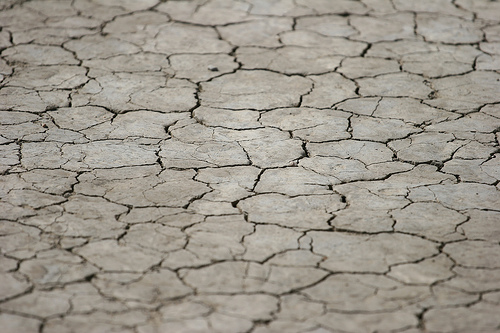
The dry lake in this photo is actually in the Mojave Desert in Southern California, it could one day apply to the Kinneret as well, which is also way below sea level.

Actually, the main problem in our water crises involves all of us who live in Israel and how we use water. When the water conserving publicity started drawing attention, a number of ideas have been forwarded for personal water conservation at home.

After reviewing many of these water saving ideas, I have come up with some interesting ideas that could save at least 18 -20 liters of water per person, per day, by engaging in the following practices:

Green Prophet Visits Amirim, a Vegetarian Paradise in the Galilee

5

amirim vegetarian village israel galilee“Make sure to place your organic waste in the buckets outside and please use our shampoo and soap when you shower so chemicals don’t enter or gray water system,” my hostess explained to my family as we first arrived in Amirim. I immediately felt at home.

We’ve been covering lots of eco-tourism tips and organic and vegetarian hot spots in Tel Aviv on Green Prophet, but I recently spent the weekend at a tzimmer (guest lodge) in moshav Amirim that was a vegetarian and ecological paradise unto itself.

Just 15 kilometers from Tzfat there is a moshav that was founded in the late 50s that was ideologically influenced by organic, vegetarian and vegan principles. My hostess at Ohn-Bar, the tzimmer where I stayed, explained that the people of Amirim were among the pioneers of Israel’s strong vegetarian movement.

David Kamp's "The United States of Arugula" Best Read When Hungry

1

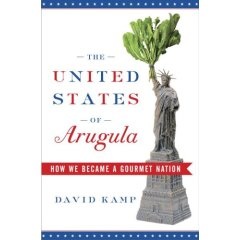
david kamp book cover united states arugala image

Israel’s fastest-growing supermarket chain is the upscale Tiv Taam, where customers can browse shelves of international beers, pick through extensive cheese selections and even purchase pancetta to include in their gourmet dishes at home. At Hinnawi, a Yafo-based butcher with a branch inside the shopping mall in Ramat Aviv, customers can choose between 17 kinds of salt and pepper grinders. And silicon spatulas, Le Creuset pots, and KitchenAid mixers are fixtures at chefs’ stores around Tel Aviv.

Yet despite all the signs of the Israeli food revolution, the movement has yet to be documented. On the other hand, in his new book ‘The United States of Arugula’ author David Kamp explains the birth of California cuisine, the rise of American celebrity chefs and the movements toward sustainable eating, which are now starting to influence Israeli cuisine, in esoteric and exciting detail.

This fast-paced and engaging 392-page tome examines America’s roots in a Puritan approach to food, which eschewed the French cuisine as too pretentious and instead relied on meat and potatoes, with the occasional monstrosity of fruit salads suspended in Jell-O. Kamp mined Food Network archives, sifted through food-related news reports and interviewed chefs and restaurant critics to find out how the USA went from such unpromising beginnings to become a country suffused with extra-virgin olive oil and truffles.

Don't Panic, It's Organic… Music: Non-Electronic Concert in Tel Aviv

1

The word “organic” can be applied to many things in our modern day lives.  Most commonly, it applies to food that has been grown organically (meaning without pesticides).  But as a quick search in Webster’s dictionary showed us, the term organic means “of, relating to, or derived from living organisms.”
And Tel Aviv’s “Don’t Panic It’s Organic” concert this Saturday night is all about living organisms.

So what’s an organic concert?

The “Don’t Panic It’s Organic” concert is a response to the hostile takeover of electronica music in the local music scene and a collective insistence upon the merit and value of man-made music.  (In other words, music of, relating to, or derived from living organisms.)  Of course it’s not entirely organic… it’s no Earth Hour Tel Aviv concert powered by biodiesel and human bicycle pedalers and some electricity will probably be used to power the lights and instruments – but it’s a step in the right direction.

Eco-Rabbi: Parshat Matot – Rights! Individual vs. Community

8

eco rabbi steak meat image judaism jew torah imageYou’re eating a bag of chips while walking down the street. As you finish you look around to find a trash can but nothing is in sight.

Do you drop it? If the city doesn’t bother to make waste bins available, why should you care about the city’s cleanliness? How about eating a piece of steak? Is it irresponsible to eat knowing the vast amounts of carbon created in order to bring it to your plate?

What if your livelihood, and the livelihood of your five hundred employees, depends upon your factory, but the only way to make the books work is if you dump your waste into the river? Does that make that act of destruction okay?

Thomas Hobbes, the father of modern political philosophy, expresses the idea – in a nutshell – that the very fact that we are human gives each of us the right to do whatever we want. Although we each need to give up some of our individual rights to the government, so that the government can make sure that everyone has equal rights. This is a significant issue when dealing with environmental issues.

Fresh fava (ful medames) beans for salads

5

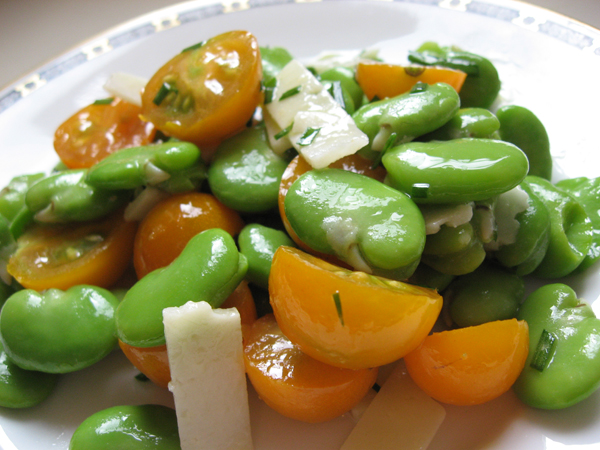
full beans fava ful salad recipe
Ful medames; ta’miyya; bissara — fava beans have given rise to iconic dishes across the Middle East. Egyptian cuisine is unimaginable without them. They’ve been a staple in the region for about eight thousand years, and were one of the first plants cultivated for food.

Most often, they are used in their dried form: rehydrated and simmered until tender, and then prepared in a host of ways. But fresh favas are wonderful – toothsome, nutty, tasting like something halfway between a pea and bean.

RELATED: first cultivated fava beans found in ancient Israel

Though they are often referred to as the ugly duckling of the bean world, we find them rather fascinating to behold…

Kudos to the Government of Israel for Going Green!

0

One of the wonderful elements of the open market is that we actually do have the power to make changes.

You don’t like the way a store treats its customers? Tell your friends to complain. If that store is smart, it will change it’s ways. This can be applied to environmental products as well.

If a company is making a effort to be eco-friendly, buy there! If enough people follow suit their competitors will catch on, if they want to stay in the game.

Make Your Cooking More Energy Efficient.

0

If you switch your oven off a few minutes before your food is ready it will stay hot enough to finish cooking the food. Also try to avoid opening the oven too often to check whether your dinner is ready by doing so you are allowing the heat to escape and your oven will have to work overtime reheating itself.

Make sure to close your fridge as well.

Israel is Growing Green Kindergartens

2

Last week in Haaretz, Naamah Lanski reported on the new green police in town. They’re about a meter tall, can’t read or write yet, and you better not throw away plastic bottles (or any other recyclables), leave lights on, or even pack lunches in plastic bags around them.

That’s right. Israel’s kindergartens are going green.

Not that kindergartens haven’t been green up till now. Many kindergarten teachers have always integrated green content in their classrooms, encouraging their students to recycle, use both sides of paper, and collect egg cartons and paper rolls from home for art projects. But as of two years ago, the Ministry of Education and the Ministry of Environmental Protection have been working together to create green curriculums for interested kindergartens and helping them implement their new plans with external assistance.