Somehow vegetables with short seasons excite the imagination and appetite more sharply than produce that’s available all year around. Good Middle Eastern cooks have many recipes for delicate fava beans, and this turmeric-fragrant soup is one.
Somehow vegetables with short seasons excite the imagination and appetite more sharply than produce that’s available all year around. Good Middle Eastern cooks have many recipes for delicate fava beans, and this turmeric-fragrant soup is one.
Somehow vegetables with short seasons excite the imagination and appetite more sharply than produce that’s available all year around. Good Middle Eastern cooks have many recipes for delicate fava beans, and this turmeric-fragrant soup is one.
Somehow vegetables with short seasons excite the imagination and appetite more sharply than produce that’s available all year around. Good Middle Eastern cooks have many recipes for delicate fava beans, and this turmeric-fragrant soup is one.
Somehow vegetables with short seasons excite the imagination and appetite more sharply than produce that’s available all year around. Good Middle Eastern cooks have many recipes for delicate fava beans, and this turmeric-fragrant soup is one.
Somehow vegetables with short seasons excite the imagination and appetite more sharply than produce that’s available all year around. Good Middle Eastern cooks have many recipes for delicate fava beans, and this turmeric-fragrant soup is one.
Somehow vegetables with short seasons excite the imagination and appetite more sharply than produce that’s available all year around. Good Middle Eastern cooks have many recipes for delicate fava beans, and this turmeric-fragrant soup is one.
Somehow vegetables with short seasons excite the imagination and appetite more sharply than produce that’s available all year around. Good Middle Eastern cooks have many recipes for delicate fava beans, and this turmeric-fragrant soup is one.
For most people the first steps to a more organic, greener lifestyle is often when we start to think about children. We start to look at our diets and lifestyles from a different persepective. What is healthy to eat, drink and do. This is when most poeple take the step to buy organic food but as we are hearing more and more about chemical threats from our cosmetics, make-up, furniture and toys and bottles for our children, organic food is really just the tip of the iceberg.
Our first port of call in the family raising stakes is pregnancy and keeping mother and baby healthy.
Israel seems to fall into the thick of the boom, and I’m not talking terror. With the tech boom, we were on the forefront. Now with the world-wide eco-conscience growing, Israel is one of the forerunners of exciting new markets opening up – all of them working to make our planet a better place for us all.
Last week Green Prophet interviewed Eyal Hadas, managing director and head of renewable energy at Cukierman & Co. Investment House Ltd. You may have browsed through our Solar Energy Co. Guide. Due to popular demand we have decided to run with the idea and this week we are proud to announce our Cleantech directory: Green Profits.
As you can see there are plenty of great ideas out there churning. If you’re an entrepeneur looking for an angel we have some great pick-up lines for you. If you are in the field already and can’t find your company on our list, we are still filling out the ranks, please submit your company. We don’t want to leave anyone out!
It’s about this time of year that the air starts to change. Evenings cool off and breezes pick up. Put another way: it is a time to put some food by, as the old phrase goes, the season for trying to make freshly harvested vegetables last as long as they possibly can. We’ve already explored the sweet end of the food-preserving spectrum, so we thought it only fair to look at the savory side as well. Thus we arrive, happily, at the wonderful world of pickling.
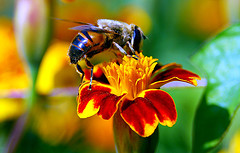
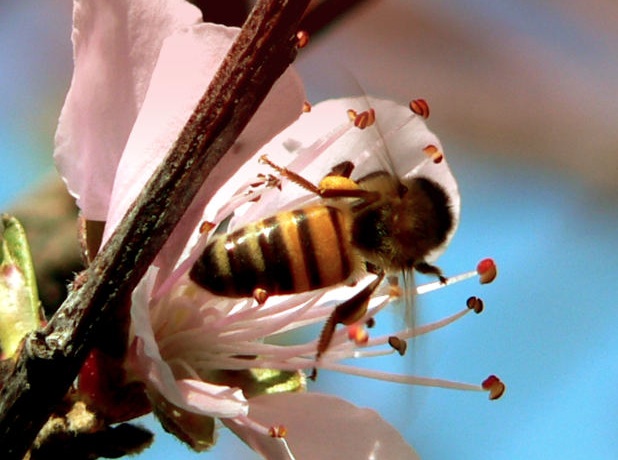
Colony Collapse Disorder (CCD), a bee virus leading to the widespread deaths of worker bees, has long signified a threat to agricultural industries. It’s not the honey that’s important in agriculture–it’s pollination, and therefore the effects of CCD on this process can be devastating.
But now Israeli company Beeologics has discovered a cure for CCD, which has been clinically tested on 60 hives in Florida. The Beelogics solution, marketed under the name Remebee, operates via the mechanism of gene silencing.
Nitzan Paldi, Chief Technology Officer of Beelogics, explains: “The technology is based on naturally occurring biological agents. Conceptually, we’re introducing the factor that prompts the silencing response,” says Paldi.
“We didn’t invent gene silencing, it’s been around for eons, and discovering its broad applicability earned Andrew Fire and Craig C. Mello the Nobel Prize for Medicine in 2006. However, as far as we know we are the first to use it commercially on non-humans.”
Paldi also explains that he believes CCD is caused by another virus that was discovered by a Hebrew University professor called Israeli Acute Paralysis Virus (IAPV). Remebee not only protects hives from IAPV, but from other viruses as well.
Another breakthrough achieved by Beelogics is the production of this expensive solution in commercial amounts–a production process which can be applied in other fields of manufacture.
Remebee is now in the process of obtaining approval from the U.S. Environmental Protection Agency.
Rosh Hashana greeting from sustainable Israeli artist, Merav Feiglin
With the Jewish new year coming up in next week, some of us are thinking about green new year’s resolutions and lifestyle changes that we’d like to make. Whether it’s recycling more items or starting a compost heap, there’s no such thing as a small difference.
But what about greening your celebration of Rosh Hashanah? How can you make your celebratory meal or family gathering more sustainable? What about Rosh Hashana’s symbolic foods?
Gefilte Fish Without Harming a Single Fish:
“Gefilte Fish Without Harming a Single Fish” is the adorable name of a Rosh Hashanah cooking workshop being offered at City Tree (Tel Aviv’s oasis for all things green). Just like the title promises, the workshop teaches participants how to make a vegan version of the classic Rosh Hashanah dish and avoid all of the carbon emissions involved with eating meat or fish.
(And let’s be honest – a vegan version of Gefilte Fish is probably a lot more edible than the traditional kind.) Other items on their sustainable holiday menu include raw dried fruit kugel and fruit juice wine. Yum. The four hour workshop will be held this Friday (September 26) at 9am (contact Alon at [email protected] to sign up).
Sustainable Gifts For Your Loved Ones: Many families exchange small gifts during big holidays such as Rosh Hashanah and Passover, and what better way to spread the sustainability bug than giving away a local, sustainably designed gift?
Get There Sustainably: In addition to eating sustainably and gifting sustainably, try to make your journey to your holiday feast as green as possible. If public transportation is not an option, try greener private car options such as carbon neutral car rentals (courtesy of Avis) or Car2Go, a carsharing service in central Israel.
Please share your ideas for celebrating a sustainable Rosh Hashanah with us in the comments section below!
Read more about how we’ve celebrated other Jewish holidays in green, eco friendly ways:
Perhaps the next green power revolution will come out of Israeli engineering.
Hillpoint Energy CEO Ben Spitz told Green Prophet’s Tyson Herberger his company’s Israeli development team will soon unveil a one megawatt high-altitude wind turbine. They are filing for a provisional patent, and hope to officially announce the new design “in the coming weeks.”
While Dubai is building a wind powered sky scraper, Hillpoint Energy’s Israeli researchers are designing wind power generators that will fly. Spitz said the wind turbine will be “lighter-than-air” and “float at a high altitude.” He continued to say the design is set to “get much stronger and consistent winds and generate a lot more power” than currently commercialized technologies.
The other day I was showering and when I stepped out of the shower I found that my house had showered with me. Hair had gotten stuck in the drain and backed up the water forcing it to exit out all over my floor! It was a nightmare. (These things usually happen right before company comes.) After freaking out for a minute or ten (probably ten seconds but it feels like ten when water is pouring out everywhere)
I finally was able to think clearly and grabbed the plunger from next to my toilet. I usually typecast the handy plunger for using only in the comfort station but I decided to give it a try. It worked great! And with no nasty chemicals!
Since then I have cleaned my plunger well and have used in many sinks and drains.
Chemical drain cleaners are among the most dangerous household products–hardly a shocker, since these lye-based formulas are meant to dissolve plugs of grease, soap, hair, and ground-up food. Yet most don’t clear undersink clogs as well as old-fashioned mechanical methods, including the humble plunger.
There are many alternatives to the messy chemical solutions that are popularly used today. One example is the drain king sink declogger, uses no electricity, just pressure! And now in Israel too!
Thanks Melanie for the tip! Do YOU have a green-living tip to SHARE?
There are few environmental topics in the Middle East more controversial than the proposed Red Sea-Dead Sea Canal to revive the Dead Sea, which has the potential to cause lasting damage to the composition of the sea’s ecosystem.
The multinational organization Friends of the Earth Middle East (FEME), who are working to build a peace park to restore the Jordan River, have an effective rejoinder to counter the Canal proposal.
With the use of water conservation and rainwater harvesting on the part of communities in Israel, the Palestinian territories and Jordan, FEME seeks to restore the Jordan River–and thereby restore the main water source of the Dead Sea.
According to Gidon Bromberg, Israel’s Director of FEME, restoring the Jordan River may be the first step to achieving Middle East peace.
The Squall Tower in Dubai is designed to rotate with the wind. Designed by Turkish architectural design studio Hayri Atak, this unique parametric skyscraper design set in Dubai seeks ‘electric’ inspiration from vertical wind turbines.
The world’s first moving building, Dynamic Tower, a skyscraper with 80 independently rotating floors, is being planned for Dubai (which has big green plans for 2008), with another 70-storey structure to be built in Moscow.
These cutting edge buildings, over 400 meters tall, will be constructed of prefabricated sections mounted on a central concrete core, at an estimated cost of $700m. Catering to the upper crust, apartments are priced to sell at $3.7m – $36m, and will include such necessities as in-house parking, indoor swimming pools, voice controlled systems and an ever changing view.
Aside from the tremendous “cool” factor, the design incorporates a number of advanced environmental building principles.
Ecological Advances on the Squall
Wind Power from the Squall
The power for the building will be supplied by horizontal wind turbines installed between the floors, thus avoiding the visual impact, one of the major drawbacks of the familiar “propellor” turbine. The blades are designed and constructed of materials to allow for quiet operation – a necessary feature, since they are only meters away from the residents. The architect, Dr. David Fisher, explained wind is a problem for most skyscrapers, and he decided to make use of it instead.
These sources are designed to generate more electricity than is used in the building, and to make this the first skyscraper that is self-powered.
Prefabrication for the Squall
The individual units will be manufactured off-site in a dedicated factory, thus reducing the costs by about 10% and increasing the efficiency of the construction by 30%. Prefabrication has the added benefit of allowing for a cleaner construction site, with a simpler and shorter process of assembly, less use of resources and energy, and minimal site disturbance.
High Density Building
High rise construction is an efficient use of area with a reduced footprint, as opposed to sprawling, low density development.
Eco Building Materials
The use of natural and recyclable materials, insulated glass and structural insulating panels.
Natural Lighting
The units in the building should have sufficient natural light from the large expanse of glass and the rotation.
By 2022, there has been no news if this concept skyscraper will ever be built.
The reason? The Ministry supports the building of a new settlement, Mirsham, in the Lachish region.
The SPNI and other environmentalists have strongly objected to the project, arguing that the Lachish region is one of the only remaining open spaces north of the Negev.
There’s a strongly political slant to the situation, because Mirsham is slated to become the home of 45 families who were evacuated from Gaza during the disengagement. (Consequently the Jerusalem Post has dubbed the settlement approval “Orange Triumphs Over Green,” because orange was the rallying color for those who were opposed to the disengagement.)
While the Union of Gush Katif Evacuees has offered to work together with environmentalists to minimize future environmental damage, the divisive nature of the whole affair is most likely irreparable, at least from this Prophet’s point of view.
Are you sick of that sick taste from water bottles? It’s great to refill your bottles again and again, but they end up tasting bad. For water storage it is better to use glass bottles rather than plastic bottles. They can be used repeatedly without the aftertaste caused when repeatedly using plastic bottles. Just be careful not to drop your bag too hard… You might crush your bottle.
Volunteering is a great way you can raise your awareness during the US National Pollution Prevention week. Can we honestly ask others to make changes if we are not working ourselves? It’s not always easy to volunteer but there are many different levels and degrees of involvement one can take.
In three easy steps you can find the most fulfilling volunteering opportunity for you:
The best way to start is by deciding how much of your time you would like to donate.
Next, make an inventory of your skills: What can I do? What do I enjoy doing? How can my time be used most effectively?
Finally, research, ask your friends and neighbors about opportunities; whether, it’s in a neighborhood school, helping in the park, or developing a curriculum, or perhaps in an organization in your area.
Finally, ENJOY! Volunteering can be rewarding and invigorating, giving you energy for the rest of your tasks during the week.
Meet Hamutal Dotan, our expert on all things culinary and delicious. Hamutal is currently working as a web editor in Toronto and aspires to be a full time writer.
Read about Hamutal’s thoughts on sustainable food, gardening education for kids, and her mouthwatering (and popular with our readers) strawberry jam recipe.
My feet! They are always there when I need them. I walk between 10-20km/day. Except in the snow. Snowy days are subway days.
Can you tell us about your biggest green passion? What fires you up?
Food, and everything about it: gardening, marketing, cooking, eating, feeding, preserving, baking plum buckle. Eating is the most visceral connection most of us have to the natural environment.
What do you think is the most important issue the world faces today?
I’m not remotely qualified to issue judgements on this, but access to sustainably produced food is definitely high on that list. The cost of staples is going up around the world, and this is leading to (at least apparent) conflict between our need to increase the volume of food produced by expanding the scope of industrial agriculture, and our desire to produce food sustainably, via the use of organic, local, and small-footprint agriculture.
What is the most important issue in the Middle East?
Peace seems like the obvious answer – the lynchpin which will enable us to tackle every other issue. I’m not actually sure it will go that way, though: there may be a bit of a chicken-and-egg thing lurking in the background. Do we need to make peace before we can decide how to allocate our water, or does the water crisis force everybody to cooperate, eventually leading to peace?
What’s the saddest environment-related thing you’ve ever seen?
I’ve definitely not witnessed the saddest environmental tragedies – people displaced because of climate change, toxic waste dumps, and the like. But one of the most poignant moments for me personally was when a grocery cashier asked me what it was I was buying, so she could ring me up (it was broccoli). That kind of alienation from something so basic is astonishing.
What’s the most hopeful project/company/event you’ve seen?
Programs that introduce gardening for food into urban school curricula, especially in poorer neighbourhoods. Kids that tend vegetable patches as part of their education are both happier and better fed. If you grow up being excited by raising your own tomatoes, a lifetime of environmental consciousness will follow much more naturally than it otherwise might.
What do you do to play your part in greening the earth?
I advocate, hopefully in a way that is intelligent and thoughtful rather than belligerent. I don’t drive, don’t shop for more than I need, and try to buy what’s been produced responsibly. I vote based on environmental policies.
What are you reading now?
Michael Pollan’s ‘In Defense of Food’. TreeHugger, Grist. The Ethicurean is a great source of information about sustainable food.
What’s your favorite post/topic on Green Prophet, and why?
I’ve just started out here, but so far my favourite has to be the strawberry jam recipe. The day that I wrote that, I spent the morning at a farm picking berries, the afternoon teaching a friend how to make jam, and the evening writing about it, and it was all SO much fun. People often seem to think that being environmentally responsible is a dour, joyless sort of commitment, one that strips you of luxuries and habits you’d like to keep. And there are obviously ways in which that’s true. But it also introduces a whole other range of thoroughly pleasurable activities into your life. Being that engaged in what you do, even just in what you eat, is deeply satisfying.
Hamutal Dotan goes strawberry picking and then cans her jam. Learn how.
Who are your environmental heroes?
Alice Waters, who is one of the first people to have really promoted thoughtful, attentive agriculture and eating. The Norwegian seed vault – it’s a safehouse for the world’s crop diversity, and the people that built it have performed an invaluable (and under-reported) public service. Rachel Carson, who had to fight harder than any of us ever will to get environmental issues taken seriously.
If you could meet with one of these heroes what would you ask them?
How to persevere, and keep your sense of humour, in the face of institutional apathy.
If you could make one green wish (or have one of your prophecies come true) what would it be?
Get genuinely green-sensitive politicians in office in the major food-producing, and pollution-emitting countries. All our individual efforts at reducing our footprints won’t make much of a dent unless they are accompanied by legislative revolutions.
To learn more about sustainability writers and their passions, read more articles in the Green Prophets series:
The subject I seem to be always answering questions about is keeping those nappies clean.
Unlike most European countries or the States we are yet to be blessed with nappy services. So how does one keep those cloth nappies (diapers) clean without feeling swamped?
To tell the truth it’s really easy and no it does not feel like extra work, quite the opposite in fact, once you have a routine you will wonder what all the fuss was about.
It’s National Pollution Prevention Week in the USA this week. This is a great time to assess your wasting habits. Where can I waste less (which inevitably means save too) Share ideas with friends. Start a campaign!

 For most people the first steps to a more organic, greener lifestyle is often when we start to think about children. We start to look at our diets and lifestyles from a different persepective. What is healthy to eat, drink and do. This is when most poeple take the step to buy organic food but as we are hearing more and more about chemical threats from our cosmetics, make-up, furniture and toys and bottles for our children, organic food is really just the tip of the iceberg.



 Sustainable Gifts For Your Loved Ones: Many families exchange small