Although Palestinian environmental activism is clearly on the rise, Palestinians still face a myriad of environmental and social challenges.
These issues often have both ecological and political aspects; the current water shortage, for instance, is influenced both by global climate change and Israel’s policies in the West Bank.
This past year, a team of four British environmentalists came together to address these problems at all levels.
In February 2008, Steve Collings, Tom Fernley-Pearson, Alice Gray and Nick Marcroft established Bustan Qaraaqa, a revolutionary new educational permaculture farm and eco-guesthouse in the West Bank.
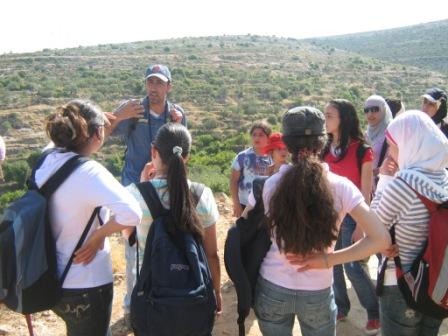
In June, the Bustan Qaraaqa team opened their facility in Beit Sahour, near Bethlehem. It consists of both an eco-guesthouse for both visitors and volunteers, and 12 dunams (4 acres) of farmland for teaching permaculture. Currently, the site boasts a greywater recycling system, composting bays, a composting toilet, a series of swales (irrigation ditches) across the valley floor and the beginnings of a rainwater-collecting cistern.
The team reports that they have hosted over 55 guests from all over the world.
Bustan Qaraaqa, which means “Tortoise Garden” in Arabic, represents these activists’ desire to build a grassroots environmental movement in the Palestinian Territories. The aim of the project is to











 There are many types of environmental activists. Not only are there those concerned with one type of environmental issue rather than another (such as being more of an advocate for