Arap Koftesi burgul balls in a garlicky yogurt sauce
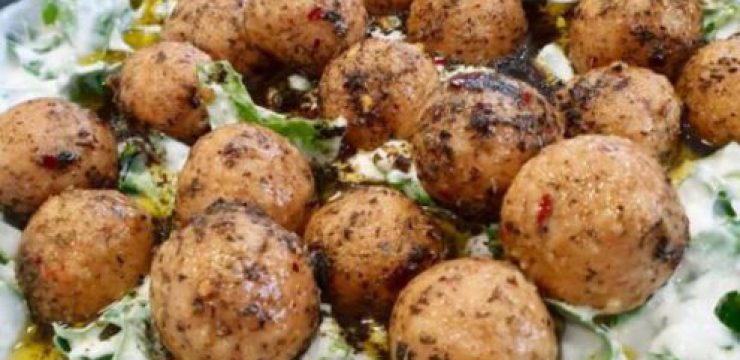
This bit of Turkish home cuisine is called Arap Koftesi, and I discovered it in Özlem's Turkish Table. We can call them burgul balls.

This bit of Turkish home cuisine is called Arap Koftesi, and I discovered it in Özlem's Turkish Table. We can call them burgul balls.

Moving to Mars? He’s a new fungus-based sunscreen to protect you from gamma radiation Planning on traveling aboard SpaceX on a trip to Mars? An American lab just found a new potential sunscreen that creates protective melanin, a low-cost alternative to squid ink. It can be grown on space labs and used on Mars. Here […]

Products were considered “accurately labeled” if they contained within 15% of the THC amount shown on the label—the same threshold the state uses. About 44% percent of flower products failed to meet that standard, with 54 of those products inflating their THC content and 23 containing more THC than the label indicated. Only four concentrate products were labeled inaccurately.

At Green Prophet, we’ve long tracked the rise of engineered living materials (ELMs), algae-based dyes, and circular fashion startups. Balena’s material joins this new wave of bio-innovation, where fashion is no longer just wearable—it’s regenerative.

"By integrating photosynthetic organisms into materials science, we can harness the sun’s renewable energy to create valuable materials," said Bae. "There is a great need for sustainable alternatives to current practices that rely on finite resources."

While Is Anyone Listening? may not satisfy those looking for hard statistics, it’s a compelling read for anyone interested in the intersection of science, philosophy, and animal behavior. Herzing’s voice—at once personal, precise, and probing—asks us not just to decode dolphin sounds but to consider our role as co-inhabitants of a shared, noisy planet.

This is like discovering that the pyramids weren’t built by natural erosion, but by ancient engineers

Another factor is sunlight scattering at high altitudes. Even though the Sun sets on Mars just as it does on Earth, light continues to scatter off the high-altitude dust, keeping the sky bright for hours. This is why astronauts may one day be able to navigate or work during the “night” without artificial lighting—at least in the early evening.

The shark products, often carried in personal luggage or by post, were likely intended for personal consumption, resale, or as trophies. While most fin products seized in Australia originated from Asia, preserved shark specimens were more commonly linked to the United States. In Aotearoa/New Zealand, however, Australia was the most common source of both passenger and mail seizures — an unexpected finding given that seizures in Australia had declined over time, while New Zealand’s numbers rose.

While enzymatic recycling offers hope for managing existing plastic waste, scientists and environmental advocates agree it must be paired with the development of bio-based plastics—materials made from renewable biological sources like corn starch, sugarcane, or algae. Unlike conventional plastics derived from fossil fuels, bio-based alternatives can dramatically reduce carbon emissions at the production stage and are often compatible with closed-loop recycling.

Chemical exposures were highest among younger toddlers and racial/ethnic minorities, reflecting systemic environmental injustice. While some older chemicals like triclosan and certain phthalates are decreasing (likely due to public pressure and reformulations), new unregulated substitutes like DINCH and emerging pesticides are on the rise.

What if a blood test could reveal the pace of our aging – and the diseases that may lie ahead?

MethaneSAT’s development marked a shift in how environmental data is collected and shared. Unlike many state-run satellites whose data is restricted or delayed, MethaneSAT was created to provide rapid, open-access emissions data to encourage faster policy responses and regulatory action.

It’s easy to make this natural broth base yourself. Most or all of the ingredients are probably already lurking in your fridge and pantry. A food processor is the kitchen tool I recommend for making it; otherwise, be prepared to do some very fine chopping. I myself just feed everything into the food processor and let it whizz.

Add a sunhat—preferably made from raffia, wheat straw, or seagrass—and a pair of upcycled shades, and you’re golden! Just like the sun intended.