

Environmental art can take many forms, but at the core the concept is the juxtaposition of humankind’s relationship with nature. Many artists create their works by using recycled products turning them into aesthetic images; others interact with the forces of nature – wind or water, for example – to reveal something about our world in the process. Others re-envision the delicate balance between humans and our planet, making statements about our role in the stewardship of Mother Earth.
A modern day example of the latter is Spencer Tunick’s photographs of naked Israelis at the Dead Sea. But it’s an ancient display of art in Iran that is capturing imaginations in a remote area of the country…penises. Everywhere.
Eco-Erotic art is not a new form by any means
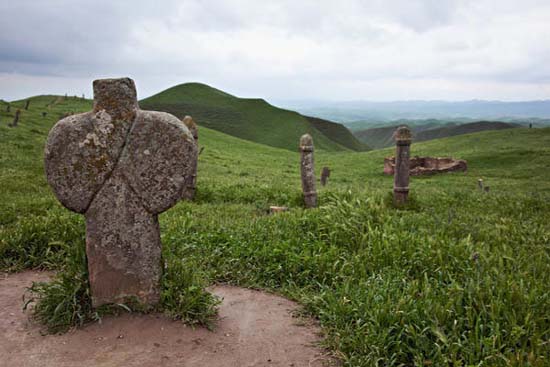
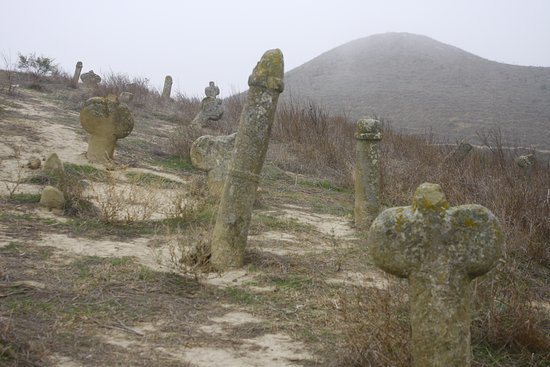
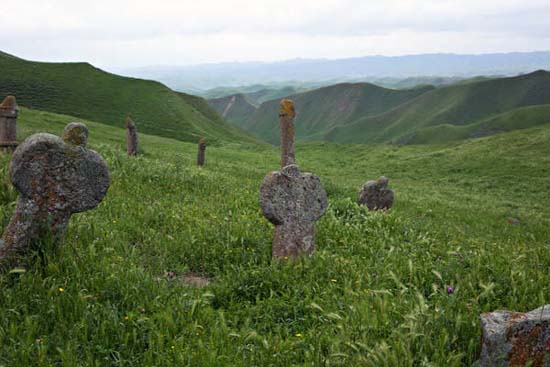
Case in point: The Khaled Nabi cemetery in northeastern Iran, a place where the over 600 tombstones have been described as ‘horny headstones’. But if you think these markers are simply an homage to the male and female genitalia, plan on being surprised. The history of the place is shrouded in intrigue….
Iran has a modern day reputation of being a place where discussions of sexuality are limited, and yet if the stories about the Khaled cemetery are true, that restrictiveness wasn’t always the case.
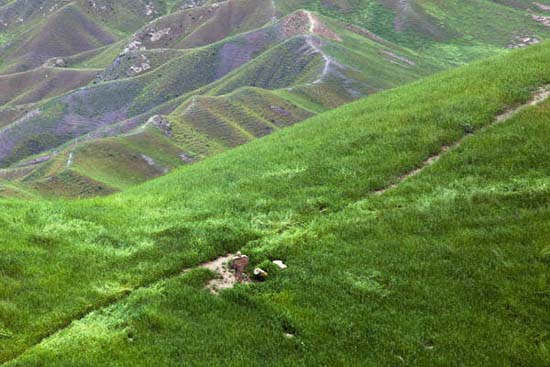
Estimated to be 1400-years-old, there’s a lot of history and culture buried on the hilltop, which in the words of one blogger, becomes a lovely site worth the strenuous climb to the top. “Geographically the region already belongs to the Turkmen steppe…it is not plain as you might expect of a steppe, but an endless series of low mountain ranges that ripple away to the horizon like a petrified sea.”
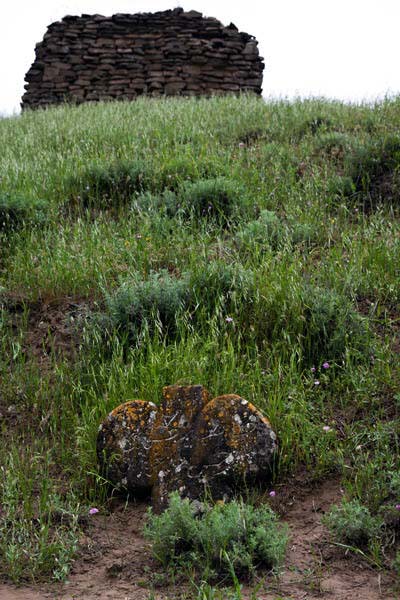
To add to the mystery, no one knows exactly who erected the tombstones, at least three of which are thought to be the sacred resting grounds for prophets (including the namesake, Khaled Nabi).
“The holy place encompasses actually not one but three shrines, revered by local tradition as the tombs of the prophet Khaled Baba, his father-in-law Alaam Baba and his shepherd Chupan Ata.”
But he lived decades before the prophet’s birth! The obvious question concerning the faith of which he was a prophet eighty-two years before the very foundation of Islam, is not raised in the legend.
However, it is very probable that he was a Nestorian Christian, one of those who in this period migrated in a growing number to the north-eastern regions of the Persian empire, and from there further to China along the Silk Road…”
Are these phallic symbols as many believe, or something else?
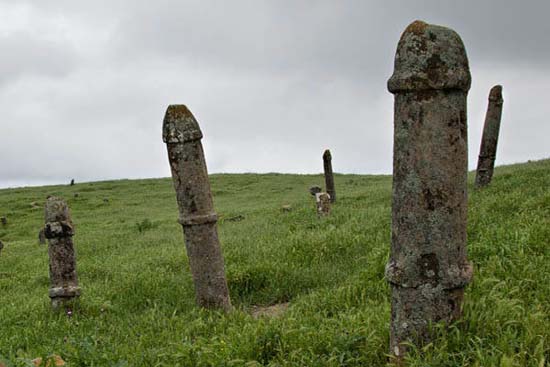
To our modern eye, there’s no mistaking what the creators intended when they carved the tombstones, and yet there are those who suggest that the helmet shaped-tops and rounded circles are indicative of warrior burial sites. Depending on the angle and image, our minds can easily consider the possibilities that both, or either, were the intended suggestion. Unfortunately, since we know so little of their origins, and they’ve only know been under the scope of academic study, we’ll have to wait to fully know if some ancient tribe was inclined to make war or love…
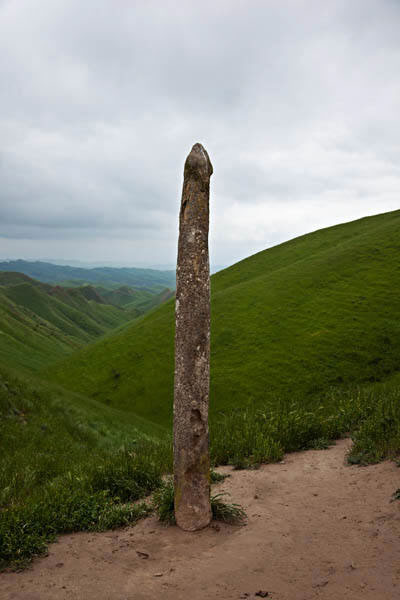
Some are columns nearly six feet high that look like penises; others bear the remarkable resemblance of female breasts. In the words of one reporter, it’s no wonder this pilgrimage site is becoming a “hot-and-bothered spot for Iran’s young adults,” even though the location, high in the mountains near the border of Turkey, makes visiting a task for the visitor.
Few have photographed or studied the place until now.
Shrouded in mystery, what can we decipher about their origins and meaning?
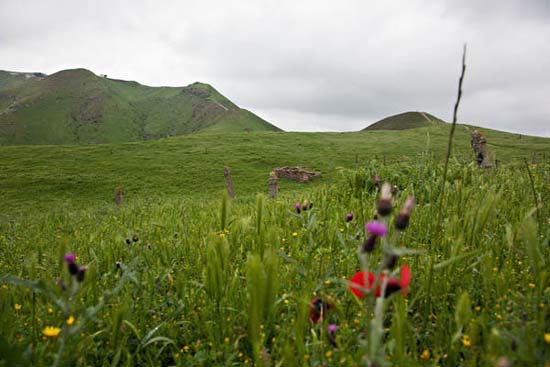
“According to Alireza Hesar Nuee, one of the few historians to have studied the site, the sexual symbolism could come from the phallic religion practiced in India and central Asia, but admits few know for sure the meaning behind the designs…The chatter among tourists, often overexcited by the surprising sight, is the only thing that breaks through the otherwise perfect silence of the cemetery and the valley.
“The bashful are hesitant to take pictures standing next to the poles, but others see it as an opportunity to have a laugh.” What we do know is that these headstones resemble those in other sites that are thought to have come from the phallic religion practiced in India and central Asia.
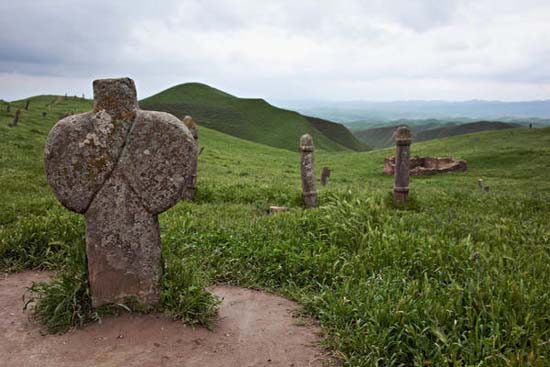
Regardless of location or origin, we at Green Prophet see more than the laughter factor in these sexually suggestive objects. Historically speaking, there is much to be learned yet about the site. One wonders what the intent of the ancient people who erected this cemetery really was, and how they might feel if they were to discover the consequences today.
In places where the discussion of sexuality is either taboo or severely restricted, eco-erotic art – whether man made and intended to arouse the senses or created by the forces of nature – offers a modern day outlet for viewers to explore their sexual natures in the safer context of admiring historical relics.
More eco-sexuality news:
Iranian President Wants Girls to Marry at 16
Strip Naked at Dead Sea for Acclaimed Artist, Spencer Tunick


