


Can a cross-border hospital between Israel and Jordan anchor environmental cooperation too?
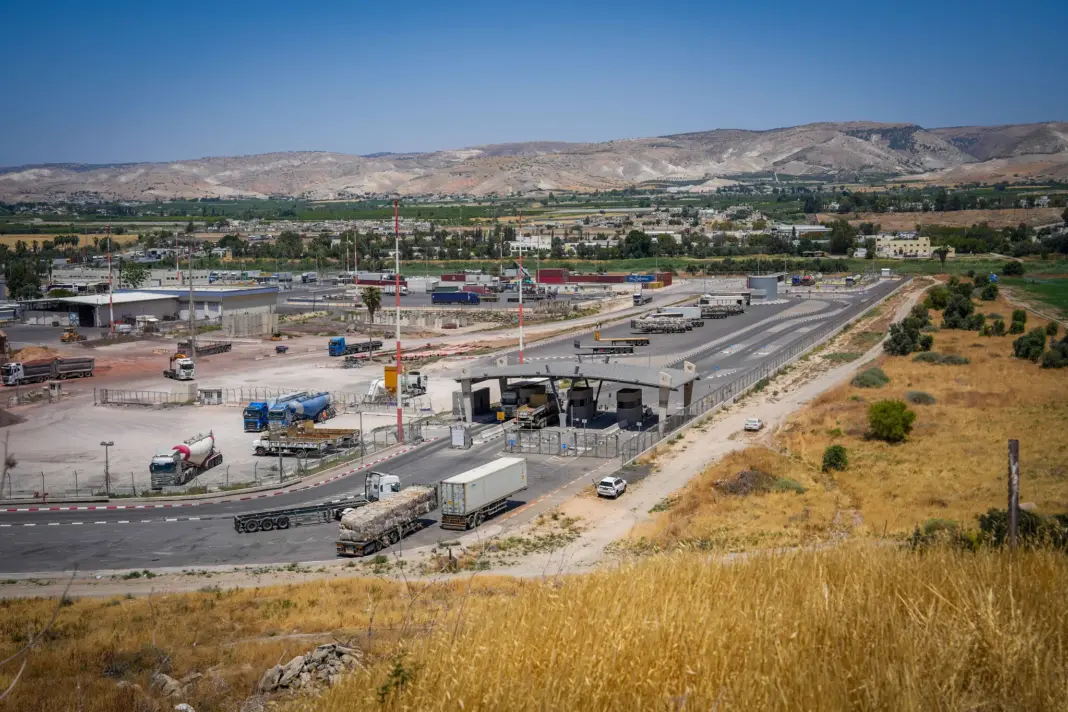
Israel and Jordan are moving ahead with one of the most ambitious cross-border development projects in the Middle East: the Jordan Gateway, a joint industrial and employment zone straddling the border near the Jordan River Crossing. Conceived during the 1994 Israel–Jordan peace talks, the zone is finally gaining momentum after years of legal disputes and construction delays.
Now, Israeli officials have confirmed that a hospital on the Israeli side, designed primarily to treat Jordanian patients, is under active government consideration. We’ve written about water cooperation and the Red Dead Canal which never happened. And now that Israel is cooperating with India, the UAE and Saudi Arabia, the region is gearing up for movement of goods, people and know-how form the east to the west.
The proposed medical centre, described by Emek HaMaayanot Regional Council head Itamar Matiash as “a centre for cancer treatment, so that people from Jordan or further away could come and receive treatment,” would become the flagship of a wider cluster of medical, academic and innovation-based services planned for the Israeli half of the zone.
Meanwhile, the Jordanian side is already home to several low-tech factories aimed at reducing unemployment, which remains around 18 per cent in the kingdom compared with roughly 3 per cent in Israel.
The defining feature of the Jordan Gateway is its carefully engineered border model. Workers from both countries will be able to enter the shared industrial zone while remaining inside an “ex-territorial bubble”. Jordanians entering the Israeli zone will not be granted entry to Israel beyond the site, and Israelis crossing to the Jordanian side will not enter Jordan proper. Full entry into either country will continue to require the formal Allenby Crossing procedures.
This controlled permeability reflects both diplomatic pragmatism and urgent security realities following the 2023 Hamas-led attack and subsequent regional instability, as well as recent violent incidents involving drivers crossing from Jordan into Israel to commit acts of terror. But not everyone should suffer from terrorism.
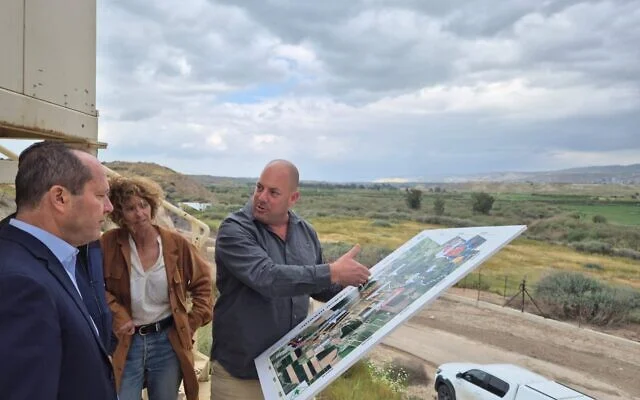
Beyond bilateral cooperation, the project’s strategic significance extends far beyond the Jordan Valley. The site is now positioned as a critical node in the India–Middle East–Europe Economic Corridor (IMEC), the US-backed transport vision designed to link Indian manufacturing hubs to Gulf ports, Israel and ultimately to European markets. This route circumvents passing through Iranian waters and areas of the Red Sea being terrorized by Yemen’s Houthis and Somalian pirates.
Under current planning, goods could cross into Israel at the Jordan Gateway, be transferred onto rail lines to Haifa Port and then shipped onwards to Europe. Officials from the United States and European Union have already conducted site visits and expressed interest in the zone’s potential role as a resilient logistics alternative to traditional Red Sea and Suez routes.
But if the Jordan Gateway is to become a model for regional integration, its long-term success will depend as much on environmental governance as on geopolitics. The Jordan River Valley is an ecologically fragile corridor long damaged by over-extraction, pollution and climate-driven water scarcity.
Fortunately, the region already hosts some of the world’s most established cross-border environmental collaborations.
EcoPeace Middle East founded by Gidon Bromberg (and featured on Green Prophet regularly) —bringing together Jordanian, Palestinian and Israeli practitioners—has spent decades advocating joint water management and ecological restoration.
Its “Green Blue Deal for the Middle East” proposes exactly the type of shared environmental planning the Jordan Gateway will require. Likewise, the Arava Institute for Environmental Studies, located near the Israel–Jordan border, has trained more than 1,800 Israeli, Palestinian, Jordanian and international students in solar energy, desert agriculture and water-scarce resilience.
These networks offer rare and durable frameworks for cooperation that continue even during periods of political tension. Participation by Jordanian and Palestinian students, however, is often kept discreet, as some prefer not to publicize their involvement in cross-border programs to avoid potential social pressures when returning to their home communities.
If aligned with such environmental expertise, the Jordan Gateway could evolve into more than an industrial park or logistics hub. It could become a proof-of-concept for environmentally grounded peacebuilding—a space where economic incentives, ecological restoration and pragmatic diplomacy reinforce one another. In a region where borders often divide ecosystems that must function as a whole, this may be the most significant experiment of all. Peace comes only through shared values, and content.
Without that, peace making is an empty word.
“For a long time, my soul dwelt with those who hate peace,” says Psalm 120.


