A new analysis published today by Urgewald, a German NGO, reveals that the European Union continues to play a central role in sustaining Russia’s Arctic gas exports, despite its public commitment to phase out Russian LNG imports by 2027.
Using cargo-level data from Kpler, the report shows that in 2025 the Kremlin’s flagship Yamal LNG terminal generated an estimated €7.2 billion in revenue from LNG shipments to EU ports alone. Of the 19.7 million tonnes exported globally from Yamal last year, 15 million tonnes — more than 76% — were delivered to Europe, making the EU by far the project’s most important customer.
“While Brussels celebrates agreements to phase out Russian gas, our ports continue serving as the logistics lung for Russia’s largest LNG terminal,” said Sebastian Rötters, Sanctions Campaigner at Urgewald. “In the current geopolitical situation, we cannot afford another year of complicity.
“We are not just customers; we are the essential infrastructure keeping this flagship project alive. Every cargo that offloads at an EU terminal is a direct deposit into a war chest that fuels the slaughter in Ukraine. We must stop providing the oxygen for Russia’s energy profits and shut the Yamal loophole now.”
The findings suggest that rather than declining, Europe’s reliance on Yamal LNG intensified in 2025. Yamal cargoes accounted for 14.3% of the EU’s total LNG imports, equivalent to roughly one in every seven LNG ships arriving at European terminals.
Sebastian Rötters
France emerged as the single largest importer of Yamal LNG in 2025, receiving 6.3 million tonnes across 87 shipments at the ports of Dunkirk and Montoir. Belgium’s Zeebrugge terminal also played a critical role, receiving more Yamal LNG than China over the same period.
According to the analysis, Europe’s importance goes beyond demand. Yamal LNG’s Arctic location makes it entirely dependent on a small fleet of 14 Arc7 ice-class tankers, which must operate on short routes to function efficiently. By allowing these vessels to unload in nearby European ports, the EU enables rapid turnaround times that keep exports flowing year-round.
The report also highlights the role of European shipping companies, noting that UK-based Seapeak and Greece’s Dynagas together control over 70% of the Arc7 tanker fleet serving Yamal LNG.
Urgewald warns that unless action is taken soon, Europe risks losing its leverage. As charter agreements expire later this year, the specialized tanker fleet could be transferred into opaque “shadow fleet” structures, further entrenching Russia’s Arctic LNG exports.
“The data shows the EU holds decisive influence over Yamal LNG,” Rötters said. “What’s missing is the political will to use it — and to close the Yamal loophole now.”
Strong infrastructure depends on dependable safety barriers that keep people, property, and equipment protected. Every project, from roadways to construction zones, needs barriers that balance strength, flexibility, and long-term performance. Finding trustworthy concrete barrier suppliers helps projects stay safe, organized, and cost-efficient from start to finish.
As new designs and materials shape the future of public and private construction, knowing which systems deliver consistent results becomes more important. This article explores leading concrete barrier options on the market today and explains how each type supports modern infrastructure goals.
48 Barriers Concrete Barriers
48 Barriers supplies durable concrete products designed for highway, construction, and property use. Their selection includes Jersey barriers, K-Rails, bin blocks, and planters. These products help organize traffic flow, define boundaries, and add stability to various site layouts.
For teams focused on safety and durability, reliable concrete barriers for modern projects support long-term infrastructure goals. The company offers both new and used styles to fit different project budgets. Each barrier meets practical demands for public and private spaces without unnecessary design complexity.
Customers across the country depend on these barriers for traffic control and perimeter protection. The option to choose between sizes and finishes makes it easier to match project standards. Reliable delivery and straightforward service help contractors complete jobs on time and with fewer logistical delays.
Hardstaff Barriers Multibloc TVCB
The Hardstaff Multibloc TVCB offers a solid solution for roads, construction sites, and site security. Each barrier measures about 3 meters long and weighs around 2.5 tonnes, giving it stability under heavy use. It uses reinforced concrete and interlocking joints that allow secure placement in different layouts.
This system meets EN 1317 standards for temporary safety barriers and holds N2/W3 containment approval. It also features threaded sockets that allow flexible use along verges or central reserves. The design supports both workforce protection and vehicle containment on modern highways.
Contractors often choose the Multibloc TVCB for projects that need quick setup and adaptable layouts. Its modular sections can be installed or relocated without complex equipment. As a result, it helps maintain safe work zones while keeping traffic disruption minimal.
REBLOC Concrete Barrier Systems
REBLOC designs and produces modern vehicle restraint systems made from durable precast concrete. The company focuses on safety and efficiency by creating barriers that meet strict performance standards in road and bridge construction. Each barrier unit connects securely to form a stable line that helps reduce vehicle intrusion during impact.
These systems allow fast installation with minimal disruption to traffic. The modular design also supports both temporary and permanent applications, which makes them suitable for highways, tunnels, and construction zones. Their compact form requires less space while still meeting high safety levels.
REBLOC barriers often feature a long service life, helping infrastructure projects meet long-term design goals. They can also integrate with different terminals and access points, giving engineers flexibility in layout and function. As a result, many projects use REBLOC systems to meet modern safety requirements while maintaining practical site operations.
Bohlmann Linkable Concrete Barriers
Bohlmann produces linkable concrete barriers that support both safety and adaptability in infrastructure projects. Each unit connects securely with others, giving job sites a solid layout that stays stable under demanding conditions. The linkable design allows crews to create longer protective lines with less effort.
These barriers come in multiple sizes and can be adjusted in height or finish to meet project standards. Their construction uses high-quality concrete that provides strength for roadways, parking areas, and industrial zones. Forklift knockouts allow for quick placement or removal, which helps reduce setup time.
Many buyers choose Bohlmann barriers because they combine durability with a clean appearance. Decorative options such as color stains or specific aggregate textures make them suitable for public spaces as well as commercial settings. As a result, they serve as both a safety measure and a structural feature that supports the overall function of modern infrastructure projects.
Jensen Infrastructure Safety Barriers
Jensen Infrastructure designs and produces safety barriers that meet modern engineering standards. The company focuses on creating durable precast concrete products that support safe roadways and secure construction zones. Each barrier follows strict quality guidelines to meet the needs of public, commercial, and government projects.
Its safety barriers serve highways, bridges, and industrial sites where steady traffic control is required. They help reduce risks for drivers and workers by guiding vehicle flow and providing separation between lanes or work areas. In addition, these barriers assist with site organization to maintain smooth movement throughout projects.
Jensen Infrastructure continues to expand its product line with solutions that reflect current infrastructure demands. The company applies tested design methods to produce barriers that handle pressure and resist wear over time. These features make the barriers a dependable choice for agencies and contractors focused on safety and long-term performance.
Conclusion
Concrete barriers play a key role in safer and more efficient infrastructure projects. Their solid structure helps guide traffic, protect properties, and reduce impact damage in both public and private areas.
Projects that use precast concrete units gain faster setup, uniform quality, and longer service life. These features save time and lower maintenance costs over the project’s life. In addition, modern design options allow barriers to match urban layouts without losing strength.
Selecting a dependable supplier matters. Contractors should assess material quality, compliance with safety standards, and performance history before purchase.
In short, concrete barriers combine strength, durability, and design flexibility to support safer and more organized infrastructure development.
Binishell homes can be made for emergency house and high-end luxury dwellings. Looking ahead in the job market, we can find new opportunities in hemp concrete and modeling software for energy efficiency
At Green Prophet, we want to start 2026 with a note of genuine thanks. We’re grateful to LinkedIn News for granting us free access to a reporter account. In a media landscape where quality data is often locked behind paywalls, this kind of openness matters — especially for independent journalism focused on climate, sustainability, and the future of work. With LinkedIn we are able to access people and contacts in hours, rather than days.
That access is put to good use in LinkedIn’s newly released Jobs on the Rise 2026, which tracks the 25 fastest-growing roles in the United States based on real employment data from 2023 to mid-2025. Beyond the headlines about AI, which will no doubt play a role in every job in the near future, the report quietly reveals something just as important: sustainability and climate-aligned work is no longer niche — it’s embedded across industries. And this report gives hope, direction and potentially new opportunities for young people starting out in their careers.
We’ve taken a look at the report and helped distill the opportunities that can work with the environment in mind.
Where sustainability shows up in the fastest-growing jobs
AI is used in mining
While “green jobs” aren’t always labeled as such, many of the fastest-growing roles are directly enabling the energy transition, climate resilience, and lower-carbon systems:
Number one on their list is Artificial Intelligence engineers. But what does that mean? Vibe coding Claude?
AI engineers, AI consultants, and AI/ML researchers
These roles are increasingly central to climate modeling, grid optimization, energy efficiency, climate risk analytics, and sustainable supply chains. AI isn’t abstract anymore — it’s infrastructure for climate decision-making. AI is being used to find new sources for mining, for solar panel optimization, and where to build wind turbines.
Field marketing representatives in renewable energy and food systems
LinkedIn data shows hiring momentum in industries tied to renewable energy services and food production — sectors under pressure to decarbonize and scale responsibly. We know that Estee Lauder went solar at the source. Other companies are following suit.
Estee Lauder in Canada sets up solar power on the roof of the manufacturing facility. Businesses can do this as well as individuals.
Fundraising officers, public affairs specialists, and strategic advisors
Climate action increasingly depends on capital, policy, and public trust. These roles help move funding, shape regulation, and translate sustainability goals into action. find jobs in the government, at NGOs and as the VP of sustainability at a job you create.
Construction project leads & new home sales specialists
As building codes tighten and demand rises for energy-efficient housing, these roles will increasingly influence materials, design, and long-term environmental impact. Definitely in solar panel installation, creating new projects like Binishells from hemp concrete, and so on.
LinkedIn’s research also highlights a striking tension: 56% of professionals plan to job-hunt in 2026, yet 76% say they don’t feel prepared.
This gap matters for climate and sustainability. The transition to a low-carbon economy depends not just on technology, but on people who can adapt, reskill, and move between sectors. LinkedIn’s inclusion of free Learning courses alongside each role (available to all members until February 6) is a practical step toward closing that gap.
So thank you, LinkedIn, for the access — and for publishing data that helps journalists, workers, and policymakers see where the future of work is heading.
Elon Musk is developing Neuralink to improve the quality of life. Bryan Johnson wants us to live forever. Somewhere in between is new research on what informs our DNA.
A sweeping new genetic analysis of more than 900,000 people in the United States has revealed something profound: as we age, parts of our DNA physically change — and for some people, those changes happen up to four times faster than for others. We’ve read the research that trauma and environmental exposure can hurt us at the DNA and cellular level, harming our future offspring, but this new research will be useful for life hackers, people that want to try to live forever.
Life hackers like Bryan Johnson, a US tech entrepreneur (founder of Braintree, which acquired Venmo) has turned his body into a full-scale longevity experiment called Blueprint. This latest research might allow some people to figure out how they “optimize” differently to live as long as possible.
Bryan Johnson
The study, published this week in the leading science journal Nature, examined repetitive stretches of DNA known as repeat expansions — short genetic sequences that copy themselves again and again over time. These repeats are already known to cause more than 60 inherited diseases, including Huntington’s disease, myotonic dystrophy, and some forms of ALS. What scientists hadn’t realized until now is just how common, dynamic, and genetically controlled this process is across the general population.
“We found that most human genomes contain repeat elements that expand as we age,” said Margaux L. A. Hujoel, PhD, lead author of the study and assistant professor at UCLA. “Some individuals’ repeats expand four times faster than others. That level of genetic control points to real opportunities for intervention.”
Researchers from Broad Institute, Harvard Medical School, and UCLA analyzed whole-genome data from nearly half a million UK Biobank participants and more than 400,000 people enrolled in the U.S.-based All of Us Research Program. Using newly developed computational tools, the team measured instability across more than 356,000 repeat locations in the genome.
What they found reshapes how scientists think about genetic aging. Repeat expansions were shown to increase steadily with age in blood cells, while 29 distinct genetic regions were identified that either accelerate or slow this expansion. Strikingly, the same DNA repair genes could stabilize one repeat while destabilizing another — a reminder that biology rarely behaves in simple, linear ways.
One discovery stood out. Expansions in the GLS gene, present in about 0.03% of people, were linked to a 14-fold increased risk of severe kidney disease and a threefold increase in liver disease risk — pointing to a previously unrecognized repeat expansion disorder hiding in plain sight.
Why does this matter? Because these expanding repeats may become measurable biomarkers — early warning signs that disease processes are accelerating long before symptoms appear. More importantly, the naturally occurring genetic variants that slow repeat expansion may show researchers which molecular pathways to target with future therapies.
“This work tells us that genetic aging isn’t uniform,” Hujoel said. “And if we can learn how to slow it in some people, we may be able to slow disease itself.”
For a world grappling with aging populations and chronic disease, the message is clear: our DNA is not static — but it may be more steerable than we thought.
What is life hacking?
Life hacking is a modern catch-all for a growing movement that treats the human body and mind as systems that can be measured, tested, and improved. A life hacker uses tools from biohacking, data tracking, and behavioral science to pursue human optimization and self-optimization, often through the quantified self approach—measuring sleep, nutrition, stress, and performance to guide personal optimization and performance hacking. Increasingly, this mindset is focused on longevity hacking and anti-aging biohacking, with the aim to slow aging naturally, reduce one’s biological age, and in some cases even attempt to reverse aging.
Central to this effort are concepts like lifespan extension and healthspan optimization, which prioritize living healthier for longer, not just living longer. Researchers and biohackers alike track aging biomarkers such as DNA aging, telomeres, and epigenetic age to understand how fast the body is aging at a cellular level—and whether lifestyle, technology, or medical interventions can meaningfully change that trajectory.
We say eat well, exercise within reason, love your God, your nation and your family, and you will have a great life.
Model Sophia Hadjipanteli sports a unibrow year round
Body hair is a big issue especially for those who have it. Some cultures adore body hair on women and men, others deny that women actually grow body hair on their arms, legs, face, and even chest. Muslims have a haram and halal guide to body hair, and Jewish women remove theirs every month before they go to the mikva when relations with their husband can resume.
Women’s chest hair, armpits, legs and bikini areas. Let it grow!
Middle Eastern women can be hairy and those not wanting it use threading and sugar wax or sugaring to remove it. Removing hair, as men who shave daily, know, is a big hassle. Some get it removed permanently but that could be a big mistake as Januhairy and a new body hair trend is coming back stronger than Brooke Shield’s eyebrows in the 80s.
Sophia-Hadjipanteli
What’s a woman to do? Like Movember when men started growing moustaches for a cause, a new movement called Januhairy is encouraging women to stop removing their body hair. Look at Cypriot-American model Sophia Hadjipanteli and her unibrow. And the TikToker Unibrow Girl. Will you join the movement?
If you look to Takijistan a woman’s beauty is measured by the size of eyebrows. Traditional Tajikistan songs including Bukaran songs by Jewish Tajikis extol women and their large eyebrows. Tajikistan women paint their eyebrows a la Frida Kahlo to appear more attractive.
A unibrow is a sign of beauty in Tajikistan and among Bukharan Jewish culture. Image via El-Len
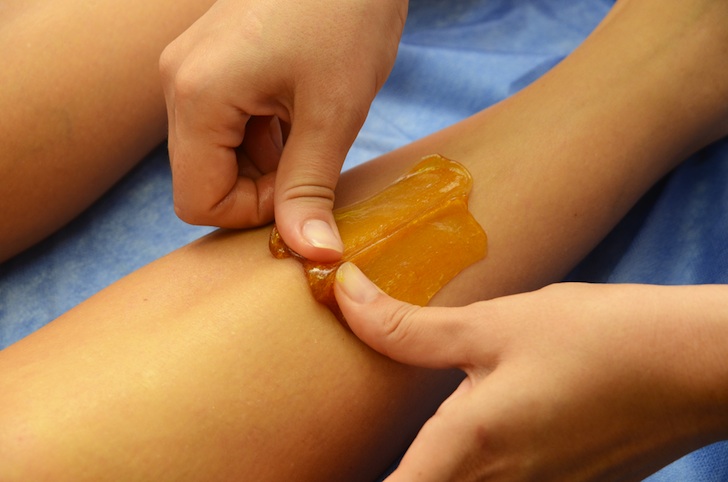
Egyptians are credited with inventing sugaring, believed to predate shaving. It’s similar to waxing, but uses a sugar-syrup paste that gets spread onto skin. When the mixture cools, it’s quickly peeled off, yanking hair out at the roots. You can eat the sweet pre-product if you use our recipe.
But why bother shaving? Women leading the Januhairy movement like Queen Esie believe that body hair can help a woman reclaim her body and redefine what is beautiful.
She offers some tips, “Most women have shaved and removed their body hair all their life that they don’t know what they look like natural, and feel shame when they body hair slowly starts growing back. If you want to stop be afraid or ashamed of your body hair and slowly start embracing it, here are a few tips:
Tip 1: Accept that you’re a hairy woman & that’s ok ? Tip 2: Wear clothes that reveal your body hair in the comfort of your home? Tip 3: Compliment your hairy body in the mirror ☀️ Tip 4: Let your body hair grow during the winter
“Once you get use to seeing body hair on your body you will slowly stop feeling shame.”
Queen Esie via Instagram
If you lived past the 90s and notice some women have bald eyebrows, that’s because women over-removed their eyebrows and they never grew back. Some women, already back then and it’s always been more common in Europe, have stopped removing armpit hair, leg hair, nipple hair and all hair down there.
Queen Esie via Instagram
Say no to a Brazil body wax
What is a Brazilian wax? In a Brazilian wax common in the west pubic hair is removed from around the external genitals, between the upper thighs, and around the anus. Some women can choose to remove all hair in the area or leave a small strip of hair in the front.
For the last 15 years or the Brazil body wax has made it common for women to remove their pubic hair as though they are pre-pubescent women. The Januhairy movement is encouraging women to keep all their growth, personal and down their intact and to embrace one’s body as it is: hairy and beautiful. It starts with a few women but if women of the world unite, you can stop shaving forever. The other option: get married and save yourself the hassle.
“Female body hair challenges not only the world’s status quo on a superficial, visual level but also our deeper stigmas and beliefs surrounding female pleasure and sex,” says Caley Draws, who discusses sex and hair.
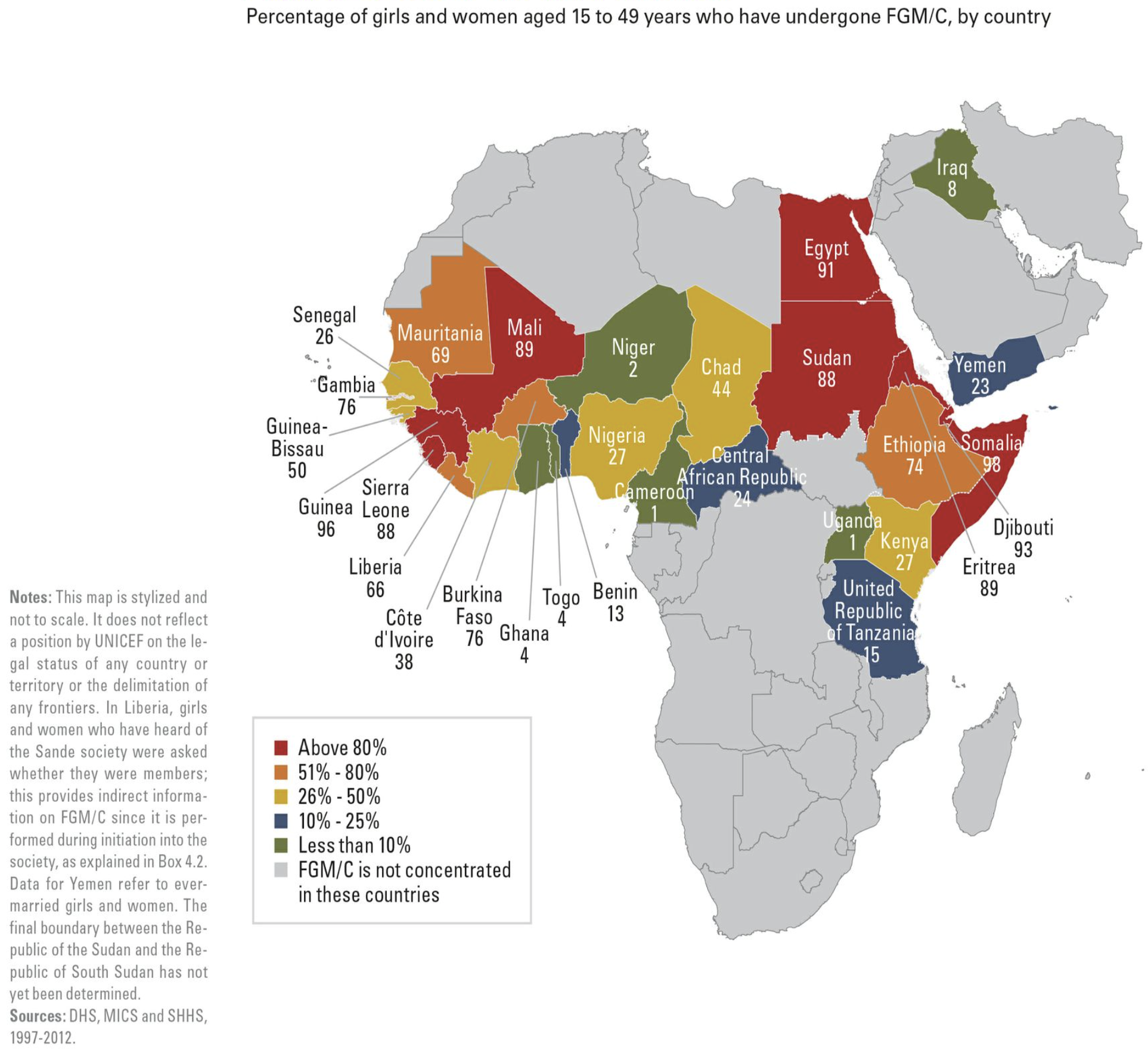
Canada criminalized female genital mutilation/cutting (FGM/C) in 1997, defining it as aggravated assault. Get caught doing it to a child or woman of any age, and expect 14 years in jail. We’d think the clinics from Toronto had shut down years ago after demonstrations against them in the 90s (it’s still happening in London), and in Islam in general – read here, yet a recent report by Islamic Relief Canada makes the uncomfortable point plain: the law exists, the practice persists, and the systems meant to protect girls and support survivors are still not ready.
There are no reliable national prevalence statistics for Canada — a gap so visible that Prime Minister Justin Trudeau publicly called for better data. That absence of measurement is not neutral. It creates the conditions for denial, and for harm to continue in private. It can happen from infancy to about age
The report released in 2025 documents what many Canadians prefer to believe cannot happen “here”: FGM/C can be arranged and performed inside Canada, including in private homes with no medical oversight. One participant recalls being told: “We must carry our culture with us wherever we are.”
Another Canadian Muslim describes the reality of secrecy and confusion when it happens on Canadian soil: “It happened in Canada… It was done in secret, at home.” And the damning detail: “The woman who did it wasn’t even a medical professional.”
In one case, the cutting was effectively imported to Canada: “My grandmother visited us… She purposely travelled to have me circumcised.”
“Vacation cutting”: taken abroad — and brought back
The report is explicit that Canada also faces the cross-border version. It is a criminal offense to remove a child from Canada for the purpose of FGM/C, yet families may still send daughters abroad. This is the most documented pathway internationally: the procedure is done during a “family trip” and returns to Canada with the harm already inflicted — and often undisclosed and most of the scars healed over.
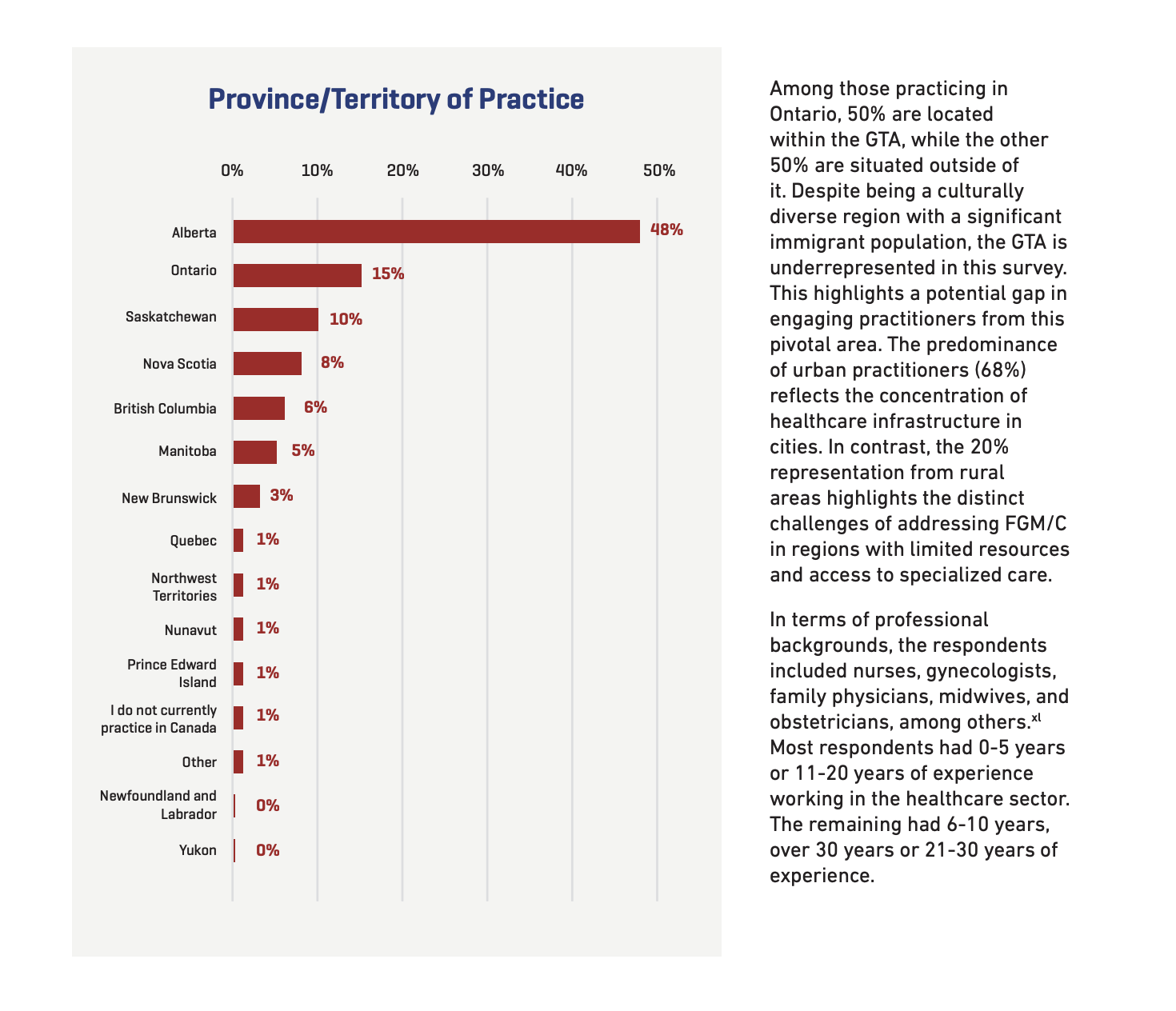
Some of the data shows the greatest amount of cases in Alberta.
Female GM in Alberta, Canada
What may be most disturbing is not only that FGM/C can happen — but that Canada’s healthcare system is still too often unprepared to recognize it, document it, or support survivors with competence and dignity. From the healthcare practitioner survey cited in the report:
Only 9% rated their knowledge as “Excellent,” while 57% rated it “Fair” or “Poor.”
48% said they were unfamiliar with the four types of FGM/C.
60% reported no formal education on FGM/C.
Stigma compounds the gap. A service provider explains that women may choose midwives from within their community to keep their status private. Another line cuts to the core: “There’s a lack of understanding… especially psychologically.”
Here is the part Canadians and new immigrants to Canada should understand clearly: aggravated assault in Canada carries a maximum penalty of up to 14 years in prison. Yet the report warns that punitive law alone does not necessarily stop the practice — and can drive it deeper underground through fear of consequences for family members.
That is why the authors emphasize a coordinated approach: training, culturally competent care, community leadership, and survivor-centered support — not just criminal statutes.
If you suspect risk or harm: who you can report to in Canada
If a child is at risk, act as if it is an emergency. According to Canada’s Department of Justice, FGM is child abuse and should be reported. If you suspect risk, contact the police. END FGM believes there are 100,000 women in Canada who are victims to FGM. To date there are zero cases of prosecution. In July 2017, a leaked internal report by the Canada Border Services Agency acknowledged that FGM/C practitioners were “almost certainly entering Canada” to engage in the practice.
Provincial or territorial child protection services (police can direct you if unsure)
School safeguarding channels (principals or designated safeguarding leads)
Hospital safeguarding teams or professional regulatory bodies
If travel is imminent and there is concern a child may be taken abroad for FGM/C, report urgently to the police. It is also illegal to remove a child from Canada for this purpose under the Criminal Code.
I was in Munich, Germany, settling into my new temporary digs when my Couchsurfing host flung open the living room windows. “Lüften!” he exclaimed ardently.
The breeze felt nice, if not a bit chilly, on that late winter afternoon. But in a land where the people love cold plunging, I made like a local and embraced the briskness.
Although it was March 2020, finding fresh air had nothing to do with the impending Covid-19 pandemic. In fact, as my host explained, lüften is a German cultural tradition practiced multiple times daily.
Simply the practice of opening windows for natural ventilation, it is considered essential for well-being and doesn’t cost a dime. Even a short burst of air has a powerful impact, with the typical session lasting from five to thirty minutes.
In the modern era, Germans have emerged as trailblazers in health and social care, but they have been practicing lüften for centuries to rid living spaces of stale air, odors, and even mold by regulating humidity. For these benefits, many landlords write lüften into their rental contracts.
Physically, lüften is a tried and true remedy for improving respiratory function, energy levels, and mood. We refresh our spaces with plants with much of the same motivation; lüften makes greenification a more immersive experience.
Lüften must invigorate a primal understanding that we are connected to the elements. When, for whatever modern reasons, we are stuck inside, we can swiftly invite in the great outdoors. Easy, breezy, beautiful.
I’ve never been a big fan of air conditioning, much preferring air that hasn’t been tampered with. It has always been a no-brainer for me to let fresh air flow inside during warmer weather, but now I happily crack the windows during the colder months too, actively recalling my old friend and the wisdom of his ancestors.
I brought lüften back with me from Germany, an unseen souvenir — often the best kind of memento.
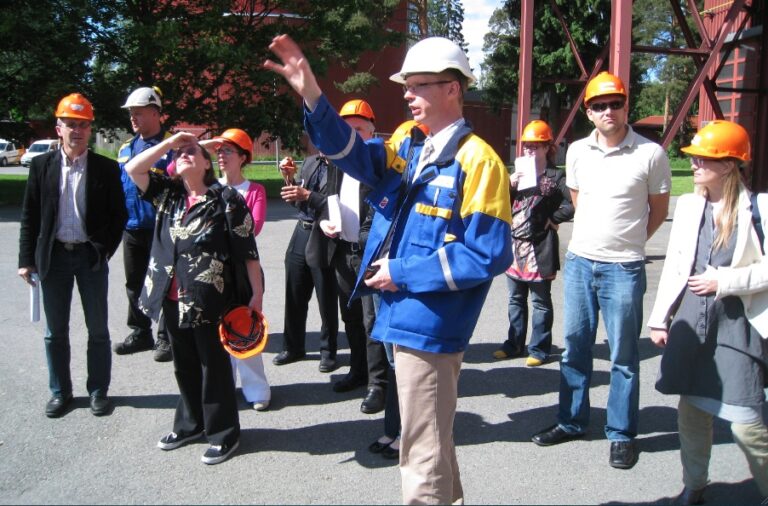
A group of international bloggers from cleantech media, Grist, Treehugger and Green Prophet visiting a power plant in Finland.
Environmental activists are finding themselves in a constant tug-of-war between advancing their causes and protecting their privacy. You might not think that your online activity could jeopardize your work, but the reality is that sensitive information can easily be accessed by the wrong people.
Consider using a free VPN for iPhone to mask your location or encrypt your communication, ensuring that your activism stays out of the wrong hands. Digital privacy is about preserving the integrity of your work in a world full of surveillance.
Environmental Activism in a Surveillance-Heavy World
Big tech companies and government agencies constantly track our online movements. While this is a concern for everyone, it’s especially critical for activists. Environmental groups often oppose powerful corporations, sometimes with controversial agendas. You might find yourself organizing a protest, sharing strategic insights with fellow activists, or researching sensitive topics – all of which could put you in the crosshairs of those who wish to silence or intimidate you. Without secure communication, your movements and plans become vulnerable to interception, which can lead to real-world consequences. This is why it’s important to encrypt emails and rely on privacy-conscious tools like a free VPN for iOS. The less information there is to steal, the harder it becomes for others to monitor or disrupt your work.
Why Public Wi-Fi and Mobile Data Aren’t Always Safe
We all love the convenience of free public Wi-Fi, especially when we’re out in nature trying to organize campaigns or connect with others remotely. But this convenience can come at a steep price. Public networks are notoriously insecure, and hackers can easily intercept your data.
Additionally, mobile data isn’t much better. While it might feel safer than a public Wi-Fi connection, mobile networks can still expose you to tracking via your device’s unique identifiers. To avoid this, always use encryption tools, such as a VPN. A VPN hides your IP address and encrypts your internet traffic, making it much harder for anyone to spy on you.
Ethical Technology Choices Matter
Many big tech companies have been called out for their lack of transparency in how they handle user data, and this can create a conflict for those of you who are trying to build a better world. Choosing ethical, privacy-focused alternatives is just as important as opting for eco-friendly products. For instance, using privacy-centric browsers helps you reduce your digital footprint. The choices you make today can push back against the surveillance ecosystem and offer a more sustainable digital future.
Digital Privacy as Part of Sustainable Living
The environmental movement often champions sustainability, and digital privacy is no exception. By reducing your reliance on centralized, data-hungry platforms, you help break the cycle of overconsumption. Instead of feeding the machine, you protect your privacy and limit the resources wasted on tracking you. Think of it like this: every time you use a privacy tool, you make a conscious decision to limit your environmental footprint in the digital realm.
Climate change is causing a number on ski hills around the world, with some shutting down for lack of predictable seasonal snow. But what people don’t know is that snow machines, using a chemical called Snowmax, or Snomax, may not be as innocuous as you think. One would imagine that snow machines just freeze water and push it out as snow, but it’s not the case with technical snow. One study even linked artificial snow, Snowmax, to increased numbers of a deadly nerve disease in this French ski village.
This shift to fake snow has raised a reasonable public question: is artificial snow safe for people who ski on it, work with it, or live nearby?
The short answer from current science is: there is no strong evidence that artificial snow is dangerous to the general public, but there are documented environmental and occupational concerns that continue to be studied.
What artificial snow is made from
Artificial snow is made from a bacteria and used in Snowmax, or Snomax to create technical snow
Artificial snow is produced by spraying pressurized water and air into cold conditions so that droplets freeze before reaching the ground. In most cases, the snow is simply frozen water. In some regions and time periods, ski operators have used snowmaking additives, most notably Snomax, which contains ice-nucleating proteins derived from the bacterium Pseudomonas syringae. These proteins allow water to freeze at slightly warmer temperatures.
The bacterium used in Snomax is non-viable (it is killed first) and it cannot grow at human body temperature. Regulatory reviews in Europe and North America have not found evidence that it causes infectious disease in humans. But not a lot of studies have been done.
Studies indexed in PubMed have examined potential health effects of artificial snow exposure. These include occupational studies of snowmaking workers and environmental monitoring of snow, air, and water. No evidence of acute illness in skiers or nearby residents linked to artificial snow.
Occupational exposure to bacterial endotoxins has been measured among snowmaking workers, particularly when handling additives in powdered form. Short-term studies, including a U.S. NIOSH health hazard evaluation, did not find clear respiratory disease in exposed workers, though sample sizes were limited.
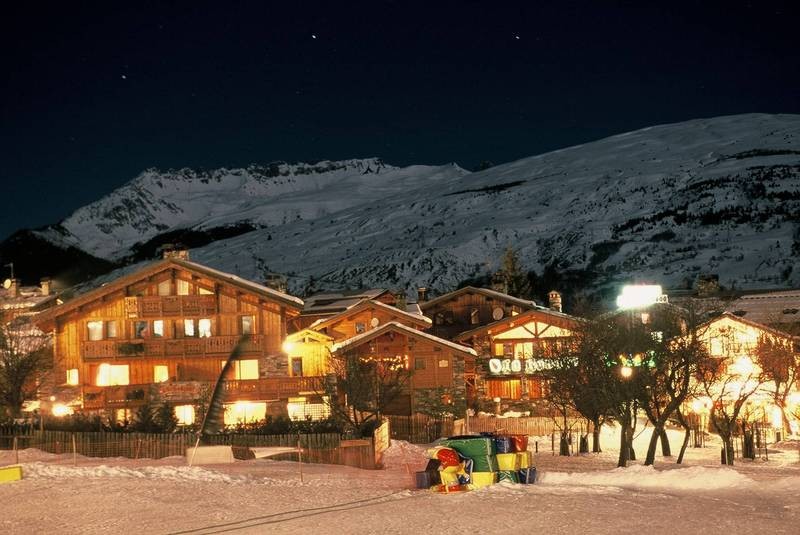
Montchavin is a ski village in the Alps that has a surge of ALS and researchers suggest mushrooms and possibly artificial snow machines might be the link
Because endotoxins are known to cause airway irritation in some contexts, researchers consider snowmaking staff — not the recreational skiers — the group most relevant for ongoing monitoring.
Recent European studies have examined artificial snow for antibiotics, bacteria, and antibiotic-resistance genes. These studies found that contaminants in artificial snow largely reflect upstream water pollution, especially from municipal wastewater treatment plants and medical facilities — not from the snowmaking process itself.
In some cases, artificial snowmaking reduced bacterial concentrations compared with intake water. Researchers also found that water storage reservoirs may help lower the transfer of pollutants into technical snow.
Despite limited evidence of direct harm, some countries and regions have restricted or banned snowmaking additives under the precautionary principle. These decisions reflect uncertainty, public concern, and environmental protection priorities rather than confirmed health hazards.
Based on current evidence artificial snow is considered safe for the general public. But as artificial snow use expands with climate change, scientists continue to study long-term environmental and health effects.
Montchavin, a small alpine village in Savoie, in the French Alps
Researchers found that this French ski village was known for eating this one thing
Amyotrophic lateral sclerosis (ALS) is often described as a cruel mystery: it’s a neurodegenerative disease that appears without warning, progresses relentlessly, and in most cases has no clear genetic cause. But research over the past decade has increasingly suggested that ALS may be shaped as much by environment as much or maybe even more than biology.
Investigations identified 14 cases by 2021, with some reports extending this to 16 people affected by ALS in the area between 1990 and 2019. These numbers are too high to be a coincidence.
One of the most compelling examples comes from a small mountainous village in the French Alps, where scientists documented an unusually high number of ALS cases concentrated within a single community. A 2024 study published in eNeurologicalSci revisits this cluster and offers new insight into what may have contributed to it: the long-term consumption of certain wild mushrooms.
The researchers examined medical histories, dietary habits, preserved mushroom specimens, and metabolic genetics of people diagnosed with ALS in the village. A consistent pattern emerged. Many of those affected had regularly eaten foraged wild fungi known as false morels collected locally over many years.
At the time, the mushrooms had been identified as a relatively less toxic species. But when mycologists re-examined dried samples using modern techniques, they discovered the fungi were actually members of the Gyromitra esculenta group, including species known to contain far higher concentrations of gyromitrin.
Why false morels raise concern
Gyromitrin is not just a cause of acute mushroom poisoning. Once metabolized in the body, it breaks down into monomethylhydrazine, a compound with well-documented neurotoxic and genotoxic effects. Monomethylhydrazine can damage DNA and interfere with cellular repair processes, mechanisms increasingly suspected to play a role in neurodegenerative disease.
In this Alpine village, which is home to a ski resort, false morels were not eaten once or twice. They were consumed seasonally, often year after year, prepared according to traditional methods believed to reduce toxicity but not fully eliminate it. The study suggests that this pattern of repeated low-dose exposure may be particularly relevant.
One of the most important conclusions of the research is what it does not support. ALS in this community does not appear to be primarily genetic.
The vast majority of ALS cases worldwide are classified as sporadic, meaning they are not caused by inherited mutations. This study reinforces that understanding. However, genetics still played a role in how individuals responded to environmental toxins.
Many ALS patients in the village were found to have slow- or intermediate-acetylator profiles, linked to variations in the NAT2 gene. People with these metabolic traits process certain toxins more slowly, allowing harmful byproducts to persist longer in the body. This helps explain why some individuals became ill while others, exposed to similar environments, did not.
Rather than genetics causing ALS directly, the findings point to a gene–environment interaction, where biology influences vulnerability to external exposures.
A pattern beyond one village
The French findings are not isolated. Similar concerns about hydrazine-containing mushrooms have been documented in North America, including a recent long-term assessment of mushroom poisonings in Michigan. Earlier studies in France also identified ALS clusters linked to genotoxic fungi, reinforcing the idea that repeated dietary exposure deserves serious attention.
Researchers are careful not to claim that false morels alone cause ALS. Toxin levels vary widely between species and even within individual mushrooms. Still, the accumulating evidence suggests that some traditional foraging practices may carry neurological risks that were previously underestimated.
Other factors that could have contributed to the onset of disease is high levels of athleticism, tobacco smoking, and exposure to chemicals (like Snomax used for snowmaking) were mentioned in the study.
Public discussion of ALS often centers on genetics or well-known figures living with the disease, including Israeli-American entrepreneur Jon Medved, who has spoken openly about his diagnosis. Like most ALS cases, Medved’s is not genetic, underscoring how urgently researchers need to understand environmental contributors. Some of the companies he’s help find as an early stage investor might help solve the questions.
Recent studies increasingly frame ALS as an exposome-related disease, shaped by a lifetime of interactions with chemicals, pollutants, dietary compounds, and naturally occurring toxins. These influences may accumulate silently for decades before symptoms appear. That’s why we need to avoid pesticides and microplastics as much as possible from an early age.
What the Alpine village teaches us
The French Alpine study does not offer a simple explanation or a single culprit. What it offers instead is something more valuable: a realistic picture of how everyday exposures, cultural practices, and biological vulnerability can intersect.
ALS may not arise from one dramatic event, but from many small ones over time. In that sense, the story of this village is less about mushrooms alone, and more about how closely human health is tied to the environments we inhabit, harvest from, and trust.
___
In the scientific literature the French village is often referred to as Montchavin (Tarentaise Valley) rather than being named prominently in headlines, but this is the community where researchers identified the ALS cluster linked to repeated consumption of false morels (Gyromitra species) in multiple studies by Lagrange, Vernoux, Camu, and colleagues.
Wellness benefits are changing how people evaluate coverage. Along with protection against hospital bills, many now want support for healthier daily habits. If you are considering health insurance for family, wellness features can be a helpful extra, but only when the medical coverage is solid.
This guide explains gym-linked perks, step-based rewards, and health rewards in simple terms, so you know what you are getting.
What Wellness Benefits Mean in Health Insurance
The core of health insurance mainly covers eligible medical and hospitalisation expenses. It may also include pre- and post-hospitalisation costs, day care procedures, and preventive check-ups, as per the plan. Wellness benefits are add-ons that reward healthy habits, helping families stay consistent with prevention before illness starts.
Gym, Steps, and Health Rewards Explained
Wellness features are usually offered through a programme linked to your policy, often via an app or partner services. Some plans also mention fitness-linked discounts or benefit enhancements as part of the offering. The value depends on how easy it is to use and how meaningful the reward is for your routine.
Step Tracking and Activity Rewards
Step rewards typically work on consistency. Activity is tracked through a phone app or wearable device, and rewards unlock when you meet regular movement goals. Benefits may appear as vouchers, discounts, wellness credits, or access to services, based on programme rules.
Gym Access and Fitness Partnerships
Gym benefits are often delivered through tie-ups rather than reimbursements. The programme may provide discounted access to gyms, fitness centres, yoga classes, or guided routines. For working couples, this reduces friction and helps maintain consistency.
Health Rewards Linked to Preventive Care
Many health insurance plans highlight preventive check-ups as part of staying fit and active. Wellness rewards can be linked to completing screenings or maintaining basic health monitoring, which helps adults avoid delaying early care.
Where Wellness Benefits Add Real Value
Wellness benefits tend to help most when they keep families moving consistently and make preventive screening easier to complete. They can also make the plan feel relevant throughout the year, rather than only during emergencies.
Where Wellness Benefits Do not Replace Medical Cover
Wellness rewards are not a substitute for strong protection during hospitalisation. Continually evaluate claim-facing terms first, including coverage for hospital stays and related expenses around treatment.
Making Wellness Benefits Work for the Whole Household
Wellness benefits create value only if they fit your family’s lifestyle.
For couples, step challenges and gym access can support shared routines.
For children, the benefit is indirect, but active parents often create healthier household habits.
For seniors, wellness should stay realistic. Many elderly parents may not want app tracking or targets. In such cases, keeping parents health insurance separate can be practical, while the rest of the household uses wellness programmes.
Parents-focused cover often highlights hospitalisation support and may include expenses around hospital stays and day care procedures, depending on the policy.
How to Choose Health Insurance Plans for a Family With Wellness Benefits
When comparing health insurance plans for family, treat wellness as a bonus, not the foundation.
Start With Medical Strength
Select a plan that offers strong hospitalisation cover and supportive features around treatment, such as pre- and post-hospitalisation expenses and day care procedures, based on the policy wording. A good medical base is what protects savings during a serious event, which is a key reason people choose family health insurance.
Then Evaluate Wellness
Use a simple filter:
Ease of use for the members who will participate.
Clear rules on how rewards are earned and redeemed.
Rewards that match your routine.
Comfort with data sharing and app permissions.
Also check whether rewards apply at renewal, whether they can be shared across members, and whether benefits lapse if activity drops. Keep expectations modest. Wellness is designed to support routines, while the hospitalisation cover remains the primary financial safeguard.
Final Thoughts
Wellness benefits can make health insurance for family feel relevant on ordinary days. Choose medical protection first, then pick wellness features that fit your lifestyle. If parents need a different approach, separate parents health insurance can keep usage practical while your main plan stays focused on your household.
Dreaming big is good. It gives us something to strive for. But calling failed projects sustainable from the outset is pitfall that architects should avoid. For years, Saudi Arabia’s vision for The Line — a 120-mile mirrored city slicing through the desert — was marketed as the future of sustainable urban living. No cars. No emissions. Everything within five minutes. A climate-friendly city built from scratch.
But as a sweeping investigation by the Financial Times now documents, The Line has collided head-on with something no amount of ambition can override: physics, finance, and ecological reality.
Entrance to the city from the Red Sea
According to the FT’s reporting, based on interviews with more than 20 former architects, engineers, and executives, the project unravelled under the weight of its own contradictions. They spoke anonymously for fears of lawsuits. A quick digging into PR and you can find which ones readily took the money and tried to make the idiotic project come to life. Costs for the “eco” city ballooned into the trillions, engineering assumptions failed the most basic stress tests, and foreign investment never arrived at the scale Saudi planners expected.
The Line, a rendering of a 15 minute city
One former architect recalled warning leadership that suspending a 30-storey structure upside-down above a marina could turn it into a “pendulum” — swaying, accelerating, and eventually failing by dropping into the marina. Another described sewage systems that required hundreds of shuttle cars to move waste uphill because gravity no longer worked in a vertical fantasy city. Even flushing a toilet became a design problem. That’s what happens at Burj in the UAE where poop trucks need to unload the sewage daily.
At the center of The Line and the Neom project stood Crown Prince Mohammed bin Salman, whose vision for Neom was intended to catapult the kingdom beyond oil and into a post-carbon future. Yet the investigation shows how dissent was discouraged, timelines were politically fixed, and feasibility studies were often replaced by renderings.
Green on the Surface, Fragile Underneath
A 15 minute city, 120 miles long
From a climate perspective, the cracks run deeper. The FT reports that building just the first 20 modules of The Line would have required more cement annually than France produces, and up to 60% of global green steel capacity — a sobering reminder that “green” materials are not infinite. Cement is definitely not a sustainable building material. When a single project distorts global supply chains, sustainability claims begin to ring hollow.
Urban planners have long warned that megaprojects often fail not because of lack of technology, but because they ignore human behavior and ecological limits. The late urbanist Jane Jacobs famously argued that cities thrive through incremental complexity, not total control. The Line attempted the opposite: a sealed, pre-engineered world with no room for organic growth.
Ecologists raised additional alarms. Bird migration experts cited by BirdLife International flagged the mirrored wall as a potential mass-collision hazard for millions of birds moving along the East Africa–West Asia flyway — an issue that design tweaks like dotted glass could not realistically solve.
A Pattern We’ve Seen Before
Masdar City was supposed to be the world’s first zero waste city. It’s basically offices and show-room now.
This is not the first time a futuristic desert city promised sustainability and delivered disruption instead. From Egypt’s stalled administrative capital to past “eco-cities” in China that never filled with people, the lesson repeats: cities are living systems, not machines.
It’s a useful contrast to projects like Masdar’s eco-city experiment in Abu Dhabi, which has evolved in fits and starts over time—more incremental, less totalizing than a single, 120 mile gesture. Green Prophet covered Masdar early on, including its first 500 homes. We’ve been there, we’ve seen the spectacle.
The world needs more sustainable architects like Ronak Roshan who sees the location, the land, and the people.
The FT notes that Saudi Arabia has already spent over $50 billion, with much of the construction now slowed or paused. People already living in villages nearby have been killed, arrested for life, with a few on death row. What remains are colossal foundations, excavated deserts, displaced communities, and a scaled-down ambition that bears little resemblance to the original vision.
The Line construction from space in 2023
The failure of The Line is not a failure of imagination. It is a failure of restraint by western architects and planners who go along with the charade. Who is holding these firms accountable? This is actually a reasonable kind of project for the UN to take on and challenge.
Climate-resilient futures will not be built by single, monumental gestures, but by repairing existing cities, restoring ecosystems, and working with land rather than against it. The most sustainable city is rarely the one that looks most radical in a rendering.
As one urban expert quoted by the FT put it bluntly: “As a thought experiment, great. But don’t build thought experiments.
This is a luxurious recipe that requires a taste for exotic flavors, and willingness to see it through its stages. It’s based on the dark meat of chicken, not an expensive ingredient, yet makes a luscious, aromatic, festive dish. With fried onions, almonds and raisins to garnish, it’s divine; a savory feast with little pops of sweetness from the raisins, piled onto a platter of golden rice.
Mandi expresses the sensuous craft of Middle Eastern cooks who take traditional ingredients to their fullest delicious potential. For the adventurous Western cook, it’s worth buying the spices needed here, not only for this one recipe, but because once you’ve savored them, you’ll want to cook with them again and again.
Start by assembling the spices for the Hawaij spice blend (ingredients listed below). Toast them briefly in a dry skillet, then crush them to a powder in a coffee or spice grinder. Marinate the chicken pieces in a paste of Hawaij, turmeric, salt and olive oil. Leave the well-massaged chicken in the fridge overnight optimally – although in a pinch, 1 hour will do.
About 2 hours before you intend to serve, proceed to the next stages. Don’t be intimidated by the length of the instructions: they’re all simple steps. Follow the recipe in the order laid out below for greatest ease.
You will need an electric spice grinder; if none available, use powdered spices (not traditional but more realistic ); a skillet, a large pot, and a rack that fits into the pot for steaming the chicken. The author suggest using a wire trivet such as those that come with instant pots, if no other rack available. You’ll also need a baking tray and if possible, a rack to fit over it.
4 whole chicken thigh and drumstick pieces (skin on, bone in)
Hawaij spice mix
2 tablespoons olive oil for marinade
1.5 teaspoons kosher salt or 1 teaspoon table salt
For the Rice
3 cups basmati rice
3 bay leaves
2 teaspoons spice mix (from the Hawaij spice blend)
5 teaspoon turmeric
1/2 teaspoon saffron strands (plus 2 tablespoons hot water (optional))
3 dried limes (optional)
1 teaspoon salt
4.5 cups water and broth (see instructions below)
1 cup vegetable oil for frying onions
For the Garnish
4 small onions or 2 large onions
1/4 cup slivered almonds or cashew nut halves
1/4 cup raisins
1 tablespoon olive oil
Optional: 1/2 cup chopped parsley
The Day Before:
Make the Hawaij spice blend Using whole spices
Place all the spices except for the turmeric in a small skillet. Toast on medium heat for 1-2 minutes, stirring constantly to avoid burning. Remove them from the heat as soon as the fragrance rises.
Allow the spices a few minutes to cool, then grind until powdered.
If using ground spices, reduce the quantities as indicated in the recipe.
Set aside 2 teaspoons from the spice mix in a separate small bowl or jar; this will flavor the rice later.
Stir in 1/4 teaspoon turmeric to the remainder of the spice mix, with 1-1/2 teaspoons kosher salt. Add 2 tablespoons olive oil and stir well to make a paste. This is the marinade for the chicken.
Massage the oily spice blend onto the chicken pieces thoroughly.
Place the marinated chicken in an airtight container and marinate overnight, or 1 hour in a pinch.
The Next Day
Fry the Onions
Slice the onions thinly.
Heat 1 cup of vegetable oil in a large pot.
Fry the onions over medium heat, stirring often, 10-15 minutes. Remove them from the heat when they’re golden; don’t let them frizzle.
Leave the oil and about 3 tablespoons of the fried onions in the pot for steaming the chicken later.
Drain the remaining fried onions on paper towels. Set aside to garnish the finished dish.
Cook the Chicken
To the pot with the fried onions and oil inside, add the Hawaij spice mix that was set aside for the rice.
Carefully pierce the optional dry limes a couple of times using a sharp knife. Add them to the pot. Add the bay leaves.
Stir everything in the oil on medium heat for a few minutes.
Add 2 cups of water.
Place the rack or trivet in the pot. Place the marinated chicken pieces on the rack.
Close the pot lid and steam the chicken for 50 minutes on medium heat. Check it every 10 minutes to ensure there is enough water. Add more if it looks like it’s drying up.
There will be a certain amount of broth in the pot. Reserve the broth.
Remove the chicken to a baking tray; if possible on a wire rack.
Brush with 1 tablespoon olive oil and bake for 20 minutes at 400F.
Put the chicken aside, covered. There will be one more step with the chicken 5 minutes before serving.
Time-Saving Steps
Prep the rice and the garnish while the chicken steams.
Wash the rice until the water runs clear. Cover with water and soak for 10 minutes
Optional (and delicious) saffron: In a mortar and pestle, grind the saffron to a fine powder. Lacking mortar and pestle, coarsely crush the saffron threads with a rolling pin on top of a chopping block or other surface that can take the blows.
Soak the saffron in 2 tablespoons of hot water and let it bloom 5 minutes.
Prepare the almond/raisin Garnish:
Fry the almonds on medium heat with 1 tablespoon olive oil. Stir continuously to avoid scorching. Remove to a bowl when golden.
Add the raisins to the skillet and toast for 2 minutes. Combine with the almonds.
Now Cook the Rice:
When the chicken has steamed and cooked through, strain the broth remaining from the steaming.
Use a measuring cup to measure out how much broth you have. Add water to get exactly 4-1/2 cups of liquid.
Pour the liquid back into the same pot. Add to it the 1-1/2 teaspoons turmeric, the salt and the bloomed saffron in its water. Taste for salt; adjust if needed. Allow the liquid to come to a boil.
Add the rice to the broth/water and stir a few times to combine. Allow it to come to a boil again, uncovered, for a few minutes. Keep the heat at medium.
Place a paper towel on top of the pot and then cover it with the lid. The paper towel absorbs some of the steam, the result being rice cooked through with separate grains. Lower the heat to minimum. Cook for 20 minutes, undisturbed.
After 20 minutes, turn the heat off and fluff the rice with a fork. Put the lid back on the pot, minus the paper towel. Let it to stand 10 minutes.
Last Step For the Chicken:
Broil the chicken for 5 minutes until golden brown. Remove and keep warm.
To Assemble:
Spread the yellow rice on a large platter.
Over the rice spread half the fried onions, almonds and raisins.
Place the the chicken on top, then add the remaining fried onions, raisins and almonds. Garnish with chopped parsley if desired.
Dry limes and saffron are optional, but highly recommended for the full traditional flavor.
The announcement of Murat Kurum as President-Designate of COP31 marks a pivotal moment for global climate diplomacy and for Turkey’s evolving role on the international climate stage.
With COP31 expected to be held in Antalya, climate negotiations move into the Mediterranean basin—one of the fastest-warming regions on Earth. Turkey is already confronting the front-line impacts of climate change: prolonged droughts stressing water systems, intensifying wildfires, severe flooding from extreme rainfall, coastal erosion, and growing pressure on food, energy, and urban infrastructure. Hosting COP31 places these lived realities at the center of global decision-making.
Turkey occupies a unique geopolitical and economic position. As a G20 economy and a bridge between Europe, Asia, and the Middle East, it sits at the intersection of climate vulnerability and climate opportunity. It is both an emerging economy still expanding its energy and industrial base, and a country increasingly aware that resilience, adaptation, and sustainability are no longer optional—they are economic and social imperatives. It has also been a rising threat to global stability as it’s given refuge to the Muslim Brotherhood and Hamas militants. Every hotel and many restaurants in Turkey require you to go through weapons detections devices.
In recent years, Turkey has made tangible contributions to climate action. The country has rapidly scaled renewable energy capacity, particularly in solar, wind, and geothermal power, while reducing reliance on imported fossil fuels. It has launched nationwide zero-waste initiatives, invested in climate-resilient urban transformation, and prioritized disaster preparedness following increasingly frequent climate-linked extreme events.
Under Murat Kurum’s leadership, urban resilience, energy-efficient buildings, and sustainable land use have become core elements of environmental policy. But they still killed 4 million dogs this past year. Like it’s always been, Turkey is between the old and the new, the east and the west.
COP31 in Antalya offers an opportunity to re-center global climate talks on implementation. The road from COP30 to COP31 will be defined by delivery—turning national commitments into real emissions reductions, adaptation projects, and financing mechanisms that reach vulnerable communities. Turkey is well positioned to help bridge long-standing divides between developed and developing countries, between ambition and affordability, and between mitigation and adaptation.
As COP31 President-Designate, Murat Kurum’s role will be to help shift the global climate agenda from negotiation fatigue to measurable progress. For Turkey, hosting COP31 is a chance to demonstrate leadership grounded in pragmatism, regional solidarity, and real-world solutions—showing that climate action can strengthen economies, protect communities, and accelerate a fairer, more resilient development path.The world’s journalists will be there and hopefully with a watchful eye.
Olive trees are uprooted from Europe to be planted in treeless Dubai
In another case of dubious Dubai, a UAE developer is making an ecological housing project and is advertising that they are uprooting ancient olive trees from the Mediterranean to plant in Dubai. We see what happens to trees planted in Dubai and then neglected. There is something deeply wrong with calling the uprooting of ancient olive trees “eco,” no matter how many studies are cited or how softly the word wellness is whispered into the sales brochure.
When Mediterranean olive trees—some said to be up to 2,500 years old—are lifted from their ancestral soil in Spain and Italy and shipped to Dubai to decorate a luxury development, this is not sustainability. It is ecological displacement dressed up as design. East tree is reported to have cost about $270,000 USD. So who is selling them?
These trees are not ornaments but are living archives. Many took root around the time of Ancient Greece, long before real estate prospectuses and infinity pools. Olive trees anchor soil, sustain biodiversity, and hold cultural memory. They belong to landscapes shaped by centuries of climate, wind, microbes, and human care. Their value is not measured in dirhams.
The idea that a tree costing AED 1 million somehow justifies its relocation is the logic of extraction, not regeneration.
Developments like MAG’s Keturah Reserve—rising in Mohammed Bin Rashid City—lean heavily on the language of biophilic design and mental wellbeing, and even point to a study on how trees are good for people. Yes, people thrive when connected to nature. But whose nature? And at what cost?
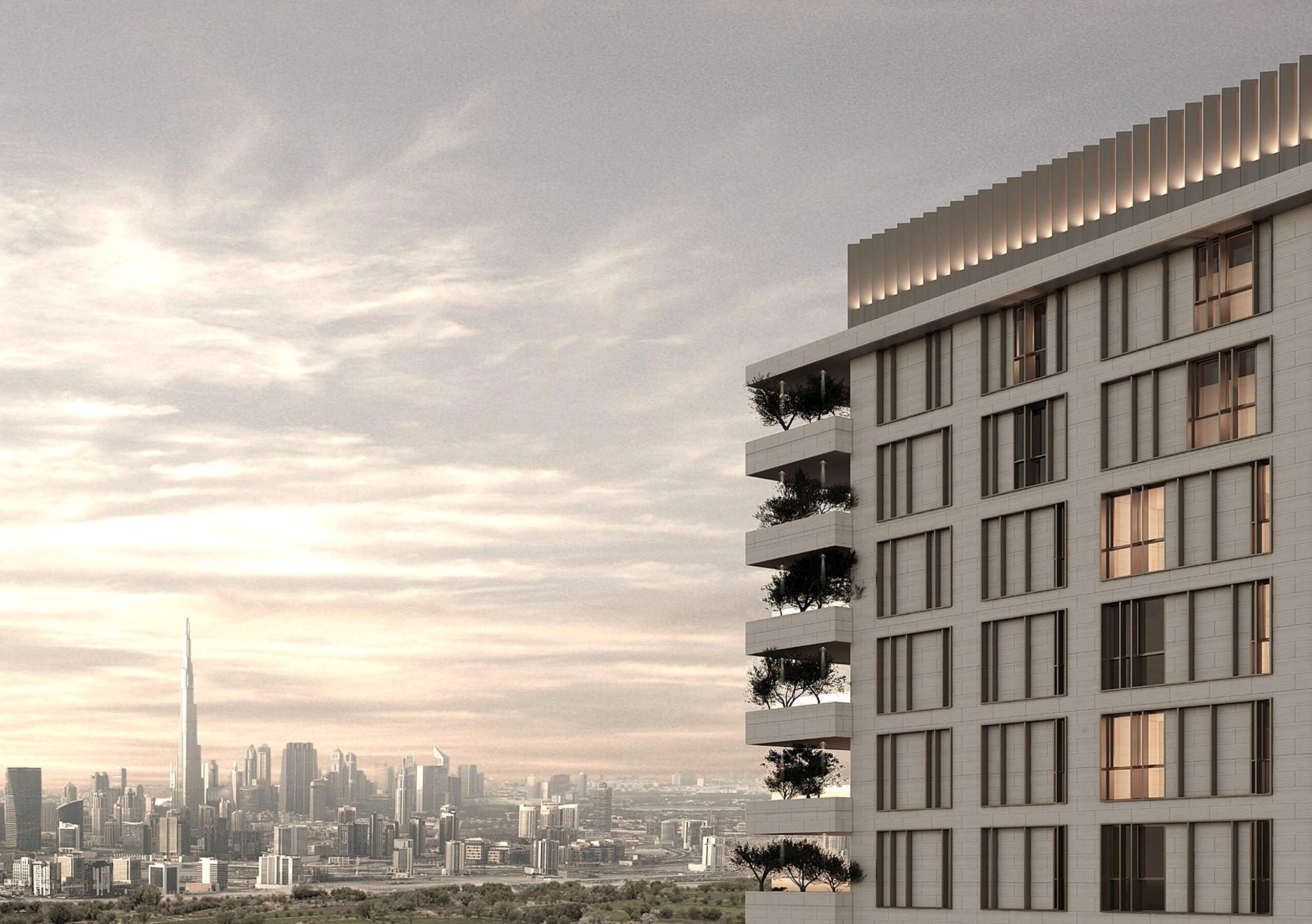
The developers say that they are going to bring the trees to their project Keturah Reserve, an apartment complex of the 533 low-rise apartments, 93 townhouses and 90 villas.
Uprooted olive trees to be planted in the sky
Flying centuries-old trees across continents via specialized cargo burns enormous fossil fuels. Replanting them in a desert climate—no matter how advanced the irrigation or “heritage preservation techniques”—places immense stress on organisms that evolved for Mediterranean seasons, soils, and rainfall patterns. And we’ve seen that the UAE is not capable of taking care of trees so survival rates are uncertain. Long-term ecological function is compromised. And the original landscapes are left poorer, stripped of irreplaceable elders.
“Every element enhances sustainability and harmony with the environment, so residents will thrive,” said Talal M. Al Gaddah, CEO and Founder of the Keturah luxury brand. “They bring history, calm, and a sense of permanence,” said Talal, who has conceived to build a natural gallery (Joni Mitchell called it a Tree Museum), where a forest of trees from around the world blend with art installations and sculptural dry gardens, just a short drive from Downtown Dubai.
This is not harmony with the environment but ecological laundering.
True biophilic design does not begin with removal. It begins with respect. If developers genuinely care about wellbeing, they would invest in native desert ecologies—ghaf trees, indigenous shrubs, living shade systems—species adapted to place, water scarcity, and heat. They would restore land rather than import symbolism.
Ancient olive trees should remain where they stand, rooted among the communities, farmers, birds, fungi, and histories that shaped them. They are not transferable assets. They are not centerpieces. They are elders.
“Money can buy old things, But it cannot give you a history and culture that was never yours to begin with.
People have rotted in prisons for smuggling antiquities less than half the age of those trees,” says Michael James, a fruit tree grafting expert in the US.