
Water doesn’t behave the same way twice. It absorbs sound, distorts it, carries it, and sometimes erases it altogether. That instability is where artist Tarek Atoui works. We’ve seen it in Bjork’s live concerts and now Atoui is bringing his installation to the Tate.
This October, Atoui will create the next annual Hyundai Commission for Tate Modern’s Turbine Hall, one of the most demanding spaces in contemporary art. Rather than filling it with volume or spectacle, Atoui is likely to do something quieter — letting sound move through materials. (Our feature and review on In The Dark bears some likeness to this upcoming event.)
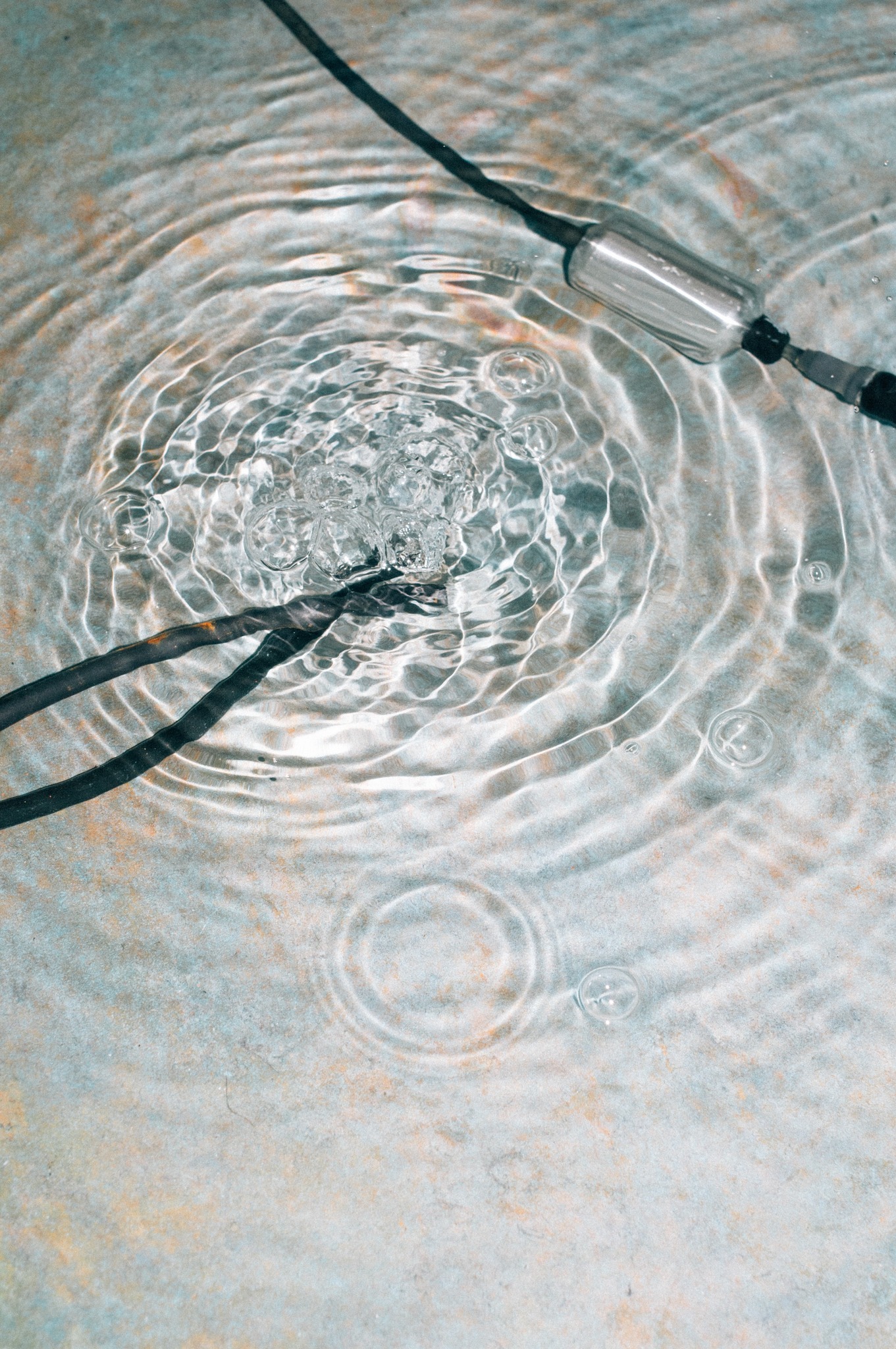
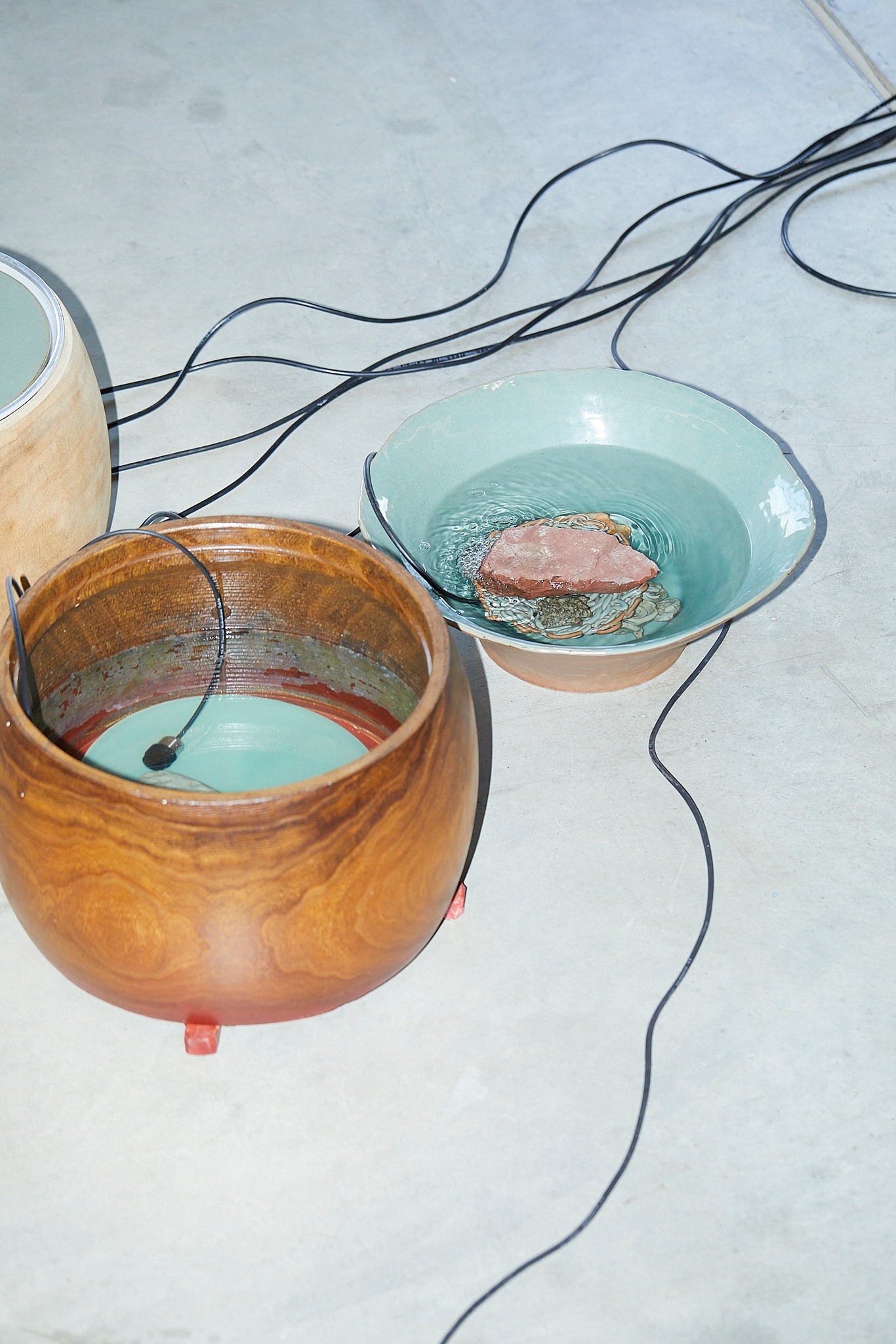
Born in Beirut, Lebanon in 1980 and now living in Paris, Atoui has spent years building instruments that don’t sit comfortably in concert halls. Many of them involve water, glass, and ceramics — materials that react to sound instead of simply producing it. Water ripples, bowls hum, glass vibrates at the edge of breaking. Sound becomes something you encounter physically, not something delivered from a stage.
Much of Atoui’s work takes place in low light or near darkness. When the room dims, listening changes. You stop scanning for meaning and start paying attention to sensation: vibration in the floor, resonance in a vessel, a faint shift in air pressure. Sound moves slowly, negotiated through touch, breath, and mechanical movement.
Water, glass, and ceramics aren’t supporting actors here. They carry the whole piece.
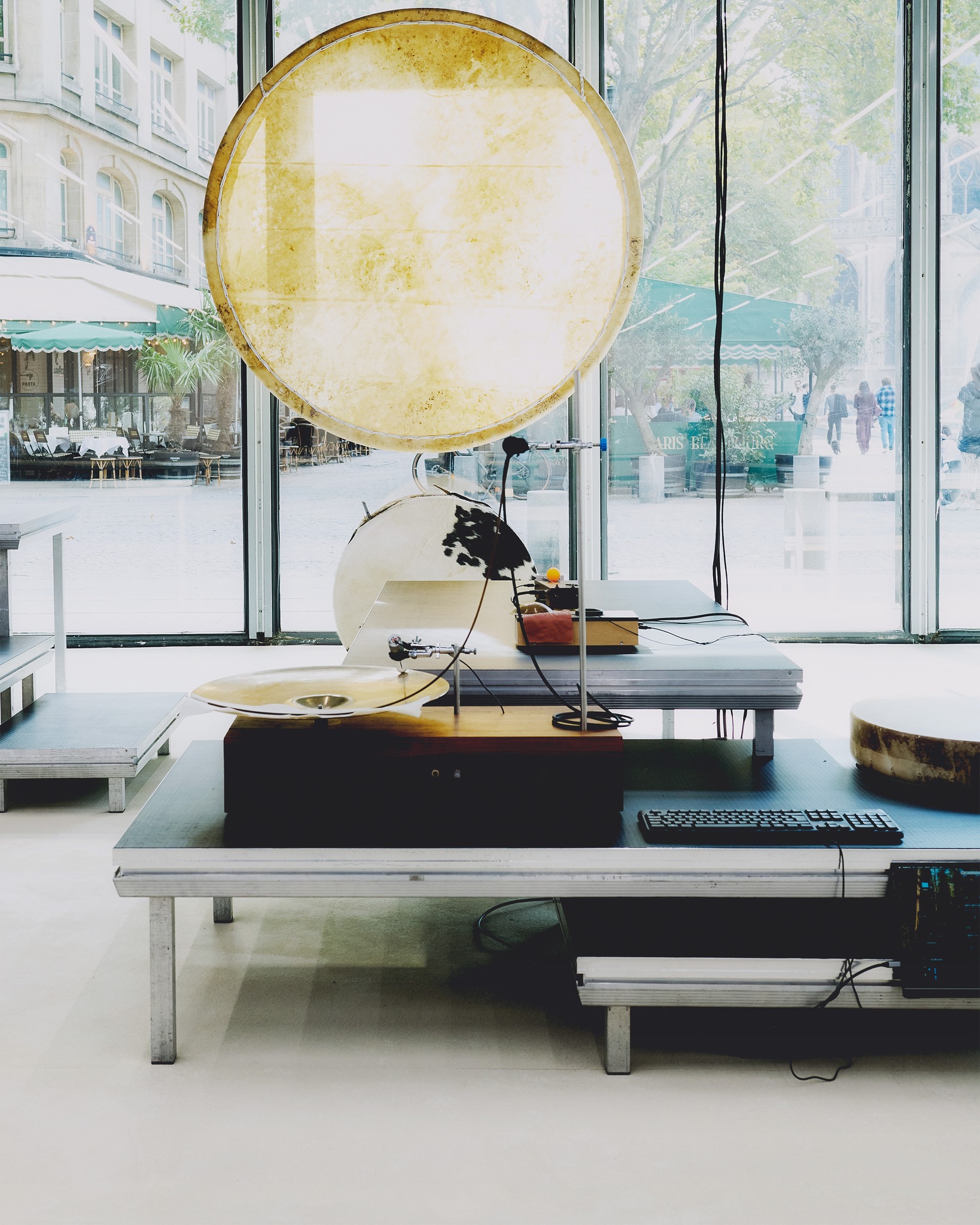
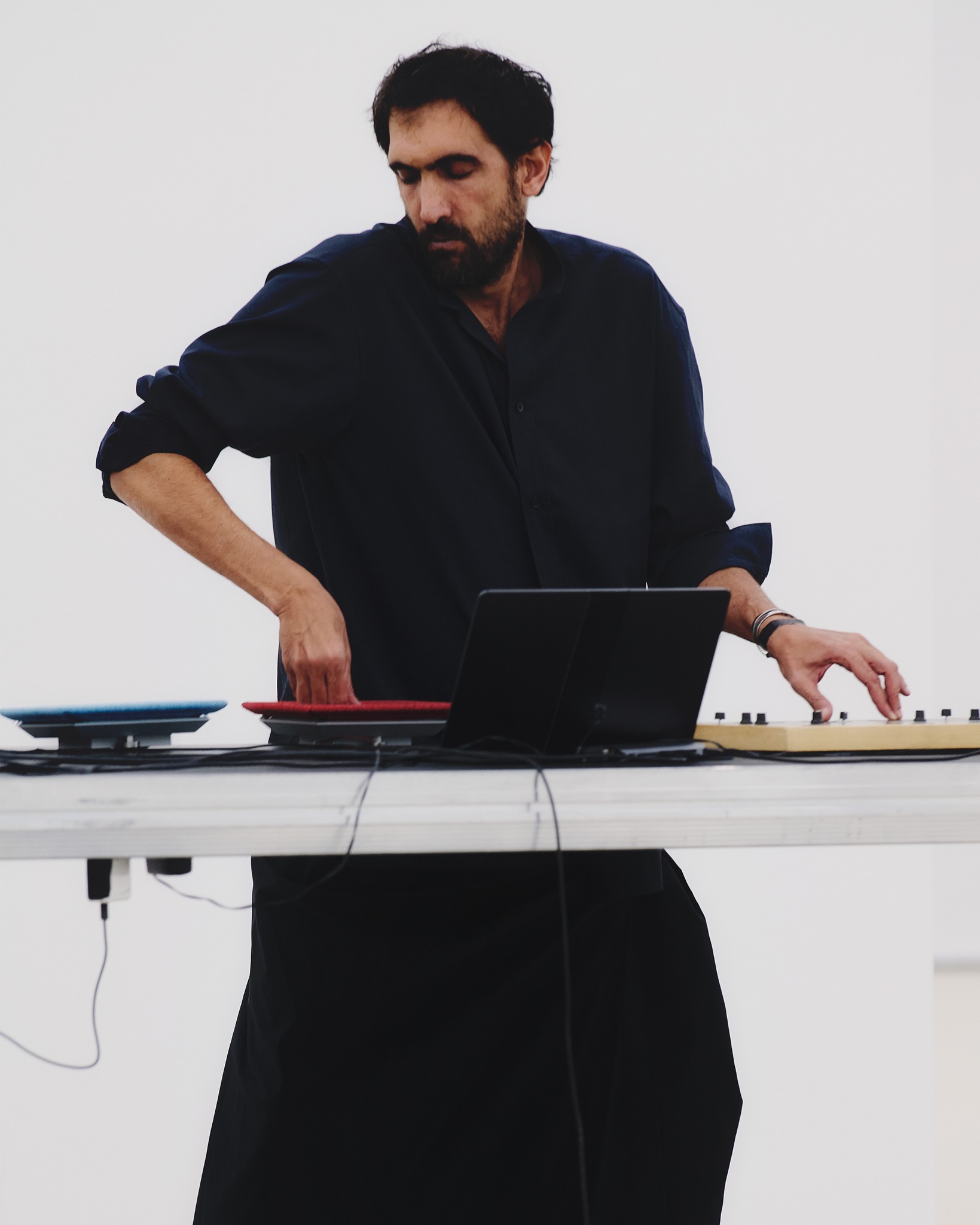
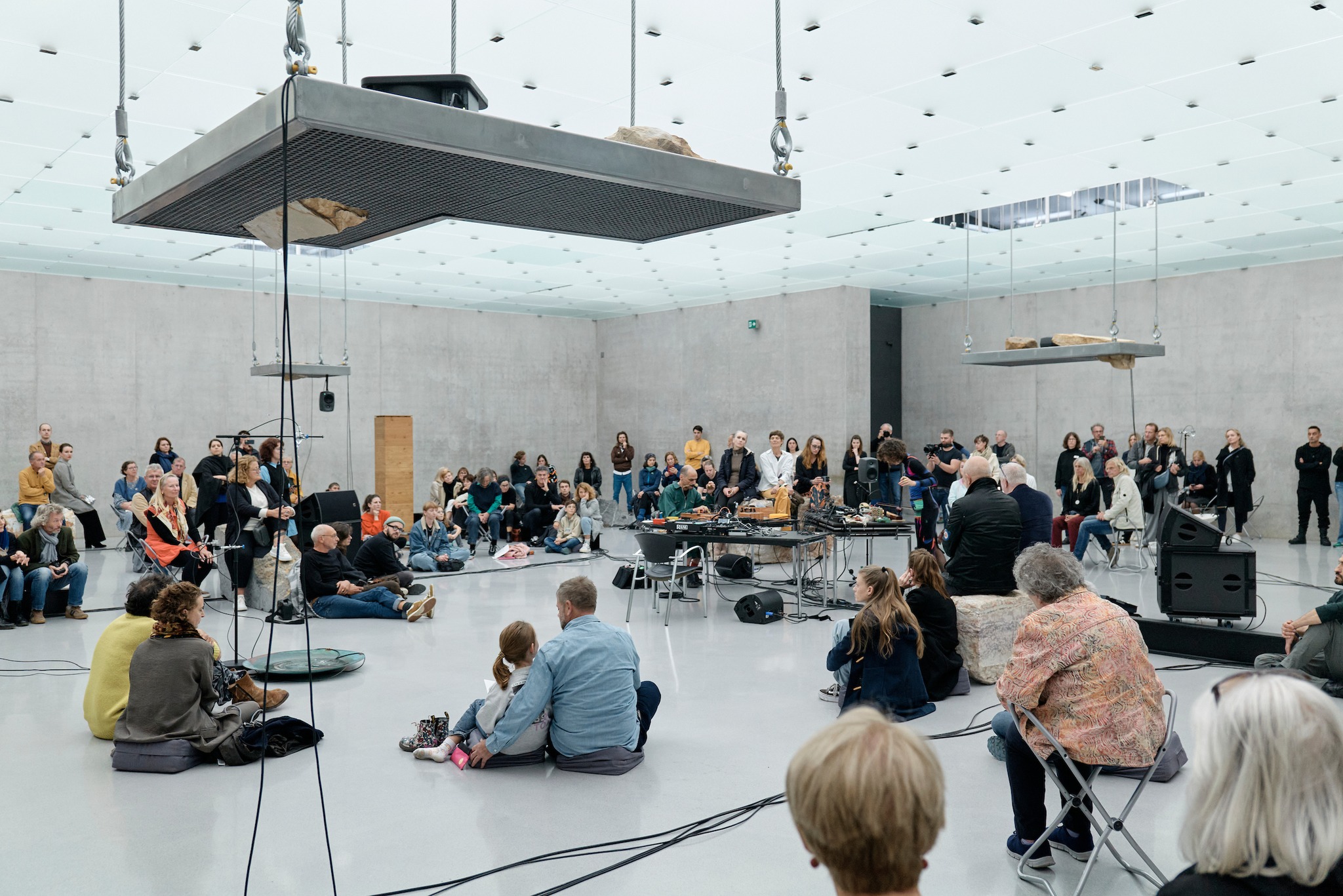
Atoui’s instruments are often activated by visitors rather than performers. A hand turns a surface. Breath enters a pipe. A motor stirs liquid in a shallow bowl. Sound emerges unevenly, depending on how gently or insistently the materials are engaged. Nothing is fixed.
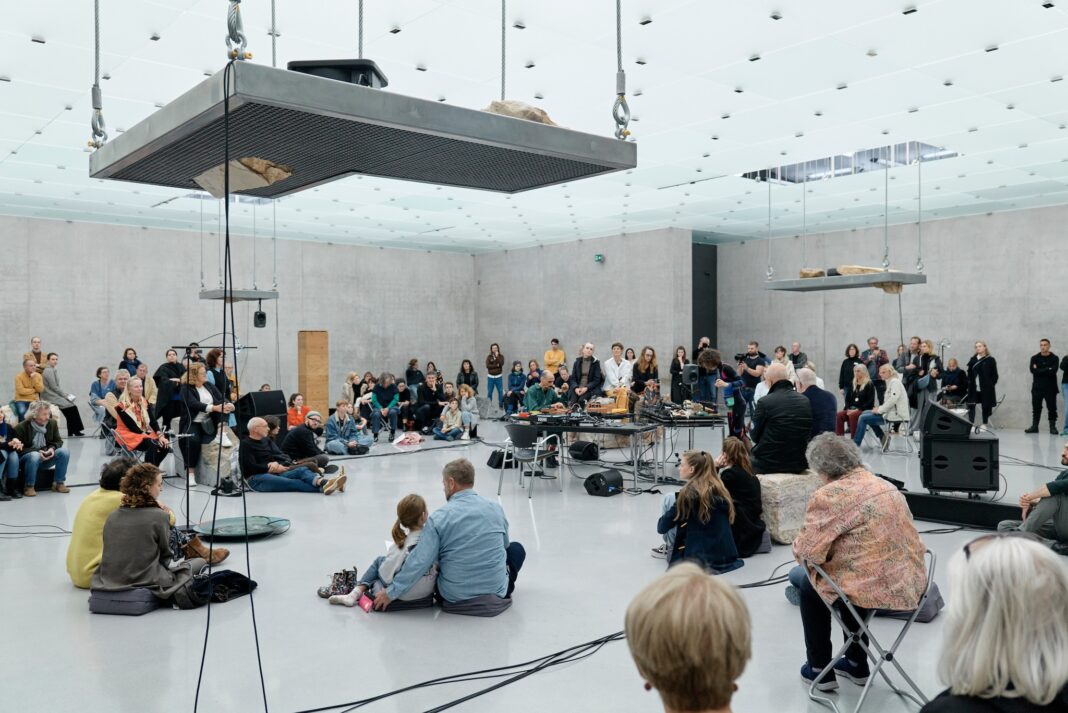
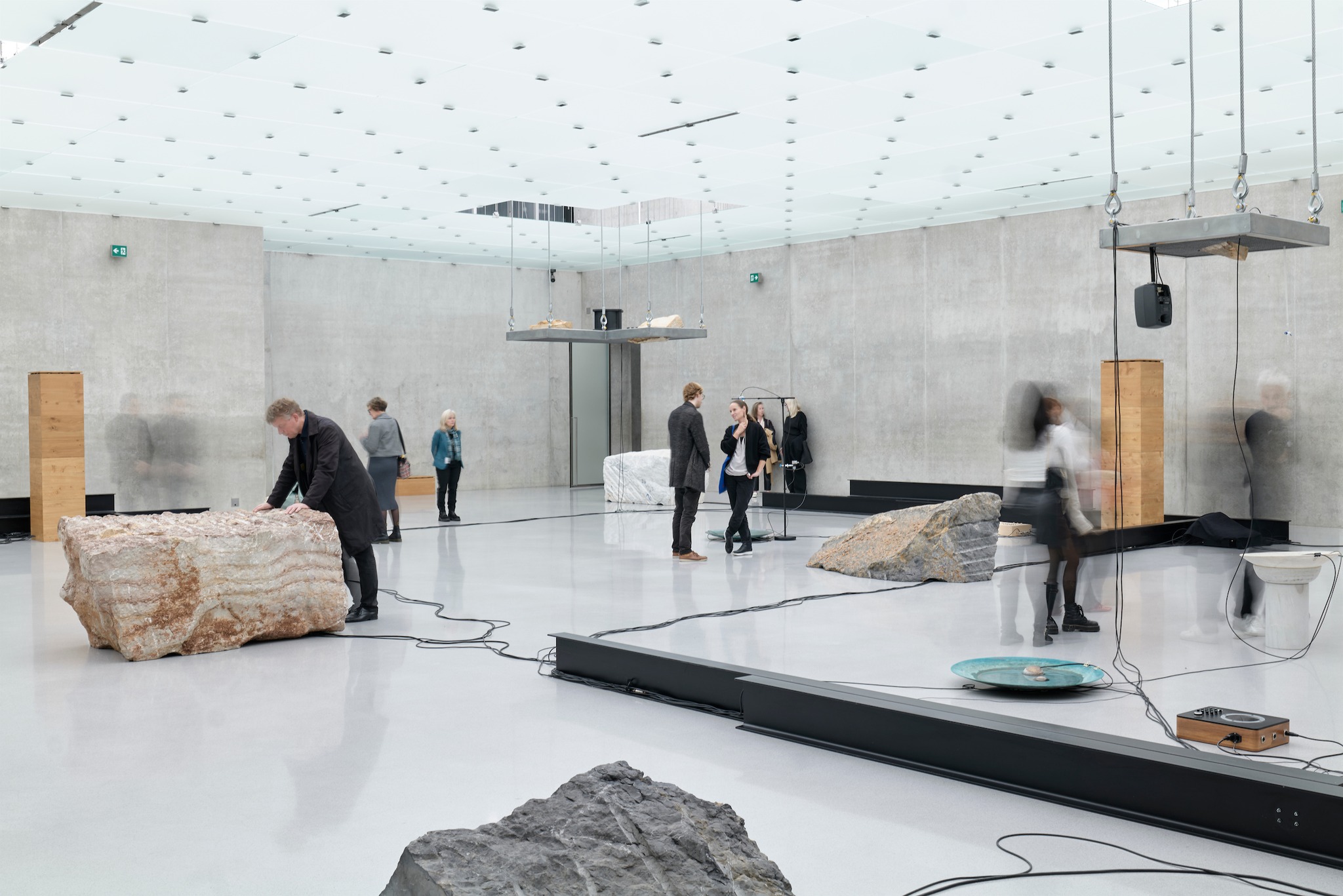
This approach is evident in works like Waters’ Witness, shown at Kunsthaus Bregenz in Austria and later at Pirelli Hangar Bicocca in Milan, where sound passed through water-filled vessels and ceramic forms. The experience was less about listening to a composition and more about becoming aware of how sound behaves in matter — how it pools, disperses, and leaves residue. Of course the easiest way to access this kind of natural “art” is just to sit by a lonely brook and listen to Mother Nature herself, without the pomposity.
The Turbine Hall itself is an acoustic body: vast, industrial, difficult to control. Rather than overpowering it, Atoui’s practice suggests a tuning of the space — allowing sound to circulate, settle, and respond to the architecture’s own history as a former power station.
At a time when sound is usually amplified, compressed, and consumed instantly, Atoui’s work insists on slowness. It asks visitors to stay with uncertainty, to notice small changes, to listen with their hands and feet as much as their ears.
There are no instructions. No single vantage point. Just materials doing what they do best when left room to act.