In today’s world, sustainability isn’t just about saving the planet—it’s about living mindfully and intentionally. And while extreme self-denial might not be everyone’s cup of tea, the core message here is clear: sometimes, less really is more. Just like these ancient nuns and monks, we can find deeper meaning by living in alignment with nature and prioritizing spiritual growth over material gain.
Read more
The research reveals how climate fluctuations over the past 230,000 years have influenced the migration of drainage divides in the Negev Desert, shedding light on the dynamic relationship between climate and landscape evolution.
Read more
As the world moves toward a more connected future, and self-driving cars, the transition from 4G to 5G standalone (SA) networks is inevitable and essential. This evolution is not just about faster speeds and lower latency—it also brings significant environmental benefits.
Read more
Given the likelihood of a buffer zone along Gaza’s border, an innovative approach could be to transform this space into a greenbelt. Many cities worldwide have successfully implemented green zones that serve as ecological buffers while also benefiting urban populations. A well-planned greenbelt could provide environmental benefits, support agriculture, and even serve as a shared space between Gazans and Israelis—turning a divisive border into an area of mutual sustainability.
Read more
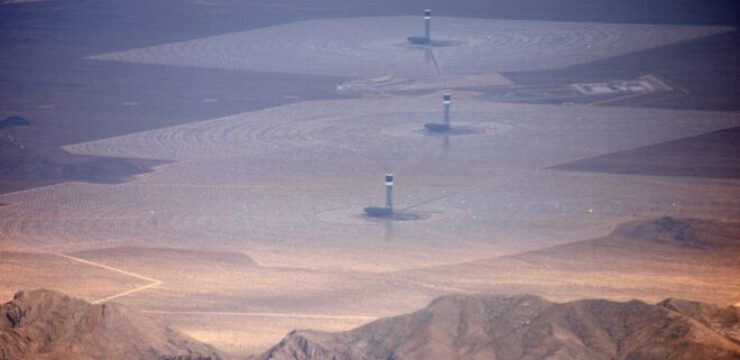
A little-known $15 billion deal between PG&E and the Department of Energy is raising concerns for California residents. The agreement, which will expand hydropower, also includes shutting down the Ivanpah solar plant, which has been providing energy to 140,000 homes. Without this reliable source of clean energy, California's already overburdened power grid will struggle, leading to higher energy costs and more frequent blackouts. Critics argue that while PG&E benefits financially, everyday Californians will be left paying the price with increased bills and an even less reliable power system.
Questions are also being raised about possible conflicts of interest with key players in the deal, making it even more controversial. We spoke with one of the main investors of the Ivanpah plant to learn more.
Read more
Researchers found a Eurasian coot nest in an Amsterdam canal made of plastic layers spanning 30 years, revealing the birds' use of human-made materials for nest construction. While reusing plastic may save time, it also poses significant risks, such as entanglement and environmental harm, highlighting the need for better waste management and awareness of urban wildlife impacts.
Read more
Natural fibers like organic cotton, hemp, and wood-based fabrics such as Tencel and modal offer a safer, breathable alternative to synthetic materials. These fabrics don’t shed microplastics, don’t contain toxic flame retardants, and allow your skin to breathe without the risk of chemical exposure.
Read more
A recent study in Nature by toxicologist Matthew Campen at the University of New Mexico found that human brain tissue contains significant amounts of microplastics. By dissolving brain tissue samples, Campen’s team was able to isolate up to 10 grams of microplastics per brain—about the weight of a crayon.
Read more
The research reveals that human brains contain approximately a spoon's worth of microplastics and nanoplastics - MNPs - with levels 3 to 5 times higher in individuals with documented dementia diagnoses.
Read more
According to a newly released scientific paper, three medical experts assert that switching from bottled water to filtered tap water could significantly decrease annual microplastic consumption—dropping it by about 90%, from 90,000 to 4,000 particles per year.
Read more
Vivobarefoot, a pioneer in minimalist footwear, proudly announces the release of "Unbound," a compelling short documentary that challenges conventional beliefs about women's footwear and its impact on health.
Read more
Chickens don’t need to free range to be happy, healthy and productive. It’s possible to raise chickens even in cities. What you need is a backyard and commitment. A well-built coop and an enclosed run offer protection from predators and the weather, as well as space to nest and run around.
Read more
Vernacular architecture refers to structures built using local materials, knowledge, and cultural influences rather than formal architectural styles. It is often associated with deep-rooted traditions, yet in a country like the United States—where many people have historically lived in temporary or nomadic housing—one might ask: Does America even have a vernacular architectural tradition? How can […]
Read more
A study performed at Michigan Medicine reveals that the use of less polluting inhaled anesthetic agents reduced harmful emissions by 50% in one year without impacting patient safety or outcomes.
Read more
The workshop on socks provides an immersive experience, guiding participants through the complete process of sock-making. After the knitting phase, SOUKI’s skilled staff steps in to sew the toes and apply a press-finish, ensuring the socks are ready for wear.
Read more