A coworking space within walking distance can cut commuting time and give you a reliable place to work, but distance alone does not make it useful. Test the internet, noise, privacy, desk setup, environmental claims and real cost before committing to a membership.
Yazan Al Homsi looks at two very different bets — Aduro Clean Technologies and Rocket Doctor — to show what investors should watch as small-cap companies attempt to move from promising technology to commercial scale.
Breast reconstruction can be an important part of recovery, but persistent pain, infection, changes in breast shape or mesh movement deserve medical attention. Here are the warning signs patients should know after breast mesh surgery.
As ABA practices grow, so can their administrative footprint. Smarter billing and documentation systems can reduce duplicated work, wasted staff time and inefficiencies while supporting sustainable growth.
Meta description:
The Houthis have turned Yemen’s Red Sea coast into part of a global geopolitical crisis. But behind the missiles, shipping disruptions and Suez Canal headlines is Mocha — the ancient Yemeni port that gave the world its name for coffee.
A coworking space within walking distance can cut commuting time and give you a reliable place to work, but distance alone does not make it useful. Test the internet, noise, privacy, desk setup, environmental claims and real cost before committing to a membership.
Yazan Al Homsi looks at two very different bets — Aduro Clean Technologies and Rocket Doctor — to show what investors should watch as small-cap companies attempt to move from promising technology to commercial scale.
Breast reconstruction can be an important part of recovery, but persistent pain, infection, changes in breast shape or mesh movement deserve medical attention. Here are the warning signs patients should know after breast mesh surgery.
As ABA practices grow, so can their administrative footprint. Smarter billing and documentation systems can reduce duplicated work, wasted staff time and inefficiencies while supporting sustainable growth.
Meta description:
The Houthis have turned Yemen’s Red Sea coast into part of a global geopolitical crisis. But behind the missiles, shipping disruptions and Suez Canal headlines is Mocha — the ancient Yemeni port that gave the world its name for coffee.
A coworking space within walking distance can cut commuting time and give you a reliable place to work, but distance alone does not make it useful. Test the internet, noise, privacy, desk setup, environmental claims and real cost before committing to a membership.
Yazan Al Homsi looks at two very different bets — Aduro Clean Technologies and Rocket Doctor — to show what investors should watch as small-cap companies attempt to move from promising technology to commercial scale.
Breast reconstruction can be an important part of recovery, but persistent pain, infection, changes in breast shape or mesh movement deserve medical attention. Here are the warning signs patients should know after breast mesh surgery.
As ABA practices grow, so can their administrative footprint. Smarter billing and documentation systems can reduce duplicated work, wasted staff time and inefficiencies while supporting sustainable growth.
Meta description:
The Houthis have turned Yemen’s Red Sea coast into part of a global geopolitical crisis. But behind the missiles, shipping disruptions and Suez Canal headlines is Mocha — the ancient Yemeni port that gave the world its name for coffee.
A coworking space within walking distance can cut commuting time and give you a reliable place to work, but distance alone does not make it useful. Test the internet, noise, privacy, desk setup, environmental claims and real cost before committing to a membership.
Yazan Al Homsi looks at two very different bets — Aduro Clean Technologies and Rocket Doctor — to show what investors should watch as small-cap companies attempt to move from promising technology to commercial scale.
Breast reconstruction can be an important part of recovery, but persistent pain, infection, changes in breast shape or mesh movement deserve medical attention. Here are the warning signs patients should know after breast mesh surgery.
As ABA practices grow, so can their administrative footprint. Smarter billing and documentation systems can reduce duplicated work, wasted staff time and inefficiencies while supporting sustainable growth.
Meta description:
The Houthis have turned Yemen’s Red Sea coast into part of a global geopolitical crisis. But behind the missiles, shipping disruptions and Suez Canal headlines is Mocha — the ancient Yemeni port that gave the world its name for coffee.
A coworking space within walking distance can cut commuting time and give you a reliable place to work, but distance alone does not make it useful. Test the internet, noise, privacy, desk setup, environmental claims and real cost before committing to a membership.
Yazan Al Homsi looks at two very different bets — Aduro Clean Technologies and Rocket Doctor — to show what investors should watch as small-cap companies attempt to move from promising technology to commercial scale.
Breast reconstruction can be an important part of recovery, but persistent pain, infection, changes in breast shape or mesh movement deserve medical attention. Here are the warning signs patients should know after breast mesh surgery.
As ABA practices grow, so can their administrative footprint. Smarter billing and documentation systems can reduce duplicated work, wasted staff time and inefficiencies while supporting sustainable growth.
Meta description:
The Houthis have turned Yemen’s Red Sea coast into part of a global geopolitical crisis. But behind the missiles, shipping disruptions and Suez Canal headlines is Mocha — the ancient Yemeni port that gave the world its name for coffee.
A coworking space within walking distance can cut commuting time and give you a reliable place to work, but distance alone does not make it useful. Test the internet, noise, privacy, desk setup, environmental claims and real cost before committing to a membership.
Yazan Al Homsi looks at two very different bets — Aduro Clean Technologies and Rocket Doctor — to show what investors should watch as small-cap companies attempt to move from promising technology to commercial scale.
Breast reconstruction can be an important part of recovery, but persistent pain, infection, changes in breast shape or mesh movement deserve medical attention. Here are the warning signs patients should know after breast mesh surgery.
As ABA practices grow, so can their administrative footprint. Smarter billing and documentation systems can reduce duplicated work, wasted staff time and inefficiencies while supporting sustainable growth.
Meta description:
The Houthis have turned Yemen’s Red Sea coast into part of a global geopolitical crisis. But behind the missiles, shipping disruptions and Suez Canal headlines is Mocha — the ancient Yemeni port that gave the world its name for coffee.
A coworking space within walking distance can cut commuting time and give you a reliable place to work, but distance alone does not make it useful. Test the internet, noise, privacy, desk setup, environmental claims and real cost before committing to a membership.
Yazan Al Homsi looks at two very different bets — Aduro Clean Technologies and Rocket Doctor — to show what investors should watch as small-cap companies attempt to move from promising technology to commercial scale.
Breast reconstruction can be an important part of recovery, but persistent pain, infection, changes in breast shape or mesh movement deserve medical attention. Here are the warning signs patients should know after breast mesh surgery.
As ABA practices grow, so can their administrative footprint. Smarter billing and documentation systems can reduce duplicated work, wasted staff time and inefficiencies while supporting sustainable growth.
Meta description:
The Houthis have turned Yemen’s Red Sea coast into part of a global geopolitical crisis. But behind the missiles, shipping disruptions and Suez Canal headlines is Mocha — the ancient Yemeni port that gave the world its name for coffee.
A coworking space within walking distance can cut commuting time and give you a reliable place to work, but distance alone does not make it useful. Test the internet, noise, privacy, desk setup, environmental claims and real cost before committing to a membership.
Yazan Al Homsi looks at two very different bets — Aduro Clean Technologies and Rocket Doctor — to show what investors should watch as small-cap companies attempt to move from promising technology to commercial scale.
Breast reconstruction can be an important part of recovery, but persistent pain, infection, changes in breast shape or mesh movement deserve medical attention. Here are the warning signs patients should know after breast mesh surgery.
As ABA practices grow, so can their administrative footprint. Smarter billing and documentation systems can reduce duplicated work, wasted staff time and inefficiencies while supporting sustainable growth.
Meta description:
The Houthis have turned Yemen’s Red Sea coast into part of a global geopolitical crisis. But behind the missiles, shipping disruptions and Suez Canal headlines is Mocha — the ancient Yemeni port that gave the world its name for coffee.
Renewable power is the cheapest source of electricity in many parts of the world already today, the latest report from the International Renewable Energy Agency (IRENA) shows. The report contributes to the international discussion on raising climate action worldwide, ahead of Abu Dhabi’s global preparatory meeting for the United Nations Climate Action Summit in September. With prices set to fall, the cost advantage of renewables will extend further, Renewable Power Generation Costs in 2018 says. This will strengthen the business case and solidify the role of renewables as the engine of the global energy transformation.
“Renewable power is the backbone of any development that aims to be sustainable”, said IRENA’s Director-General Francesco La Camera. “We must do everything we can to accelerate renewables if we are to meet the climate objectives of the Paris Agreement. Today’s report sends a clear signal to the international community: Renewable energy provides countries with a low-cost climate solution that allows for scaling up action. To fully harness the economic opportunity of renewables, IRENA will work closely with our members and partners to facilitate on-the-ground solutions and concerted action that will result in renewable energy projects.”
The costs for renewable energy technologies decreased to a record low last year. The global weighted-average cost of electricity from concentrating solar power (CSP) declined by 26%, bioenergy by 14%, solar photovoltaics (PV) and onshore wind by 13%, hydropower by 12% and geothermal and offshore wind by 1%, respectively.
Cost reductions, particularly for solar and wind power technologies, are set to continue into the next decade, the new report finds. According to IRENA’s global database, over three-quartersof the onshore wind and four-fifths of the solar PV capacity that is due to be commissioned next year will produce power at lower prices than the cheapest new coal, oil or natural gas options. Crucially, they are set to do so without financial assistance.
Onshore wind and solar PV costs between three and four US cents per kilowatt hour are already possible in areas with good resources and enabling regulatory and institutional frameworks. For example, record-low auction prices for solar PV in Chile, Mexico, Peru, Saudi Arabia, and the United Arab Emirates have seen a levelised cost of electricity as low as three US cents per kilowatt hour (USD 0.03/kWh).
Electrification on the basis of cost-competitive renewables is the backbone of the energy transformation and a key low-cost decarbonisation solution in support of the climate goals set out in the Paris Agreement.
Malabi with pistachios via les petites pestes. Food trends come and go, but malabi, or muhallabia (in Arabic) is forever! Mouhallabia is a classic creamy stovetop milk pudding from the Middle East. It is egg-free and gelatin-free, takes a few minutes to cook and has been enjoyed across the Middle East for centuries. It is affordable and cooks in a reasonable amount of time; with easy-to-find ingredients.
Rose-flavored sweetness and a light, creamy texture that keeps you dipping your spoon back in – in Israel this pudding is called malabi.
In Turkey, Lebanon, Syria, Jordan, and Egypt, people call it muhallibieh. The Greeks eat it as well. And it’s only milk pudding, made in ten minutes. Sounds like a dessert for children, but all over the Middle East, you’ll see Malabi offered in restaurants and at dinner parties. In Tel Aviv and Jaffa you will now find shops called malabia, which serves a vegan or cream option for about $2.50.
Recipes vary a little. Some call for a combination of milk and cream. A vegan combination I like is half coconut milk, half water. Rice milk works very well too, but not, for some reason, soy milk.
Some people flavor their malabi with rosewater, some with orange flower water. Very old recipes call for mastic, a resin from a shrub belonging to the pistachio family.
Toppings vary too. You can top Malabi with chopped pine nuts and walnuts, or with chopped pistachios, like in the above photo. Some dust a little cinnamon over the top, or sprinkle shredded coconut and peanuts. A little syrup over everything – it can be silan – the Middle-Eastern date honey used to “sweeten” sweet potatoes – or a home-made sugar syrup flavored with lemon, maple syrup, or chocolate syrup.
Malabi
8 servings – can be halved
Malabi, it will be gone before you know it. Image by Karin Kloosterman, 2019 – Jaffa Malabia in the Jaffa Flea Market
Ingredients:
4 cups milk
1 cup sugar
5 tablespoons cornstarch, diluted in 1/4 cup water
2 tablespoons rose water or orange flower water
4 oz. chopped nuts
Silan or other syrup
Method:
1. Put the milk and the sugar in a pan and bring the mixture to a boil.
2. Always stirring, add the cornstarch and water mixture.
3. Cook over medium heat till the pudding thickens – up to 5 minutes.
4. Add the rose water; stir.
5. Ladle into small bowls. Cool the pudding and then refrigerate it till cold.
5. Garnish the servings with chopped nuts and a swirl of syrup.
Want a summer body and the fastest way to lose weight? Run in sprints, according to new study
If your knees are still young and your mind willing, running is by far the best way to keep your heart and bones strong. It’s by far the easiest way to lose weight but you need to be committed. Recent studies show that swimming and cycling may have very little positive effect against osteoporosis (and can even be putting your bones at risk). And as we learn in grade school, it’s never too young to start keeping your bones strong.
I started running 2 years ago, I admit, to lose weight I had been gaining from childbirth. Not the actual birthing but after I stopped nursing. I started running on a trip to Costa Rica. Not a fan of gyms, driving or working very hard to exercise, running seemed like the least hassling option for looking better. Side benefits I now see are plenty… I eat better as I crave less fatty foods, I feel better as the positive hormones cycle through my body, and people respond to me more favorably creating lots of positive feedback loops. I had been feeling so good about myself that one year after running I started combining it with Iyengar yoga to lengthen the muscle mass I had started to build.
When I started running I only took cues from my body. As I was already in my 40s yet was quite active as a teen and young adult in my 20s, I had some muscle memory and some basic skills that carried through with me. When I first started running I decided that I would run for 3 miles (about 5 kilometers) and do it every other day. My step-son told me that it’s good for the body to have a day off to burn fat.
So I started out. From the outset I decided that I would never stop running. Even if I was going slower than the walkers. I wanted to keep my hips and leg muscles engaged in the running position and I wanted to improve with every run, even if it was just a tiny bit. If I was sick and needed to take a day or two off, I would return to the run a bit slower than my last run. This way I was never discouraged.
I did two other important things: I told myself that I can’t quit. That not running 3 days a week for myself would be like not giving my kids breakfast in the morning or taking the dog out for a walk.
Somehow among all my friends with “great tips” from speed-walking yoga gurus to crossfit enthusiasts, I decided to go with my intuition. In order to advance in my running and improve my heart health and overall effect I would sprint 3 times during my 3 mile run. I normally started the sprinting sessions, about 150 yards at a time, after I had run halfway or even two thirds of the way in. I would start sprinting only at the time when I felt my heart rate was stable (I could feel it inside me, I don’t wear a monitor); and during the sprint I would run as fast as I can.
Being a little competitive I sometimes like to sprint past the people who try to run ahead of me. Lucky for me I live on the Mediterranean Sea so have a lovely wind and backdrop for my sport. Hopefully you too can find a forest or a cool path that makes you happy to run through. One of my rules: never change the route. This way my mind can’t play tricks on me to shorten the route. Also I know what to expect most of the time — although today I saw a colt taking a bath in the sea — did not expect that!
The results of my two year running combined with yoga have been exceptional and it really does boil down to what you do and what you eat. If you run and do piles of yoga but then eat meals of junk food, soda and processed food, well it might not give you the effect you want. That said I do eat whatever I want but cravings for sweets and fried foods and meat have tapered off.
Read more: the 10 best marathons in the Middle East
To my chagrin and not surprise a new study on running looks at the approach I have taken and it confirmed my intuition.
In a new observational study that looked at more than 70 scientific papers, the results were in line with what my body had told me. Compared to high intensity training (HIIT) like working out at the gym, taking it in stride with sprinting (SIT) is the key to losing weight.
“The data shows that sprint interval training led to a 39.95% higher reduction in body fat percentage than HIIT. Additionally, SIT participants exercised for 60.84% less time than HII.”
All Findings:
Sprint interval training (SIT) vs High-intensity interval training (HIIT)
SIT resulted in a 39.59% higher reduction in body fat percentage than HIIT.
SIT significantly outperformed HIIT in Body Fat Percentage (BF%) reduction while requiring 60.84% less time spent exercising than HIIT.
SIT participants spent 81.46% less time sprinting in comparison to time spent doing high-intensity intervals of HIIT.
On average, SIT conducted 10% fewer workouts per week and these workouts were 44% shorter in comparison to HIIT.
During these workouts, the SIT group did 4.68% fewer sprints than the HIIT participants did their high-intensity intervals.
These sprints were 85.64% shorter in duration than the high-intensity intervals of the HIIT group.
Sprint interval training vs Moderate-intensity continuous training (MICT)
SIT resulted in a 91.83% higher reduction in body fat percentage than MICT.
SIT significantly outperformed MICT in Body Fat Percentage (BF%) reduction while requiring 71.17% less time spent exercising.
SIT participants conducted 15.54% fewer workouts every week on average compared to MICT.
These workouts for SIT were 60.12% shorter than MICT workouts.
For those that want to try it know that sprint interval training requires intense bursts of energy, where you give it your all, but you have long rests in between (in my case jogging at a slow pace) so it makes it super easy to achieve the desired effects without a lot of time or effort. The key here is just committing to it. Once you have the game plan, stop wasting hours and hours at the gym. You are telling yourself lies and spending money for no reason.
Your time can be spent doing so many other things, like hanging out with your friends or making a healthy home-cooked meal at home for your kids.
So it’s summertime again. That means swimwear. When was the last time you found the perfect bathing suit? On a trip to Rome maybe in 2010 when you found that perfect bikini? Ordering on the Internet or going to some bland and somewhat vulgar shop like Bikini Bay fills me with dread; I tried both at some point in my life.
Then I stumbled upon Reformation and took the chance. Above is the first thing I ordered, the Tropicana One Piece. I am not being paid to write about the company or review them. I really just think that this is a company more women need to support. Especially ones like us who want to move this planet forward with basic values that every product we buy should carry. Reformation uses regenerated materials or dead stock to create a stunning line of dresses, pants, shirts, shoes and bathing suits.
In their swimwear, Reformation uses a sustainable product called Econyl, a regenerated nylon fiber made from waste such as fishing nets from the oceans and other waste from landfills. That makes me happy. But above their adorable packaging (this is a vegetable) and social media messaging (these are our new shoes what you do with them is your business), and eco-values and tips on how to clean your clothes to minimize microfibres, they make really good clothes that feel like they will last.
Not me, but a very cute model showing off the 50s era Reformation bathing suit. Fit for a pinup girl, or you.
The bathing suit has the feeling of something durable, like my grandmother’s bathing suits from the ’70s (or was it the ’60s?) and the lining is sturdy. Nothing flimsy there, except maybe for the tie-on part in the front that I need to adjust every once and a while.
Sizing was done with their online charts and with my husband’s tape measure I managed to figure out my figure. Order was placed online and arrived within a week via courier. Sent to Canada we did have to pay import fees and shipping but overall the pricetag (about $180 US after everything) is what I would pay for a decent bathing suit anywhere.
As I am active advocate of buying few things, but good things that you can keep forever or a long time, I am holding myself back from buying another Reformation bathing suit, but if the temptation overcomes me I will be doing it in good conscience.
Three cheers to this company that makes sustainable fashion affordable, sexy, in good quality and in good faith.
Sodastream, the Israeli company manufacturing devices producing soda gas beverages in reusable bottles (which sold to Pepsi Co for 3 billion last December), has been on a continuing upswing since featuring actress Scarlett Johansson to be its anti-BDS advertising queen in 2014.
Since then, the company has been a rising star in Israel’s manufacturing community, as well as being a friend of the environment and an advocate of peaceful co-existence between peoples.
Sodastream manufactures devices producing CO2 gas beverages in reusable bottles. The company’s new plant in the Bedouin town of Rahat, outside of Beersheba hires a diversified workforce of 2,000 including Israeli Arabs, Jews, Druize and Palestinians.
Following the company’s purchase last year by Pepsi Cola for $3.2 Billion, company CEO Danny Birnbaum gave a bonus of NIS 18,000 ($5,000) to all Sodastream employees who had been working at the company for at least one year.
The plant in Rahat has 84 specialized injection machines to assemble and fill its unique sparkling water devices. Since the plastic bottles used can be refilled over and over again, the environmental benefits are enormous as this results in less disposable bottles being sent to trash dumps or finding their way out to sea.
(Israel is the world’s largest user per capita of one-time use plastics – Andreas Weil, EcoOcean)
SodaStream’s fortunes since inception have been a long roller coaster process with the company sometimes on the verge of bankruptcy due to economic and political concerns (the company was once located in the West Bank, near Jerusalem).
Birnbaum’s feelings pertaining to peaceful co-existence and equal opportunities can be partially attributed to his father, Rabbi Erwin Birnbaum, a Holocaust survivor and partisan fighter who brought his family to Israel in the late 1970’s after serving as a Conservative Rabbi in the USA for many years.
Rabbi Birnbaum has long advocated peaceful co-existence between peoples in the region and elsewhere; an attitude that has certainly influenced his son Danny in his position as CEO of SodaStream.
When interviewed on Israel’s Channel 12 in Israel we caught Birnbaum saying: “this is one of the best ways to promote peace by giving people in Gaza more economic opportunity. We don’t talk politics here; we only talk peace. Birnbaum recently took 30 journalists from all over the world on a media tour of the SodaStream plant in Rahat.
Joint manufacturing projects between Israel and Palestinians in Gaza have been tried in the past; with less than satisfactory results. Birnbaum hopes to change this with establishing the new plant in a “peace zone” between Israel and Gaza.
“This project is for the benefit of everyone, including my own family. I have two sons in the army now and don’t want them or any other Israelis to have to be living in Gaza,” says Birnbaum.
Read more on SodaStream and issues regarding disposable plastic wastes:
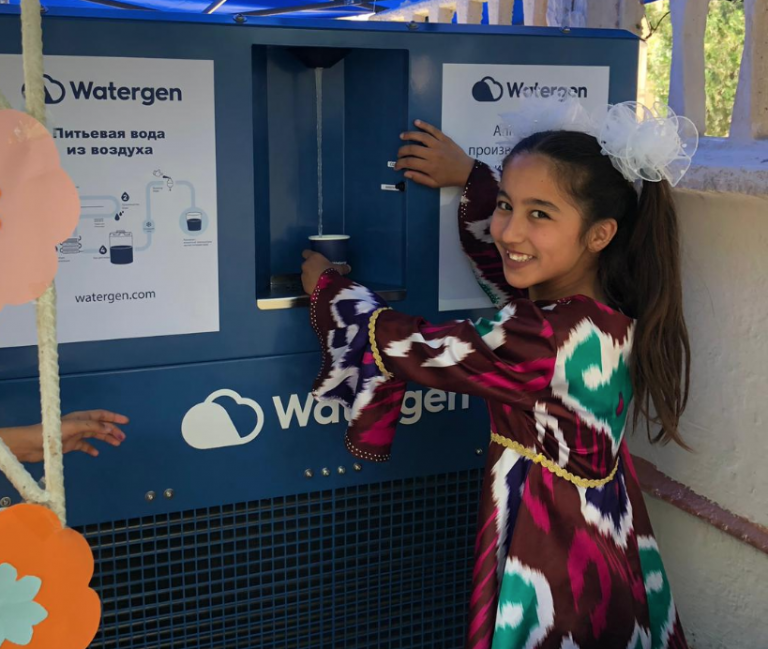
Watergen, an Israel-based innovative company that creates clean water out of air is now providing a source of freshwater for over 120 children living in an orphanage in Uzbekistan’s city of Bukhara. We covered the company in 2015 and they are doing well!
The technology comes in the form of an atmospheric water generator known as the “GEN-350,” which can produce up to 900 liters of water per day. A popular tourist destination but also associated with arid weather conditions, Bukhara has recently been experiencing serious water shortages. Earlier this month, water supply was even disrupted for almost two days. The entire city of Bukhara was left without drinking water including several busy hotels. Since the local underground water is unusable, fresh water is currently supplied to Bukhara from the city of Samarkand, almost 300 km away.
With a weight of just 800 kilograms, the GEN-350 is transportable and can be installed easily. Each unit contains an internal water treatment system and need no infrastructure except a source of electricity in order to operate. The GEN-350 was installed at the orphanage as part of a test pilot, estimated to run for about two months, in order to demonstrate the generators unique capabilities to produce hundreds of liters of clean, safe-drinking water in the arid environment of Bukhara.
Attending the inauguration ceremony of the GEN-350 were senior political leaders in Uzbekistan including First Deputy Prime Minister, Achilbay Ramatov; Prosecutor General, Otabek Murodov; Governor of the Bukhara region, Uktam Barnoev; and Mayor of Bukhara, Karim Kamolov. All signs show that the pilot has gotten off to a great start. Watergen’s Vice President of Sales and Marketing, Michael Rutman, who was present at the ceremony said: “I’m very pleased with the results of the GEN-350. The children were very excited to drink the high quality water from the GEN-350.”
Watergen’s president, Dr. Michael Mirilashvili added: “Uzbekistan’s water utility company was thrilled with our water from air solution and requested to run pilots in several other regions of Uzbekistan. Although there is only 20% humidity in the air of Bukhara, the GEN-350 was still able to generate hundreds of liters of high-quality drinking water.”
Dr. Mirilashvili is also the visionary behind Watergen’s goal to provide clean, safe-drinking water to every human around the world. Watergen’s efforts to make fresh, pure water available around the globe earned the company its place on the World Economic Forum’s list of the world’s top technology pioneers in 2018.
AI solutions like flux are using military technology to feed the world
All over the world, farmers are grappling with increasingly harsher weather conditions, pests, pollutants, and soil depletion in the face of ever-growing product demand.
Food shortages will likely become worse as phenomena such as desertification and natural disasters intensify. This topic was at the core of a recent scientific conference at the School of Sustainability at the Interdisciplinary Center in Herzliya, in cooperation with the Manna Center for Food & Security at Tel Aviv University, entitled “How to feed 9 billion in an era of climate change?”
Israel is situated in a region that is greatly impacted by climate change and therefore, serves as a kind of research incubator to examine the effects of shifting weather conditions on agriculture.
According to Avner Forshpan, director of the Climate Change Division of the Israel Meteorological Service, the past 15 years in Israel were the hottest since national records began. In terms of precipitation, those years have seen a decline, especially noticeable during spring. For the most part, rainfall decrease is not uncommon for the Middle Eastern region – an overview of the data shows that in the past, during the 1920s and 1930s, Israel experienced prolonged dry periods.
However, according to Forshpan, there has been an increase in the frequency of extreme weather events in recent years, which are also reflected in the meteorological data. “In terms of heat waves, which lasted three days or more, we find a significant increase,” Forhspan says.
Due to the sensitivity of agriculture to climatic changes, a 30 degrees Celsius temperature threshold is already critical. Any deviation from this threshold could cause adverse effects on the quantity and quality of the production.
The success of Israeli agriculture
“Israel has become a fertile ground for agricultural technologies because of the combination of unique needs and challenges that stem from the circumstance of the country,” says Alon Ben-Gal of the Institute of Soil, Water and Environmental Sciences at the Gilat Research Center. “Decisions as to what to grow and what not to grow are made according to an economic approach, and not based on the caloric value of the crops – and this is part of the background to the success of Israeli agriculture.”
In Israel, drip irrigation is practiced in 80 percent of the crops while in other parts of the world it accounts for only 25 percent of the irrigation practices, while the rest is irrigated by flooding. “Drip irrigation has the advantage that you can irrigate frequently and thus provide optimal water and fertilizer needs, whereas, in traditional methods, such as flooding, the fields receive water only once every few days,” says Ben-Gal.
Moreover, traditional irrigation practices separate between watering and fertilization, while in drip irrigation both applications are made simultaneously. It is an effective means of saving water, but in many areas of the world, the severe shortage of water forces farmers to use “marginal” water – brackish water, which has a higher salinity than drinking water, or effluent – purified sewage, which also has a higher salt content than drinking water. The disadvantage of marginal water is that prolonged use can lead to soil salination and crop damage.
According to FAO, the United Nations Food and Agriculture Organization (FAO), the salinity surplus in agricultural land is a severe problem and is affecting about 20 percent of the irrigated areas.
Growing on depleted soil
With an average agricultural GDP of $965 million between 2000 and 2018, Israel has created a competitive and tech-oriented market. However, due to limited resources, small landmass, and an arid climate, Israel is still not self-sufficient in its food production and relies on imports, which accounted for $6.1 billion of its entire expenditures in 2017.
But what the country lacks in arable land it makes up for in the production of sophisticated farming equipment and materials. In 2016 alone, 204 Israeli companies exported $9.1 billion worth in agricultural technologies. Among those exports were irrigation systems, equipment for the dairy and poultry sectors as well as seed and propagation materials.
The unique challenges Israel is facing in the agricultural sector have encouraged the creation of dozens of ambitious startups aiming to revolutionize the farming industry. Of the $1.5 billion investment made into the international agri-tech field in 2017, $185 million were invested exclusively in Israeli businesses. Many of those businesses have developed methods for crop yield improvement in arid or harsh conditions.
Salicrop, for instance, is a company that developed a seed treatment allowing crops to survive in saline soil or with brackish water irrigation.
“Salinity makes it harder for the crop to absorb water, and the salt may also destroy the plant cells. Each plant has a salinity threshold, beyond which it sustains damage. Salicrop has created a chemical treatment in which the plant seeds are soaked in a special solution. Subsequently, they are dried and returned to the company that produces them. Thereby we can allow the crop to produce more yields even when salt levels increase,” says Dotan Burstein, director of Salicrop.
So far, the company’s treatments have been carried out in crops such as corn, rice, wheat, tomatoes, peppers, and spinach. Yield improvement, according to Burstein, may potentially reach up to 70 percent. One of the experimental trial locations of the company was in India, in fields adjacent to salt pans. “In plants that grew from treated seeds we’ve observed a 32 percent higher volume of seeds and a 63 percent increase in plant weight,” says Burstein.
Another Israeli startup called PlantArcBio strives to improve crop resistance through gene discovery. Last year, the company raised $3 million from private investors and struck up a collaboration with the University of Wisconsin-Madison. According to Dr. Dror Shalitin, founder and CEO of PlantArcBio, arid conditions can easily damage the quality of the yield. An increase of 4°C, for instance, could slash the entire US corn harvest by 50 percent.
The company’s activity focuses on discovering genes which might help the crops cope with environmental stresses. In this context, PlantArcBio is working with genes that are extracted from plants native to the desert and Dead Sea region. Apparently, in such “ecological niches,” there is a high probability of discovering hidden genes which have a high resistance to aridity. “We use plants and microorganisms that we believe contain genes we can use for our purposes. By transferring certain genes to tobacco plants, for example, which were used to develop our technology, we were able to double plant weight.” says Shalitin.”
Yet another young Israeli startup named Taranis has developed an analytics engine helping farmers to monitor their fields effectively, determine the right time and location for applying agro-chemicals and preempt crop issues, diseases, and weather-related damage. So far, Taranis has raised $30 million since its launch in 2014, mainly from American and Israeli ventures, and it provides its services to large farmers all over the world, in countries such as the US, Canada, Brazil, Argentina, Russia, Ukraine, and Australia.
Evidentially, the challenges of the food supply in the age of a global climate crisis and rapid population increase requires thorough contributions from various fields such as water, plant sciences, genetics, and chemistry. Alongside the improvements these technologies offer to agriculture, they also help promote the science behind them.
However, it is important to remember that these technologies merely treat the symptoms of a more far-reaching problem. In order to slow down climate change, it is imperative to reduce greenhouse gas emissions, not by applying technology but through full-scale reforms in the policy-making of nations, public awareness campaigns and a shift in the consumption habits of the citizens of the world.
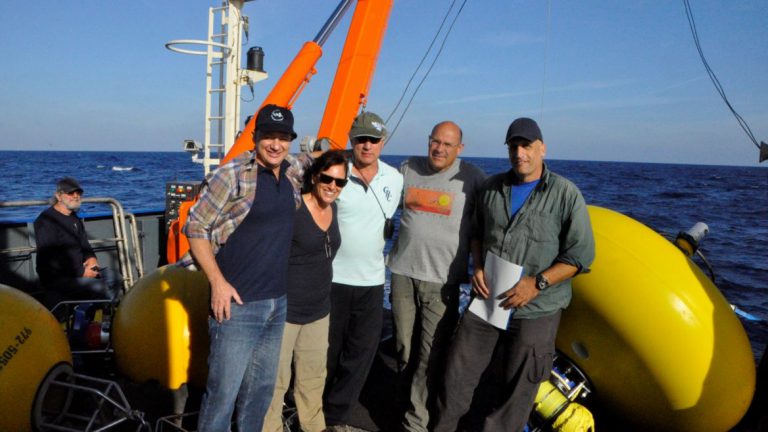
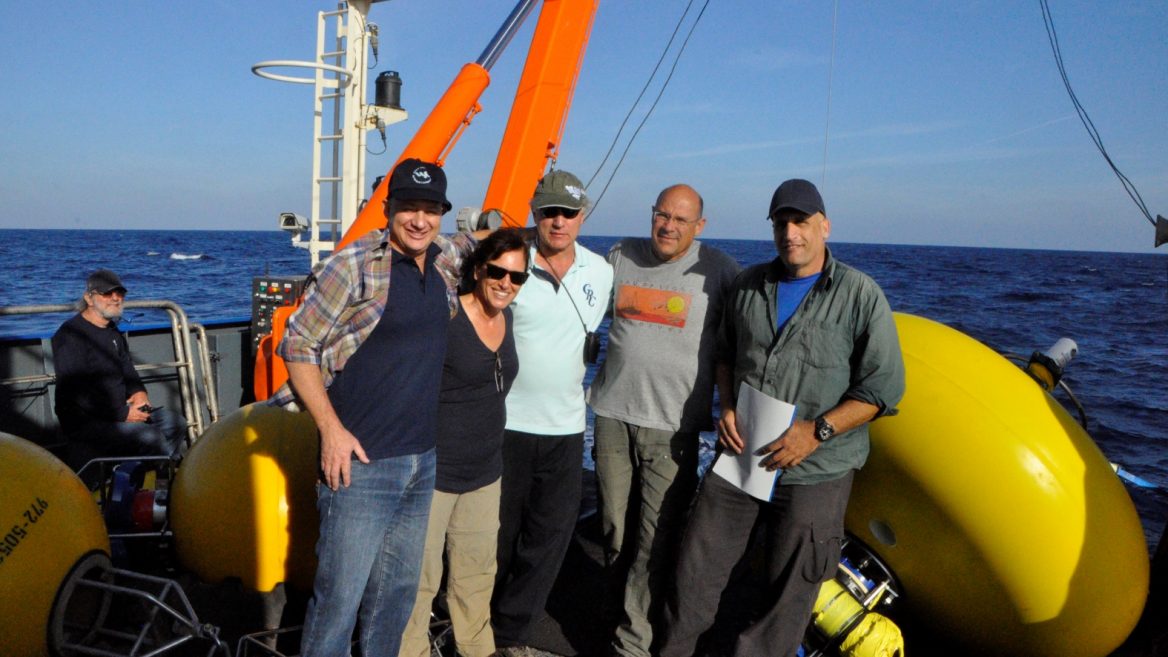
A first-of-its-kind deep-sea research station placed 50km (31mi) from the Israeli shore called DeepLev which combines “deep” with the Israeli meaning for heart which is “lev”. Reaching a 1.5km depth (~1mi) it is set to shed new light on the eastern Mediterranean marine environment and the implications changes in this ecosystem hold for humans.
The marine environment makes up over 70% of our planet’s surface, it holds 97% of all water and is the cradle of life on earth. Still, the ecological, physical and chemical processes underlying marine ecosystems remain largely unknown. These processes provide significant benefits to humans and hold other implications for us; it is, therefore, necessary to gain a better understanding of them. First anchored in January 2017, scientists have placed, a first-of-its-kind deep-sea research station (named DeepLev) some three hours sailing distance from Haifa in northern Israel.
“This is a unique initiative in the eastern basin of the Mediterranean Sea,” say Professors Ilana Berman-Frank and Yishai Weinstein of Bar Ilan University, who jointly lead the project with Professor Barak Herut and Dr. Timor Katz of the Israel Oceanographic and Limnological Research (IOLR). The project – a complex and resource-intensive one – was conceived and conducted in collaboration with colleagues at the Hebrew University in Jerusalem, Tel Aviv University and the Geological Survey of Israel. Its primary objective is to discover what is really happening in the deep open sea and the impact of human activity and global change have on this environment: “we do that using a station, anchored to a fixed location, which constantly monitors and tracks what is happening there” explains Professor Berman-Frank.
The team will be able not only to monitor the processes but also to understand their significance and the implications they have for human society: “understanding these processes is hugely important because it helps us realize how the entire system works,” she points. “An incident in one marine location can affect other parts of this environment. The eastern Mediterranean basin is a particularly sensitive environment that is subject to the effects of climate change and other human pressures – gas explorations, maritime transport, industrial and agricultural pollution, and desalination plants; data collection is essential for predicting possible ecosystem responses to these various pressures.”
The station’s instruments continuously and independently collect data allowing researchers to study biological activity processes, currents and wave patterns, and the flows of organic matter from the surface to the deep. The latter is especially important to understand how the marine environment copes with the increase in atmospheric carbon dioxide level; it is professionally referred to as ‘the biological pump.’ The pump is powered by small marine plants – algae – that are critical in regulating carbon dioxide and ocean acidity.
Algae are a basic building block in the marine food web, grazed by other marine creatures, while dead algae sink to the sea bottom: “algae have a critical role as they transport excess CO2 from the atmosphere to the sea bottom and assist in moderating global warming,” explains Professor Berman-Frank. “Our project was also conceived to understand the downward flows of carbon better and other particles from biological or other sources” adds Professor Weinstein. “Instruments called ‘sediment traps’ are placed along the cable, and they capture the particles; we can measure the flows and understand the dynamics of sedimentation along the water column gradient from the surface to the seabed.”
“An article by IOLR’s Dr. Tal Ozer published in April 2016 in the journal Global and Planetary Change summarizes 30 years of measurements in the Eastern Mediterranean and analyses the changes in sea temperature and salinity,” says Professor Barak Herut, IOLR’s Director General.
“It clearly demonstrates the evidence for sea warming and climate change. The Mediterranean Sea body is divided into several strata. The middle layer exhibits warming that is consistent with the IPCC’s (inter-government panel on climate change) predictions; the surface layer’s temperature, however, increases much more rapidly than the forecast.” This phenomenon, according to Herut, is very significant because it influences the occurrence of extreme weather events, the amounts of precipitation and, of course, the ecosystem itself. The new monitoring station will further assist in tracking these trends and predicting their possible ramifications.
Another important aspect that the research team would like to explore is the effect changes in the nearshore environment (circa 200 meters depth) have on the deep sea. Professor Herut explains that “nearshore waters contain higher levels of pollution due to runoff from extensive human uses. The monitoring station will assist in studying the interactions between the two environments.” preliminary data from the first six months already indicate that nearshore waters have greater influence during specific periods: “and the station will allow us to better measure these interactions and assess their future trends.”
The new Israeli station is one of several similar monitoring stations around the world – in the Atlantic and the Pacific Oceans, as well as one in the north-western part of the Mediterranean, run by a French organization. According to Professor Herut, “we aim to operate these stations for the long-term and to gain a deep understanding of what is happening in the marine environment.”
He emphasizes that insights gained in the marine stations go beyond the sea itself: “the understanding that the rising level of atmospheric CO2 is becoming an acute threat to planetary systems is a result of long-term monitoring in a permanent station.” The Israeli station will also monitor CO2 concentration level, thus tracking the process of ocean acidification which affects marine organisms that use calcium carbonate to build their skeleton and shells (for example plankton species, corals, snails or oysters). “The new station, and an additional station IOLR operates in a different location, are part of an international network to track ocean acidity levels (pH), and they will help us assess whether ocean acidification also occurs in our part of the world, and if so, at what rate.”
The station is essentially a massive cable, 1.5 kilometers long, with measurement instruments of different types attached at various depth levels. It is fixed to a designated location for a period of six months to collect the data, at which point the scientists take it out to extract the measurements and then drop it back again for another six months. “It may seem like a trivial task placing a few devices at 1500 meters depth,” says Professor Berman Frank “but it actually took a team of experts – led by Dr. Timor Katz and Ronen Alkalay, a doctoral student – three years to plan and carry out.
The location of the station is some 50 kilometers into the sea west of Haifa; we had to carefully think about how to steady the station, precisely in the same position we wanted it to be, accounting for the currents and storms that occur here, and protecting it from ship collisions or unintentional damage. All of this required detailed logistical considerations and plenty of resources.” One of these resources, Professor Herut reports, is the new government-sponsored ‘Bat Galim’ acquired by IOLR, which has been transformed into the most advanced research vessel in the Levant. Professor Berman-Frank enthusiastically recounts that “anchoring the new station took eight hours and a crew of 25 people.
We left early in the morning and completed the task only by sundown. It is a logistically complex endeavor.” Professor Herut adds, “Positioning such a station, or pulling it out, requires truly deep maritime knowledge and I am glad to say we have successfully accomplished it. The direct costs of each day at sea – excluding insurance, mooring, maintenance, equipment, or other overheard – exceeds 10,000 USD. The station’s equipment is also very expensive: 1500 meters of multiple instruments and floatation devices that have to withstand water pressure. With every extraction, the instruments’ batteries have to be replaced, and they also cost thousands of dollars. To extract data, the instruments have to be disassembled and then assembled again.
“Although it is logistically complex, at the end of the day, this investment will pay off because the station can provide data for many years and would support not only academic research but also other public and governmental objectives. This is not only a research platform; it stands to assist evidence-based decision making in different domains.”
One such domain is the economic activity in the Mediterranean. About half a billion people live around the Mediterranean Sea, and this entails increasing human pressure on the marine environment. “Even Israel’s short coastline is crowded with power plants, desalination plants that release chemical pollution, natural gas exploration and production sites and their infrastructure” Professor Berman Frank describes. “Industrial, urban and agricultural sewage is released to the sea. All of these affect the ecosystem and threaten human well-being. We now know that urban and agricultural sewage saturate the marine environment with nitrogen and phosphorous that lead to ‘algal bloom’, some of them are toxic, and this has led to cattle, pets, and even human deaths around the world.”
“With only 190 kilometers of coastline,” she concludes, “Israel has no marine or coastal backup in an extreme event or accident. We need to be cautious and vigilant in preventing an environmental disaster, and we also need to better understand the ecosystem, so that if something does happen, we would be prepared whether the cause is natural gas – or oil production in the future – or other sources of pollutions. The capacity to monitor and track changes in our deep marine environment is of tremendous importance.”
The earth’s bounty is endless, even though our species is so intent on altering and destroying it. These organic lemons, limes and oranges provide much needed vitamin C. And they are perfect, no?
Lemon juice, white vinegar and essential oils – that’s all you need in order to avoid the negative health and environmental effects of cleaning
Did you ever notice how many cleaning products you use when you clean your house? Did you read the labels and the safety recommendations of any of them? Are you aware of how many chemicals are present in each product? Probably not. As we are mainly concerned about getting rid of the harmful bacteria and germs to prevent our children and us from catching a disease, the label only matters when it promises to kill 99.9% of the microbes.
Cleans the house, kills the fish
Ironically, while cleaning, you can be exposing yourself and your family to a number of toxic and harmful substances hidden behind the floral scent. The exposure to toxic cleaning products can have some immediate adverse effects but can also contribute to the development of other chronic diseases. Many ingredients found in common household cleaning products, like chlorine, ammonia, lye, sodium hydroxide, and propylene glycol n-propyl ether may cause lung irritation, eye and skin burn, increase the risk of asthma, and boost allergies. Other substances, like butyl cellosolve, petroleum distillates, nitrosamines and 1,4-dioxane may act as carcinogens, neurotoxins or hormone disruptors, causing the malfunction of the nerve and endocrine systems.
Besides the adverse effects of cleaning products on human health, there are also negative outcomes for the environment; after we use them, the substances find their way into the sewage and can reach rivers, the sea, and water reservoirs, affecting the balance of ecosystems. For example, phosphates – a common ingredient in laundry detergents- act as fertilizers in the waterways, producing algae overgrowth, which can deplete the water’s oxygen supply, causing the death of fish and other organisms.
The Environmental Working Group, an American non-profit organization focused on environmental health, did extensive research about the ingredients of 2,500 different cleaning products, ranking them into five categories from A to F: A being the safest. The results are quite alarming, as roughly 60% to 70% of the products were ranked as D and F, the most dangerous categories.
The research found that the most acutely hazardous cleaning products are corrosive drain cleaners, oven cleaners, and acidic toilet bowl cleaners, as they contain very aggressive substances to be more effective. However, in the rest of the categories, at least 50% of the products are still ranked in the lowest two places. In The Environmental Working Group’s website, you can find detailed information about brands, products and their specific threats to health.
There’s another way
At this point, you might be worried about what to do about this harmful stuff when you are supposed to keep your house clean. Well, you have some options. The first one is to pay more attention to the labels of your current products and try to find the ones that represent less hazard to health, avoiding those which are listed as poison or that include any of the hazard symbols in their labels. If you have to use any of the hazardous products, make sure to wear the appropriate protecting items, such as gloves and masks while cleaning and keep the areas well ventilated.
Try to use as less cleaning substances as possible. Dilute dangerous substances such as bleach by adding them to water (and never the other way around). Never mix different cleaning product. For example, Never mix bleach with acidic substances such as acidic toilet bowl cleaners. This action could release extremely dangerous chlorine gas. Chlorine is used as a chemical weapon in Syria these days, so you don’t want to produce it by mistake at home.
If you have a bigger budget, you can also visit the organic section of the supermarket or go to a specialized naturist shop where you will find a variety of safer options for cleaning based in bio-degradable and plant-based substances. But beware, some companies take advantage of the “eco-friendly” trend and they just green-wash their labels to make them look safe when they are not. Look for specific claims in their labels such as “no solvents,” “no phosphates,” or “plant-based,” instead of vague and ambiguous tags such as “natural” or “organic.”
However, if you want to be 100 percent sure that you are reducing your exposure to the minimum or if your budget is tight but you still want to keep healthy, we have excellent news for you. You can clean almost everything with ingredients that can be found in your kitchen. Hot water, vinegar, lemon juice, and baking soda can make everything look new while not compromising your health. Here there’s a list of DIY recipes that you can prepare and use for each area of your house:
All-Purpose cleaner– Mix equal parts white vinegar and water. If you care about the fresh smell, you can add a few drops of the essential oil of your preference (you can purchase it in any nature shop). Mint or lavender oil are good options for it.
Tile Grout Cleaner– Mix 1 part water and three parts baking soda mixed into a paste. Apply to grouty area and then scrub with a scrub brush or toothbrush and remove with a warm cloth.
Glass Cleaner- For most of the cases, plain water and a mop will do the job. You can also add 50 milliliters of white vinegar or one tablespoon of lemon juice for the hard-to-remove spots.
Cookware– Mix equal parts lemon juice with sea salt and scrub. Baking soda paste is also a good option.
Toilet Cleaner-Mix white vinegar with some essential oil for freshness. Scrub as usual with toilet bowl cleaner.
Air Freshener– You can put Essential oils mixed with water into a spray container, or buy an essential oil diffuser which will automatically do it for you.
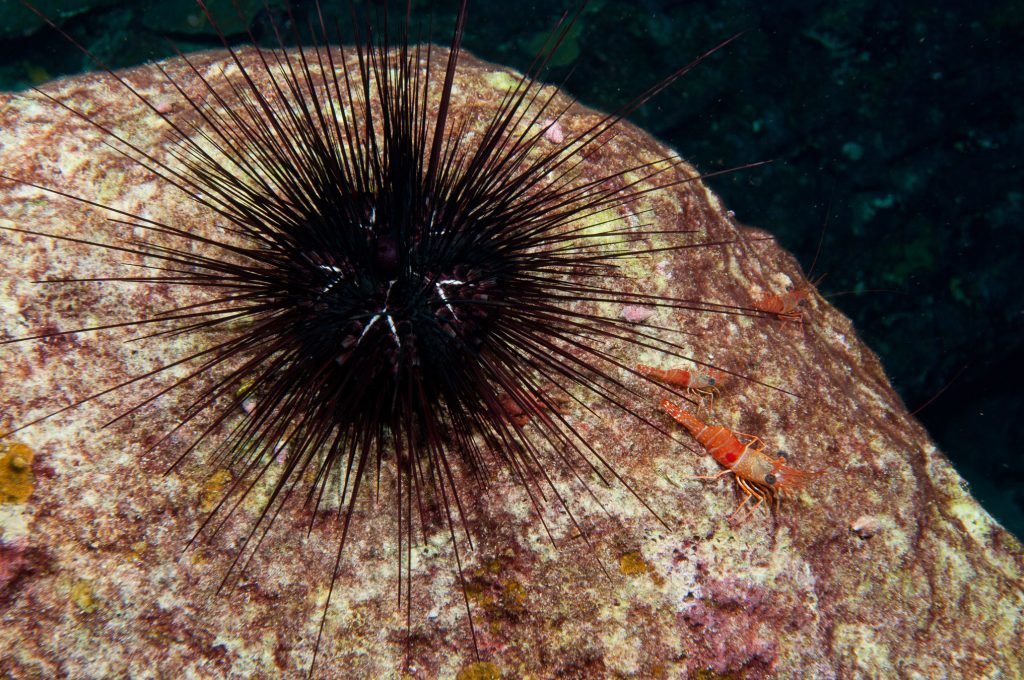
The Black Long-Spine Sea Urchin – a familiar creature from the Indian and Southern Pacific Oceans –is appearing the Mediterranean, with some serious implications for people and the ecosystem.
Those who dive, snorkel or even just paddle in the coastal waters of the Red Sea, the Indian Ocean or the Southern Pacific Ocean, are well familiar with the sight of the Black Long-Spine Sea Urchin. The species is now on the verge of colonizing the Mediterranean according to a comparative genetic research led by an Israeli scientist.
The sea urchin species (taxonomically known as Diadema setosum) is one of the most widespread species of sea urchins. Most people know better to avoid them; the urchins’ sting, while not lethal to humans, is painful and the toxins in its spines could cause inflammation or swelling.
Dr. Omri Bronstein is a researcher at the Geological-Paleontological Department in the Natural History Museum of Vienna and an expert on Echinoderm, the super-class of marine organisms that include sea cucumbers, starfishes, sea lilies, and sea urchins. Dr Bronstein expects the black sea urchin to become established in the Mediterranean in the near future. “These urchins, widespread in tropical waters are an invasive species in the Mediterranean where they are increasing in numbers,” he says. “The first specimen was discovered in 2006 near the coast of Turkey. This individual sample is now stored in the collections at the Steinhardt Museum of Natural History in Tel Aviv University, and since then, the species was observed multiple times around the Mediterranean basin.”
Bronstein is confident that even though a documented sighting of the urchin is yet to be made around the coast of Israel it is only a matter of time before this happens, and it is more than a gut feeling. In a recent research, published last November in the journal Marine Ecology Progress Series, Dr. Bronstein and his colleagues studied the expected dispersal of the species around the Mediterranean Basin. “We collected all available information about the global distribution of the species and created a model predicting its spreading like an invasive species in the Mediterranean. We discovered that it is highly likely that the species will become prevalent near the shores of Israel and indeed around the Eastern Mediterranean.”
Dr. Bronstein warns that in this event “it will be very problematic. We now know that the urchin species is a permanent resident in the Mediterranean at least since 2006. Indeed it disperses very slowly, but such is the nature of biological invasions; there is an interval between the initial invasion and the establishment of the species in the new location.” But this implies that the window of opportunity to respond to the looming invasion is narrowing: “once the population of urchins will reach a critical mass, the actual outbreak will happen quite rapidly. It is possible that one summer we will find our beaches filled with these urchins. Unless something is done, we could face a problem similar to that of the Nomad Jellyfish, the infamous creature that changed our sea-bathing habits considerably.”
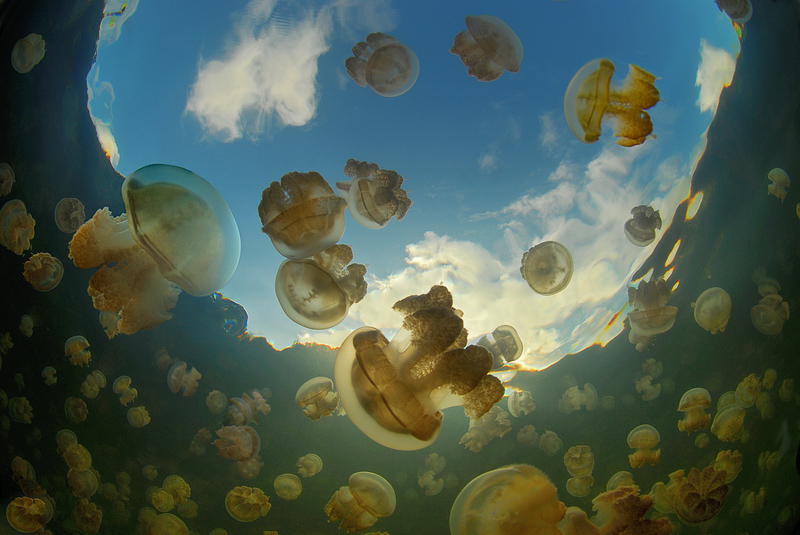
As many people know, the Nomad Jellyfish (Rhopilema nomadica) is also an indigenous species of the tropical Indian and Pacific oceans, migrated to the Levantine Basin through the Suez Canal in the 1970s. The serious economic and environmental impact the jellyfish inflicted led to its classification among the 100 worst invasive species in the European Union.
While it seems one species cannot destabilize an entire ecosystem, Dr. Bronstein stresses that it could dramatically disrupt a delicate balance and harmfully alter its environment. He gives an example from the shores of East Africa where intensive fishing activity removed virtually all of the species’ natural predators leading to a population outbreak: “they became so widespread that in some places there are scores of urchins per square meter – it’s like a blanket of black spines stretching for kilometers – it is impossible to put one’s foot in the sand.” In sites where sea urchin populations exploded and the economy depends on coastal tourism and recreation, workers from nearby villages are recruited to physically remove the urchins from the shallow waters each morning; something that needs to be repeated every day. “This is an example of how bad things could get. If no natural enemies exist in the Mediterranean things could go very wrong.”
There are local sea urchins species in the Eastern Mediterranean, the most common is the purple sea urchin (Paracentrotus lividus), a species very different from its black relative: it is smaller, with shorter blunted spines, and it finds cover in rocky habitats away from those engaged in leisure activities. Also unlike the black sea urchin, the purple urchin seems to be slowly disappearing. It is assumed that rising sea temperature – expected to further increase with climate change – is the possible explanation. While the purple urchin prefers temperatures of up to 30C, the black sea urchin thrives in warming sea water. “The black urchin habitats are in the Indian Ocean, the Red Sea and the Persian Gulf where temperatures are higher than the Mediterranean” explains Dr. Bronstein. “As the Mediterranean Sea temperature increase, it will only boost the species’ capacity to establish itself. Additionally, since it is adapted to very shallow waters – it is abundant in waters 20 centimeters deep – it would be a problem for any beachgoer.”
So how did the black urchin migrate to the Med? Dr. Bronstein explains that “if we consider the possibility that the species migrated via the Suez Canal – like many other invasive species into the Mediterranean – you can expect to find them along the coasts of Egypt and Israel. But although an extensive monitoring program is in place – led by the Israel Nature and Parks Authority – this species is yet to be documented in the region. We currently assume that it was actively transferred by human activity and not by an independent migration northward through the canal. One possibility is that larvae – the juvenile form of the species – were transported in ship ballast water which was released in a Mediterranean port. An alternative explanation is that the species, grown in aquaria around the world, might have been – intentionally or accidentally – released to the open sea.
What could be done? Dr. Bronstein would like raising public awareness to urge policymakers to act before the black urchins colonize the eastern Mediterranean. An investment in monitoring, and reaching an understanding where the urchins come from, will assist in developing policy measures to address the issue: “if decision makers would understand that the likely economic damages far exceed any investment in early prevention or elimination, it might help at least to mitigate future negative outcomes” he concludes.
The first person ever to be treated with an antibiotic was a policeman from Oxford, England in 1941. While tending his garden during his day off, the man scratched himself on a rose thorn, which soon led to an infection. Two months later he found himself on the verge of dying in the Radcliffe Infirmary. A team of doctors had managed to synthesize a small amount of penicillin, which was discovered some 12 years before by Alexander Fleming but had never been used on a human (and no one even knew if it would work). The treatment allowed the policeman to live a couple more days, but he died shortly after the doctors ran out of medicine.
Nowadays, there are no such shortages, and many lives have been saved due to antibiotics. However, massive industrial utilization and misuse of the drug, have imposed such a considerable selection pressure on bacteria which that many of them have become resistant to antibiotics. “Antibiotic resistance is one of the most complicated problems we are facing today,” says Prof. Nadav Davidovitz from the Ben Gurion University, who was part of the special multidisciplinary effort addressing the problem.
Are antibiotics really killing the bacteria?
Bacteria are single-celled organisms that can be found all over the inside and outside of our bodies. Many bacteria are not harmful. In fact, some are actually beneficial to the body, including most of the bacteria that live inside our intestines.
Antibiotics are drugs that fight infections caused by bacteria in both humans and animals, either by killing off the bacteria or by making it more difficult for them to grow and multiply. Antibiotic resistance occurs when bacteria, by natural selection, become immune to the drugs designed to kill them; in short, the germs are not killed and continue to grow. Therefore, antibiotic resistance does not mean the body becomes resistant to antibiotics, but the bacteria become resistant to the antibiotics.
Infections caused by antibiotic-resistant germs are difficult and sometimes impossible, to treat. In most cases, infections require extended hospital stays, additional follow-up doctor visits, and costly and toxic alternatives. “Some patients can no longer be treated with antibiotics because certain bacteria are completely resistant,” says Dr. Gili Regev-Yochay, Director of Infectious Disease Epidemiology Unit from Sheba Medical Center.
Despite significant advances in science, there has been a steady increase in mortality from infectious diseases due to the emergence of bacteria that are resistant to a wide variety of antibiotics. It is estimated that by 2050, global mortality associated with antibiotic resistance will reach about 10 million people per year. The World Health Organization has recently included antimicrobial resistance in its list of the ten biggest threats to global health in 2019, emphasizing the need for an international effort to tackle the problem.
Antibiotics are used in livestock to treat and prevent diseases. In the second half of the 20th century, they have also been used to increase the growth rate in farm animals. Although data collection is highly insufficient so far, it is estimated that global antibiotics use in food production ranges between 63,000 tons to over 240,000 tons. In the US, farm animals consume twice as many antibiotics as humans do every year.
Experts come together in “hackathon” to discuss solutions
In this context, a 36-hour hackathon (a multidisciplinary debate) was carried out at the Center for Digital Innovation (CDI) in Beersheba, in southern Israel, with the aim to boost entrepreneurship and answer one central question: How do we stop the rise of antibiotic resistance?
“We believe that solving complicated problems requires people from various disciplines from different sectors of society and that is what we hope to achieve through this hackathon,” says Shahar Cahanovitz from the Heschel Sustainability Center.
The hackathon consisted of nine teams, each one covering a specific aspect of the issue of antibiotic-resistant bacteria – resistant bacteria and ventilation systems, monitoring control and antibiotics, reducing antibiotics in the animal industry, medical education, vaccines to prevent infection, contaminated sewage treatment, media and press, reducing the duration of treatment and intervention in the food chain system.
At the end of the debating marathon, 15 judges chose three groups that had come up with the most promising and worthwhile ideas. The jury consisted of experts from different fields ranging from professors and researchers to entrepreneurs and doctors.
“The fact that a potential solution to a problem of this magnitude may arise from an outright multidisciplinary field of professionals is simply fascinating. We sat down for two days straight, without distractions and managed to produce something that otherwise would have taken months” says Dr. Uri Lerner, a Mimshak graduate (an Environmental Science and Policy Fellowships Program) working in Maccabi Healthcare.
Toilet bowl cleaner with an active antibiotics breaker
The team for reducing antibiotics in the animal industry came off as the winner of the hackathon. The main question the group asked itself was: How much antibiotics do animals actually receive? In search of the answer to this question, the team concluded that monitoring must be the first step. By having accurate data on how much medicine livestock are receiving, measures may be taken to either adjust or reduce the drug dosages. The outstanding feature of the approach lies in an innovative system named ‘E-prescriptions for veterinarians,’ in which the animal’s drugs would be electronically prescribed. In practice, this process would be directed by the Ministry of Health and greatly simplify the monitoring efforts.
There is a vast number of captive turtles kept as pets in homes, and it is up to their owners to give these wild animals their freedom back. At the Gazelle Valley Park in Jerusalem, an unusual animal welfare initiative aims to protect the local turtle population.
Turtles aren’t domestic animals and should live in their natural habitat. But over the past decades, massive development has taken place over what were previously open areas where turtles once thrived. This urbanization also includes paving roads that endanger the animals. For this reason, it is necessary to protect them from confinement and preserve their environment.
World Turtle Day is celebrated May and is sponsored by the American Tortoise Rescue, a nonprofit organization established in 1990 for the protection of turtles. This day was created to help people celebrate turtles and tortoises and protect their disappearing habitats.
200 turtles returned in 5 days
Gazelle Valley Park, an urban nature park in the heart of Jerusalem, is taking advantage of the World Turtle Day by campaigning for people to give up their pet turtles and bring them to the park. This park is the largest urban nature site in the country and is the consequence of planning in collaboration with the general public. The valley encompasses an area of about 25 hectares, where, over the years, a herd of 30 deer has lived.
A similar initiative was launched last spring by the Jerusalem Municipality, the Israel Nature and Parks Authority and the Gazelle Valley Park. “We contacted the Israel Nature and Parks Authority, and we told them about the fact that people have turtles at home. We worked together in a campaign to ask people to bring the turtles to Gazelle Valley. We were amazed to see that in 5 days, we had over 200 turtles returned,” says Yael Hammerman, Director of Gazelle Valley Park.
The turtles are divided into three different groups: unhealthy turtles that are taken to the Israeli Wildlife Hospital for rehabilitation, turtles in good health (either due to short captivity time or good care), and turtles that need to stay in Gazelle Valley Park in order to to be evaluated to determine if they should return to nature.
Turtles in danger
There are two tortoise species in Israel: the Greek tortoise (Testudo graeca), which can be found throughout the country, and the Negev tortoise (Testudo werneri), which inhabits mostly desert areas.
Turtles from Asia have the highest percentages of endangered species, due to much higher levels of exploitation. They are collected and traded in the East Asian meat consumption trade, and their shells and bone are also used for traditional Chinese medicines. Live animals of all sizes, especially of rare and/or attractive species, have been poached and illegally marketed to the high-end international pet trade, primarily in China, but also to other Asian countries (e.g., Thailand, Malaysia, Japan, and Indonesia) as well as to Europe and the United States.
One of the biggest threats to turtles is keeping them as pets, which is happening worldwide; Israel is no exception. Having a pet turtle is both a problem for the turtle, which is deprived of its natural habitat and for the turtle owner, who might get sick from the diseases that turtles carry (e.g., salmonella). On the other hand, many pet owners are unaware of the nutritional needs of these animals. “Turtles get sick in people’s homes because they receive insufficient or inappropriate food,” says Yael Hammerman.
Another problem turtles face in captivity is when females want to lay their eggs. In the absence of a male, a female turtle will lay them regardless, but they will not be viable. In addition, when turtles do not have a suitable substrate to deposit their eggs, they will lay one or two eggs at a time over a few weeks rather than the entire batch at once; they may even not lay any eggs at all. The unlaid eggs will become increasingly calcified the longer they are held, making them more prone to breaking inside the turtle, which is a condition called egg-yolk peritonitis and can be fatal if not treated.
Free the turtles, responsively
If pet owners decide they can no longer care for their turtles, they sometimes free them on their own accord, which is illegal. These domesticated turtles may not survive on their own and may infect wild turtles with diseases they contracted during captivity. Released turtles that are not native to the area can out-compete local species for food and habitat, thus threatening the original biodiversity.
“If you see a turtle walking outside, enjoy by watching it but don’t pick it up! We want to see more and more turtles in the wild and not in houses. Let’s respect nature by helping it to be how it is supposed to be,” says Hammerman.
Planning on living on a bowl of rice a day in India, or under the age of 25 and hostel jumping in dorms with bed bugs? This article is not for you. Mature-ish, aging hipsters read on: Artjuna is your first stop in India
With the world at our fingertips, working remotely from anywhere, and more time for leisure as many of us skip the high-stress jobs, why not go to India? Home to yoga, ancient mystics, and the kindest people on the planet, India is one of those places that can change your soul and course of life. I was always dreaming of India but hadn’t managed to get there before I had kids. With 2 small ones, I wondered, how do I jump in? Known as “India Light” Goa on the coast is a perfect first stop to exploring India. Come in the fall when the weather is drier and less hot and make sure that you start everything off at Artjuna Cafe in Anjuna, Goa. This is what I did with my family of four and parents.
Moshe Inbar and his life partner Anastasia run the dynamic cafe-cum-community center cum-DJ hub. Even if you don’t love trance music and late night dance parties which the town is famous for, you will meet a wonderful community of kind souls from around the world who can help you navigate your first steps in India. Where should we go and when? How can we rent a house? Where should we eat, is it safe? Where can the kids go to school? I asked all these questions to Moshe before arriving to Goa and throughout our 6 weeks in Anjuna and Vagator he was the best ambassador to the region, connecting locals from Goa and Mumbai to a rich and varied international crowd. He gave his his best advice with all his heart and I feel with left Goa with a new friend.
Moshe’s cafe on one of the main streets provides healthy and clean sustenance in mornings and afternoons. Walk in and you will enter a quiet little kingdom with treehouses for kids to explore. I appreciated the high level yoga classes run by his Iyengar teacher friend Ian Teger.
This is how it started before we travelled to India:
After hearing Moshe’s name a few times from my friends in Israel, I was on a quest to meet him. We connected by WhatsApp and he was answering any questions I had. I found a place on AirBnB, asked him if it sounded reasonable and after yes, booked. The first things we did after arriving to Goa, via Mumbai, was drop our bags, rent a car through our host, get a SIM card and then we visited Moshe.
We put his café in Waze and found it immediately. A kind guard helped us into a parking spot across the road from the café and there we would find our new home in India for 6 weeks at Artjuna Café.
Artjuna functions as the cultural center of India, a drop off point for newcomers, aging hippies, DJ’s, locals, Indians from Mumbai, yoga enthusiasts and people who value good, healthy food, health drinks and coffee. Back in the days when I was a backpacker I would sail from hostel to hostel asking the guy in town a week before me about what’s going on, what I should do. Today, 20 years later, I like my privacy, have an aversion to bed bugs most hostels aren’t for me anymore. This time around we would rent a small house with a bedroom and bathroom for everyone in the family.
Now we have the Internet beyond the Lonely Travel guides and travelling becomes less about being the lone wolf and finding new frontiers, and more about building community, the community you always wanted and how to have authentic experiences with people you meet along the way. In India, Artjuna is the place to start building those foundations.
Spiritual singing with Marina Kalyani Pieri and Paco Rodriguez
At its core, Artjuna’s beating heart and brains is Moshe, and his less-public partner Anastasia who runs the boutique selling her own designs in clothes and jewelry, with a collection of things hand made by others. A couple for a couple of decades with two young girls, they both started in the trance scene in Goa years ago. Some fifteen years on with lots of lessons learned, they run the most successful café in the region, for many reasons. Great food, reliable information and advice you would give to your best friend, yoga, community events, and a great clothing shop if you want to avoid the overheated markets.
I’ll take two!
Food
There is really something extremely yummy for everyone. My daily meal after an hour and a half of yoga every morning was often a Greek salad with bread, or a granola bowl with fresh fruit. Moshe is from Israel so he really knows how to serve up fresh and healthy Mediterranean food. While it’s not hard to find fresh fruit and veggies in Goa, it is a labor making sure that you can eat them, that they’ve been cleaned appropriately. His staff is local. Try the ABC juice.
Vibe
Moshe and Anastasia
Alcohol is not served at Artjuna and there is a no drugs policy. There is an annual art show where you can buy art made by Goans and travellers from all over the world. A woman in a yoga class (from Italy) gave me her pants. The people there are amazing.
Yoga
What kept me coming back daily to Artjuna was the yoga sessions, though about half of the cafe seemed to be just in it for the friendship. Like an Indian version of entering a Cheers set. Many are throwbacks from the 90s rave scene, but there is a great mix of ages, younger and older too.
Ian Teger, while leading a yoga retreat in Jaffa
I enjoyed Iyengar yoga sessions with in-house yoga teacher and good friend to Moshe, Ian Teger. He teaches multiple levels at once, from the just-past-beginner to the master class level student. The very beginners can start studying with Ian’s protégés (one has a great clothing shop too nearby – see Ondi) in a beginner class after the first of the morning.
The classes are challenging, restorative and a lot of fun. Ian takes the less serious route that most Iyengar teachers embrace. The class is full of jokes, sometimes in Yiddish. Ian is originally from the UK and was a close student of BKS Iyengar, a yoga guru who brought yoga to the western world.
While many people struggle to book week-long or longer detox of yoga sessions before they travel to India, I think the best way to get the most for your money and social life is to find a local place to stay (we stayed with a local Goa family) and spend most of your time at Artjuna with Moshe and his crew.
For those with kids, try the Holistic Yellow School, where hippy kids get educated. Drop-ins allowed, even for weeks at a time. Meet you there next winter?
Algae as superfood? Countries like Japan have already known for years about the possibilities of using algae as a nutritious food product, as any sushi fancier will attest to. Growing algae to feed the world’s hungry may soon become a viable reality as some forms of algae likespirulina, actually a form of cyanobacteriaand up to now much more expensive to produce as a food source.
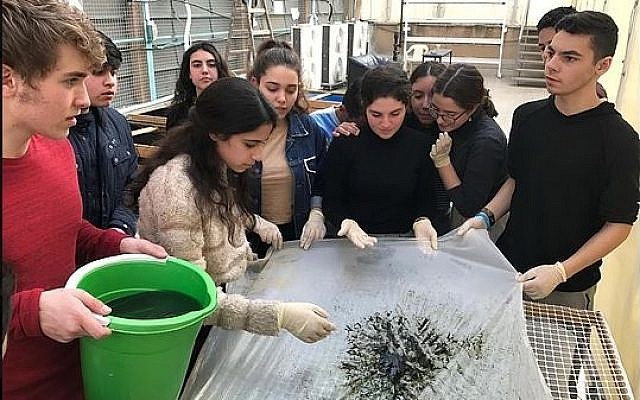
This cost factor may now be reduced significantly due to a project being conducted by high school students at Israel’s Gymnasia Herzliya in Tel Aviv. The school program actually began back in 2013 when the high school students began experimenting with growing the algae in plastic bottles in what they referred to as the Algeed Superfood Project.
Spirulina has been found to contain as much as 70% protein and as such can be a tremendous help to feeding countries such as those in Africa whose large populations suffer from high levels of malnutrition. Since its original inception, the Tel Aviv high school project has expanded to actual involvement with African countries like Rwanda and the Democratic Republic of the Congo.
“The idea is to find a low cost nutrition solution to feed the world’s hungry,” says Ben Berger, the project head. Congolese Agricultural representatives recently visited the high school, whose students took on the project six years ago to find a way to reduce significantly the cost of producing the highly nutritious algae at a lower cost than had been done up to now when spirulina was mostly sold in health foods stores at a much higher cost. Spirulina in its natural state, usually looks like the photo below:
Dr. Zeev Degani, the school principal, is very happy that the project is taking place at his school which has expanded it to the point where some of the students have actually visited African locations to see the progress being made to produce the algae there. The Gymnasia Herzliya students have developed a way to grow the algae in plastic drink bottles, an item that is plentiful all over Africa and usually discarded in trash dumps. The program was aired recently on Israel’s Channel 13 news program.
Beginning originally on South Africa, the project is also being tried in Rwanda, Ethiopia, Kenya and the Democratic Republic of Congo, where more than 1.5 million children suffer from various forms of malnutrition. “Instead of being dependent on aid programs, which usually end after a period of time, why not focus on something that will enable countries to provide their own nutrition solutions?” said a representative of the Lwiro Research Center of Natural Sciences in the Dem. Republic of the Congo.
With the stunning Spanish sunshine and a rich culture to explore, Spain is a fantastic destination for a family holiday. Yet its theme parks can lift your holiday from good to great.
So, when you’re browsing for spacious villas in Spain that are large enough for the whole family, find the nearest family-friendly theme park to you with this list.
PortAventura, Mainland Spain
PortAventura is one of the most famous theme parks in Spain, bringing in approximately five million visitors a year. Within walking distance from Salou on the Spanish Mainland and only around an hour’s drive from Barcelona, PortAventura is a popular day out for the whole family. Nearly 300 acres in size, the huge park is split up into six themed areas. Enjoy the laid-back atmosphere in Mediterrania, where you can ride on a steam train, or set sail through the park to the Imperial China world.
In China, the atmosphere is more upbeat with iconic roller coasters such as the Dragon Khan with its 8 loops and speeds of up to 110 km/h. Scaling 76 metres tall, Shambhala is also here and is the tallest roller coaster in the whole of the park.
Next to PortAventura are two other great theme parks, Ferrari Land and PortAventura Caribe Aquatic Park. With water rapids, slides, an indoor splash pool and a large wave pool, the Aquatic Park is perfect for cooling off on sunny afternoons. Ferrari Land was inspired by the Italian car and offers not only rides and roller coasters but unique F1 racing experiences in their immersive 4D cinema.
Siam Park, Tenerife
With waterslides, rides and rapids, visit the popular Siam Park in the Costa Adeje resort in Tenerife. The park was voted last year as the best water park in Europe in TripAdvisor’s Traveler Choice Awards and it doesn’t disappoint. Its main attraction is the plummeting Tower of Power. With a knee-trembling 28m drop, the Tower of Power is not for the faint-hearted.
The whole family can experience the epic Vulcano – with four-person rafts taking you through dark tunnels. Or pair up and ride The Gigante as you navigate through the twists and turns backwards.
Unleash your competitive side and race down the Naga Racer slides or relax on the Lazy River and enjoy the Thai inspired setting. With a wave pool and slides suitable for all ages, the whole family can feel the excitement together.
Oasys MiniHollywood, Almeria
For a theme park with a twist, visit Oasys MiniHollywood. Set in the vast Tabernas desert, venture to Almeria in southeast Spain to discover this attraction. Enjoy an action-packed afternoon in the wild west on this classic movie set, which was the location for many spaghetti western films in the 60s and 70s. Visit the interactive prop museums, stroll around the cactus gardens and get involved in the western shows. With Can Can dance shows in the saloon, a themed pool area and a small zoo, there’s a lot to explore here.
Terra Mitcha, Benidorm
A theme park with a historical twist, take the family to Terra Mitcha in Benidorm to enjoy a world where five ancient civilisations meet. The park has five distinct areas: Egypt, Rome, Greece, Iberia and The Islands with themed roller coasters, rides and slides to discover. In ancient Greece, immerse yourself in the avant-garde world with a 5D cinema that’s set in an authentic Parthenon. Or, if you’re feeling brave, ride the Magnus Colossus roller coaster.
In Egypt, ride in a Pharaoh’s sarcophagus through the twists and turns before you plummet 20 metres in this epic water rapid ride. Enjoy the bubbling hot tubs and fountains in the Nile River and, for something downbeat, sail from the shores of Egypt to Iberia to take in the seafaring landscape.