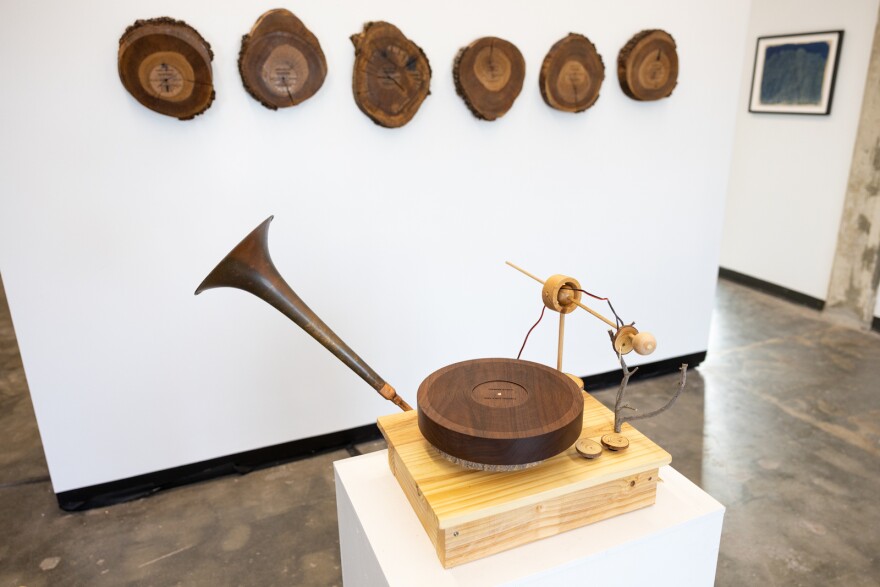
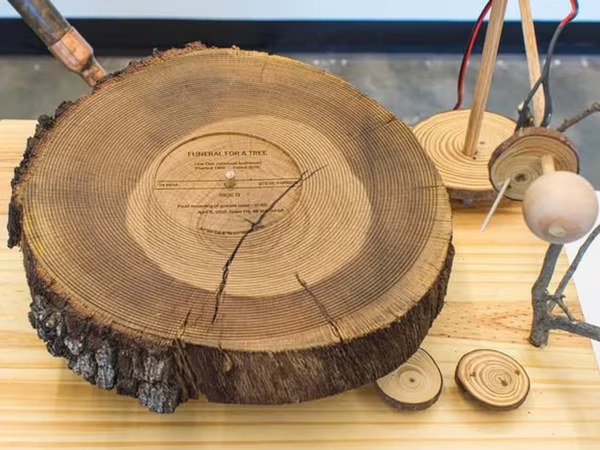
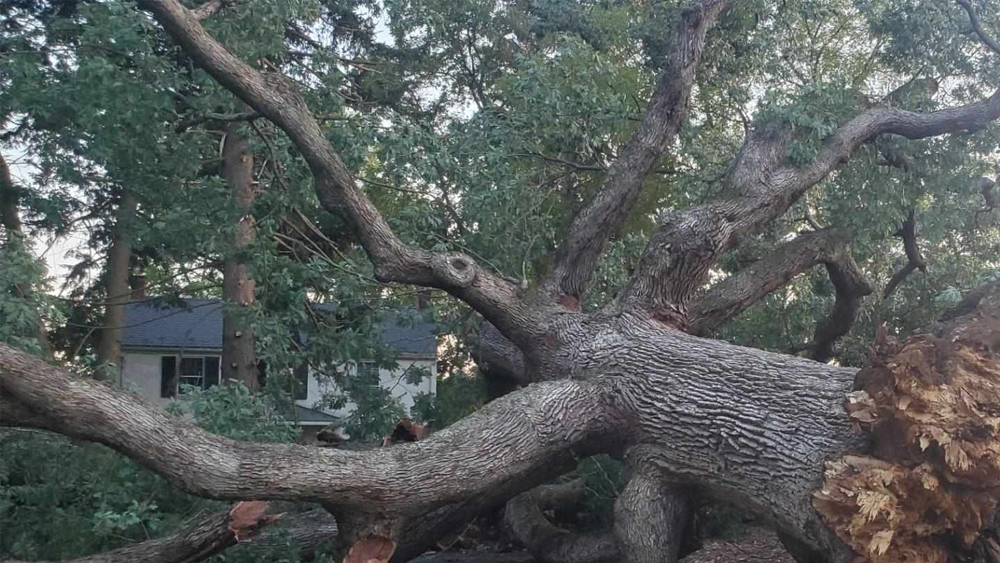
When a 65-year-old oak tree in Steve Parker’s yard died from fungal disease, he did not cut it into firewood or haul it away. He did not erase it. He cut the tree into disks and then turned them into records that play birdsong –– a touching tribute to the years that the tree was house and home to birds and all manners of creatures.
Parker, a Texas-based sound artist known online as @parkerstevesounds played the disks of wood on a Victrola-style turntable, and from the it the wooden records emit layered avian soundscapes, transforming dead wood into a living archive. He called the project Funeral for a Tree.
I once worked on a similar project in clay. I created a series of vessels designed to hold seeds. While shaping each one, I spoke to it — prayers, fragments of thought, small conversations with the material itself. I recorded my voice and the surrounding landscape of sound into the walls of the ceramic. Today’s machines cannot retrieve those recordings. But future instruments — capable of hearing at finer scales — may. The vessels are simply waiting for the right ears.
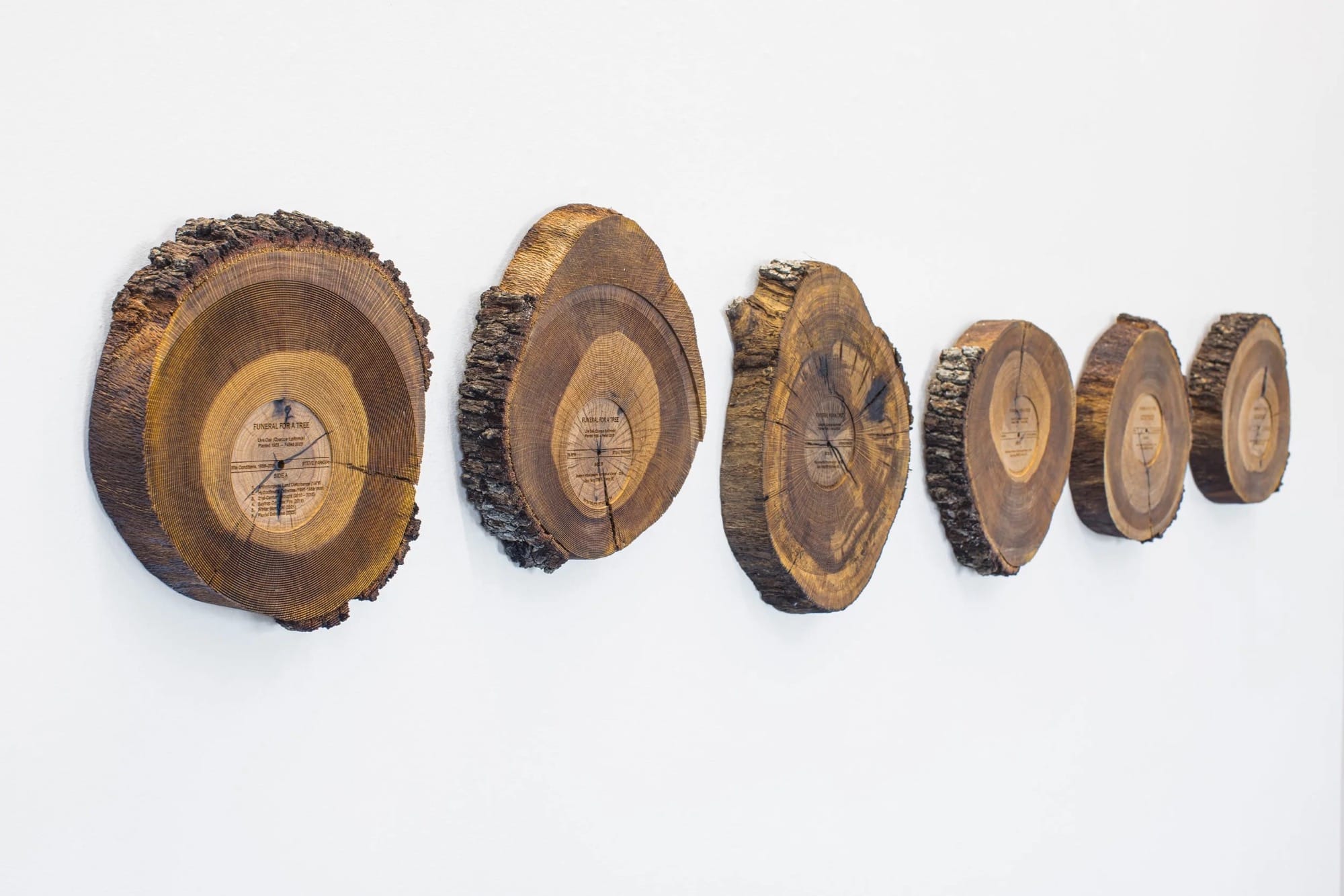
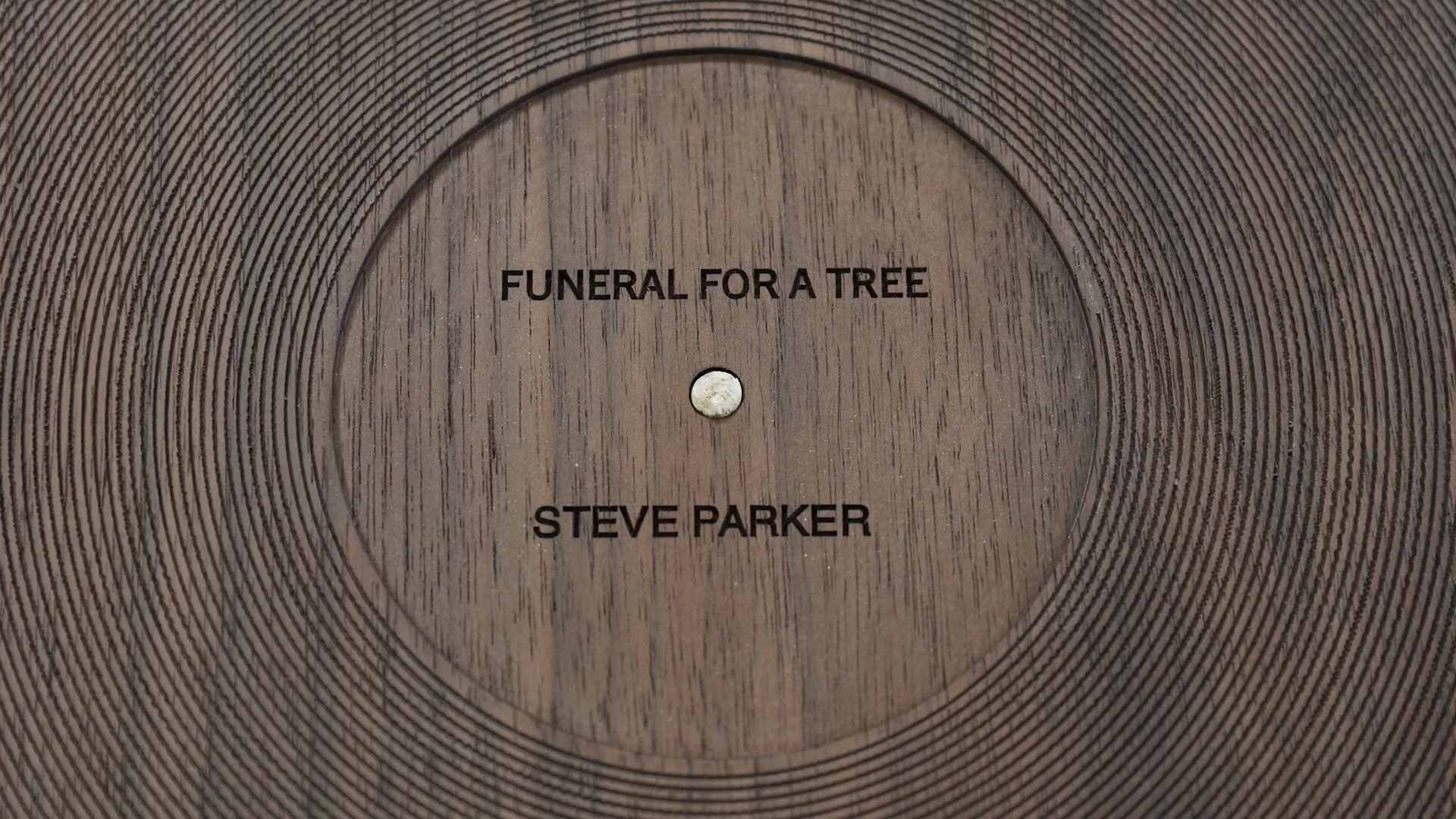
Trees are not neutral objects. Their rings hold records of rainfall, drought, heat, and cold. Their fibers contain chemical traces of stress, recovery, and time. In scientific terms, trees are environmental witnesses. In Parker’s hands, they become storytellers.
The project was later exhibited at Ivester Contemporary in East Austin, Texas where visitors encountered both the wooden records and the physical remains of the tree itself. The installation did not explain the tree. It allowed people to sit with it.
In a time when climate loss is reported in numbers — hectares, parts per million, extinction rates — Funeral for a Tree insists on intimacy. It is easy to talk about forests. It is harder to mourn a single trunk. It’s like people fighting for Gaza or Iran or places thousands of miles beyond their city limits, but they don’t have time to call their grandmother or check on the sick boy down the street.
Parker’s work invites us to create rituals and intimacy with objects and meaning close to our homes and hearts.