
How to Make Mushroom Paper
If you’ve already experimented with making moss graffiti or traditional papermaking, here’s the next level of nature craft: mushroom paper. This activity is perfect for forest schools, Waldorf school families, or DIY crafters who love experimenting with natural materials. Making paper from fungi not only produces unique earthy textures and colors, but it also connects you with the forest in an entirely new way. With seeds or dried flowers added, your creations can even be planted—turning your art into living gifts.
Why Mushrooms?

Unlike plants (which are rich in cellulose), mushrooms are made of chitin, a strong structural polymer. This gives mushroom paper a distinct leathery texture—sometimes even resembling vegan leather, such as that used by iconic fashion designer Stella McCartney, the daughter of the Beatle’s Paul.
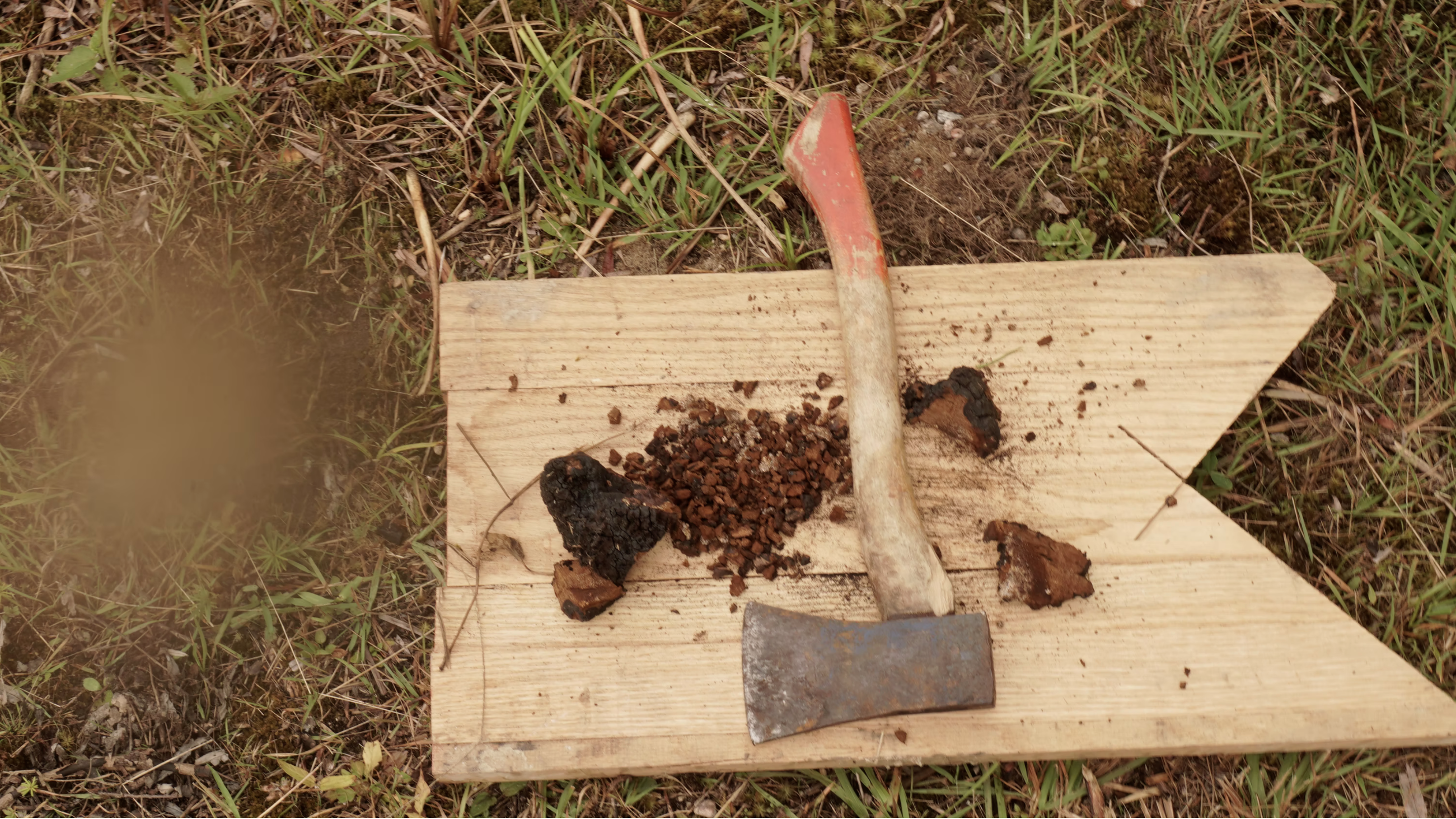
While we’ve heard from mycologists that say you can use poisonous mushrooms for paper as well as edible, we;d stay on the safe side and suggest using fungi confirmed by a local expert to be non-poisonous. And stick to woody, tough species you wouldn’t want to eat. Mushrooms like chaga could be curious to try, but the value of them might be better kept as a tea.
Best Mushrooms for Papermaking
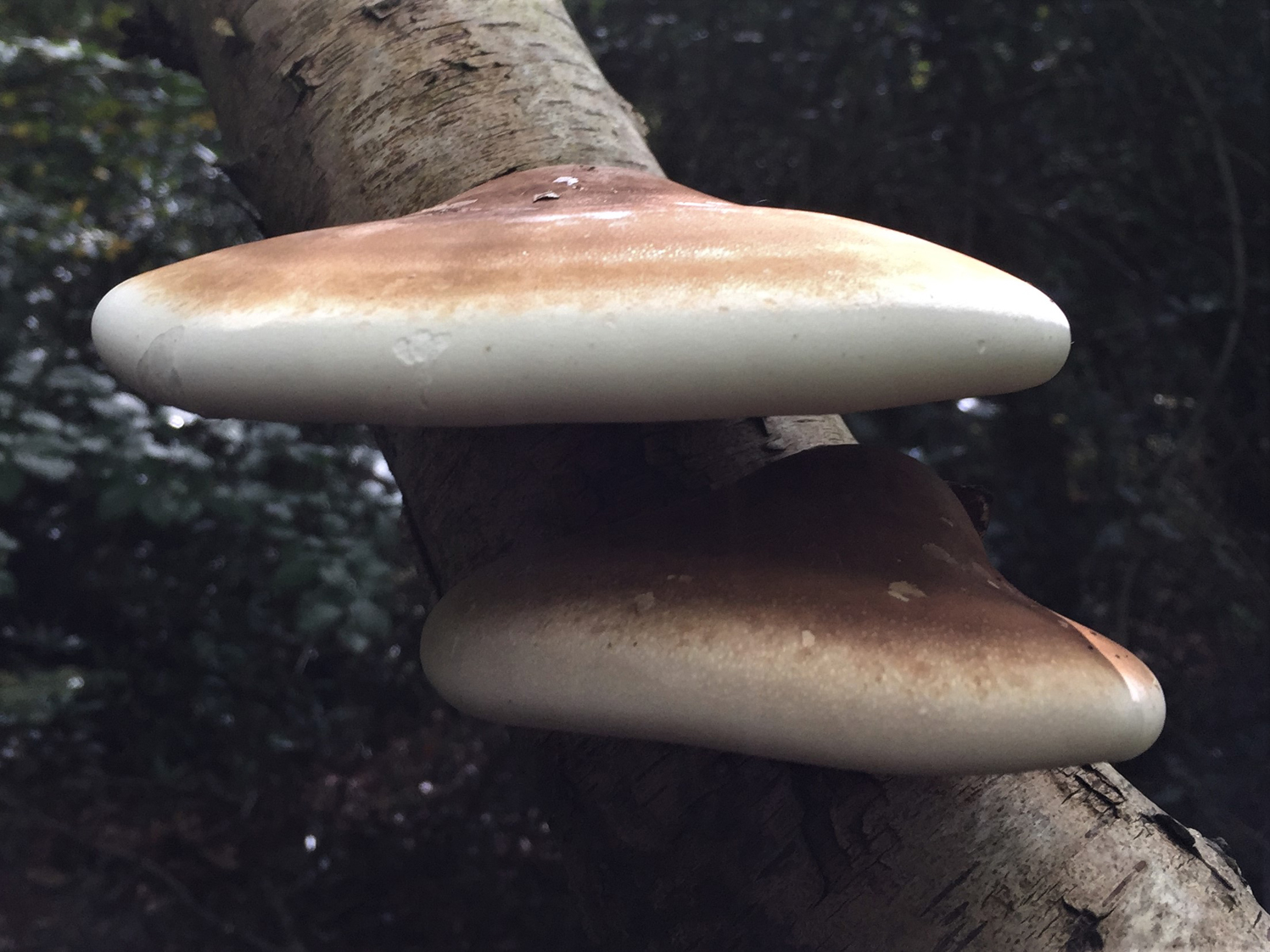
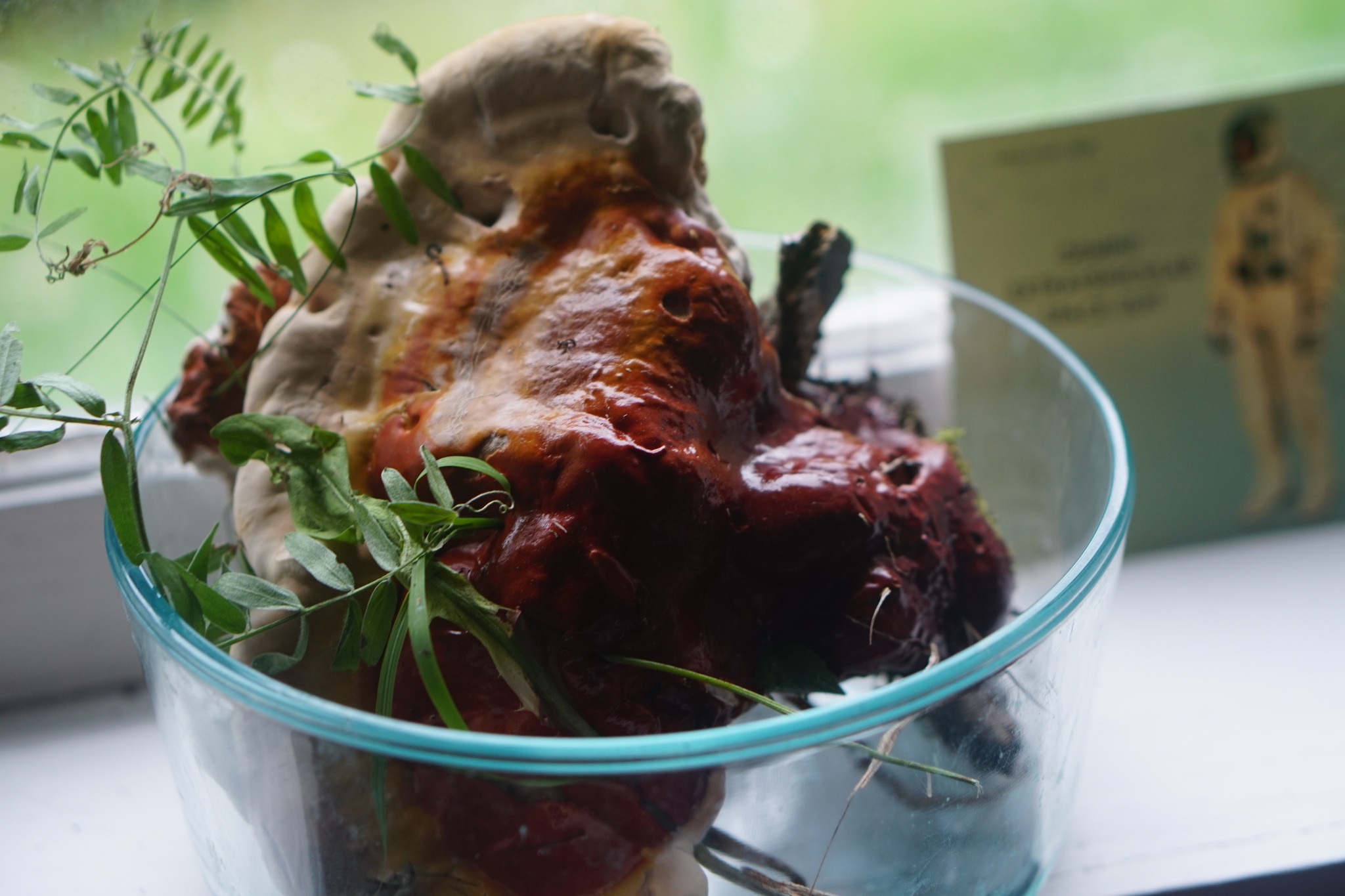
Dry, woody bracket fungi (also called polypores) are the top choice. They are called bracket fungi because they sit on the side of a tree like a shelf or bracket. They are hard to pull off but are removed with a knife or a rock. Experts we’re spoken with from the group UK Wildfood Larder say it is okay to pull all parts of the mushroom out. There is no need to consider leaving the roots since the actual “roots” of the mushroom run deep in the forest as mycelium. Mushroom hunters typically cut the mushrooms clean to avoid dirt and bugs in their edible haul. Below is a list of some bracket fungi you can try as paper. Really any of them will do.
-
Artist’s Conk (Ganoderma applanatum)
-
Turkey Tail (Trametes versicolor)
-
Red-Belted Conk (Fomitopsis pinicola)
-
Birch Polypore (Fomitopsis betulina)
-
Reishi / Lingzhi (Ganoderma lucidum)
Chaga (Inonotus obliquus) – though often too valuable as medicine
Mushrooms to Avoid
-
Soft fleshy caps (button, portobello, chanterelle, oyster) → too mushy.
-
Chicken of the Woods → better eaten than pulped.
-
Slimy caps → produce weak, sticky sheets.
Tip from Angela at Foraging with Angela: “It’s best to use a bracket fungus rather than a toadstool. Look for species with visible fibers, leathery feel, and flexibility.”
Materials You’ll Need
-
Foraged mushrooms (woody polypores work best) like birch polypores.
-
A large tub or tray that is big enough to fit your mould and deckle. (You can make one easily with an old picture frame)
-
Blender
-
Water (lots!)
-
Mould and deckle (or DIY with a picture frame + mesh)
-
Absorbent cloths, towels, newspapers, or rags
-
Sponge
-
Optional: recycled paper scraps, cotton fibers (up to 20%), seeds, dried flowers
Step-by-Step Process for making simple mushroom paper
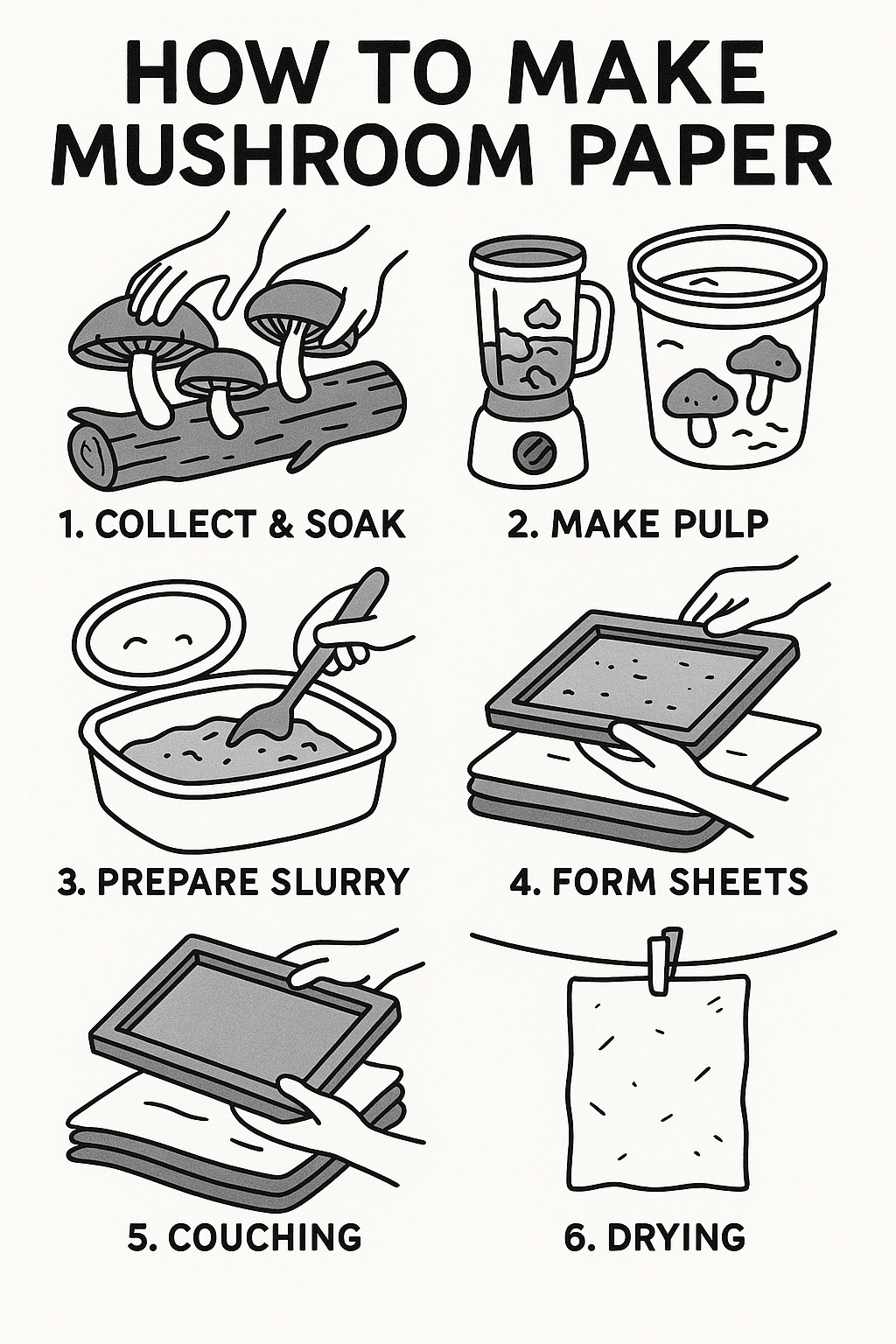
1. Collect & Soak
Harvest mushrooms and cut up into chunks. Soak them overnight—or longer to soften the fibers. Change the water if you soak for more than a couple of days as it will ferment.
2. Make Pulp
-
Chop fungi into smaller pieces.
-
Blend with plenty of water until you have a smooth pulp. A good strong blender like a Vitamix can help. The more you blend and liquify, the finer your paper can be.
-
Mix in fibers like cotton or recycled paper for strength. Some papermakers suggest 20% paper.
3. Prepare Slurry
-
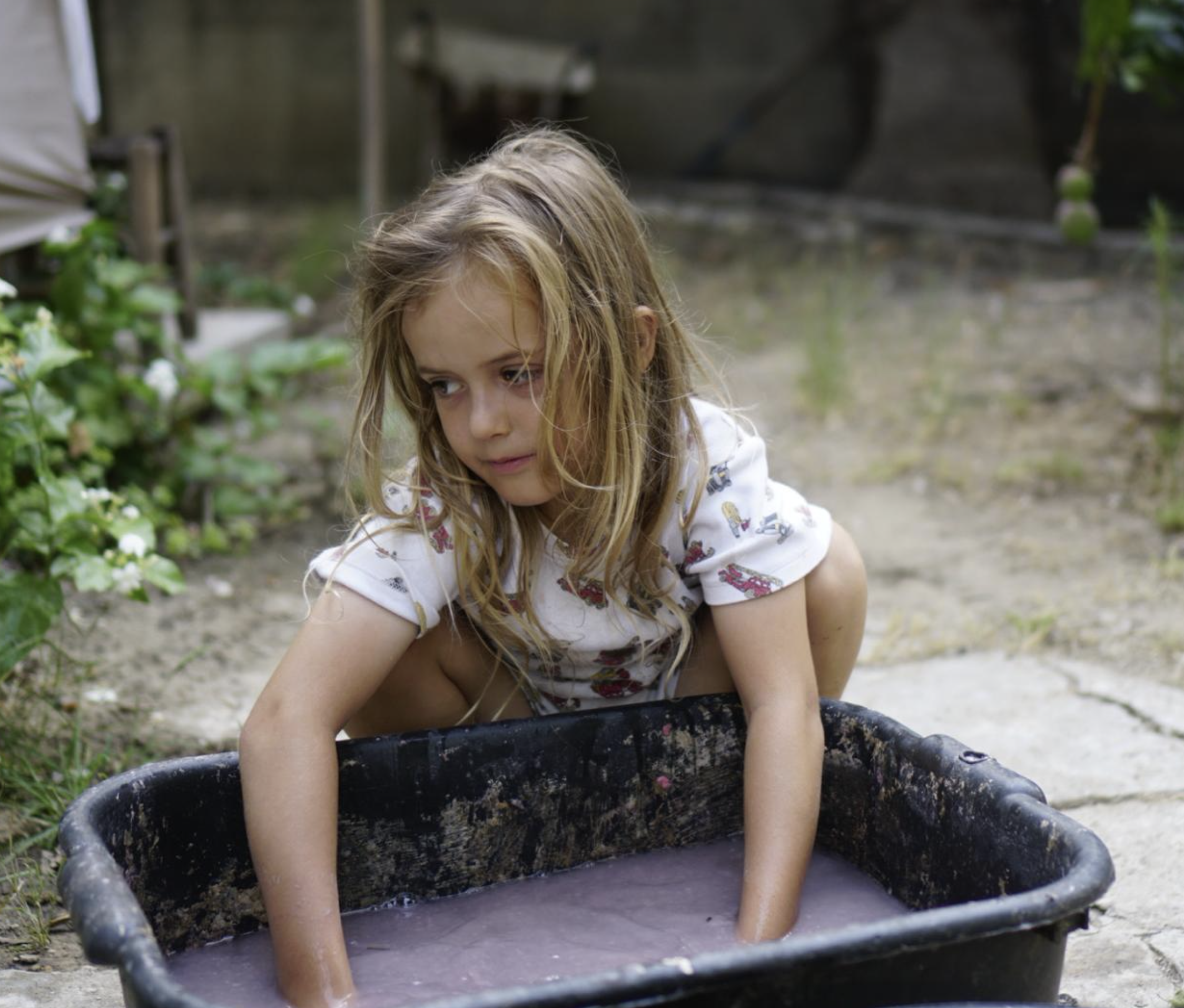
Pour pulp into a tray with extra water.
-
Stir so fibers float evenly.
4. Form Sheets
-
Submerge mould and deckle.
-
Lift smoothly, letting water drain while fibers settle into a sheet. Experiment with concentration of material on the deckle. More will create a thicker paper, less will create a finer, thinner paper. in the video above the maker is using a proper mould and deckle. A picture frame with an added screen instead of glass will do. Pull it up through the slurry and place another screen piece on top and press out water and flip and you will be fine.
-
Remove deckle.
5. Couching
-
Flip the wet sheet onto a towel or cloth.
-
Sponge away water.
-
Gently peel off the screen.
6. Drying
-
Layer sheets between newspapers/cloths.
-
Press under heavy books or iron through fabric.
-
Replace damp layers until fully dry.
- Iron dry the sheets on a low setting to keep the sheets flat.
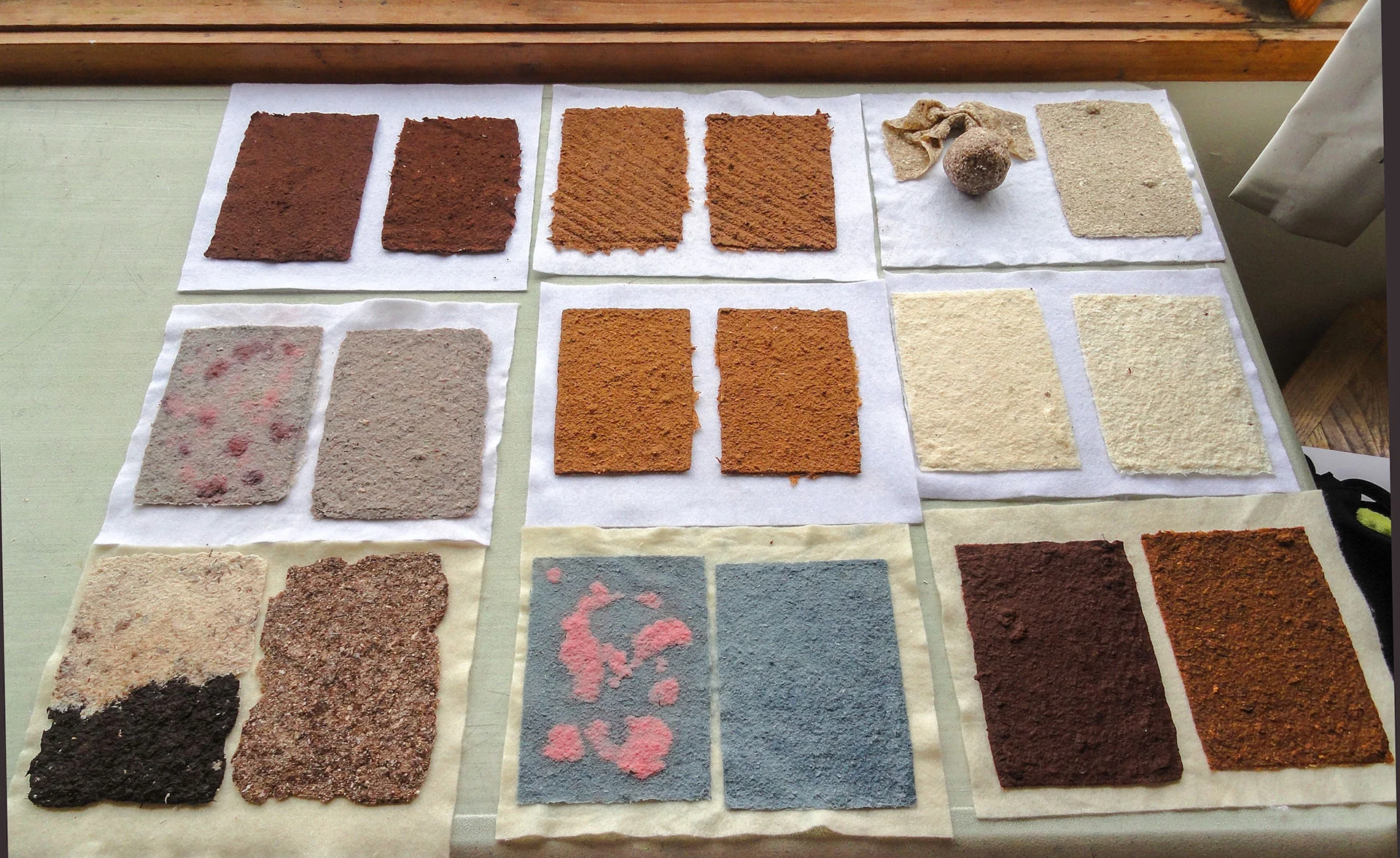
The process is flexible—part craft, part experiment—and every batch yields different textures and tones. We advise you to only use foraged mushrooms and fungus that are confirmed to be non-poisonous by a local mushroom expert. We also suggest you use mushrooms you prefer not to eat because why waste a tasty chicken of the woods when you can use an old dry bracket mushroom instead?
Creative Uses

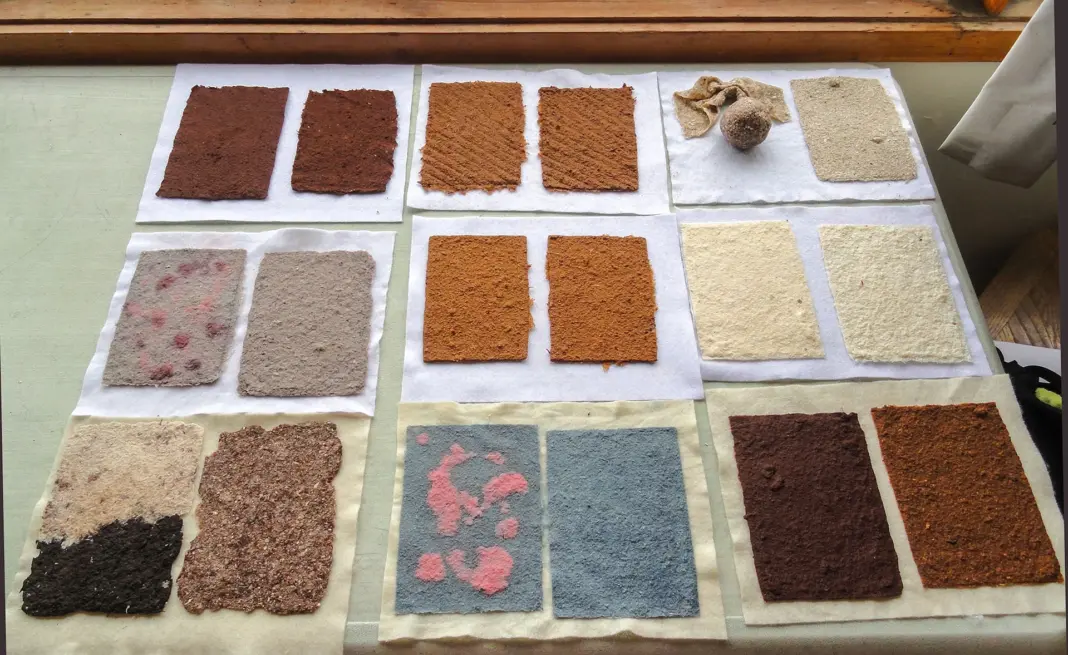
Mushroom paper varies from pale cream to rich tans, often with an earthy scent. Each sheet is one-of-a-kind. Try it for:
Greeting cards and envelopes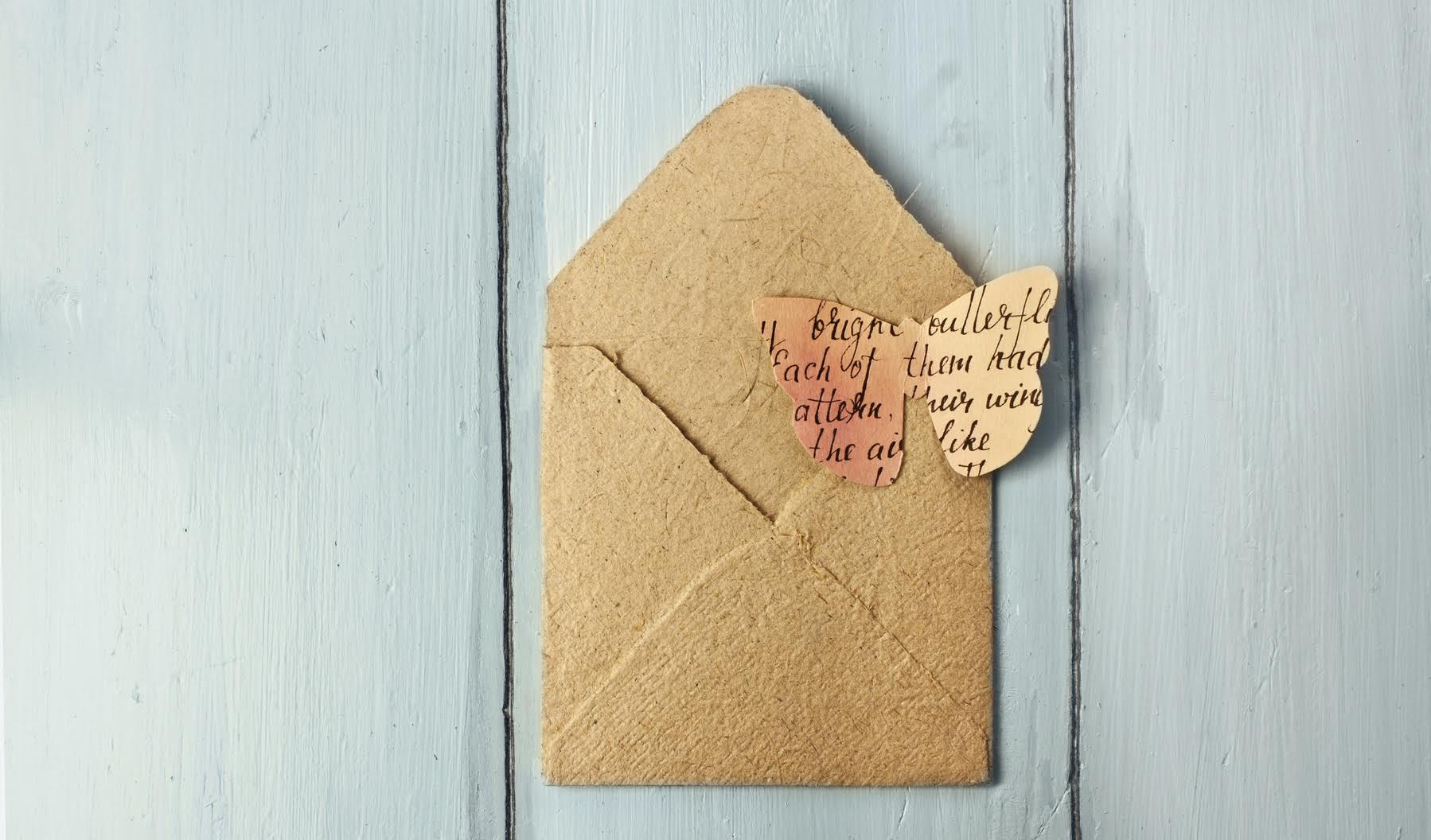
Handmade notebooks
Plantable gift tags (with seeds inside)

Mixed-media art and collage
ewelry (rolled paper beads)
Eco-sculpture or masks
Make it thicker and use the “leather” in alternative fashion or art projects. Like mushroom leather pants?
Making mushroom paper is as much experiment as craft. Every batch turns out a little different, carrying the spirit of the forest (and you) into your art. Whether you’re creating earthy stationery, exploring eco-leather alternatives, or just enjoying the process with kids, this project is a hands-on way to turn fungi into something extraordinary.
In our journey meeting mushroomers, we also heard it’s possible to take some sawdust and inoculate it with mushroom spores to grow a thin flat sheet of mushrooms which can be later dried for “leather”.
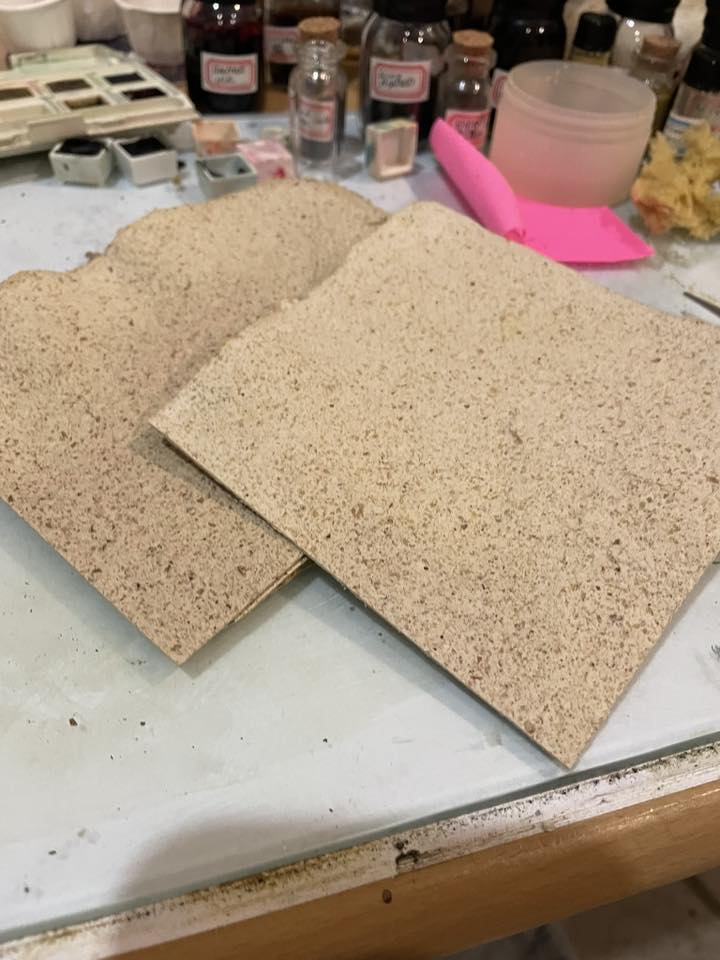
Nichola Jane Rodgers: This is my mushroom paper I use a mix of birch polypore and chicken of the woods.
Angela from Foraging with Angela tells Green Prophet: “I’ve made mushroom leather from a few species, but I’ve found that Oak Maizegill is the one I get the best results from. They grow in my area (Cape Town SA) as an alien. Any bracts that aren’t poisonous should do. You can usually tell the kind of paper/leather you’ll end up with by the feel of the fresh mushroom.
“I didn’t use any glues or binders for the Maizegill paper, their natural fibers are sufficient. It makes a flexible, foldable, leathery paper. I just blend it with lots of water to make the slurry.”
And the paper, she notes, can be “more of a leather. Depending on the species.” See her video below.
Mushroom paper typically ranges from pale cream to deep tan, often carrying a subtle earthy aroma. No two sheets are alike—each piece carries the spirit of the forest into your art.
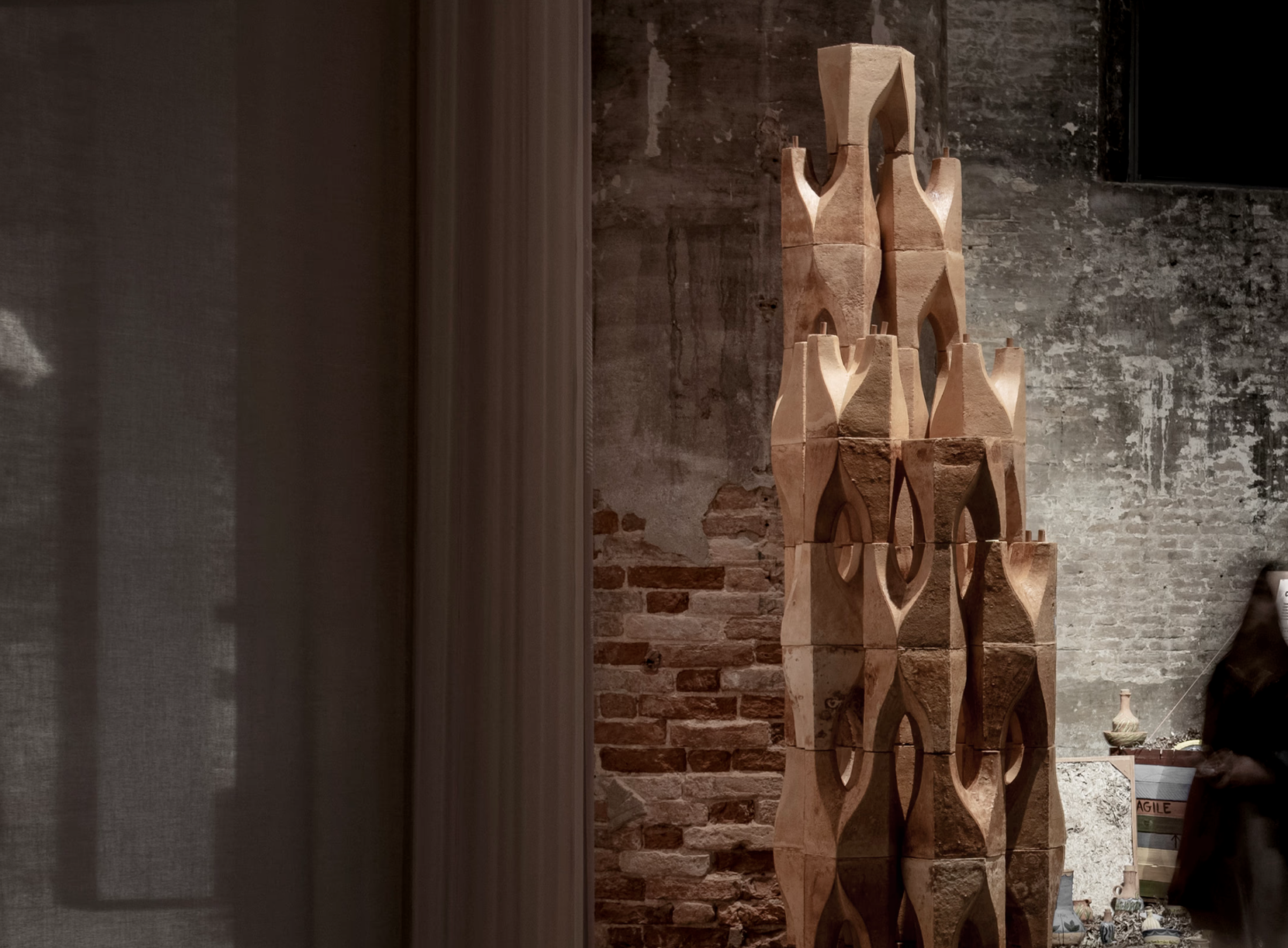
Inspired by making paper? Check out this Indian-based design firm Anomalia –– they design furniture using mycelium!
And we were suggested to watch this video, about a man who makes hats from mushrooms in the forests as they are. The hats are made from amadou, a material made from Fomes fomentarius mushrooms. This species grows mainly on beech and birch. And a part of the cap called trama can be extended with figers (when cleaned from the spore part and the top layer “skin”.
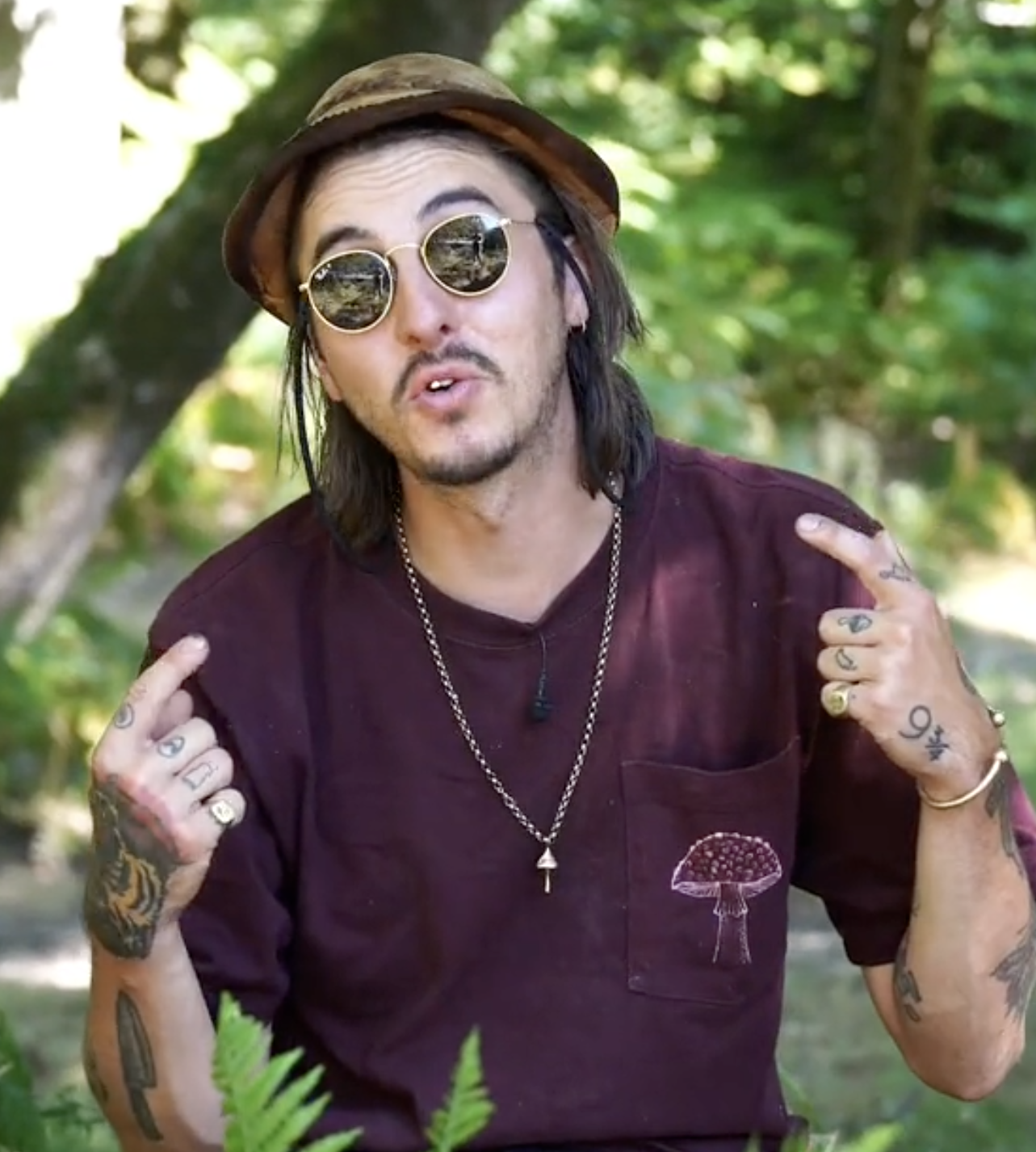
Primarily this material was used as tinder for fire making in many parts of Europe. Hat making was rarer. And survived only in one village in Transylvania (now a part of Romania) in a place inhabited by Szekler people speaking an ancient dialect of Hungarian.
Only a few families still make a hat, mainly the old people. The video was made with the youngest from the line of Mate hat makers, Karoly Mate. This is the vegen leather of the future and these people steward this knowledge. This process was popularized by the famous ethnomycologist Paul Stamets.