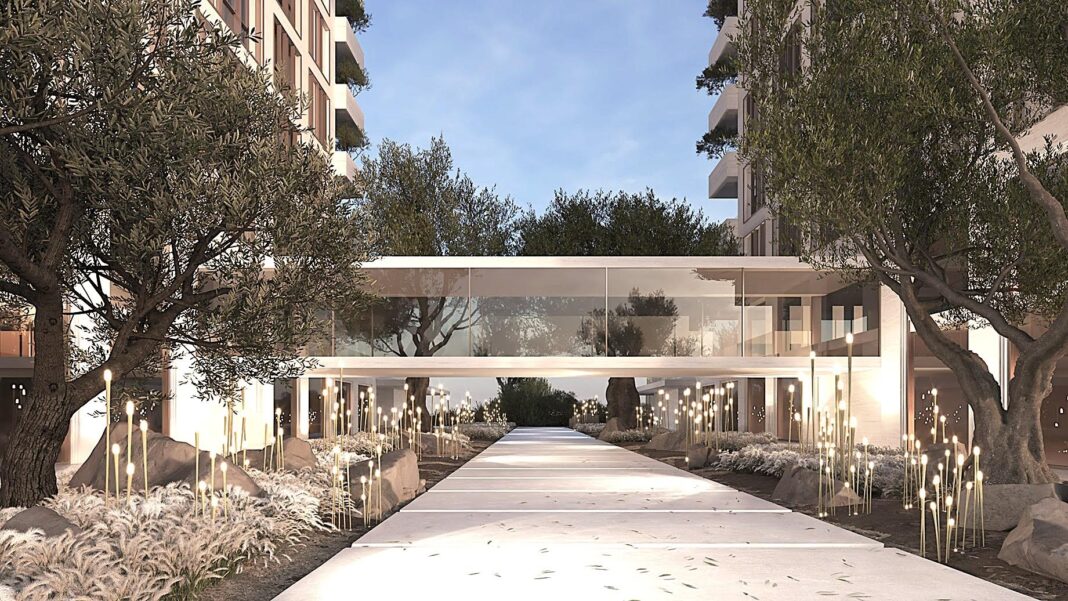


In another case of dubious Dubai, a UAE developer is making an ecological housing project and is advertising that they are uprooting ancient olive trees from the Mediterranean to plant in Dubai. We see what happens to trees planted in Dubai and then neglected. There is something deeply wrong with calling the uprooting of ancient olive trees “eco,” no matter how many studies are cited or how softly the word wellness is whispered into the sales brochure.
When Mediterranean olive trees—some said to be up to 2,500 years old—are lifted from their ancestral soil in Spain and Italy and shipped to Dubai to decorate a luxury development, this is not sustainability. It is ecological displacement dressed up as design. East tree is reported to have cost about $270,000 USD. So who is selling them?
Related: See what happens when millions of trees in Dubai are not watered
Water turned off in Abu Dhabi desert tree experiment (photo)
These trees are not ornaments but are living archives. Many took root around the time of Ancient Greece, long before real estate prospectuses and infinity pools. Olive trees anchor soil, sustain biodiversity, and hold cultural memory. They belong to landscapes shaped by centuries of climate, wind, microbes, and human care. Their value is not measured in dirhams.
Related: The value of an ancient olive tree in Israel
The idea that a tree costing AED 1 million somehow justifies its relocation is the logic of extraction, not regeneration.
Developments like MAG’s Keturah Reserve—rising in Mohammed Bin Rashid City—lean heavily on the language of biophilic design and mental wellbeing, and even point to a study on how trees are good for people. Yes, people thrive when connected to nature. But whose nature? And at what cost?
The developers say that they are going to bring the trees to their project Keturah Reserve, an apartment complex of the 533 low-rise apartments, 93 townhouses and 90 villas.
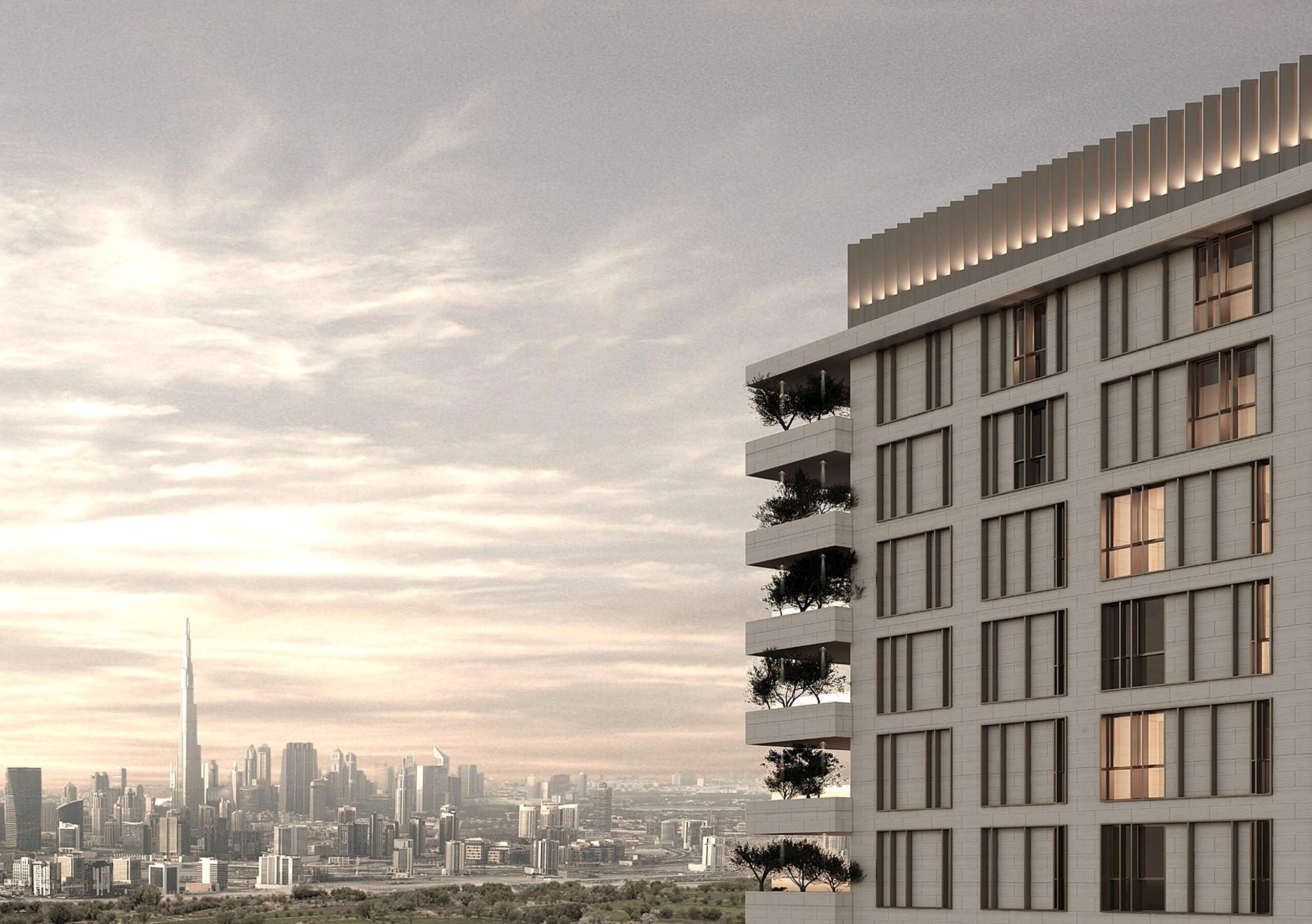
Flying centuries-old trees across continents via specialized cargo burns enormous fossil fuels. Replanting them in a desert climate—no matter how advanced the irrigation or “heritage preservation techniques”—places immense stress on organisms that evolved for Mediterranean seasons, soils, and rainfall patterns. And we’ve seen that the UAE is not capable of taking care of trees so survival rates are uncertain. Long-term ecological function is compromised. And the original landscapes are left poorer, stripped of irreplaceable elders.
“Every element enhances sustainability and harmony with the environment, so residents will thrive,” said Talal M. Al Gaddah, CEO and Founder of the Keturah luxury brand. “They bring history, calm, and a sense of permanence,” said Talal, who has conceived to build a natural gallery (Joni Mitchell called it a Tree Museum), where a forest of trees from around the world blend with art installations and sculptural dry gardens, just a short drive from Downtown Dubai.
This is not harmony with the environment but ecological laundering.
True biophilic design does not begin with removal. It begins with respect. If developers genuinely care about wellbeing, they would invest in native desert ecologies—ghaf trees, indigenous shrubs, living shade systems—species adapted to place, water scarcity, and heat. They would restore land rather than import symbolism.
Ancient olive trees should remain where they stand, rooted among the communities, farmers, birds, fungi, and histories that shaped them. They are not transferable assets. They are not centerpieces. They are elders.