

In a visionary nod to the past, architecture studio Snøhetta from Oslo, Norway has unveiled its design for the Royal Diriyah Opera House, set to grace the historic town of Diriyah on the outskirts of Riyadh, Saudi Arabia. Informed by the rich tapestry of traditional Najdi architecture (see the House of Saud), this ambitious project is poised to become a cultural landmark, contributing to the wider redevelopment masterplan of Diriyah. The ancient town, celebrated for its vernacular Najdi architecture characterized by mud-brick structures closely clustered to provide shade, will soon witness the emergence of a state-of-the-art opera house that seamlessly blends heritage with contemporary aspirations.

Scheduled for completion in 2028, the Royal Diriyah Opera House is envisioned as a distinguished venue capable of accommodating 3,500 visitors. The architectural marvel will house a 2,000-seat opera theater, two 450-seat multipurpose theaters, and a 450-seat covered rooftop amphitheater, providing a dynamic stage for the aspirations of future generations of performers.


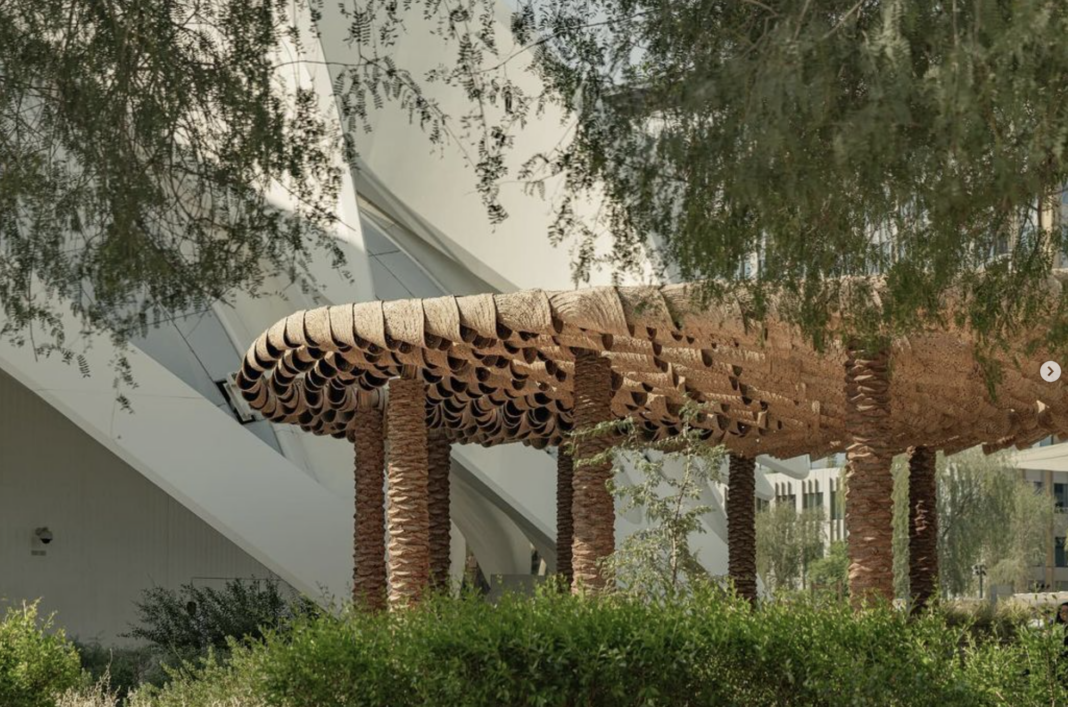
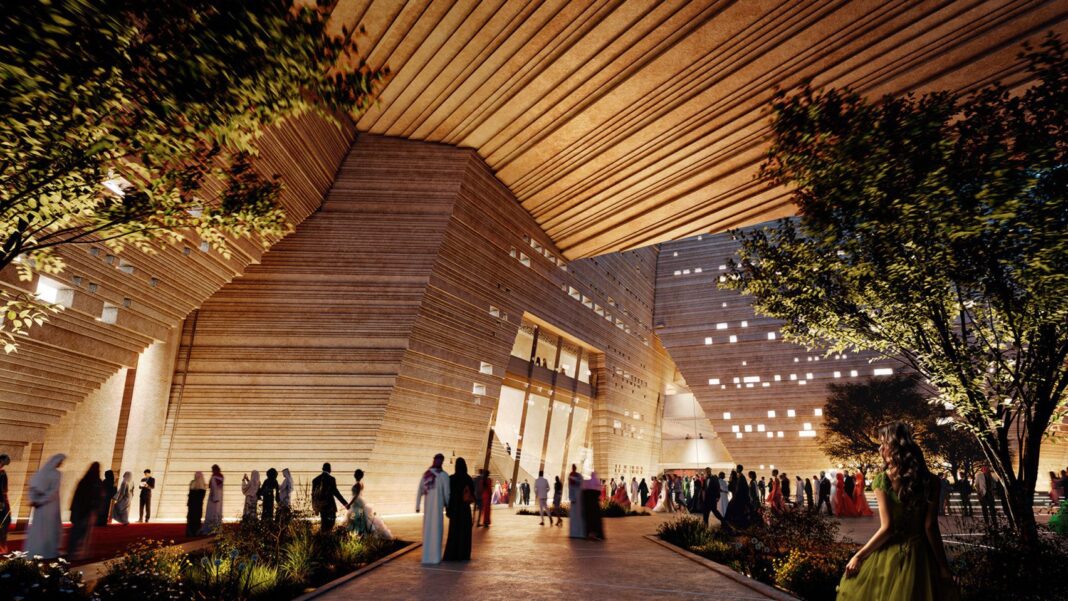
Snøhetta’s design draws inspiration not only from Najdi architecture but also from the nearby riverbeds of the Wadi Hanifah valley. The result is a cluster of buildings characterized by textured facades constructed from locally sourced materials, including palm, stone, and earth. The deliberate choice of these materials not only pays homage to the traditional elements of the region but also ensures a sustainable and contextually sensitive approach to the architectural narrative.
What is Najdi Architecture?
Najdi architecture is an approach from the central Arabian Gulf region that combines three main factors –– from the people who lived there over the years including Bedouin tribes. Some of the Bedouin tribes migrated to other parts of the region including Jordan, Sinai, and present-day Israel. Najdi is built in harmony with nature and 1) works in hot desert climates; 2) it provides privacy in residential buildings as Muslims guard their privacy (see mashrabiya), and 3) uses locally available materials such as mud brick, stone and wood.
Kjetil Trædal Thorsen, co-founder of Snøhetta, expressed the studio’s vision for the project, stating, “This project aims to connect the area’s rich history with contemporary culture, highlighting the importance and integrity of arts when building future communities.”
The design concept is rooted in the idea of the earth from riverbeds, cracked by the relentless sun, molded by wind and rain, and ultimately assuming new shapes as separate forms. The resulting cluster of buildings appears to rise organically from the ground, featuring open passages that invite exploration and engagement.

Beyond its primary function as an opera house, the Royal Diriyah Opera House is conceived as a multifaceted cultural complex. In addition to the performance theaters, the facility will include a cafe, retail spaces, public gardens, and shaded outdoor areas. This strategic integration of public spaces serves to enrich both cultural and recreational experiences, elevating the intrinsic value of the location.
As part of a broader initiative to revitalize Diriyah, and entice Westerners to Saudi Arabia for investment and tourism, the Royal Diriyah Opera House aligns with the town’s historical roots while charting a course for a vibrant and progressive future. Diriyah, with its distinctive Najdi architecture, has long been a testament to the ingenious use of mud-brick structures that define the character of the town. The redevelopment masterplan acknowledges this heritage, ensuring that the new opera house not only stands as a symbol of cultural advancement but also harmonizes with the surrounding environment.
Snøhetta’s approach to the Royal Diriyah Opera House mirrors its global portfolio of culturally significant projects. From an elliptical planetarium in France to a mass-timber museum extension with an oculus in the United States, the studio has consistently demonstrated a commitment to pushing the boundaries of architectural innovation while respecting the cultural and historical context of each location.
Najdi architecture, prevalent in the central region of Saudi Arabia, is characterized by its distinctive use of materials and design elements that are adapted to the arid climate and the cultural traditions of the area. Here are five notable examples of Najdi architecture in Saudi Arabia, showcasing the enduring beauty and functional brilliance of this regional style.
Examples of Najdi architecture
-
Diriyah Historic Area:

Visitors to Diriyah Gate can explore its labyrinthine streets, visit museums, dine in traditional restaurants, and witness live performances in the historic At-Turaif district. The revitalization of Diriyah Gate not only preserves the architectural marvels of Najdi heritage but also positions Diriyah as a global cultural destination, inviting people to experience the intersection of the past and the present in the heart of Saudi Arabia. The very location chosen for the Royal Diriyah Opera House is steeped in Najdi architecture. Diriyah’s historic area is a testament to the traditional Najdi style, featuring mud-brick structures closely clustered together. The use of these materials not only provides insulation against the harsh desert climate but also creates a charming aesthetic with narrow streets and shaded walkways.
-
Al Masmak Fortress:

Constructed from mud-brick and clay, Al-Masmak is characterized by its thick walls, watchtowers, and traditional Najdi architectural elements. The fortress has been meticulously preserved, offering visitors a journey through time. Inside, the Masmak Museum showcases artifacts and exhibits that narrate the historical events, bringing to life the story of King Abdulaziz’s triumphant capture of Riyadh. Located in the heart of Riyadh, the capital city of Saudi Arabia, Al Masmak Fortress stands as a prime example of Najdi military architecture. Constructed in the 19th century, the fortress is made of clay and mud-brick, with thick walls that reflect the defensive needs of the time. The distinctive Najdi style is evident in the fortress’s simplicity, showcasing the practical approach to architecture in the region.
-
Historical Jeddah:

The unique charm of Historical Jeddah lies in its well-preserved coral houses, reflecting the traditional architecture of the region. The buildings, adorned with vibrant wooden detailing, feature enclosed courtyards and elevated wind towers that capture the essence of Najdi and Hejazi architectural styles. The city’s layout, characterized by narrow streets and hidden squares, invites exploration and reveals the influence of diverse cultures that have shaped Jeddah over the centuries. While Najdi architecture is most closely associated with the central region, its influence can be seen in other parts of Saudi Arabia as well. In Historical Jeddah, the old city bears witness to the integration of Najdi elements in the design of traditional coral houses. The use of intricate wooden detailing, shaded courtyards, and narrow alleys reflects the adaptability of Najdi architecture to different environments.
-
Ushaiger Heritage Village:

Walking through Ushaiger, visitors encounter structures with distinctive features such as wind-catching towers designed to mitigate the region’s intense heat. The village’s layout, with its interconnected dwellings and shared walls, exemplifies the practicality and sustainability inherent in traditional Najdi design Ushaiger, a well-preserved heritage village in the Najd region, is a living testament to the enduring charm of Najdi architecture. The village features mud-brick houses with distinctive geometric patterns, creating a harmonious blend of form and function. The layout of Ushaiger follows the traditional Najdi style, emphasizing communal spaces and interconnected dwellings.
-
House of Saud:

The House of Saud, made from mud The House of Saud originated in the 18th century when Muhammad bin Saud, the emir of Diriyah, and the religious scholar Muhammad ibn Abd al-Wahhab formed an alliance. This collaboration, grounded in their shared commitment to Wahhabi Islam, marked the establishment of the first Saudi state.
The Royal Diriyah Opera House emerges as a beacon of cultural expression in an historic area, marrying the traditional nuances of Najdi architecture with the avant-garde vision of Snøhetta. As a testament to the evolving cultural landscape of Saudi Arabia, this architectural gem not only symbolizes a nod to the past but also paves the way for a harmonious coexistence of heritage and modernity in the heart of Diriyah.
Come 2028, the Royal Diriyah Opera House is poised to take center stage, inviting audiences to witness the seamless fusion of tradition and progress against the backdrop of Saudi Arabia’s rich cultural tapestry. Let ‘s home it is built with sustainable materials along with its vision.
Renders of the opera house by Binyan