
For a long time, large technology companies spoke about renewable energy mostly in terms of climate commitments. And the commitments felt like punishments to all of humanity. Carbon offsets, net-zero timelines, carefully worded sustainability pages. I’ve covered plenty of those announcements over the years, from conference halls and Zoom cals to quiet briefings where the stories always felt more narrative than about opportunity.
We first heard the call about electricity and the Internet around 2005 when people who were starting up websites were expected to use servers powered by renewable energy. We tried but when the wind power failed at a company we chose, our site went down. Electricity is now a practical constraint and a business opportunity.
That shift helps explain why Alphabet, Google’s parent company, has agreed to acquire American renewable energy company Intersect Power in a deal valued at roughly $4.75 billion. It’s a move that reflects a deeper change: technology companies are paying closer attention to the physical systems that support their growth.
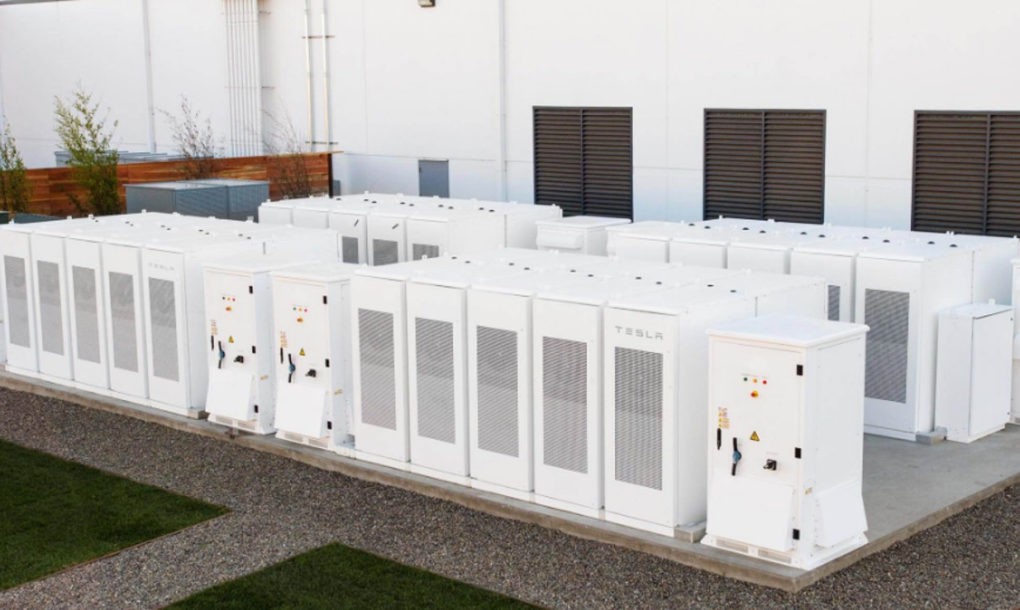
Intersect Power is a US-based clean energy developer focused on large solar power plants paired with battery storage. The pairing is important. Solar generation alone is inexpensive but intermittent. Lots of energy can be produced by day and fed to the grid but what isn’t used just disappears. Storage allows energy to be used later, during periods of high demand or grid congestion, rather than only when the sun is shining.
Intersect develops, owns, and operates many of its projects, then sells the electricity through long-term power purchase agreements to utilities or large customers. It’s a familiar infrastructure model, one that prioritizes predictable returns and steady output over experimentation. The early beginnings of this model started around 2007, but the technology of solar energy couldn’t always deliver returns. See how Ivanpah in California was built on promises that are no longer a good business model based on today’s projections.

Intersect’s projects are built to power data centers and are concentrated in California, Texas, and parts of the USSouthwest. Anyone who has followed energy reporting in California over the past decade has seen how fragile the system can feel during heatwaves, when demand spikes and grid operators issue warnings. Locating generation and storage close to demand helps reduce stress on those systems.
Today, Intersect operates and is building multiple gigawatts of solar capacity, along with several gigawatt-hours of battery storage. Altogether, it has well over 10 gigawatts of projects operating, under construction, or in development across the United States. That scale places it among the larger independent clean energy developers in the country.
Intersect Power was founded in 2016 by Sheldon Kimber and Luke Dunnington, both coming from energy finance and infrastructure backgrounds. This is typical in solar energy and renewable energy companies as the deals are mostly based on contracts with banks, financing and investors. The company is headquartered in San Francisco, close to both capital markets and the technology firms that increasingly shape electricity demand.
Before the Alphabet deal, Intersect had raised more than $2 billion in equity and project financing from private investors.
According to CEO Kimber, “Intersect will remain Intersect, remaining separate from Alphabet and Google under the Intersect brand, and I’ll continue as CEO.
“When we founded this company in 2016, the goal was to build something durable and to preserve our planet for future generations through innovative energy solutions and modern infrastructure. To ask why not? when the industry reflexively said, that’s not the way it’s done.
“Today, modern energy infrastructure sits at the center of American competitiveness in AI. Power is the bottleneck.
“I’ve always been excited about tackling what comes next. Exploring new technologies. Continuing to accelerate the redesign of an energy infrastructure for the world we actually live in.”
Alphabet’s and Google’s interest in an energy developer isn’t about public messaging. Running large data operations requires steady, uninterrupted electricity and reliable cooling. Delays in grid connections, power shortages, or price volatility can slow expansion plans. I’ve reported before on renewable projects that were technically complete but couldn’t deliver power because transmission simply wasn’t available. Those kinds of bottlenecks are no longer abstract risks.
Owning or controlling access to generation and storage offers a way around some of those constraints. In that sense, Alphabet’s move resembles earlier shifts in the tech sector, when companies moved from renting infrastructure to building and managing it themselves.
Alphabet is not the only firm thinking this way. Microsoft, Amazon, and Meta have all increased their involvement in long-term power contracts and energy development. What has changed is not the technology, but the motivation. Clean energy is now tied closely to reliability, timing, and operational planning, not just emissions targets.
For investors, Intersect Power itself is not publicly traded, and exposure now largely comes through Alphabet. Other options include infrastructure funds, storage-focused energy investments, or companies that supply batteries, power electronics, and grid equipment if you are looking to invest in a meaningful space for 2026.