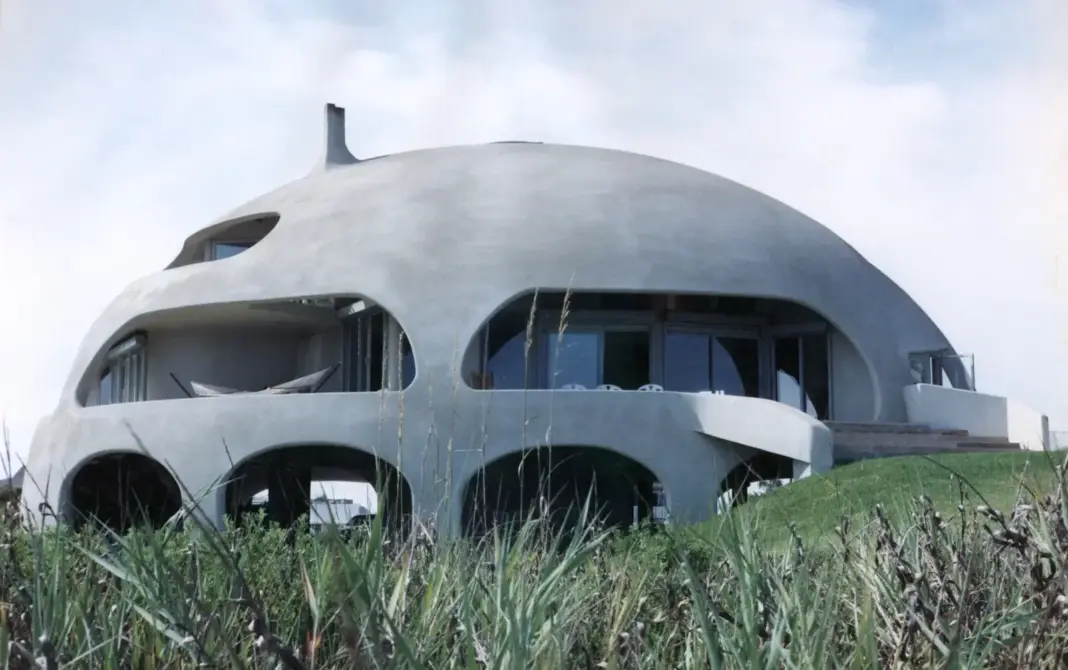


What is an inflatable concrete house? Robert Downey Junior owns one. And they’ve been touted as costing a mere $3500 a build. An inflatable concrete house is a home whose structural shell is formed by using an inflated form or bladder, often made of fabric or drop-stitch material – see our article on Binishells. This form is then filled or coated with concrete—sometimes sprayed—to create a permanent, self-supporting shell. After the concrete sets, the inflatable form either remains as part of the structure or is removed.

There are several versions of this method, but the classic Binishell system was invented by Italian architect Dante Bini, and uses a large inflatable bladder laid on the ground. Reinforced concrete is poured or sprayed on top, then inflated so the shell lifts itself into its final domed shape.

A newer approach developed by Automatic Construction employs inflatable flexible factory formwork—flat, lightweight drop-stitch fabric bladders that are transported easily, inflated on-site, and then filled with concrete to form both walls and roof. We can imagine that 3D printing concrete robots will be able to handle the lay-down of concrete in the future. Current designs don’t look great but are pilots in progress.
The company website states that their factory-made forms reduce on-site labour, transport cost, and job-site waste; they claim their buildings will cost “1/5th the cost” of standard cast-in-place concrete. Their website also notes that actual homes you can live in are “coming soon”.

Another experimental process, created by researchers at the Vienna University of Technology, uses pre-hardened concrete panels placed on an inflatable air cushion. When inflated, the panels lift and bend into their final curved geometry, a process known as pneumatic forming of hardened concrete. The research is coming out of TU Wien’s Institute of Building Construction and Technology, led by Professor Benjamin Kromoser and Professor Johann Kollegger.
Instead of pouring wet concrete into a form, the concrete is already cured, and the inflation pressure deforms it elastically, forming arches, shells, or domes. Once the desired shape is reached, it’s fixed in place with steel reinforcements or stiffening ribs. This technique allows the creation of elegant curved concrete roofs and shells without traditional scaffolding, molds, or 3D-printed supports.
The appeal of these systems lies in their efficiency and simplicity. Inflation and concrete filling can take place in a few hours instead of the weeks required for conventional formwork. Builders report significant labor and material savings, and dome or shell shapes provide exceptional strength and durability, even under severe environmental conditions. The method also carries a distinctive architectural character that attracts designers seeking expressive, futuristic, or minimalist aesthetics.
As for cost, estimates vary widely depending on design, size, and finishing.
Some small Binishell prototypes have been built for around US $3,500 using sprayed concrete over an inflatable form. Automatic Construction reports shell costs of roughly $10–$30 per square foot for 100- to 200-square-foot prototypes—far below standard homebuilding prices. The Vienna method is described as “quick and cost-saving” for double-curved shell structures, but specific dollar/€ cost numbers are not given in the available sources.
More conventional dome homes, which use similar air-form techniques, typically range between US $100 to 250 per square foot once fully finished. A 1,000-square-foot monolithic dome, for example, might cost about US $60,000 for the basic shell and around US $130,000 after interior finishing.
In all cases, actual costs depend on local labor, materials, foundation, insulation, utilities, and compliance with building codes—but inflatable concrete shells remain one of the fastest and potentially most cost-efficient structural methods emerging in contemporary housing design.

The fact that cement is a non-sustainable resource (read our article here on how cement is destroying the seas), may lead prospective home owners down a different path if you are following the aesthetics of a dome.
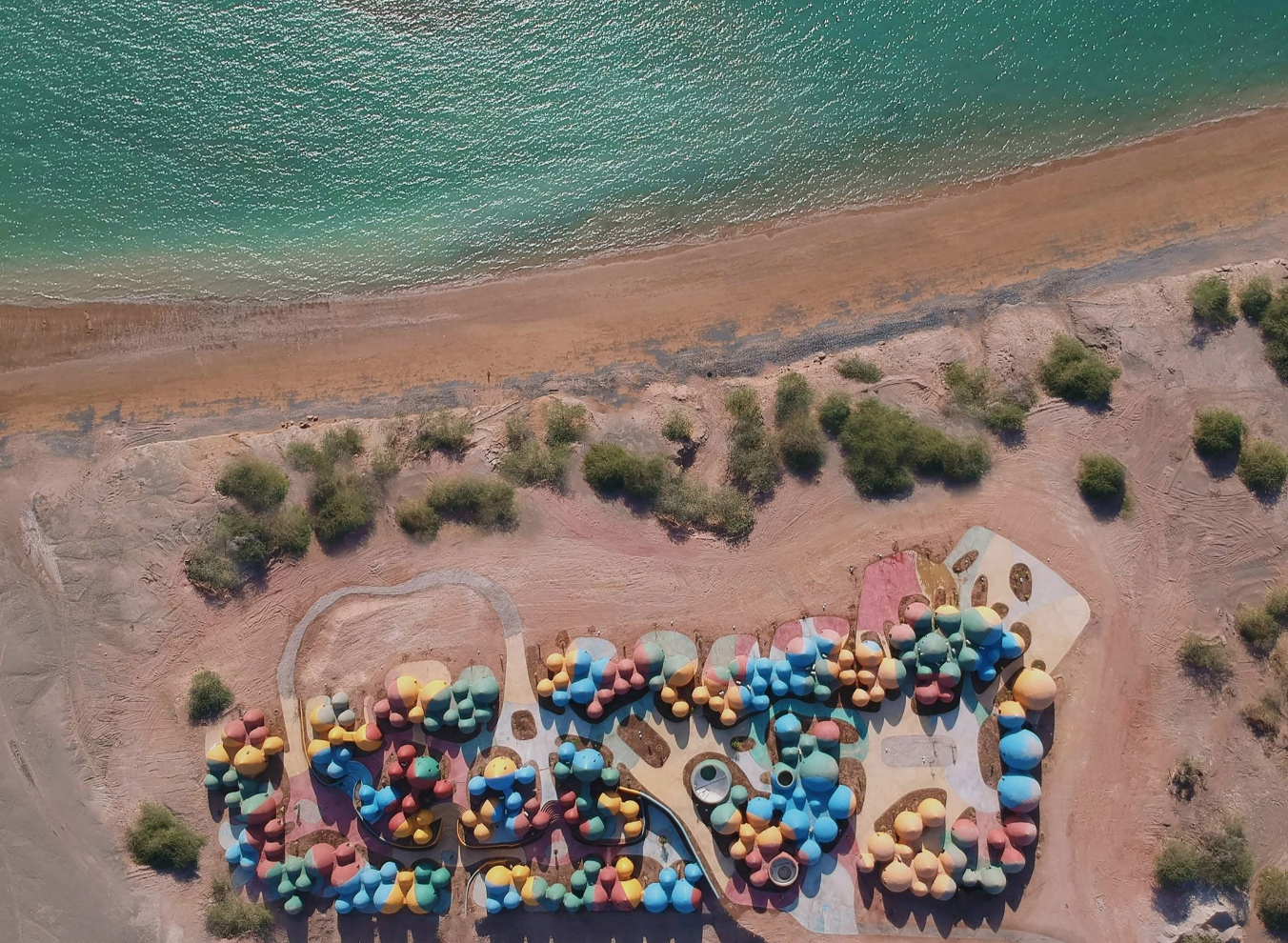
Caltech’s Nader Kalili invented prototypes for adobe dome homes (he called superadobes), earthen homes made to breath and which are sustainable at their core from a materials point of view, but this does not give them a pass if developers destroy islands like this one, in a quest to build a sustainable resort.
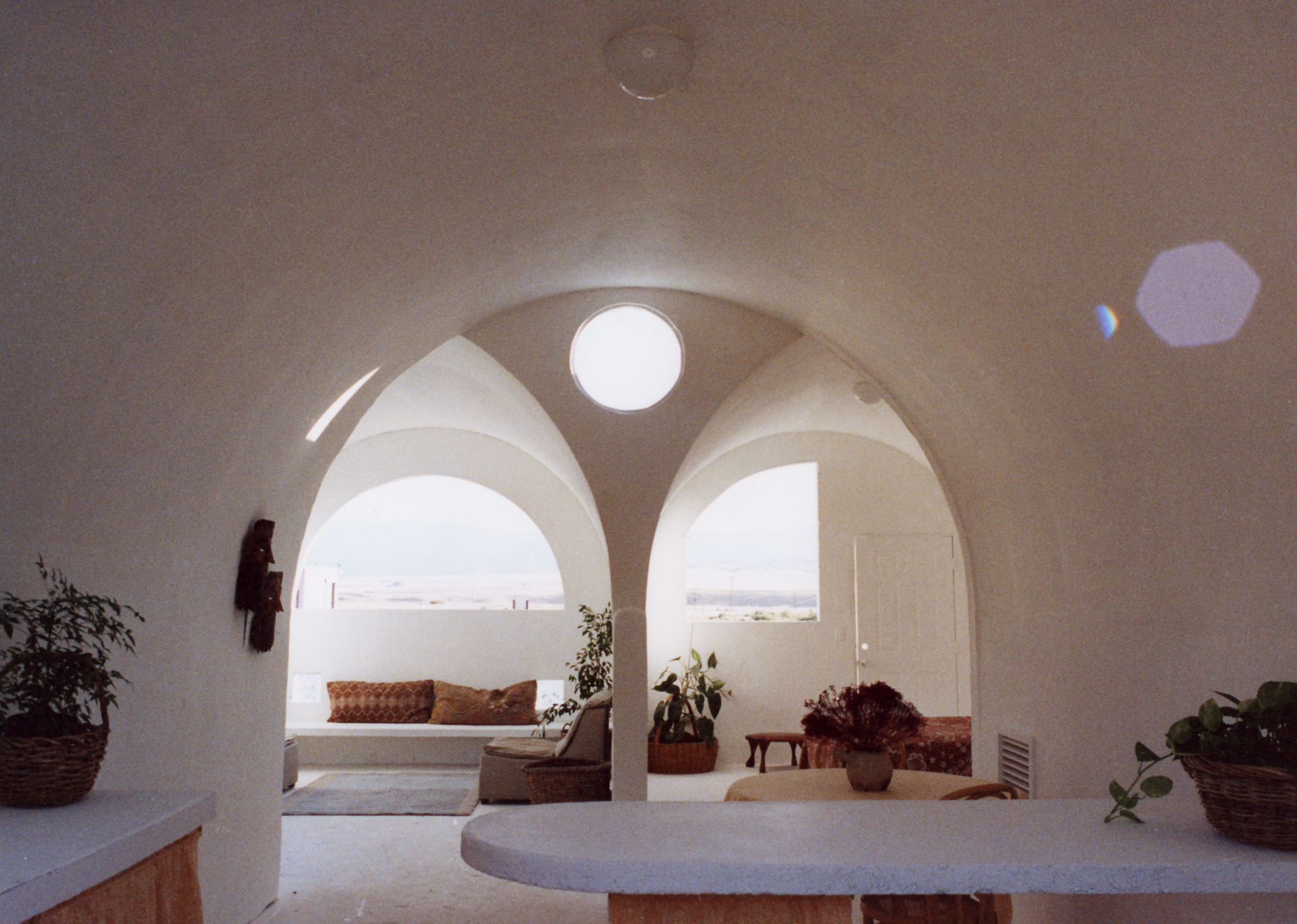
These are great solutions for rebuilding Gaza and Sudan with earthen homes, and for helping back-to-the-land movements create affordable homes that are healthy and safe. If you are in the space of sustainable home building, get this book Habitat. We’ve featured the editor Sandra Piesek here. It’s currently the best and more sober resource for land-based architecture of the people for the people. Some architects refer to it as vernacular architecture.
Love the idea of an inflatable concrete house? We have some case studies for California and Canada.