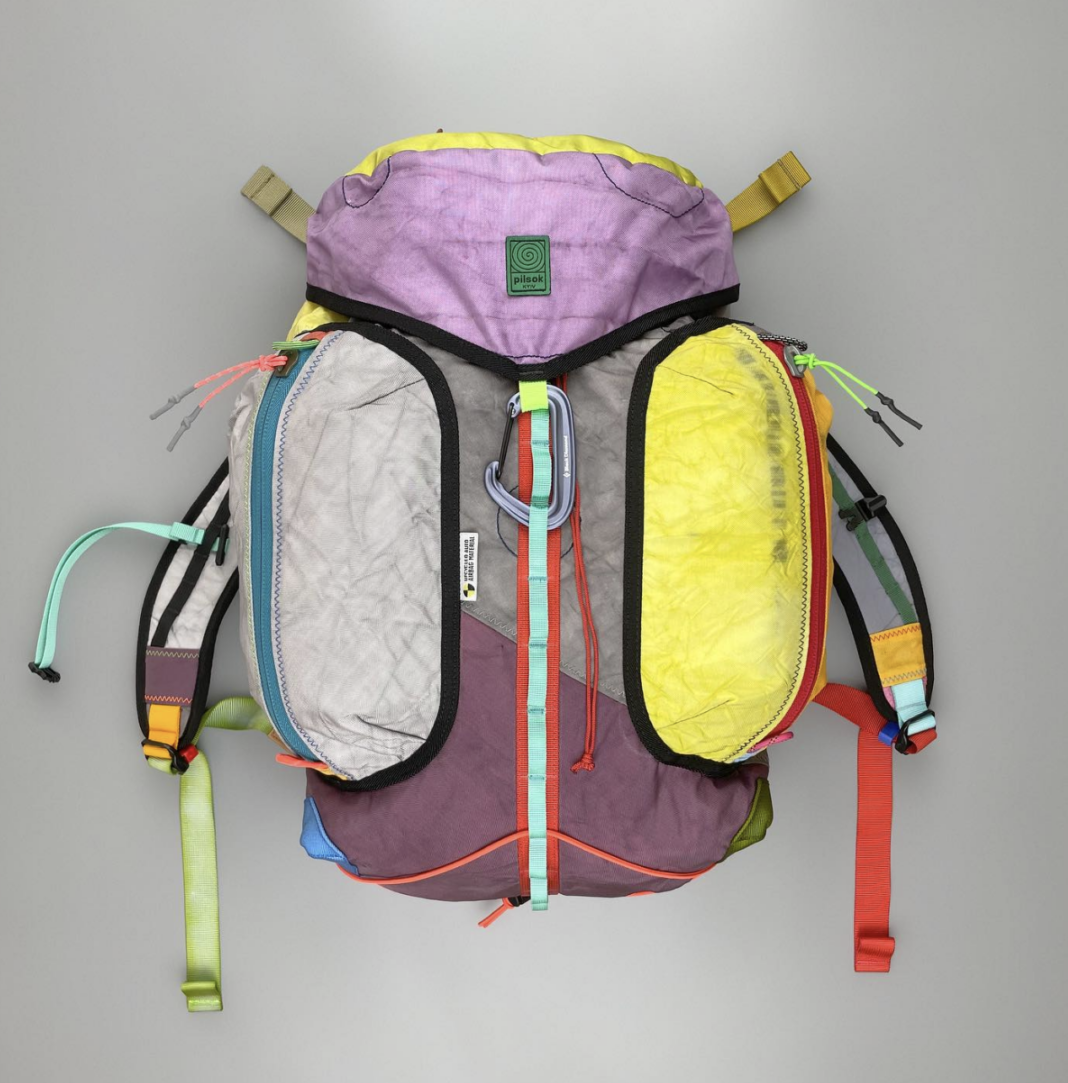

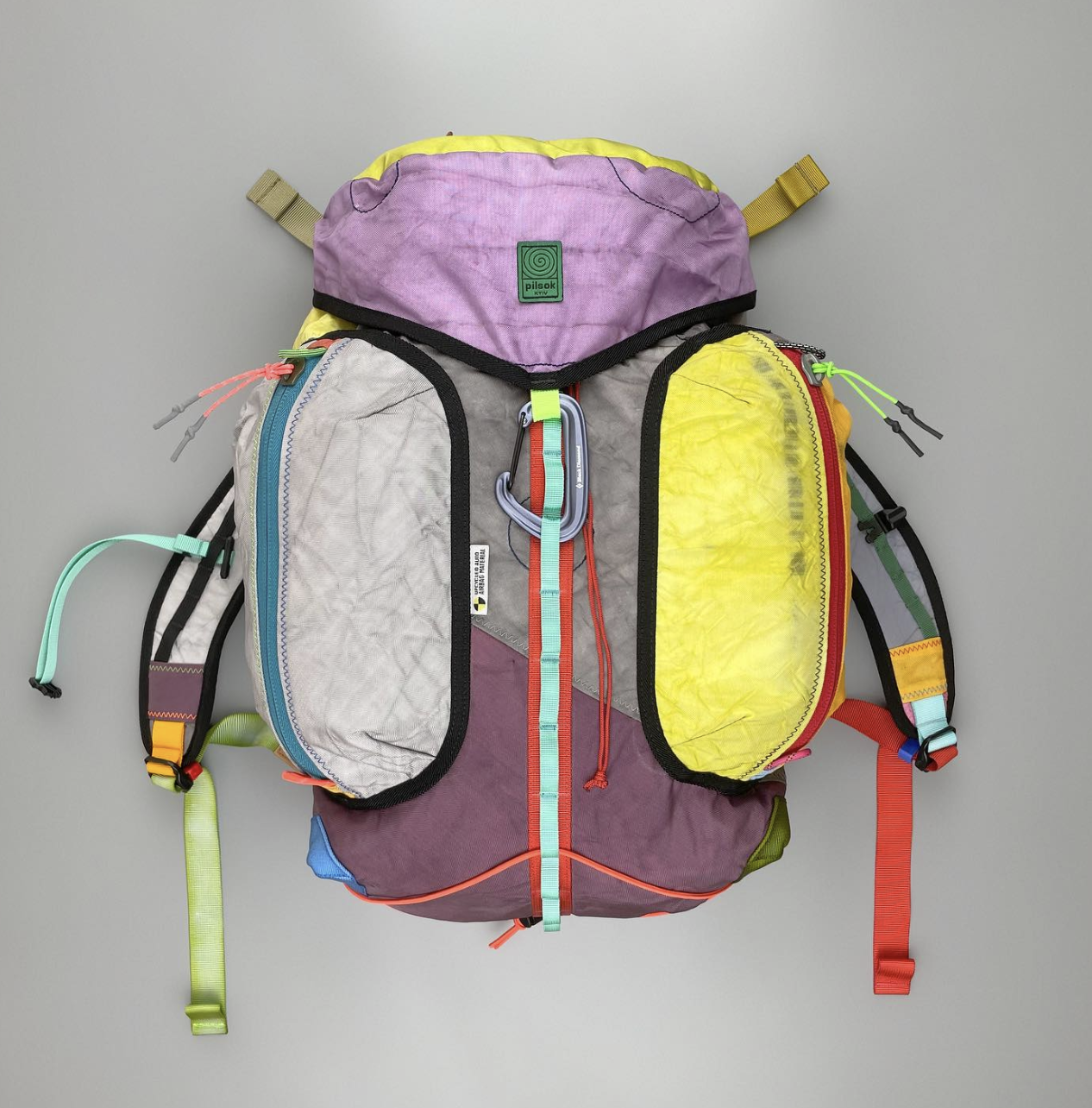
What happens to a car’s airbag after it’s decommissioned? In Kyiv, the answer is unexpectedly stylish. Pilsok, a Ukrainian accessories label founded in 2007, has released beetle backpacks and shoulder bags cut from retired airbags—light, durable nylon engineered to save lives now saving materials from landfill. The team explained that it can take “about three airbags to create one backpack,” and that they “came across airbags taken from disassembled cars” after testing other surplus materials.
Pilsok says the bags are cut and stitched in-house in Kyiv, with each piece reflecting the folds, seams and printed codes of the airbag it came from—making every bag unique by design. We have a feature on the Pilsok beetle backpack here. The bad news is that you probably won’t find one instock. Drops are rare and they sell out fast. Read here about Pilsok beetle bags and how they are made.
Pilsok isn’t alone. In Zurich, FREITAG launched the F700 ARROW and F708 FIREBIRD shoppers “made from accident-free airbags and used tension belts,” embracing a “bag-follows-form” approach that preserves the original folds and shapes.

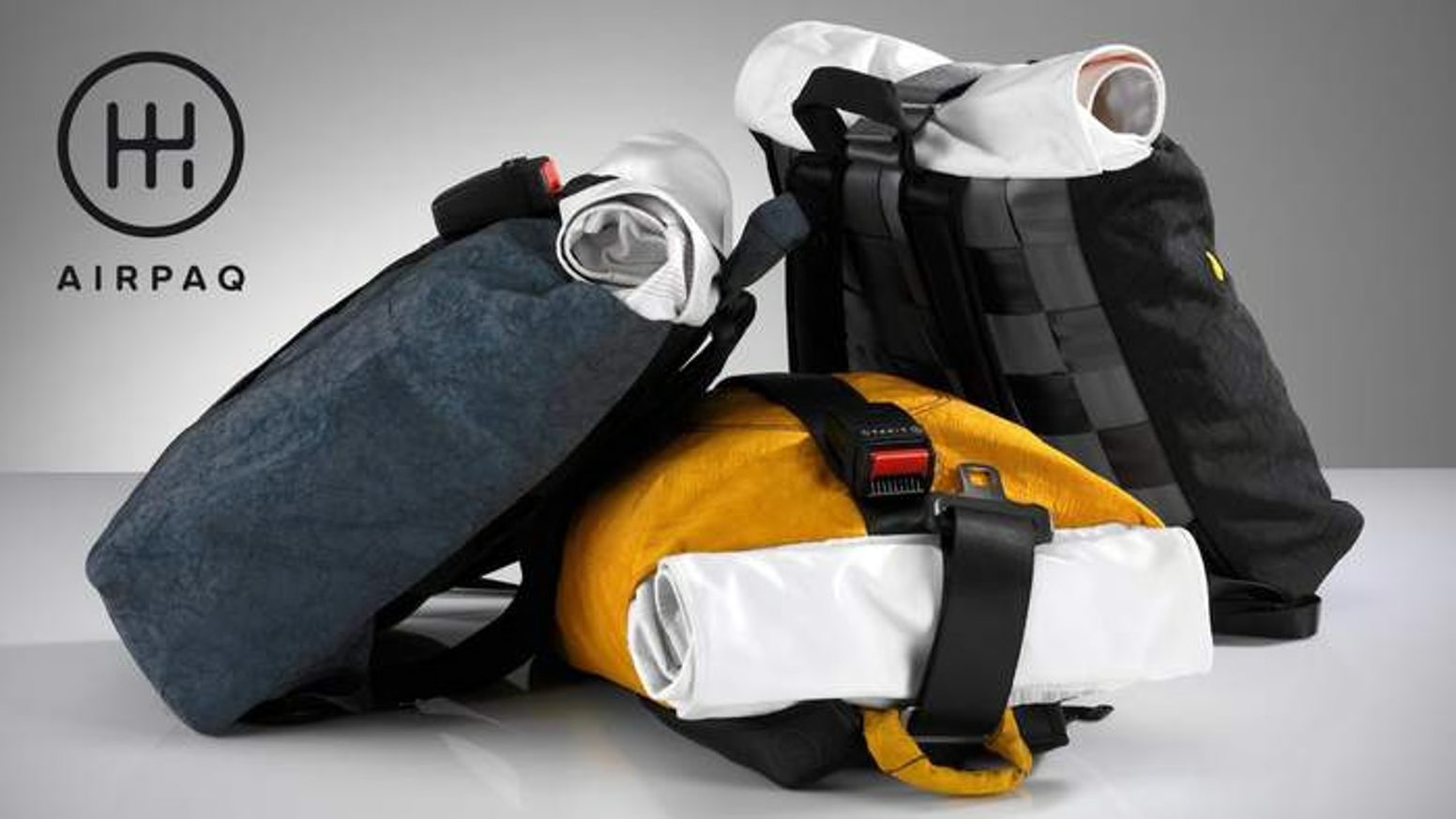
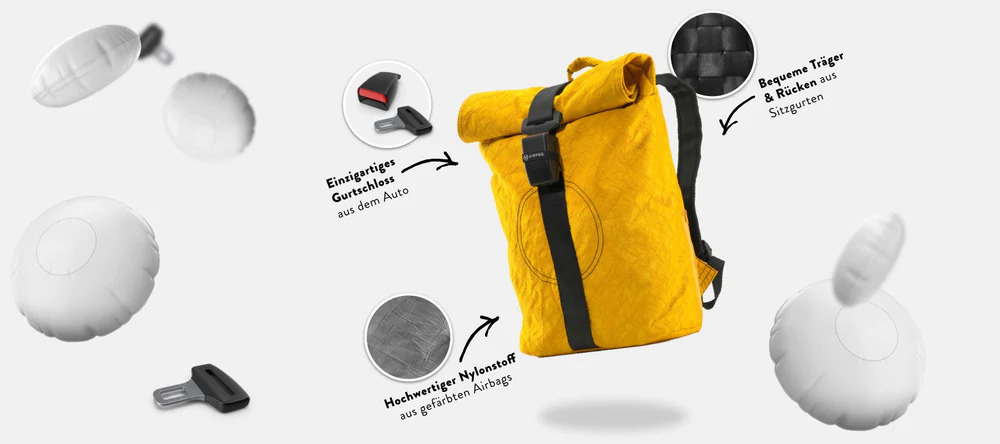
Germany’s AIRPAQ manufactures backpacks and accessories by reusing “discarded car airbags, seat belts, and belt buckles,” and has been recognized by European retail and innovation programs for circular design.
The same upcycling logic has reached aviation. In 2025, Emirates announced a second “Aircrafted by Emirates” drop: a limited run of 167 handmade pieces crafted from retrofitted A380 and 777 interiors, from aluminum headrests to leather and seatbelts.

Airbag textiles are engineered for extreme stresses—lightweight, tear-resistant, and stable when stitched—so they’re a natural fit for durable day bags. Upcycling research also shows that objects with a visible “prior life” can carry stronger emotional stories, nudging buyers toward repair and long use. As one study neatly put it, “turning an old car airbag into a backpack.
20 years of R-R-R: what’s next
Two decades into mainstream Reduce–Reuse–Recycle, fashion’s center of gravity is shifting from one-off “eco” drops to circular design—materials that can loop, products built for repair, and business models that favor take-back, refurbishment, and resale. The upcycled-airbag movement is one thread in a larger fabric: premium brands are trialing biobased and compostable polymers, experimenting with “living” or self-healing materials, and investing in traceability so customers can see a product’s full story. For a deeper dive into how circular design is maturing, see Green Prophet’s analysis of what circular design means in 2025.
Pilsok’s work is a pragmatic, local example of circularity: identify a high-performance waste stream (retired airbags), design with its constraints (panels, folds, labels), manufacture locally, and make repairable, long-lived products. It sits comfortably alongside other stories we’ve tracked at Green Prophet—from aviation upcycling to new materials—showing how design thinking has matured since the early days of R-R-R.

Related reading on Green Prophet
Upcycled aviation: Emirates turns retired aircraft into luxury bags (limited-edition “Aircrafted” collection).
Biomaterials & circular design: Stella McCartney’s compostable sneakers (BioCir® Flex); Stella McCartney chooses Balena for upcycled foamy fashion; living plastics that clean water; ten future-forward sustainable fashion companies; slow and sustainable fashion through your eyewear; and our overview of circular design in 2025.
DIY upcycling roots: turn old T-shirts into bags; fuse plastic bags into durable sheeting; and a very early look at creative reuse in recycled map “infobags”. For more, browse our sustainable fashion and circular fashion archives.