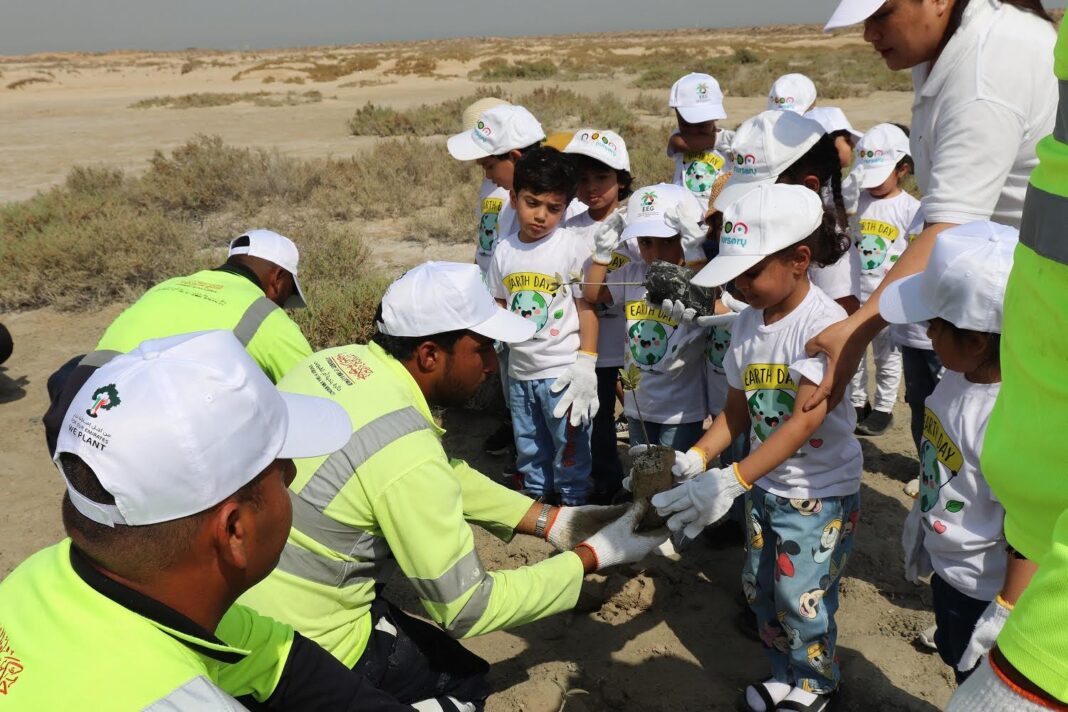

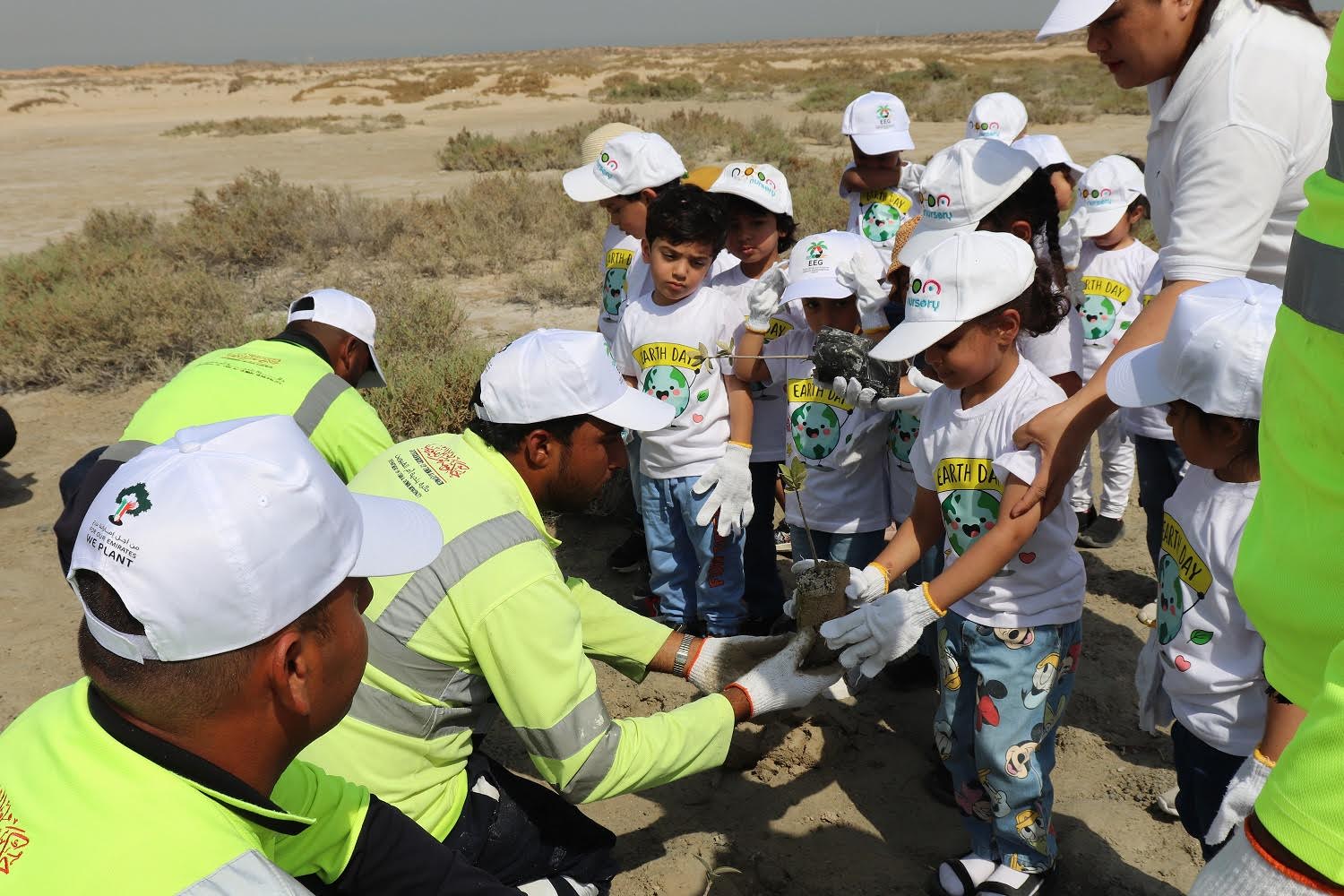
In a meaningful gesture of environmental solidarity, the Emirates Environmental Group (EEG), in collaboration with Umm Al Quwain Municipality, marked Earth Day 2025 by planting over 1,200 mangrove saplings along the ecologically vital Mangrove Beach in Umm Al Quwain.
The initiative was part of EEG’s longstanding national campaign, “For Our Emirates We Plant”, a grassroots movement that has helped seed millions of trees across the UAE’s arid landscape.
More than a ceremonial planting event, the gathering served as a stirring reminder of the UAE’s growing momentum in greening the desert and amplifying climate action in a region historically synonymous with drought and sand. Earth Day 2025 brought together government officials, academics, youth groups, and families, all united by a common goal: regenerating ecosystems and building coastal resilience in a time of escalating climate emergencies.
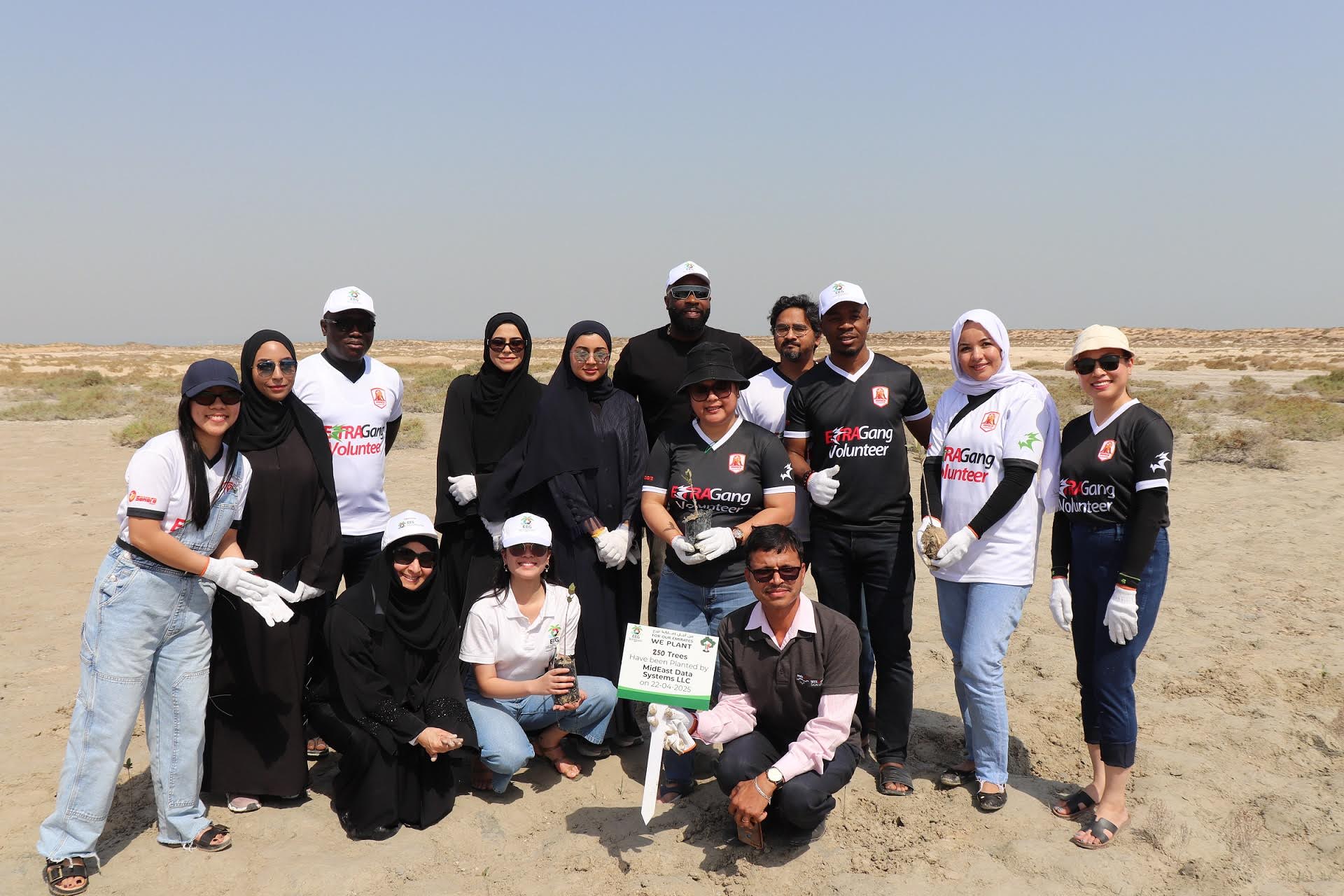
“Each mangrove planted today is a living pledge for the future,” said EEG Co-Founder and Chairperson Habiba Al Mar’ashi, addressing attendees. “We are not only restoring coastal forests but cultivating a culture of care and responsibility toward our planet.”
Over the past two decades, EEG has facilitated the planting of more than 2.1 million indigenous trees across the Emirates. Their efforts, particularly since 2007, have resulted in the sequestration of over 186,000 metric tonnes of CO2 — a measurable contribution to the UAE’s Net Zero 2050 ambitions.
Mangroves: Coastal Guardians and Carbon Powerhouses Mangroves — often overlooked in favor of more iconic forests — are emerging as climate champions. Able to absorb up to four times more carbon dioxide than terrestrial forests, these trees serve as a natural bulwark against rising seas and intensifying storms. They filter water pollutants, prevent coastal erosion, and create rich nurseries for marine life — all while thriving in salty, oxygen-poor soils that would kill most other trees. In hyper-arid nations like the UAE, mangroves have proven their mettle as ecosystem engineers. And interest is surging across the Middle East.
Saudi Arabia recently launched its own coastal reforestation program under the Saudi Green Initiative, with plans to plant 100 million mangroves by 2030. These efforts are vital not only for biodiversity and carbon drawdown, but also for cooling coastlines that are rapidly heating under the climate crisis. Historical Roots of a Green Revolution The UAE’s mangrove legacy is rooted in conservation efforts dating back to the 1970s, when late ruler Sheikh Zayed first introduced reforestation programs in Abu Dhabi.
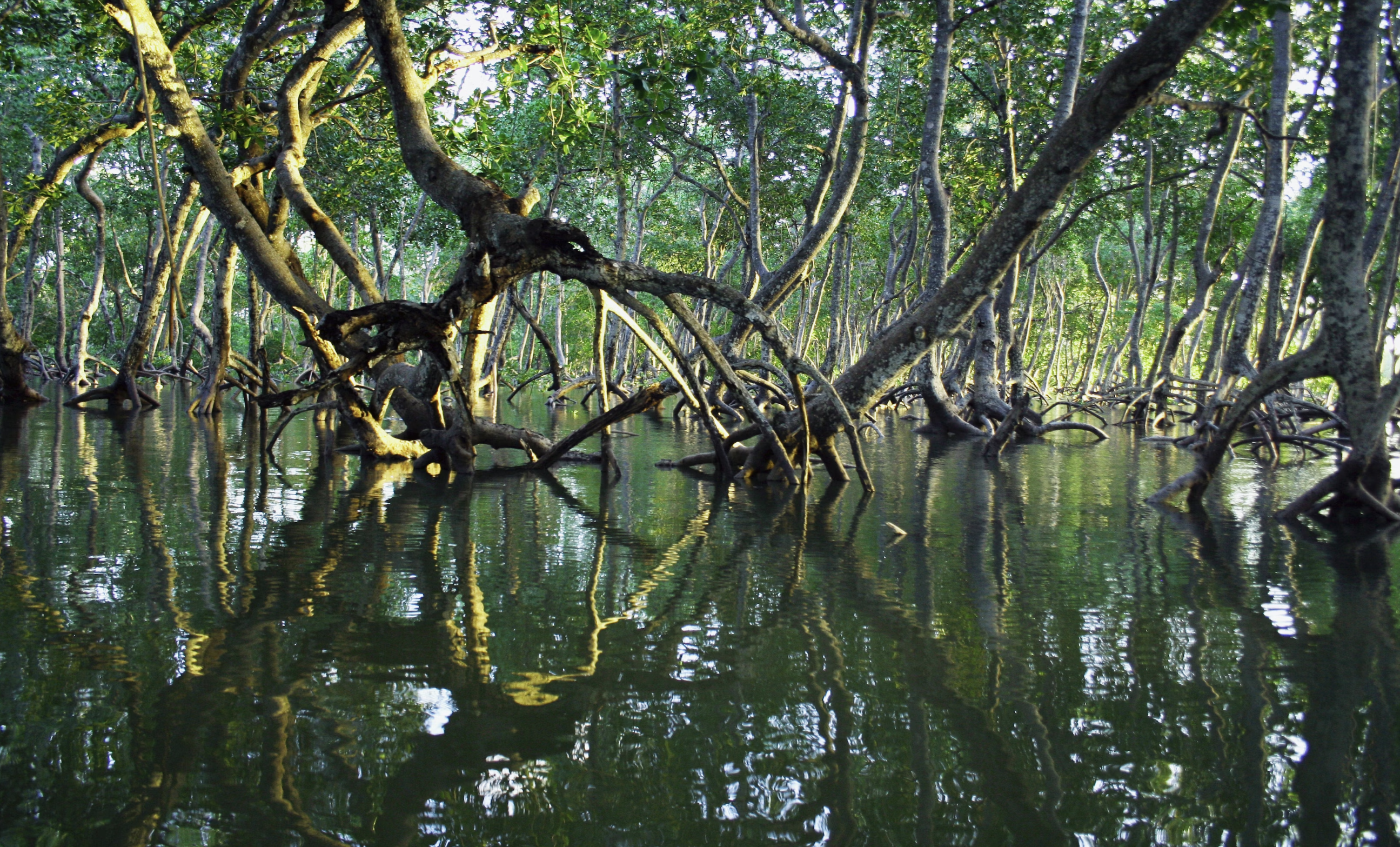
Since then, the country has slowly cultivated a green spine along its coasts — a powerful symbol of what’s possible when environmental vision meets community action. Green Prophet has previously reported on efforts to protect mangrove ecosystems in the face of destructive development. In 2019, we highlighted the push to use drones to plant mangroves in hard-to-reach tidal zones — a testament to how tech and tradition can coalesce for Earth’s benefit.

A Desert Forest for Future Generations In the Gulf, where freshwater is precious and fertile land is rare, initiatives like “For Our Emirates We Plant” serve as a clarion call for climate resilience.
Mangroves, often viewed as muddy or marginal, are now at the forefront of regional regeneration. They are not merely trees but living infrastructure — cooling cities, sustaining marine life, and holding back the tides. Earth Day 2025 in Umm Al Quwain wasn’t just about greening the beach. It was a reminder that hope can grow even in the harshest conditions — and that in the Middle East, the future might just be forested.