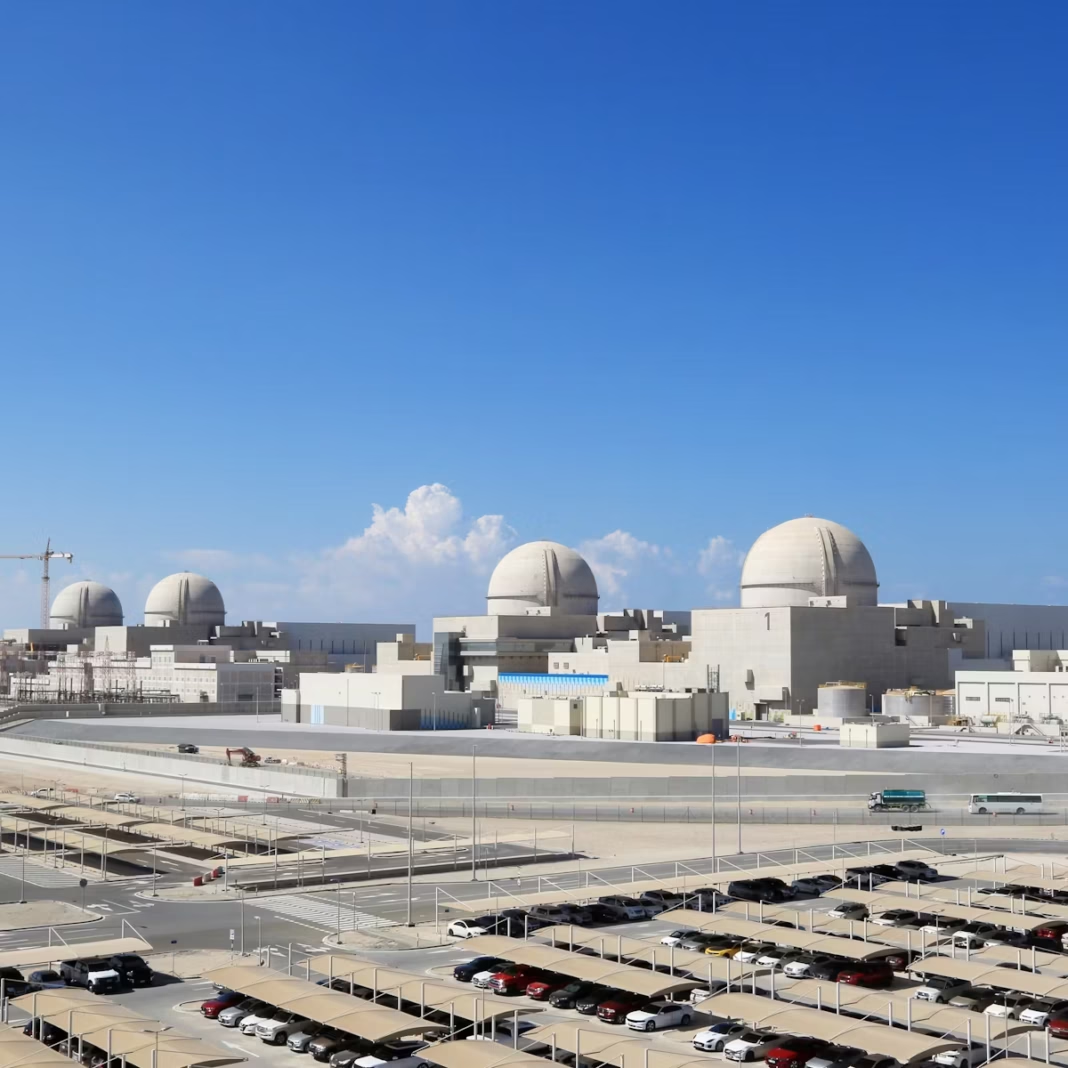

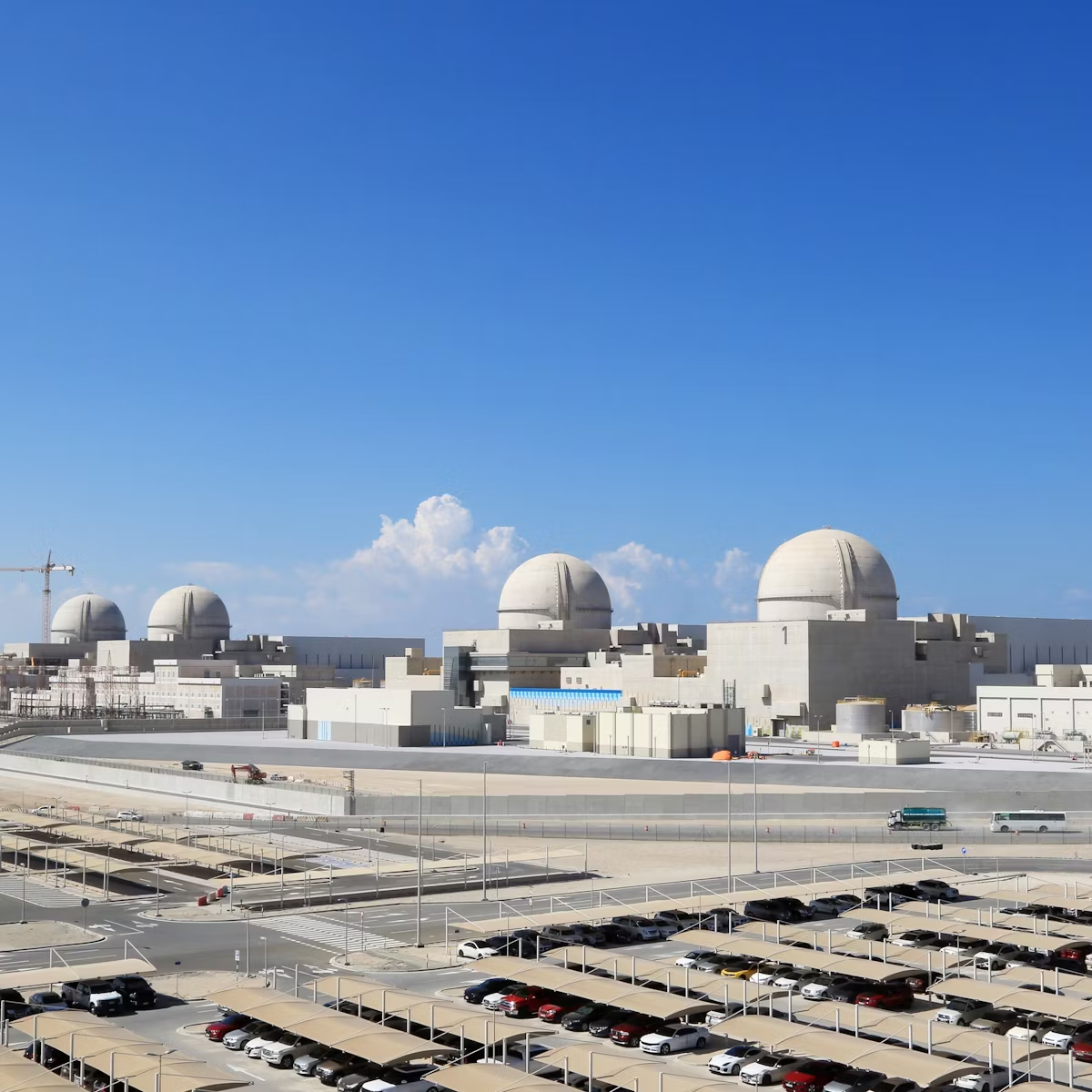
As Germany shut its last nuclear plant last year, the oil-rich country the United Arab Emirates has completed firing up its first.
Abu Dhabi’s Barakah Nuclear Energy Plant is lated to produce 40 terawatt-hours of electricity every year now that its fourth and final reactor has started running, announced the state-owned Emirates Nuclear Energy Corporation (ENEC). The reactor was built by Korea.
The nuclear plant will generate 25 percent of the electricity needs of the hot, desert Gulf state, where everyone has their air-conditioning firing at full blast most of the year. The air con needs are nearly the equivalent of New Zealand’s annual consumption, the ENEC said.
Related: ways to use your air conditioner water
The nuclear power plant will power the Abu Dhabi National Oil Company (ADNOC), one of the world’s biggest oil producers, and Emirates Steel and Emirates Global Aluminium, ENEC said.
Barakah, which means “blessing” in Arabic. It started operations in 2020.

Emirati President Sheikh Mohamed bin Zayed Al Nahyan hailed Barakah’s completion as a “significant step on the journey towards net zero”.
“We will continue to prioritise energy security and sustainability for the benefit of our nation and our people today and tomorrow,” he said on X.
According to the International Atomic Energy Agency, the plant “will have to be disassembled at the end of its useful life, in around 60 to 80 years”.

The UAE was built on oil and is one of the largest oil producers in the OPEC cartel.
Last year, it hosted the COP28 UN climate talks which resulted in an agreement to “transition away” from fossil fuels. Not all environmentalists agree that nuclear energy is clean energy die to the risks.
The UAE currently uses gas-powered stations for its electricity needs, but also now has one of the world’s biggest solar plants outside Abu Dhabi.