Walk around a forest in Canada and you can’t miss the precise piles of round animal poop: Deer, moose, and rabbits. But there is one animal in the world (that we know of) that poops in cubes and it’s a wombat. How does the Tasmanian mammal do that? Yes, serious researchers want to know. Biologists get to ask ridiculous questions like this when they grow up, and then try to answer them using tools from science.
A team from the University of Tasmania has determined that a wombat’s surprisingly long and intermittently stretchy intestines compress their poop (or stool) into cubes. The team has now pinpointed another factor to making cube poop, which seems to apply to all animals that produce feces in pellet form: how the poo dries in the animals’ guts.

The research has been supported by the Ig Nobel Prize, the satirical prize awarded annually since 1991 to celebrate unusual or trivial achievements in scientific research.
In the latest study, researchers built an artificial wombat digestive system and passed corn-starch ‘poop’ through plastic troughs, simulating intestines and added heat lamps to dry them out. Greater drying resulted in more closely spaced cracks — wombat poo, which contains 65% water, cracked into little cubes.
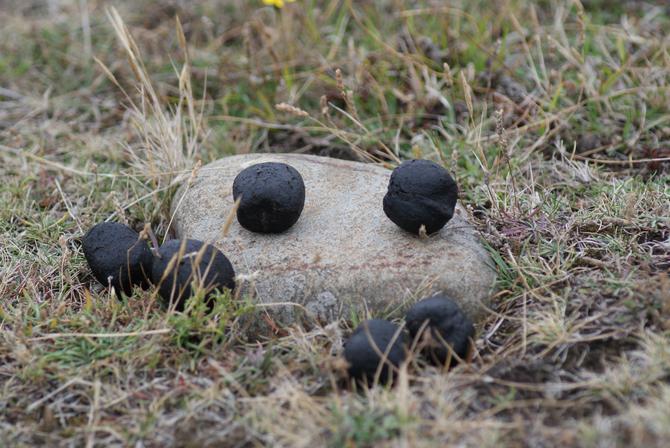
Human poo, made up of 75% water, comes out in longer tubes, and cow pat, containing up to 90% water, just slops right out.

The researchers leading the wombat study is Scott Carver from the University of Tasmania and Georgia Tech’s Professor David Hu. They set out to crack the secret of the unique cubed poo of wombats: “There are many colourful hypotheses to explain the phenomenon, but nobody had ever investigated it. This research has been a fun effort to answer the questions of how and why,” says Carver.
How and why wombats produce cubed faeces has been a fascination to many people for a long time, he added.
And there are applications in human health. Certainly you’ve seen photos or videos of how a healthy human poop should look? The scientists looking at wombat stool agree: “the methods and physical picture shown here may be of use to physicians and veterinarians interested in using feces length as a marker of intestinal health.”
If reading scientific papers is your thing, catch up on the latest wombat cubed poop research in: Drying dynamics of pellet faeces. And if you are interested in wombats, Womsat is helping protect them in Australia. If you are interested in doing science, check out our experiment using worms to eat plastic.
Jokes aside about cubed wombat poop in Tasmania (it’s made so it doesn’t roll away in Tasmanian wind!), nature has the best technology. We study it so we can learn from it to make energy more efficient and medicine more attuned to our bodies. The field is also known as biomimicry. Wombats know why their poop is cubed. Do you?