

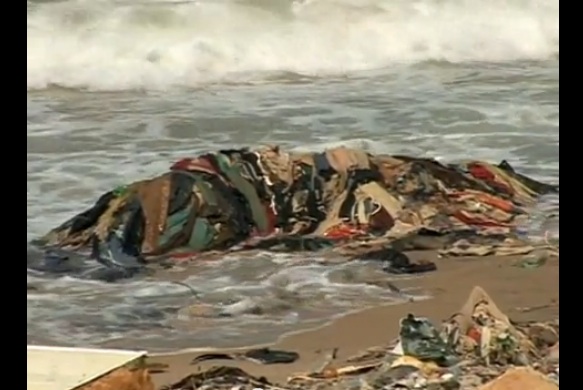
Not that long ago, the city of Sidon (or Saida) in Lebanon moved its trash to the local Sidon dump, where the toxic landfill and trash site washed into the sea every winter. Sometimes dump trucks didn’t wait for the rains and dumped directly into the sea. Thanks to Saudi Arabia, which offered some $20 million USD to clean the Sidon dump, the deed is almost done.
Taking a cue from Israel in the south perhaps, the Sidon dump will be turned into a recreational area, much like Israel’s Hiriya garbage dump, and its landfill dump in Jaffa – both sites are now recreation spots for walking and picnicking.
The Sidon clean up is overseen by the United Nations Development Program, the Sidon Municipality and the Environment Ministry Lebanon.
Sidon is the third largest city in Lebanon.
The dump has been cleared of harmful gases, while garbage there has been seperated. A wave breaker has been installed to prevent winter’s stormy seas from reaching the dump.
Some residents however, say the toxic fumes emanating from the clean up are worse than the dump site itself:
“36 year old Ahmad, who preferred not to give his real name, is a mechanic at the Industrial City and has lived near the waste-fill for most of his life. Almost one month ago, he moved out of his house and chose a location farther from the coast to protect his two young daughters from polluted air, which has been getting increasingly worse over the past two months.

He said this past August: “We don’t know the reasons behind the strong stench. We don’t know if it is dangerous to our health or not. But I felt the need to take my own precautions and moved out of the area. Many like me are following suit, but there are also many others who are financially incapable and are suffering extremely.”
As for the organic materials extracted from the waste, developers will be putting it aside to decompose for energy extraction purposes.
This video was taken before the clean up:
[youtube]http://www.youtube.com/watch?v=ffvJcASvvAo[/youtube]
“The city will finally be able to get rid of its shameful garbage mountain and the site will be turned into an entertainment complex for its residents,” said UNDP resident representative Robert Watkins.
According to local media the landfill was established in 1982 and it contained somewhere between 50-60 percent of solid waste and 35-40 percent of biodegradable material.
Plans were made to close down the dump late 2012. Containing some two million cubic meters of waste, it would cave in during wet winter months and funnel garbage down to the sea and beaches of the city. Deadly fires took place there recently.
Anaerobic fermenting will produce energy from the site, much like Israel’s Hiriya garbage dump which produces biogas to power lighting there.
There are plans to build on Sidon (Saida) but local blogger Keep Lebanon Green thinks that it should be left alone once the clean up is done:
“Filling the sea with land, also known as “land reclamation” in order to build structures on it, has environmental consequences. It is a form of habitat destruction. Land reclamation disrupts eco-systems and kills marine life. What an environmental plan should focus on is rehabilitation, not using the site to build something new. We need to rehabilitate the polluted sea around the dump too, not destroy it by filling it with soil.
“Lebanon, it’s great that the dumpsite is finally going to be treated, but the land reclamation part of the plan has dire environmental consequences. Let us advocate for environmental rehabilitation of both the dump and the sea! We can do it, Lebanon!” the blogger writes.
More on garbage and pollution:
Pollution Costs Lebanon $500 Million a Year
Arrow Ecology Sorts Through Garbage for Gold
Going on a Picnic at Tel Aviv’s Garbage Mountain


[…] Liibanonis asub näiteks kurikuulus Saida prügimägi, mis asub mererannas. Tänaseks on küll olemas poliitiline otsus see sulgeda ja Saudi Araabia rahaline toetus seda ellu viia, kuid näis kaua see protsess aega võtab. Vahemere ääres liigub aeg omasoodu… Lähemalt loe siit. […]