Lebanon’s Toxic Sea-side Sidon Dump Gets Eco Makeover

sidon saida-lebanon-garbage

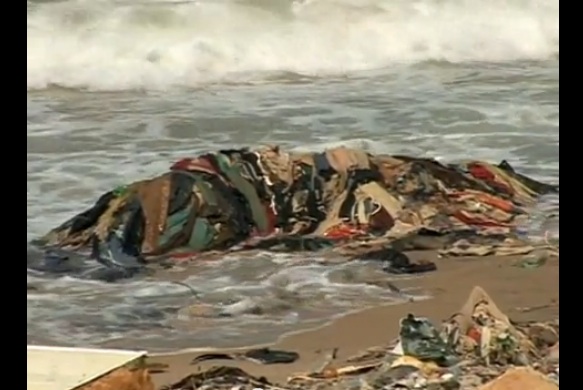
Not that long ago, the city of Sidon (or Saida) in Lebanon moved its trash to the local Sidon dump, where the toxic landfill and trash site washed into the sea every winter. Sometimes dump trucks didn’t wait for the rains and dumped directly into the sea. Thanks to Saudi Arabia, which offered some $20 million USD to clean the Sidon dump, the deed is almost done.

Taking a cue from Israel in the south perhaps, the Sidon dump will be turned into a recreational area, much like Israel’s Hiriya garbage dump, and its landfill dump in Jaffa – both sites are now recreation spots for walking and picnicking.

The Sidon clean up is overseen by the United Nations Development Program, the Sidon Municipality and the Environment Ministry Lebanon.

Sidon is the third largest city in Lebanon.

The dump has been cleared of harmful gases, while garbage there has been seperated. A wave breaker has been installed to prevent winter’s stormy seas from reaching the dump. 

Some residents however, say the toxic fumes emanating from the clean up are worse than the dump site itself:

“36 year old Ahmad, who preferred not to give his real name, is a mechanic at the Industrial City and has lived near the waste-fill for most of his life. Almost one month ago, he moved out of his house and chose a location farther from the coast to protect his two young daughters from polluted air, which has been getting increasingly worse over the past two months.

He said this past August: “We don’t know the reasons behind the strong stench. We don’t know if it is dangerous to our health or not. But I felt the need to take my own precautions and moved out of the area. Many like me are following suit, but there are also many others who are financially incapable and are suffering extremely.”

As for the organic materials extracted from the waste, developers will be putting it aside to decompose for energy extraction purposes.

This video was taken before the clean up:

[youtube]http://www.youtube.com/watch?v=ffvJcASvvAo[/youtube]

“The city will finally be able to get rid of its shameful garbage mountain and the site will be turned into an entertainment complex for its residents,” said UNDP resident representative Robert Watkins.

According to local media the landfill was established in 1982 and it contained somewhere between 50-60 percent of solid waste and 35-40 percent of biodegradable material.

Plans were made to close down the dump late 2012. Containing some two million cubic meters of waste, it would cave in during wet winter months and funnel garbage down to the sea and beaches of the city. Deadly fires took place there recently.

Anaerobic fermenting will produce energy from the site, much like Israel’s Hiriya garbage dump which produces biogas to power lighting there.

There are plans to build on Sidon (Saida) but local blogger Keep Lebanon Green thinks that it should be left alone once the clean up is done:

“Filling the sea with land, also known as “land reclamation” in order to build structures on it, has environmental consequences. It is a form of habitat destruction. Land reclamation disrupts eco-systems and kills marine life. What an environmental plan should focus on is rehabilitation, not using the site to build something new. We need to rehabilitate the polluted sea around the dump too, not destroy it by filling it with soil.

“Lebanon, it’s great that the dumpsite is finally going to be treated, but the land reclamation part of the plan has dire environmental consequences. Let us advocate for environmental rehabilitation of both the dump and the sea! We can do it, Lebanon!” the blogger writes.

More on garbage and pollution:
Pollution Costs Lebanon $500 Million a Year
Arrow Ecology Sorts Through Garbage for Gold
Going on a Picnic at Tel Aviv’s Garbage Mountain

Karin Kloosterman
Karin Kloostermanhttp://www.greenprophet.com
Karin Kloosterman is an award-winning journalist, innovation strategist, and founder of Green Prophet, one of the Middle East’s pioneering sustainability platforms. She has ranked in the Top 10 of Verizon innovation competitions, participated in NASA-linked challenges, and spoken worldwide on climate, food security, and future resilience. With an IoT technology patent, features in Canada’s National Post, and leadership inside teams building next-generation agricultural and planetary systems — including Mars-farming concepts — Karin operates at the intersection of storytelling, science, and systems change. She doesn’t report on the future – she helps design it. Reach out directly to [email protected]

Read More

1 COMMENT

TRENDING

Lebanon reporting fellowship for truth-tellers

Lebanon’s environmental crisis is not abstract. It is shaped by war, neglect, corruption, and silence. Rivers carry untreated sewage and industrial waste into the Mediterranean. Dynamite fishing shatters fragile marine ecosystems along the coast. In many areas, Hezbollah’s military presence and decades of instability have made environmental accountability nearly impossible. What flows into the sea is not only pollution — it is politics, poverty, and unresolved war. And yet, these stories are rarely told with depth, care, or courage. Silat Wassel’s Environmental Justice Journalism Fellowship is opening space for exactly that. They are looking for a few brave souls. 

Slow food market Souk el Tayeb in Lebanon celebrates food and Eid El Barbara

What makes Souk El Tayeb in Lebanon remarkable is not only its insistence on local, seasonal produce, but its belief that dignity and sustainability must go hand in hand. Farmers are paid fairly. Villages are uplifted. Traditional recipes are kept alive not as nostalgia but as knowledge systems: real food is carbon-light, waste-free, and is adapted to the land.

The Pope visits Lebanon and the site of the deadly Beirut blast

“Lebanon, stand up,” he added. “Be a home of justice and fraternity! Be a prophetic sign of peace for the whole of the Levant!”

Dead shark on beach injured by fishing nets

  A dead shark that washed ashore this week at...

Lebanon ski resorts and when to escape climate change

Lebanon’s mountain resorts — from Mzaar Ski Resort Faraya to the Cedars of God in Bsharri — offer rare snow in the Middle East, where you can ski by day and swim in the sea by night. But climate change is shrinking snow seasons fast. Resorts like Zaarour, Laqlouq, Faqra, and the Cedars are adapting, turning toward year-round eco-tourism and mountain conservation.

Yerukim Forms a New Green Economy Where the Money is Really Green

The Yerukim members who pick up the recyclables get to keep the monetary reward, the public earns "green" bills that can be used in shops, and business owners get to be associated with environmentalism.

Choosing Riyadh over Dubai? What Investors Should Know

Saudi Arabia is deploying capital at unmatched scale to catalyze tourism and advanced industry while rewiring its power-and-water backbone. The investable frontier is widening—especially in renewables, grid storage, water efficiency/desal retrofits, and hospitality operating platforms. Prudent investors will insist on phased delivery, enforceable KPIs (energy, water, biodiversity), and RHQ/zone compliance—while pricing political-economy and reputational risks alongside growth upside.

Sell your cooking oil for biodiesel money

Want to make money on old french fry oil? Sell it.

Qatar Alternative Energy Summit Pairs Investors And Innovators

Alternative energy investors and innovators can meet n' greet in Doha, Qatar March 16 and 17.

Here’s How To Implement The Four Pillars Of Employee Engagement

If you throw a party for your work team and they are vegans, don't make it a barbecue. Know the sustainability values of your team to boost moral and retain good people.

Locals From Rishon Fight IKEA

Big Box stores are a pretty new concept in Israel, and thank God that not every Israeli city wants them in their backyard. A word from someone who has see the beautiful farmland around her hometown Newmarket, Ontario stripped and converted into vulgar strip malls of big box shops: they have no place in a healthy and sustainable town or city.

The Jewish National Fund Meets An Inconvenient Truth

According to the JNF, it has transformed thousands of acres of barren land into green forests in Israel. They state that each person emits about 23 tons of carbon per year, estimating that each tree planted can absorb one ton of carbon in its lifetime. That's a whole lot of trees you'd need to be planting. Could so many fit in Israel?

How to quiet noise from construction in your office

Streets need to be resurfaced in New York but the humming and grinding noise is unsettling. Noise is environmental pollution. 

Popular Categories