
As our twins enter their last year of high school, we are acutely aware of the passage of time. We feel a strong pull to linger and savour our moments together. So at the end of the summer, with our national airline in Canada on the verge of a strike, we booked a 10-day trip to Morocco. Looking to slow down our experience of time, we wanted to learn from people with different stories and life paths.
We focused on doing and learning. We crafted with master artisans – carving wood, etching plaster and stamping copper. We cooked tagines and couscous with a local family, baked bread in the community oven, and walked the winding pathways of medina streets in Marrakesh and Fez. We travelled by train and car while delighting in raw landscapes, beautifully spiced food, colourful architecture, and connecting deeply with the people we met.
Between Marrakesh and Fez, we booked 2 nights in the small mountain village of Imlil, in the High Atlas Mountains, to experience nature and life outside Morocco’s more urban centres. Despite its proximity to and easy travel from Marrakesh, Imlil felt dramatically different. We stayed at the Kasbah du Toubkal which is much more than a boutique hotel.
The Kasbah du Toubkal
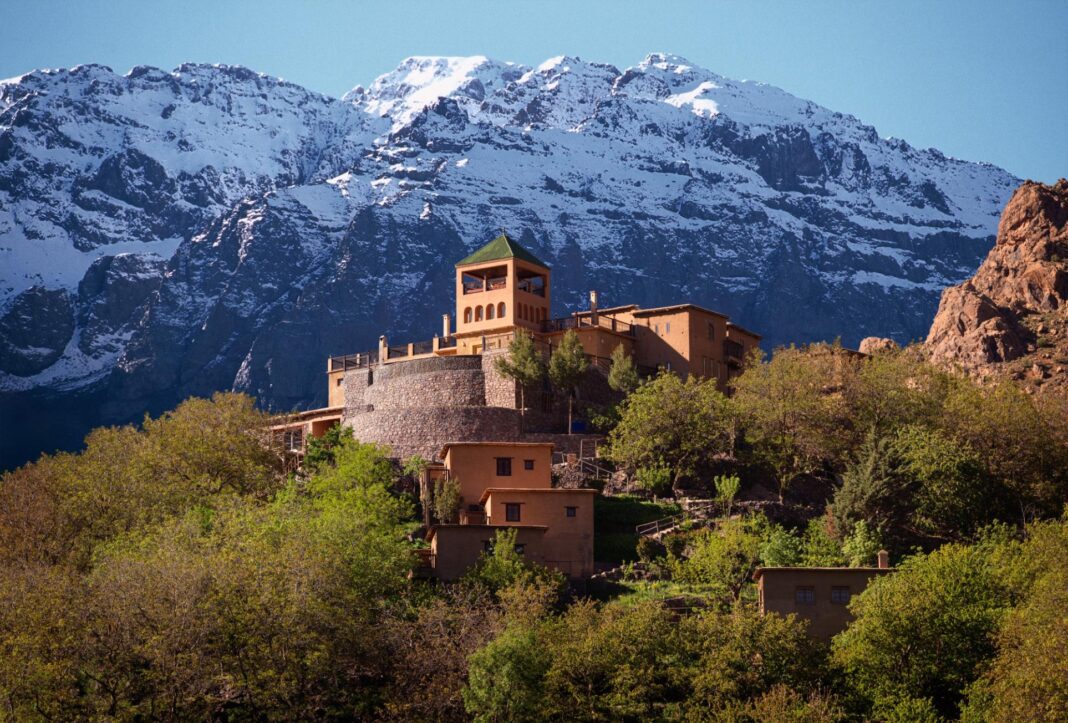
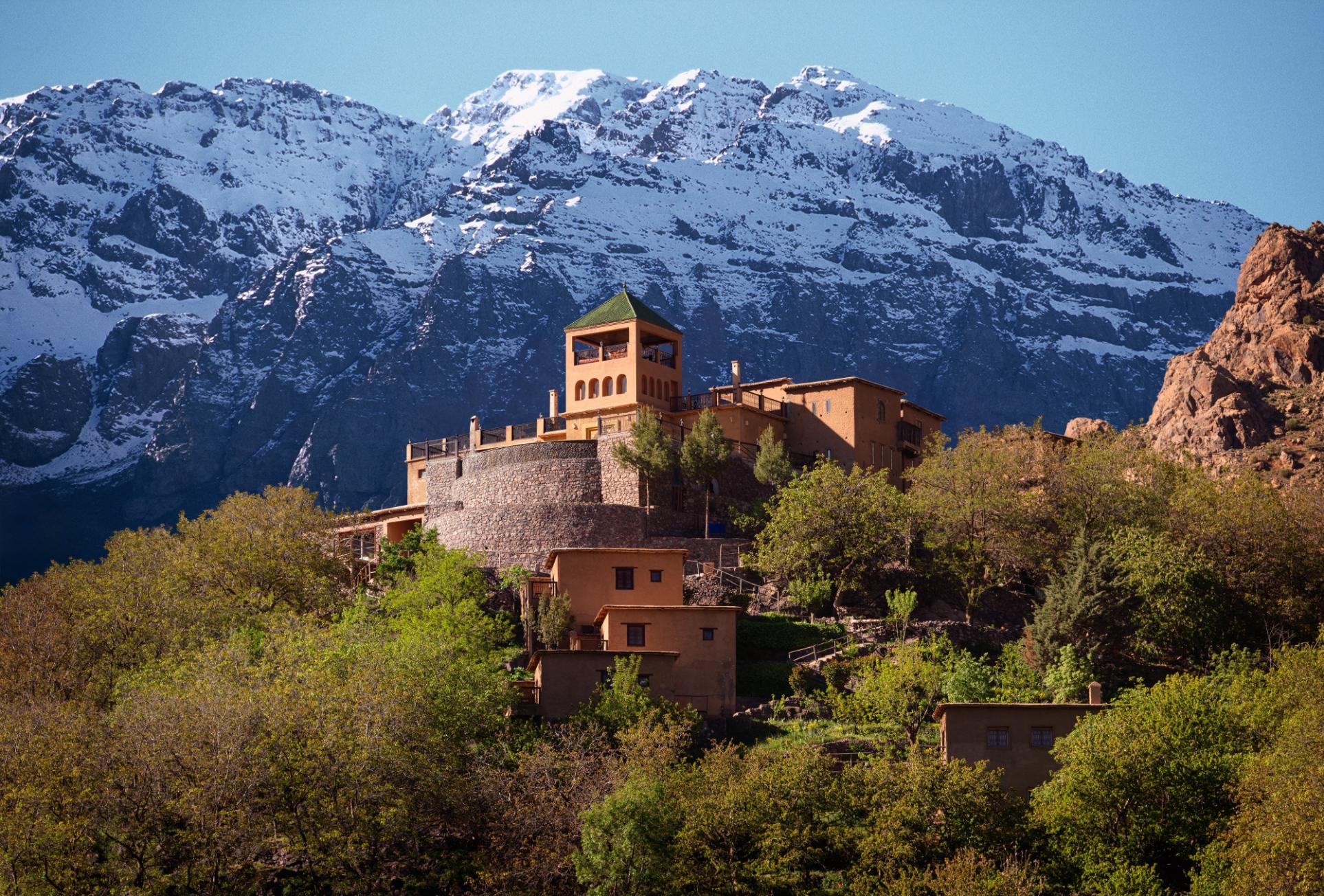
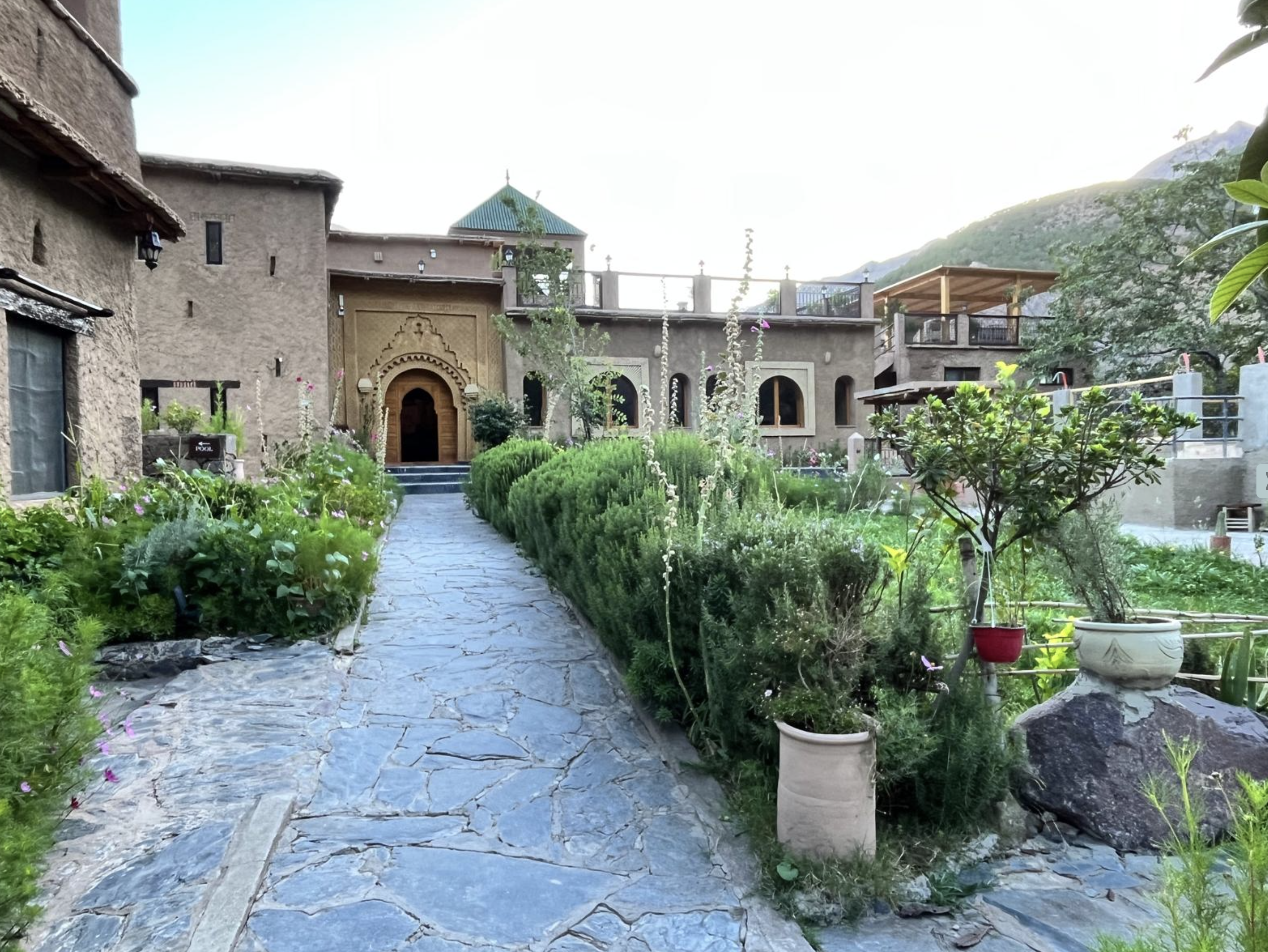
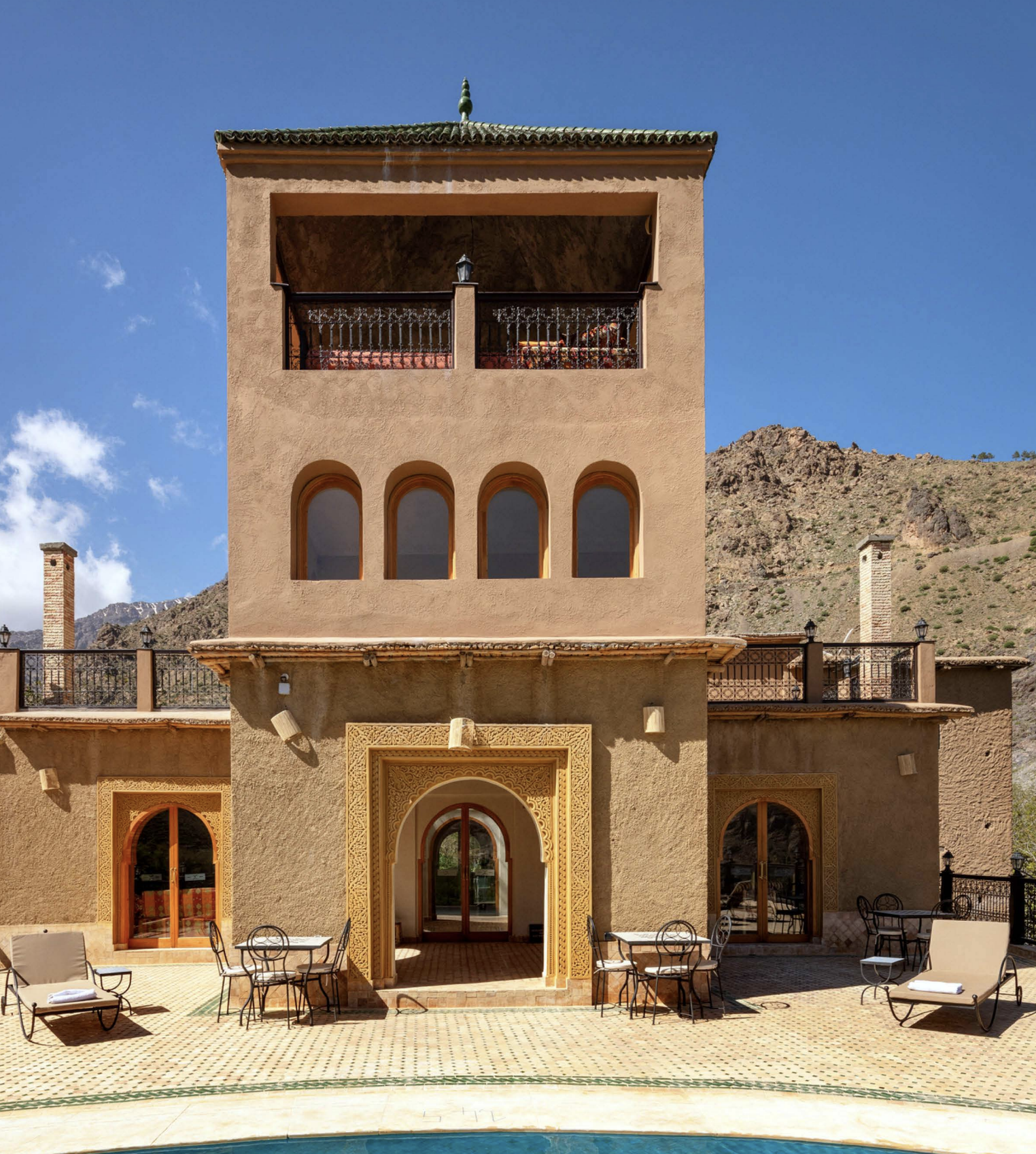
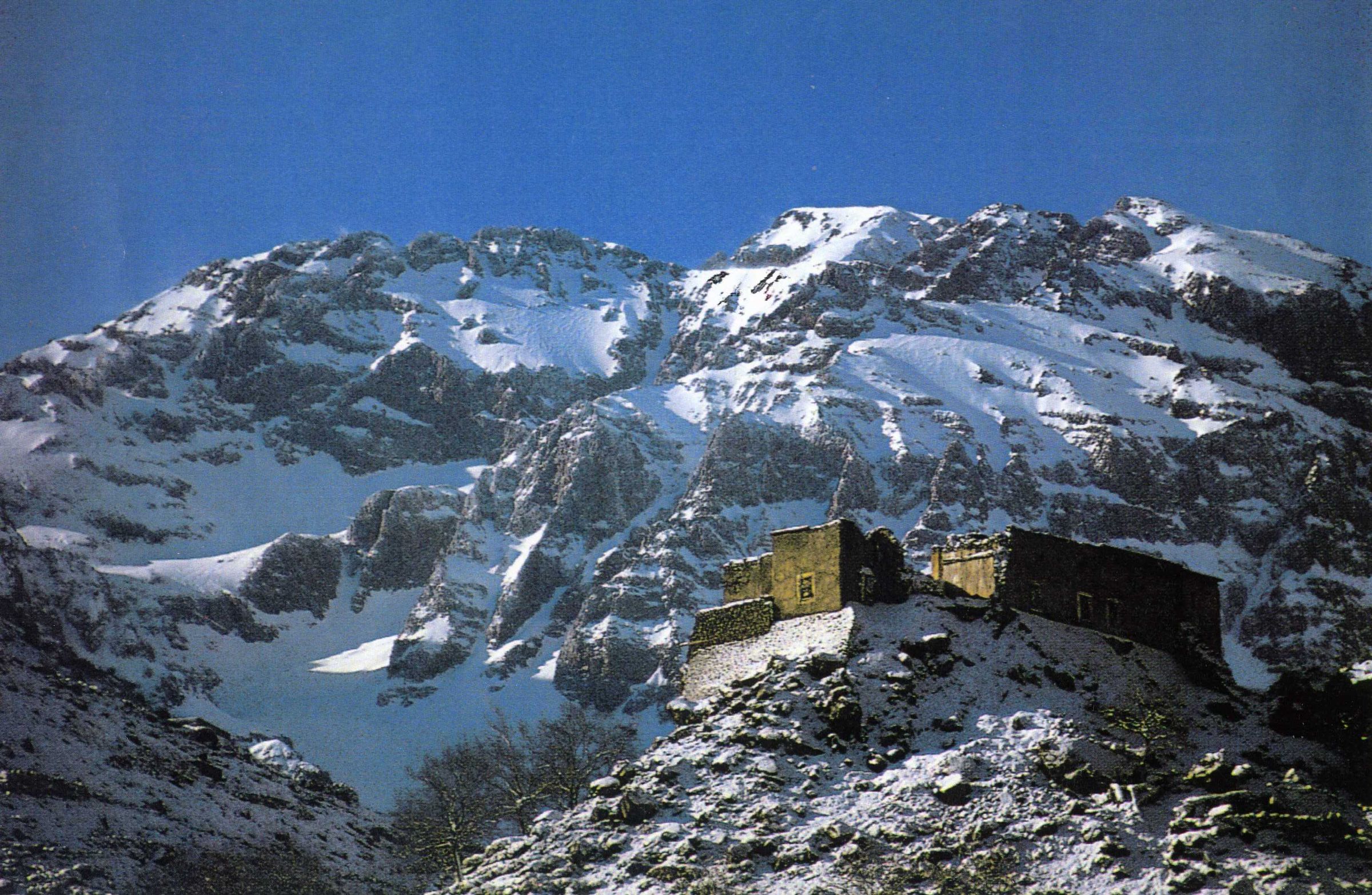
The Kasbah du Toubkal is set high on a hilltop overlooking the village of Imlil with North Africa’s highest peak, Mount Toubkal, behind it. Unique in its approach to tourism, the Kasbah was founded upon and reflects an intentional set of ethical principles that aims to promote Berber values of hospitality, community connection, environmental preservation and cultural harmony.
The Kasbah is grounded in a story of true partnership and friendship between two people, British and Berber, which is infused into every aspect. Mike McHugo and Hajj Maurice met in 1978 and the Kasbah opened in 1995, with the shared belief that the Kasbah be built in collaboration and connection with the local Berber community.
Hajj Maurice and his wife Hajja Arkia (who welcomed us with a hug) along with their team from the local community, manage the day to day operations. A core value of the Kasbah is to share the beauty of Toubkal National Park with anyone who respects it, thereby offering a range of accommodation and pricing to ensure it is widely accessible to a diverse group of guests.
The arrival
Only 1.5 hours from Marrakesh, up winding pink mountainous roads, we arrived at the Berber village of Imlil in anticipation of the mystery that awaited us. After a warm greeting, we began our walk up a steep rugged trail to the Kasbah, passing by families from the local communities and towering gnarled walnut trees, grateful to the mule accompanying us, our bags strapped to her back. After 15 minutes, we reached the dark etched wooden doors of the Kasbah eager to experience what lay beyond them.
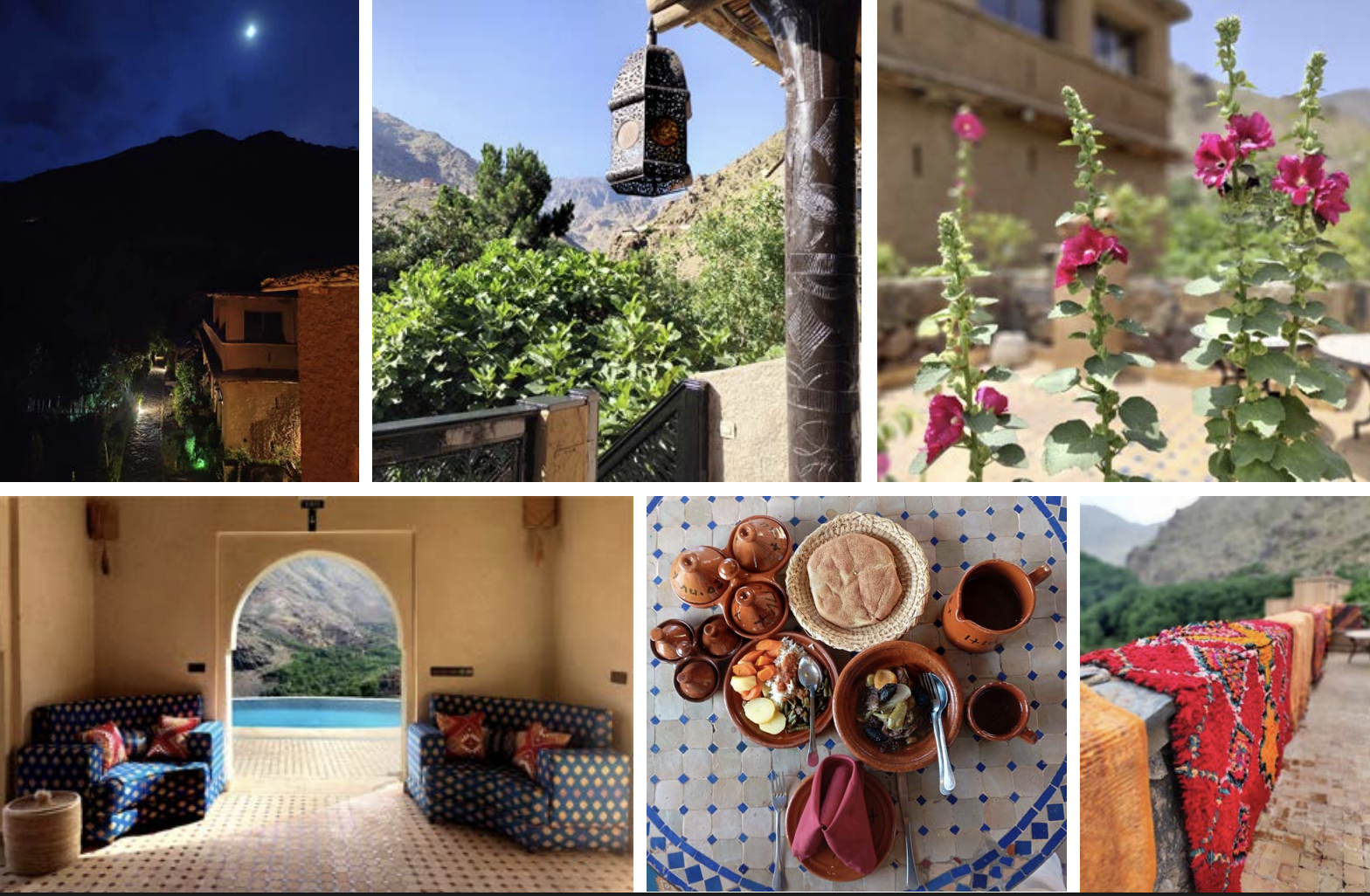
The Kasbah’s doors opened into a mystical realm of intricate stone pathways, arched doorways and hidden alleyways. Nature surrounds, with mature fruit trees, colourful flowers, looming mountains, villages and waterfalls dotting the landscape. Large sitting areas with colourful traditional decor and fireplaces, interspersed throughout, offer panoramic views and facilitate connection among guests.
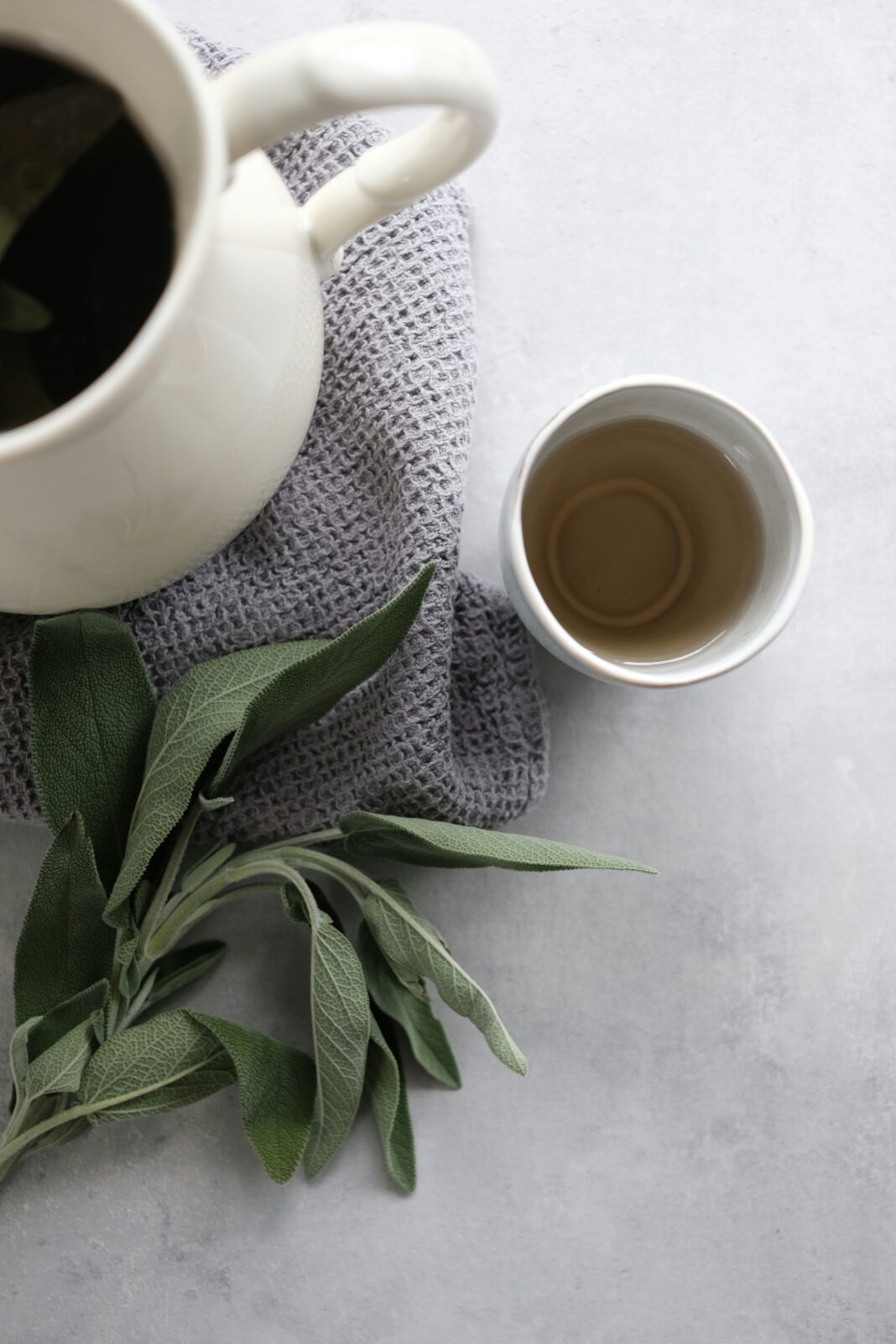
We were welcomed with fresh mint tea and nuts which we enjoyed while sinking into colourful pillows, the imposing mountains ablaze with the bright afternoon sun. We could hear the soulful call to prayer being sung from the village mosques further grounding us in this spiritual moment. Our kids sat at the edge of the newly built infinity pool looking out on the multi-coloured rock, still processing the previous days’ experiences in Marrakesh.
We ate dinner on the upper terrace as the sun set across the valley, the sun illuminating the towering peaks surrounding us. Dinner, prepared in house, included warm fresh bread with butter, black and green olives, potato soup eaten with long wooden ladles, fresh dates, and chicken tagine with preserved lemons, potatoes rice and carrots – beautifully presented on clay dishes.
That night we went to sleep in our family suite to the cacophony of sounds from the surrounding villages echoing across the valley, of children playing, and animals bellowing, making the mountains feel alive and comforting in the darkness of the night.
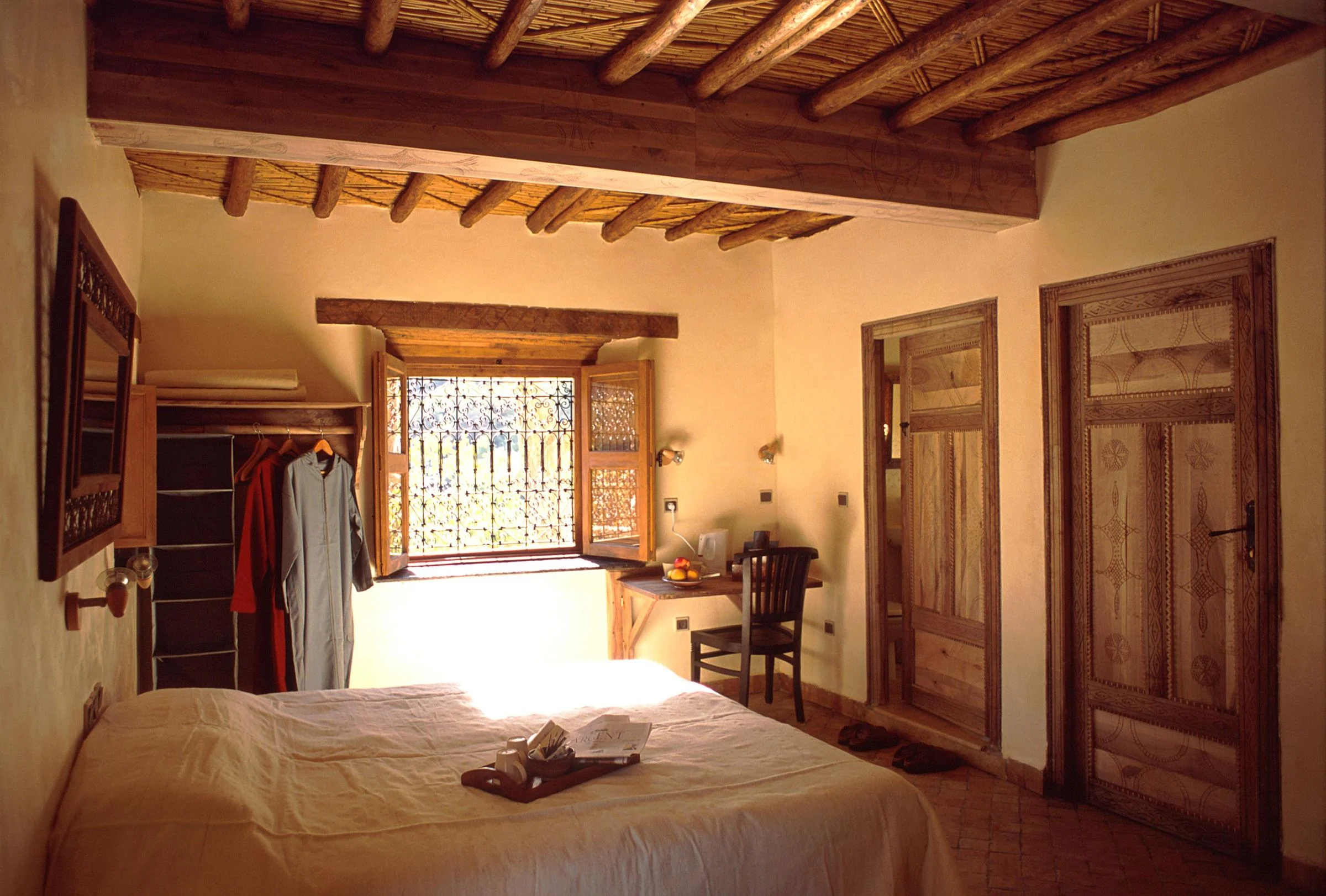
The Kasbah offers many types of accommodation from en-suite rooms, to full private self-contained houses. We stayed in a two-level family suite with colourful decor, hand-woven carpets and carved wooden doors. Upstairs there was a full kitchen, living room, dining room, indoor fireplace, and an outdoor terrace overlooking fruit-laden fig trees. The Kasbah also offers its guests the opportunity to sleep under the stars on carpets and under blankets which we hope to experience someday.
Mount Toubkal and Trekking
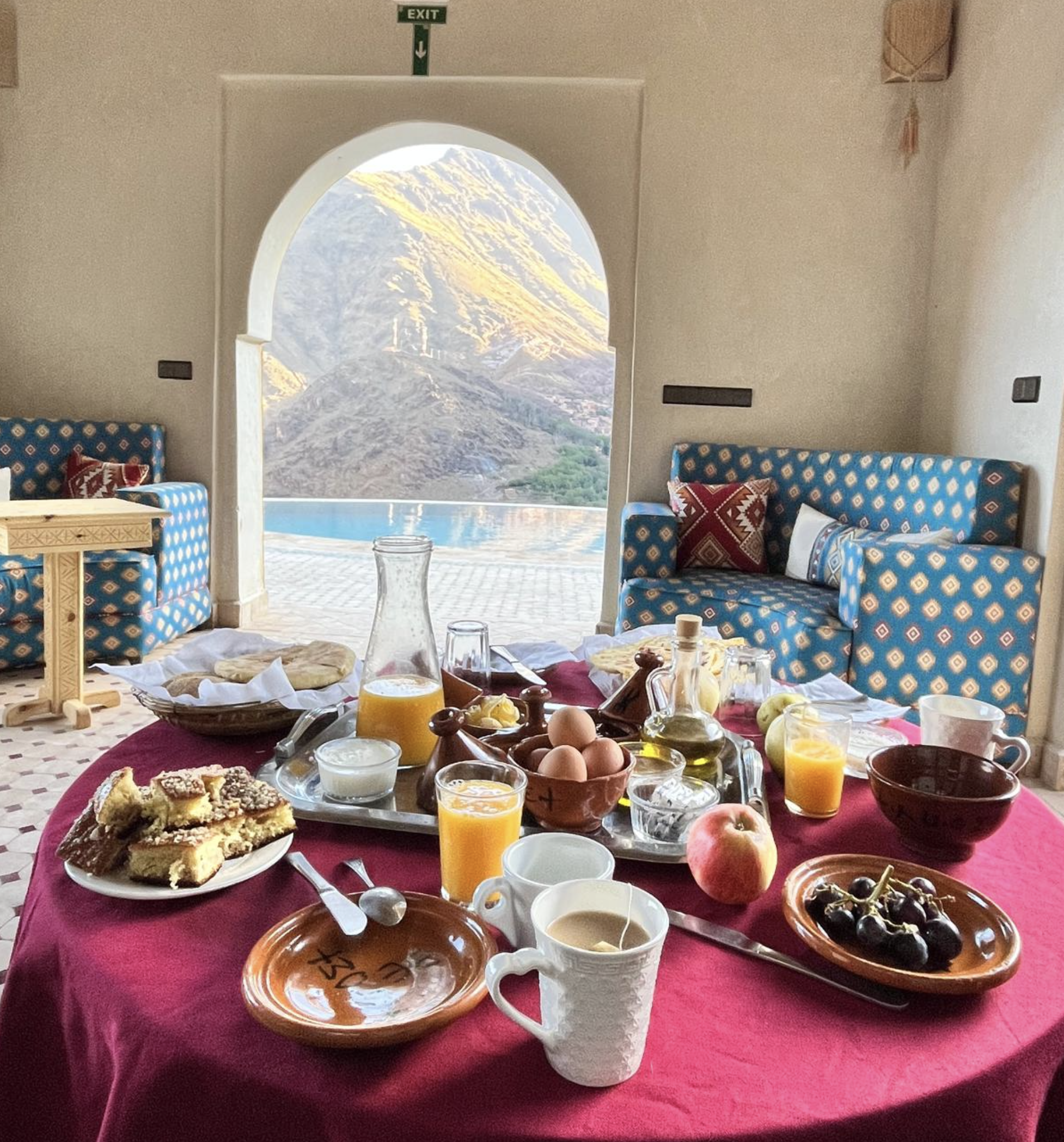
The next morning, we woke up early for a guided hike arranged by the Kasbah. We fueled up with breakfast from a display of wooden bowls filled with nuts, dried fruits (prunes, figs, apricots), cereal, and yogurt. The warm bread and crepes were served with butter, cheese, honey, hardboiled eggs, and freshly squeezed orange juice.
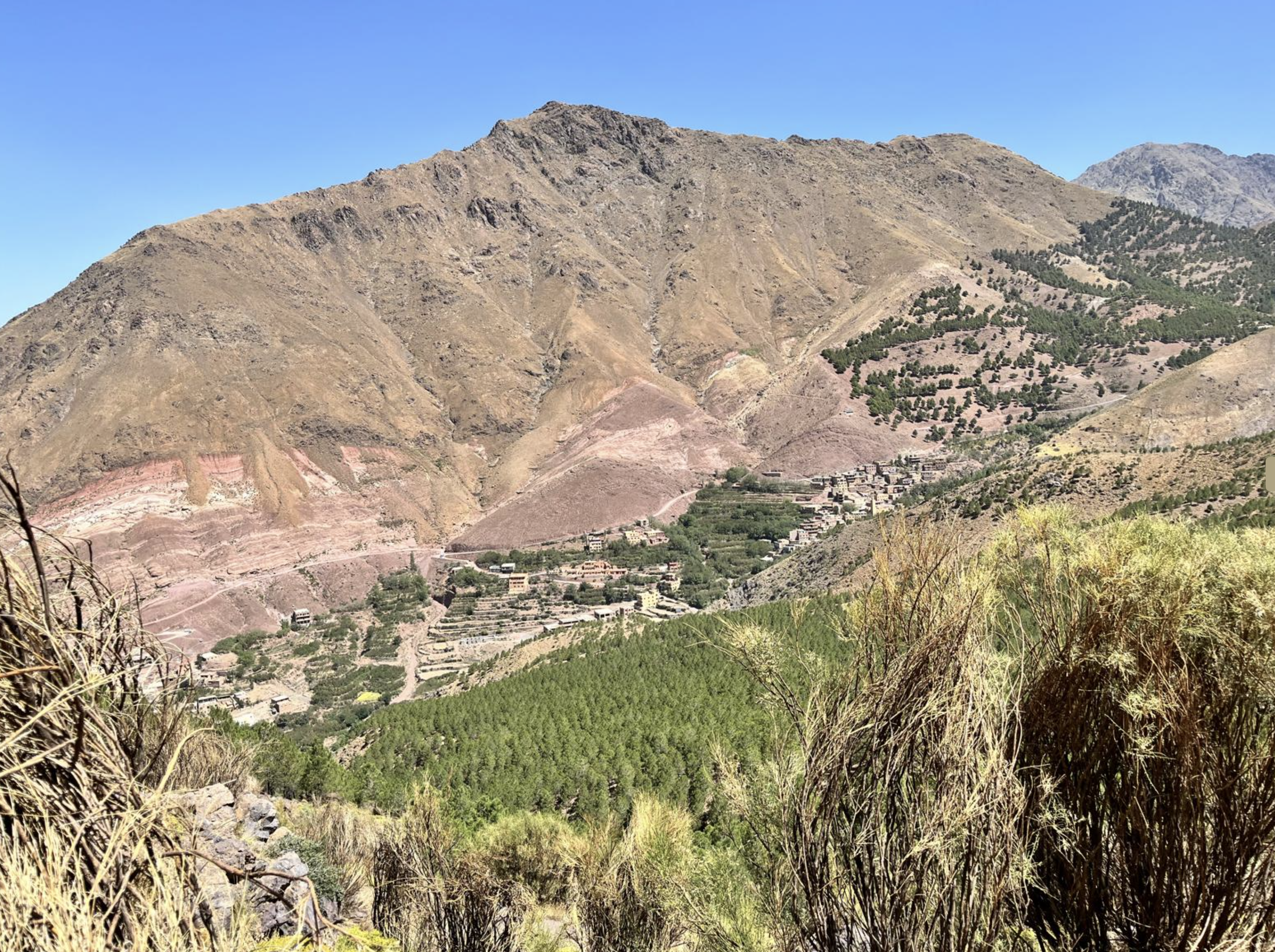
We set off with our guide, Abdul, on a half day rigorous hike. Following a stream, we eased in with a tour of local villages, then up a steep climb through the Toubkal National Park. Mountain trails took us through turquoise, red, orange and purple boulders where we spotted elusive squirrels darting in and out of the rocky cracks. We passed bee hives, apple orchards, and snacked on wild blackberries. We descended steep stairs built into the rocks to waterfalls, where families splashed in swimming holes and enjoyed tagines cooked on open coals.
Our guide told us stories of village life and explained the nature all around us. He told us his father used to ski between villages in winter until global warming took away most of the snow and that before electricity arrived in 1997, people used to communicate by yelling across the valley. These few hours only gave us a taste of the potential to explore this rugged region. The Kasbah offers multi-day treks including the ascent of Mount Toubkal.
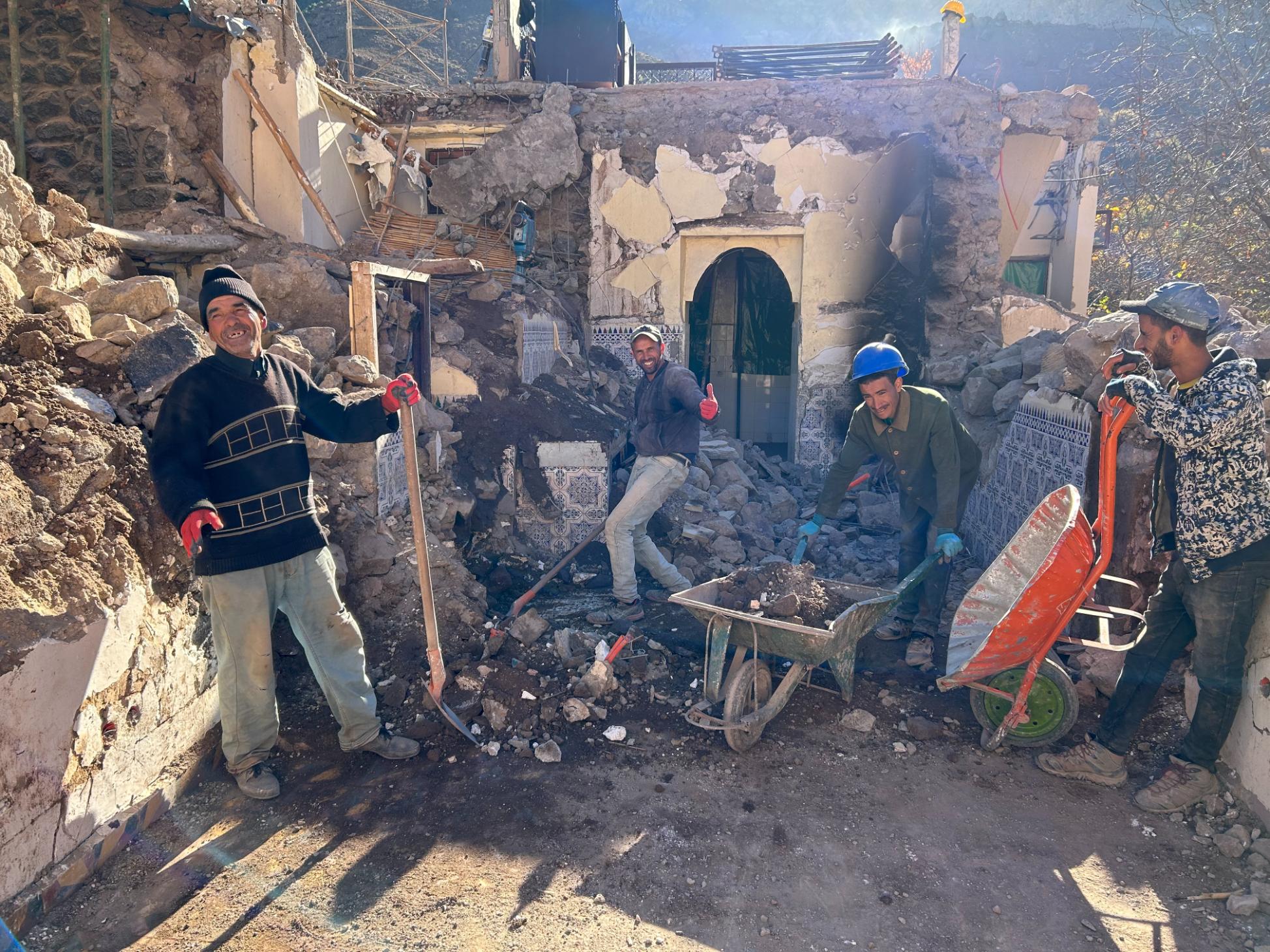
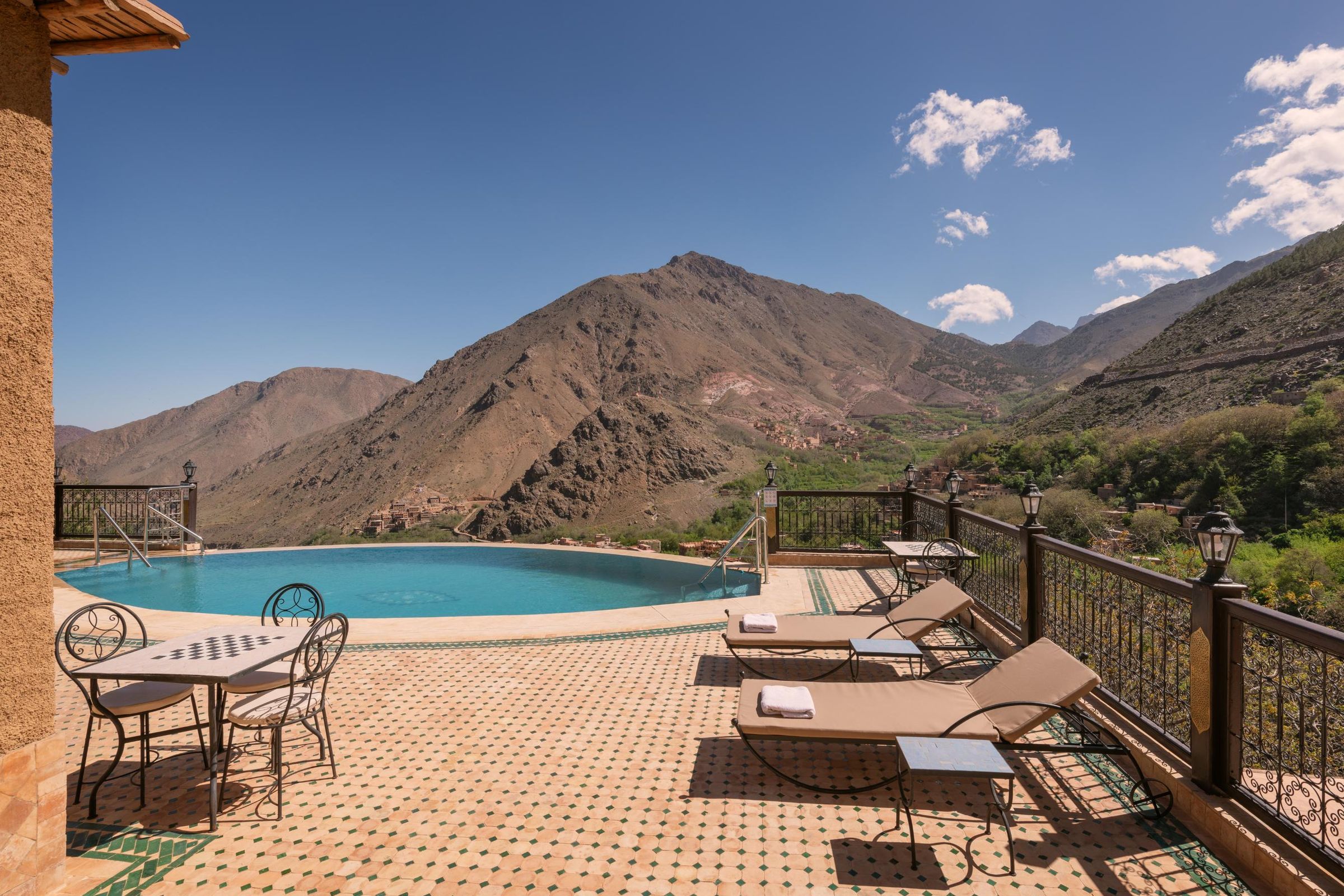
That afternoon, we swam in the Kasbah’s new infinity pool, that holds a 270-degree vista of the surrounding mountains, villages and valleys. This pool was added during a major rebuild after an earthquake in September 2023 devastated the area and destroyed parts of the Kasbah. It is a beautiful addition that can be enjoyed by families. We met other guests from England and Wales who were resting up by the pool before commencing their multi-day trek up Mount Toubkal.
After our swim, we visited the traditional Hammam on the grounds of the Kasbah. Wooden doors enclose a room full of hot steam heated by wood fire. We covered ourselves with black soap and an exfoliating glove softened our skin. We felt even more alive after the cold plunge in the marbled mosaic tile bath under the high arches and windows to the sky.
Connection to the local community
A core principle of the Kasbah is to ensure that it operates in harmony with and of benefit to the surrounding communities recognizing that it is itself a guest of the local Berbers and seeking to learn. A 5% levy is charged on the Kasbah’s services which is then directed to the Imlil Village Association to fund community projects including: building the first community hammam (bath house), creating a garbage disposal system, initiating the first two ambulances to serve the area, improving water safety in surrounding villages, and the creation of the organization Education For All to promote access to secondary education for girls from the High Atlas mountains including the building of a home for girls to board while attending school away from their families.
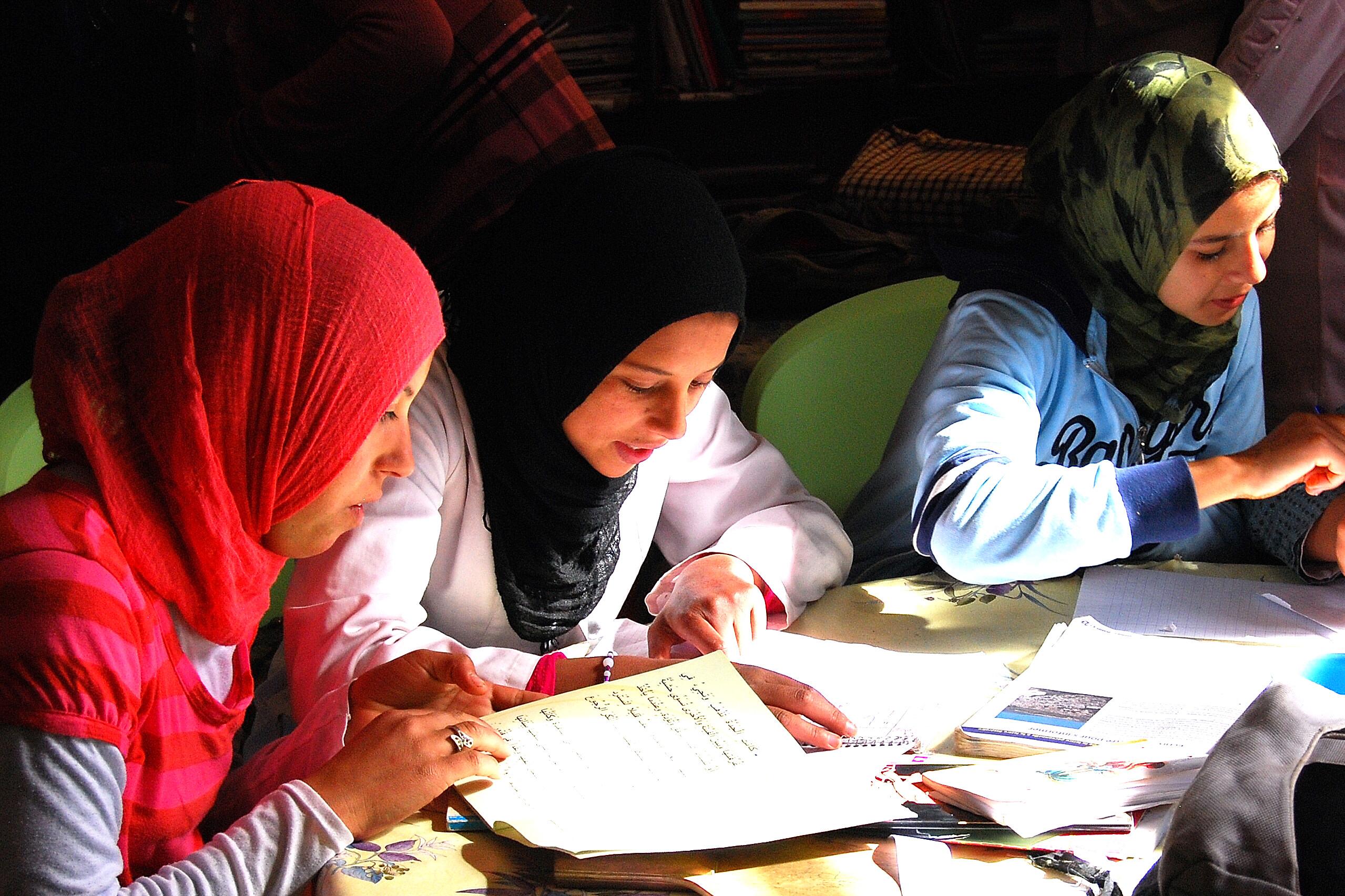
The founders’ longstanding commitment to education emanated from when they began leading educational tours in Morocco for school and college students long before the Kasbah was built.
Sustainability
The Kasbah was created in accordance with the principles of responsible tourism and sustainability. Highly conscious of the risk of greenwashing, the founders have intentionally sought to ensure the Kasbah benefits the community and also protects cultural traditions. Built before there was electricity in the region, workers from the surrounding villages used traditional building techniques (without electrical tools) and local materials, carried in by hand or with the assistance of mules. The fresh spring water is safe for drinking, and the Kasbah encourages the use of re-usable water bottles rather than plastic ones. The fruits, vegetables and meat are all locally sourced.
Standing on the terrace staring out at the mesmerizing landscape as the sun set behind High Atlas mountains, I reflect upon the passage of time in our parenting journey. Words cannot capture the mystery of the Kasbah du Toubkal – the magic of which must be experienced.
Walking well-trodden mountain pathways, eating fresh local food, and learning about the transformative work embedded in the Kasbah’s approach to tourism has now been imparted to our children. We hope, in turn, these experiences will serve to inform their contributions in the world as they continue to grow. Don’t wait, Morocco is on everyone’s bucket list. Growth and change are inevitable.
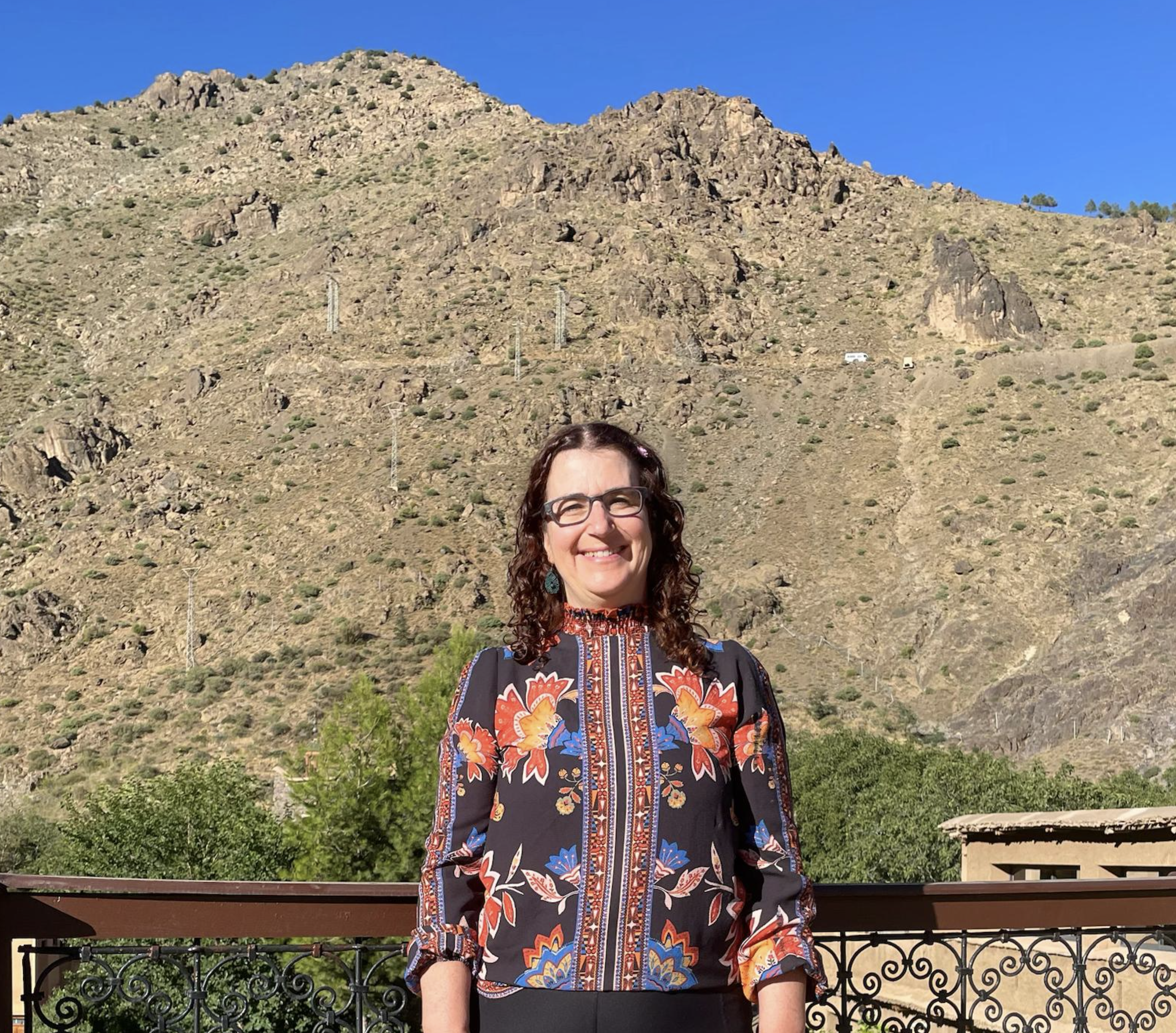
Karen Spector lives in Toronto with her husband, three kids, and three cats. She loves to engage in slow travel with her family, explore nature, and learn about local crafting and colourful textiles.