

Some diseases of the modern world that appear to be non-contagious can be linked to living in certain countries. More women in Canada get multiple sclerosis than anywhere in the world based on a number of factors including exposure to vitamin D and the Epstein Bar virus. But also doctors and a medical system that tracks it.
A first-of-its-kind nationwide in the United States has mapped epilepsy incidence rates among older adults in the United States and identified key social and environmental factors associated with the neurological condition. The analysis revealed that epilepsy cases among adults aged 65 and older were significantly higher in parts of the South—including Louisiana, Mississippi, East Texas and central Oklahoma—compared to other regions.
Epilepsy affects an estimated 3.3 million people in the United States, according to the US Centers for Disease Control and Prevention. In 2019, health care spending on epilepsy and seizures reached $24.5 billion. It can be a debilitating disease and those suffering from it can’t drive and may always be at risk at hurting themselves when a seizure comes on. In children, epilepsy can slow growth and brain development as we learned from our friend Dr. Alan Shackelford who gives child patients cannabis and CBD oil to slow symptoms and attacks. His first patient was a girl named Charlotte.
Published recently in the science journal JAMA Neurology, the study is a collaborative effort between researchers at Houston Methodist Research Institute and Case Western Reserve University.
Why are some states more epileptic than others?
“Until now, we didn’t have a national picture of where epilepsy affects older adults the most,” Weichuan Dong from Case Western Reserve University said. “By applying advanced geospatial mapping to Medicare data, we revealed striking clusters of high epilepsy rates across parts of the South — what we call the ‘epilepsy belt.’ Understanding where the burden lies is the first step toward uncovering why and helping communities reduce risk.”
The study found that the most influential factors linked to higher epilepsy incidence included insufficient sleep (fewer than seven hours per night), extreme heat (more days with heat index above 95 degrees), lack of physical activity, and lack of health insurance among younger adults (suggesting delayed diagnosis until Medicare eligibility) and limited access to a household vehicle.
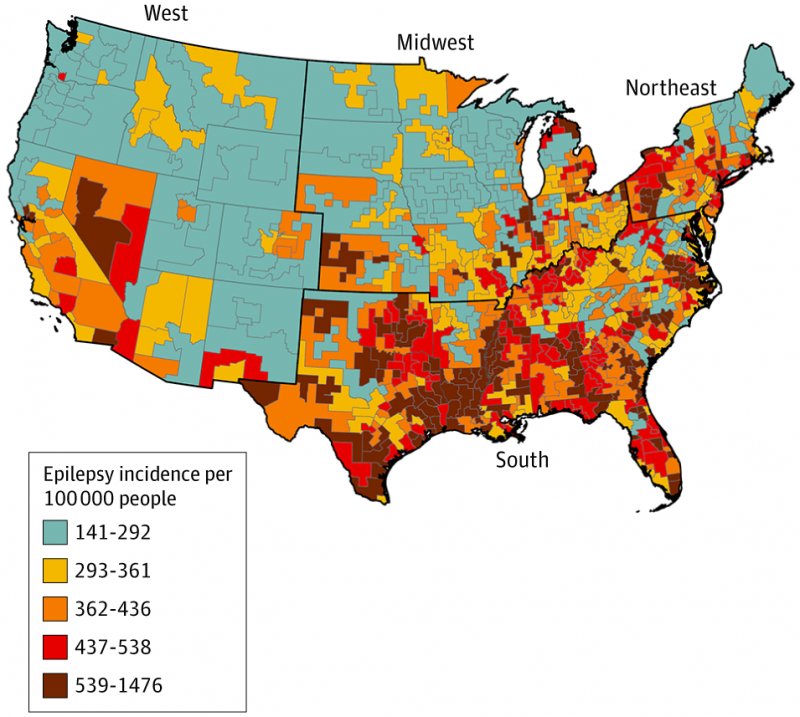
These conditions, often shaped by local environments and socioeconomic status, were more prevalent in regions with the highest epilepsy rates.
“This is the first study documenting such a strong association between extreme heat and incident epilepsy in older adults across the US., highlighting the importance of climate change in emergency preparedness, especially given the graying of the population,” said Siran Koroukian from Case Western Reserve University School of Medicine.
Using advanced geospatial machine learning algorithms, researchers analyzed data from 4.8 million Medicare beneficiaries between 2016 and 2019. Data sources included the U.S. Medicare Master Beneficiary Summary File and the Agency for Healthcare Research and Quality. Alaska and Hawaii were excluded due to incomplete data from the Social and Environmental Determinants of Health report.
The study uncovered patterns previously invisible in national data, showing how factors like neighborhood sleep habits, heat exposure, health care access and household vehicle access can shape health outcomes. Other strong predictors included obesity prevalence and availability of primary care physicians.
If you are suffering from epilepsy consider self-care to get more sleep. Smart watches like Night Watch can monitor and track seizures from epilepsy, weighted blankets offer natural sleep accessories, yoga classes and calming aromatherapy products such as diffusers and eco-friendly bees wax candles to clean negative ions from your space.