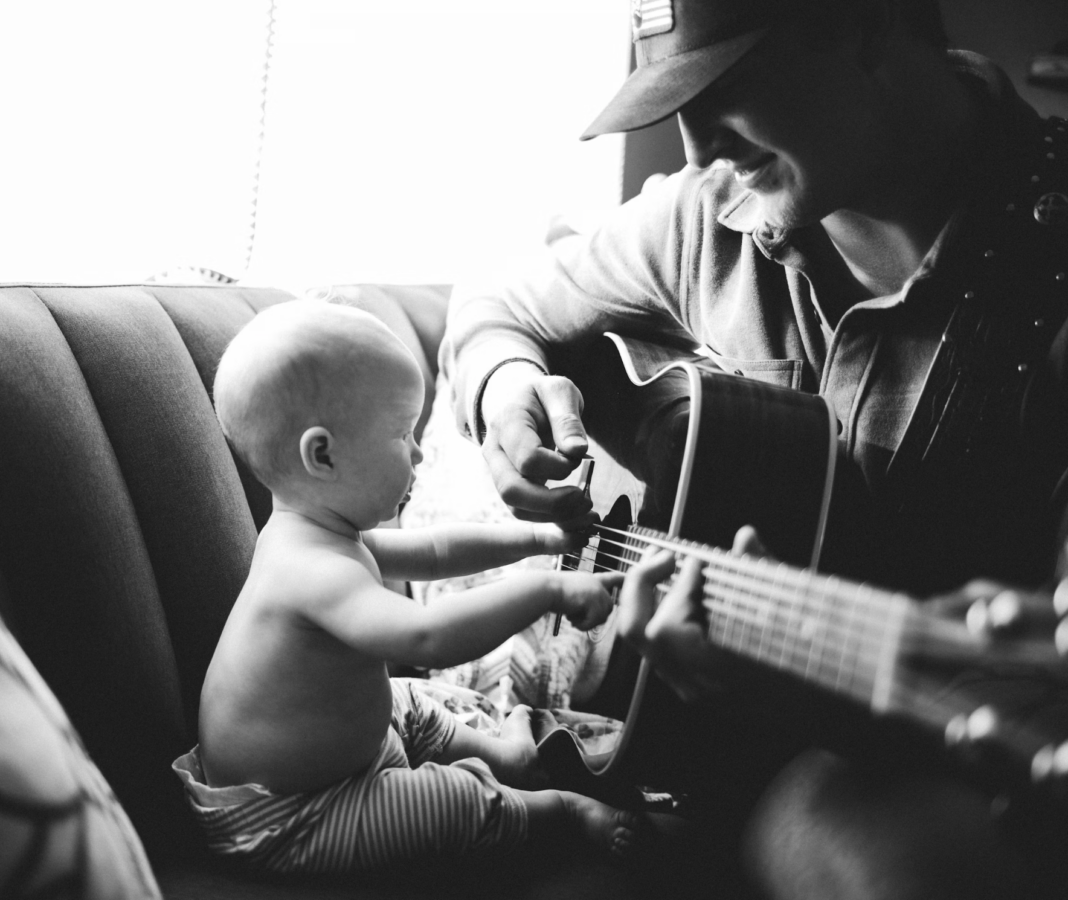


In homes from rural Kenya to Tokyo high-rises, one universal thread connects us across culture, language, and belief: singing to babies. Now, a new study out of Yale University offers scientific validation to what parents and caregivers have known for generations—singing soothes babies, lifts their moods, and strengthens early emotional bonds.
Published in Child Development on May 28, the study reveals that even brief increases in musical engagement can lead to real health benefits for infants, particularly improved mood and emotional regulation. This is a timely reminder that amidst rising mental health concerns and parenting stress, some of the most powerful interventions are still the simplest—and the most ancient.
Singing in Waldorf Education: A Foundation for Emotional Intelligence

In Waldorf education, which draws on the philosophies of Rudolf Steiner, singing is not simply entertainment—it’s a way of being. From infancy through grade school, Waldorf teachers and caregivers incorporate song into daily rituals, transitions, and lessons. The belief is that young children absorb the world through rhythm and melody, and that music helps them harmonize internally with their environment.
In a Waldorf pre-school class, you might see a teacher lighting a candle while softly singing a greeting song. Later, a lullaby might guide children into rest, or a playful tune might invite them into circle time. Even math and language learning are introduced through song.
“Singing carries warmth, and warmth is what the young child most needs,” says Karin Kloosterman, the founder of Green Prophet. “When we sing to babies, we offer them an emotional map of the world.”
Singing to babies isn’t exclusive to Waldorf or Western education. It’s a cross-cultural instinct deeply embedded in human caregiving. In Uganda, mothers sing lullabies called ebinyinyinya to soothe infants at night. In Arctic Inuit communities, families use ayaya songs—short, improvised melodies whispered to babies during long winters. In India, lori lullabies are passed down through generations as sacred maternal rites.
Anthropologists have found that infant-directed music has recognizable patterns across all human cultures: slower tempo, higher pitch, and repetitive phrasing. “Music is one of our species’ earliest and most reliable ways of saying, You are safe. You are loved,” says Dr. Samuel Mehr, director of The Music Lab at Yale.

Even in cultures where literacy is limited, music serves as a primary vehicle for emotional and social development. And now, science is catching up.
The Yale Study: A Closer Look
In the Yale study, 110 parents of babies under four months were divided into two groups. One was encouraged to sing more often, supported with baby-friendly songbooks, karaoke videos, and weekly prompts. After just four weeks, the babies in this group were consistently rated as being in a better mood compared to those in the control group.
Notably, many parents naturally used singing as a tool for calming fussy infants, even though the study didn’t instruct them to do so. “They intuitively reached for music, because it worked,” says co-author Lidya Yurdum.

While the parents’ own moods didn’t show marked improvement over the short timeframe, researchers believe long-term singing might also support caregivers, potentially offering relief from stress and even postpartum depression. The study has now expanded into a longer eight-month trial, titled “Together We Grow.”
In a modern world saturated with overstimulation—from screens to synthetic noise—this research reminds us of the profound power of simplicity. Singing is free. It requires no batteries, no subscriptions, and no formal training. And yet, its impact is potentially transformative.
In fact, studies suggest that when caregivers sing lullabies, they regulate not only their child’s emotions but also their own. Heartbeats slow. Breathing deepens. A kind of co-regulation unfolds, tuning parent and child to each other’s rhythms.
“It’s the original language of connection,” says Waldorf educator and parenting coach Eliza Gold. “Singing allows us to meet our children in a space that words can’t reach.”
Want to Start Singing to Your Baby?
Keep it simple: No need for perfect pitch. Babies love the sound of your voice.
Create routines: Use the same song for waking, naptime, or bathtime.
Include siblings: Singing together strengthens family bonds.
Draw from yoru own family traditions. Ask your grandmothers, or parents or aunts. Use Waldorf inspiration: Sing instead of speaking during transitions—e.g., “Time to wash your hands” becomes a gentle chant.
In a time when parents are bombarded with products and programs promising better baby development, it’s worth remembering that our voices—and our presence—are still the most powerful tools we have. The science now confirms it. And the world’s mothers, grandfathers, and early childhood teachers have always known it.