
Did chimps teach us how to drum?
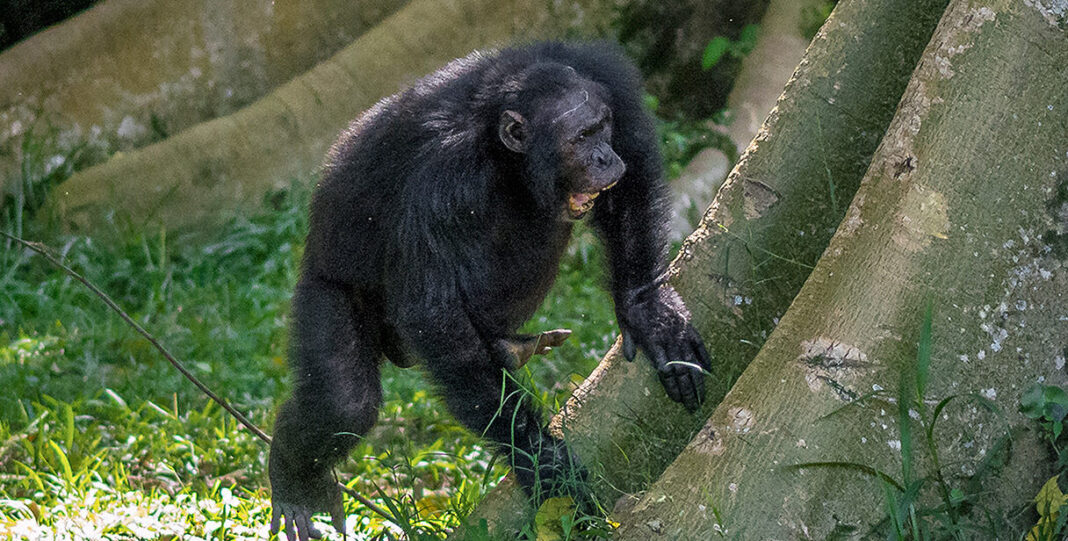
In the remote forests of West and East Africa, a form of communication echoes across the trees—low, percussive thuds made not by humans, but by chimpanzees. Scientists have long known that our closest relatives use calls, facial expressions, and gestures to interact. But a new study reveals something more astonishing: chimpanzees drum.
Not randomly, and not just for fun. These wild chimpanzees use tree roots as percussion instruments, and they drum in culturally distinct patterns depending on where they live.
Researchers observed that Pan troglodytes verus, the western subspecies found in Côte d’Ivoire, drum in steady, evenly spaced beats. Their eastern cousins, Pan troglodytes schweinfurthii, living in Uganda, perform a more complex rhythm with alternating long and short pauses, reminiscent of a natural Morse code. The sound travels across long distances—allowing chimps to signal location, hierarchy, or perhaps even mood.
In another related study, researchers found western chimps also drum by hurling stones at tree trunks, suggesting that different groups have distinct “instruments” and playing styles. The implications? These rhythmic behaviours may hint at the evolutionary roots of music, revealing that musicality may not be uniquely human.
The scientists analyzed more than 370 drumming bouts across 11 communities in six populations of these chimps—recordings that span almost 25 years, making it the biggest data set of chimpanzee drumming that exists out there in the world.
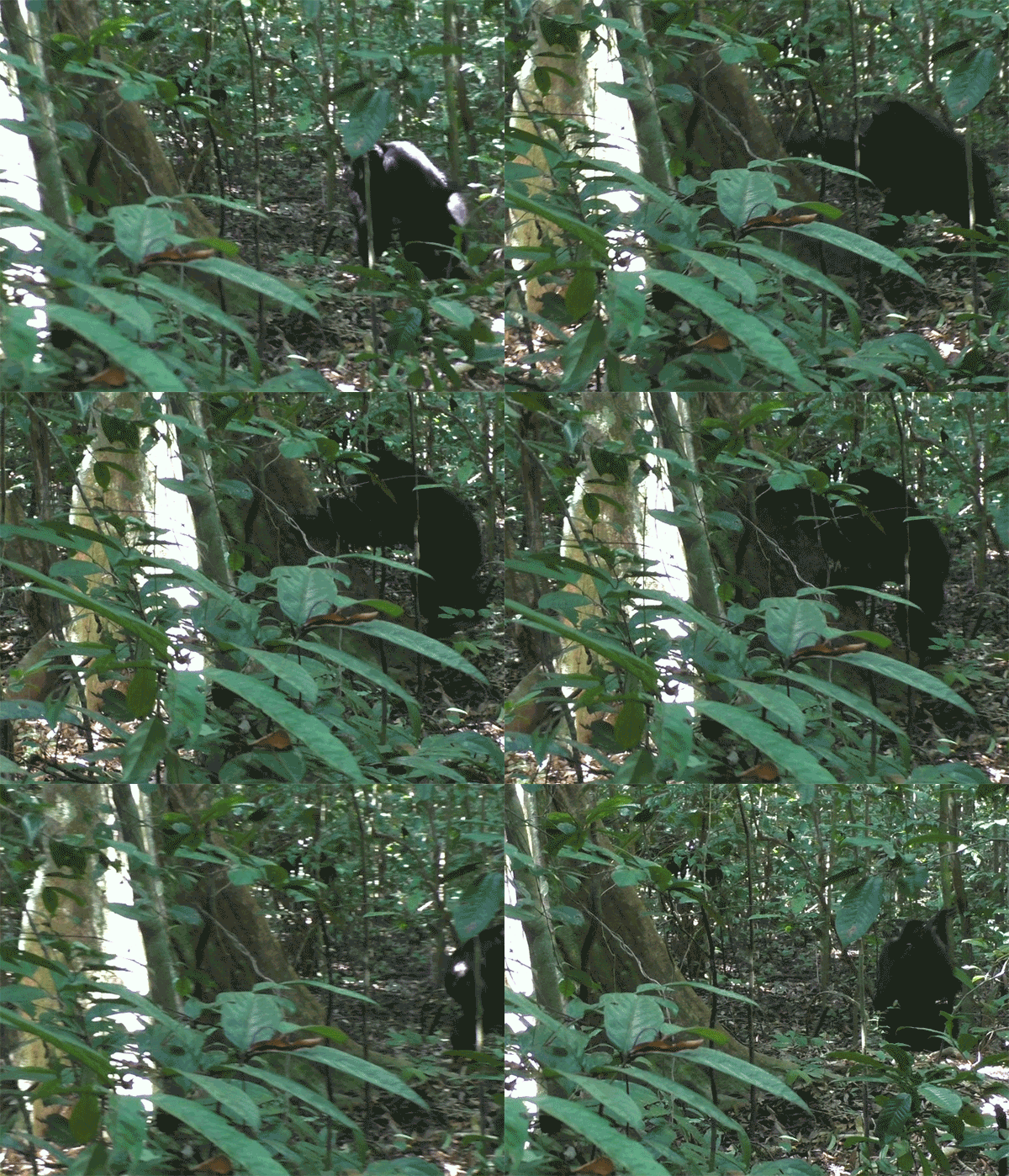
The team found that chimpanzees consistently produce rhythmic drumming patterns—and that these vary across populations. Western chimps drum with evenly spaced beats, “like the ticking of a clock,” says Vesta Eleuteri, a behavioral biologist at the University of Vienna who led the study, published today in Current Biology. In contrast, eastern chimps alternate between short and long silences after each hit (see video, below).

These findings also raise big questions about animal cultures and how environment and social structure influence the evolution of communication.
Other Stories Where Animals Inspire Awe and Awareness:
Tortoises of Aldabra Face Threats From Luxury Developers
On a remote atoll in the Indian Ocean, ancient giant tortoises—the oldest reptiles on Earth—are now in the crosshairs of Qatari-backed resort projects. Conservationists fear that habitat destruction on nearby Assomption Island could spell extinction for some of the last wild populations.