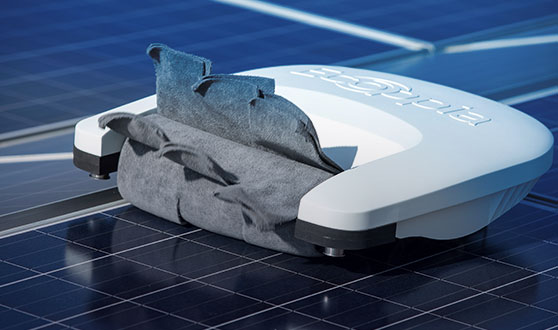
As the global shift toward renewable energy accelerates, solar power continues to dominate as a key source of sustainable electricity. However, the efficiency of solar panels is significantly affected by dirt, dust, and debris accumulation. Cleaning solar panels manually is time-consuming, costly, and inefficient, particularly for large-scale solar farms. This is where solar panel cleaning robots come into play, offering automated, precise, and efficient cleaning solutions that enhance energy output and maximize return on investment (ROI).
Who Needs Solar Panel Cleaning Robots?
Solar panel cleaning robots are essential for various stakeholders in the solar energy value chain, including:
- Utility-scale solar farms: These massive installations require regular cleaning to maintain optimal efficiency.
- Commercial solar installations: Large businesses with solar rooftops can benefit from automated cleaning to maintain consistent energy production.
- Operations & Maintenance (O&M) companies: Firms that manage solar assets require efficient cleaning solutions to meet performance guarantees.
- Solar EPC (Engineering, Procurement, and Construction) companies: These companies benefit by integrating cleaning robots into their project planning to ensure long-term efficiency.
How Investing in Solar Cleaning Robots Improves ROI

Investing in solar panel cleaning robots leads to several financial and operational advantages:
- Increased Energy Output: Clean panels produce more electricity, leading to higher energy yields and revenue.
- Reduced Labor Costs: Automation reduces the need for manual labor, cutting down operational expenses.
- Extended Panel Lifespan: Regular and non-abrasive cleaning prevents damage, enhancing panel longevity.
- Water Conservation: Many robotic solutions use little to no water, making them environmentally and economically efficient.
- Minimized Downtime: Automated robots can clean at night or during non-peak hours, ensuring uninterrupted energy production.
Top Solar Panel Cleaning Robots: Pros and Cons
Here’s an overview of some of the best solar panel cleaning robots available today:
| Company | Pros | Cons |
|---|---|---|
| SolarCleano | Modular design, high mobility, suitable for different terrains, fast cleaning rate | Requires human supervision for operation |
| Ecoppia | Fully autonomous, AI-driven, operates without water, minimal maintenance | Higher upfront investment |
| Serbot | Robotic arms for complex surfaces, suitable for industrial applications | More suited for smaller installations, requires infrastructure setup |
| Airtouch | Dry-cleaning technology, no water usage, automated operations | Not suitable for extremely soiled panels |
| BP Metalmeccanica s.r.l. | High precision cleaning, durable European manufacturing | Limited global availability |
| PVH | Integrated with solar tracking systems, enhances efficiency | Limited standalone robotic options |
| AX System | Fully automated, scalable for large solar farms | Higher initial cost |
| Integra Global Co. | Custom solutions for different panel types, highly efficient | May require additional installation infrastructure |
| Sunpuretech | Self-powered system, adaptable to different environments | Not as widely tested in extreme conditions |
| Solar Cleaning Machinery | Cost-effective, suitable for small and medium installations | Requires more frequent maintenance |
| Bladeranger | AI-driven, autonomous, scalable for different panel sizes | Limited field testing for extreme environments |
| Clean Solar Solutions | Full-service provider, includes maintenance and repair | Higher cost for O&M services |
| Miraikikai | Innovative Japanese technology, water-efficient | Higher cost for international buyers |
| Indisolar Products Private Limited | Cost-effective Indian manufacturing, good for local markets | Limited global reach |
| Bitimec Washbots | Mobile, adaptable to various panel layouts | Requires human oversight |
| Infosys | AI-integrated robotic solutions, data-driven efficiency improvements | Still in early market deployment |
| Bosonrobotics | High-tech sensors, adaptable to multiple surfaces | Higher cost compared to basic solutions |
Innovations Needed to Improve Solar Panel Cleaning Robots
To further enhance the efficiency and effectiveness of solar panel cleaning robots, the following innovations are needed:
- AI and Machine Learning Integration: Smarter robots capable of detecting the level of dirt on panels and adjusting cleaning intensity accordingly.
- Self-Sustaining Power Sources: Solar-powered robots with energy storage capabilities to operate independently for extended periods.
- Improved Mobility and Adaptability: Robots that can navigate various panel layouts, including curved and vertical installations.
- Better Sensor Technology: Enhanced obstacle detection and positioning systems to improve precision and minimize damage to panels.
- Hybrid Cleaning Mechanisms: Combining dry and wet cleaning options to optimize performance based on environmental conditions.
- Automated Fleet Management: Centralized control systems that allow multiple robots to coordinate and clean large solar farms efficiently.
- Weather-Resistant Designs: More durable materials and designs to withstand extreme weather conditions, including high winds, heavy rainfall, and extreme temperatures.
Conclusion
Solar panel cleaning robots are no longer a luxury but a necessity for ensuring maximum efficiency and ROI in solar energy generation. Companies in the solar industry should evaluate their needs, budget, and site-specific challenges when selecting a cleaning solution. With continuous advancements in robotic technology, these automated systems are becoming more efficient, cost-effective, and environmentally sustainable, making them a smart investment for the future of solar energy.