The Nabataeans understood that prosperity in the desert depended on respecting environmental limits. Two thousand years later, Petra's greatest attraction may still be the wisdom of the people who learned to live within them.
From Bill McKibben to climate organizers across the Middle East, Green Prophet has followed 350.org for 16 years. At COP31 in Türkiye, the movement is demanding an end to fossil fuel expansion and a fair transition to renewable energy.
One of the most persistent questions in seismology concerns whether scientists will eventually be able to predict major earthquakes before they happen.
I believe Jordan needs a cultural transformation alongside its infrastructure investments. We must begin by redefining social prestige. Why should ownership of an expensive car be considered a greater achievement than making an environmentally responsible transportation choice? Why should travelling by bus carry a social stigma?
Unstageable wounds are another group of pressure injuries characterized by slough or eschar covering, which makes it hard to determine the real depth of the wound.
Beavers are heading north. Far north. The North American beaver, Castor canadensis, is expanding into parts of the Canadian Arctic where, not long ago, the landscape simply did not offer enough woody material for a beaver to make much of a living.
Now warming temperatures are changing the tundra. Willows and alders are growing taller and becoming more abundant, giving beavers both food and construction material. And once the beavers arrive, they begin changing the landscape themselves. A new study published in Ecosphere has tracked that expansion using an unusual combination of tree rings and satellites.
Researchers from Anglia Ruskin University in the UK worked with the Imaryuk Monitors, an Indigenous environmental guardian and monitoring group in Canada’s Inuvialuit Settlement Region, surveying territory from Inuvik north toward Tuktoyaktuk on the Arctic Ocean.
They recorded 60 beaver lodges or dam sites and collected willow and alder stems bearing the scars left when beavers chewed them. Those scars turned out to be timestamps. Tree-ring science, or dendrochronology, is normally associated with figuring out the age of ancient trees or reconstructing droughts and fires. Here the researchers used it almost like forensic evidence.
They matched scars in browsed willow and alder stems against regional growth-ring chronologies reaching back to the late 1960s and early 1970s. That allowed them to identify when beavers had been active at particular sites. The evidence points to beaver colonisation in the region beginning around 2008.
“Beavers effectively write their history into the landscape with each shrub they cut and every pond they create by damming streams,” said lead author Dr Georgia Hole, who carried out the research at Anglia Ruskin University and is now based at Durham University.
The researchers then looked from above. Satellite images showed that at one large lodge and dam complex, surface water expanded suddenly and significantly between 2015 and 2019. That flooding coincided with a period of heavy beaver browsing recorded in shrub rings at the same site.
Two completely different records — one written into wood and another visible from space — told the same story.
That matters because the Arctic is enormous, remote and poorly monitored. Scientists frequently lack decades of observations showing what an ecosystem looked like before a major change began.
The beaver is not just another animal moving north. Beavers are what ecologists call ecosystem engineers. They do not simply occupy a habitat, they rebuild it. And can stop flash floods and catastrophic damage with their beaver dams.
A dam can turn moving water into a pond, flood surrounding land, change drainage patterns and alter habitat for fish and other species. In the Arctic, those changes have another dimension: permafrost.
Flooding and changing water flows can affect frozen ground, with consequences that are still being investigated as the region warms. The arrival of beavers therefore is not simply a charming story about furry Canadian animals finding new territory. It can change lakes and rivers, fish populations, access to land and traditional practices for people who live there.
“Arctic Indigenous communities are already observing rapid environmental change, and beaver range expansion is part of that shift,” said senior author Dr Helen Wheeler, Associate Professor of Ecology at Anglia Ruskin University.
The work was carried out in close collaboration with Inuvialuit research partners and communities through the BARIN project, part of the Canada-Inuit Nunangat-United Kingdom Arctic Research Programme.
There is an old rule around computers that most of us learn only after something goes wrong: the most valuable part of your laptop is rarely the laptop. It is your stuff and all the data you accumulated along the way: the photographs, documents, unfinished work and years of digital debris stored inside it.
That becomes an environmental issue when lost data convinces us that a device itself is finished. Last week, The Express Tribune reported on a growing return to the repair economy, with consumers increasingly fixing laptops, phones and household electronics rather than replacing them as the cost of new equipment rises. It is a trend Green Prophet is watching. Repair has always been one of the less glamorous parts of the circular economy, but extending the life of electronics (and your shoes!) is often greener than recycling them after only a few years.
Data recovery belongs in the same conversation. A computer that appears to have lost everything after an accidental deletion, corrupted drive or formatting mistake may not need to be thrown away and the hard drive trashed. The opposite: sometimes the first sensible step is data recovery software. Before doing anything, however, stop writing new information to the affected drive. Deleted data can remain physically present until another file overwrites the same storage space. Stop what you are doing and read on.
Five free data recovery tools worth knowing for the repair economy
Stellar Data Recovery Free
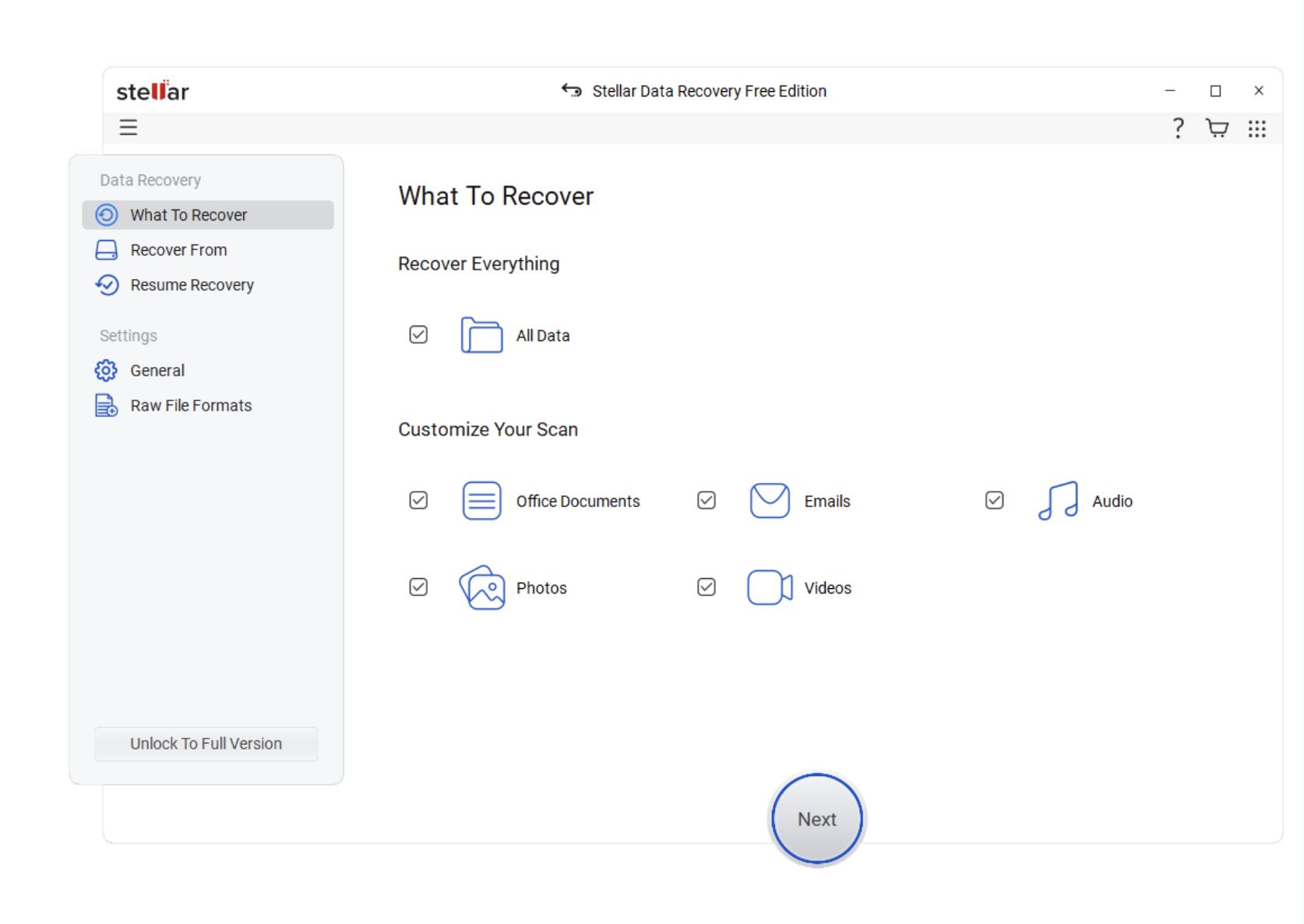
For someone who does not work in IT, simplicity matters. Stellar Data Recovery Software Free is a free data recovery software designed around a relatively straightforward process: choose what you are looking for, scan the relevant storage device and preview recoverable files before restoring them.
The current free edition allows users to recover 1GB of data, with another 1GB available through its promotional sharing option. It supports hard drives, SSDs, USB drives and memory cards and can search for common documents, photographs, video and other file formats. This is probably the one I would try first if the lost data belonged to a parent, student or small business owner who wants a visual interface rather than a command line. In short, this is the kind of solution Windows users will like.
Recuva
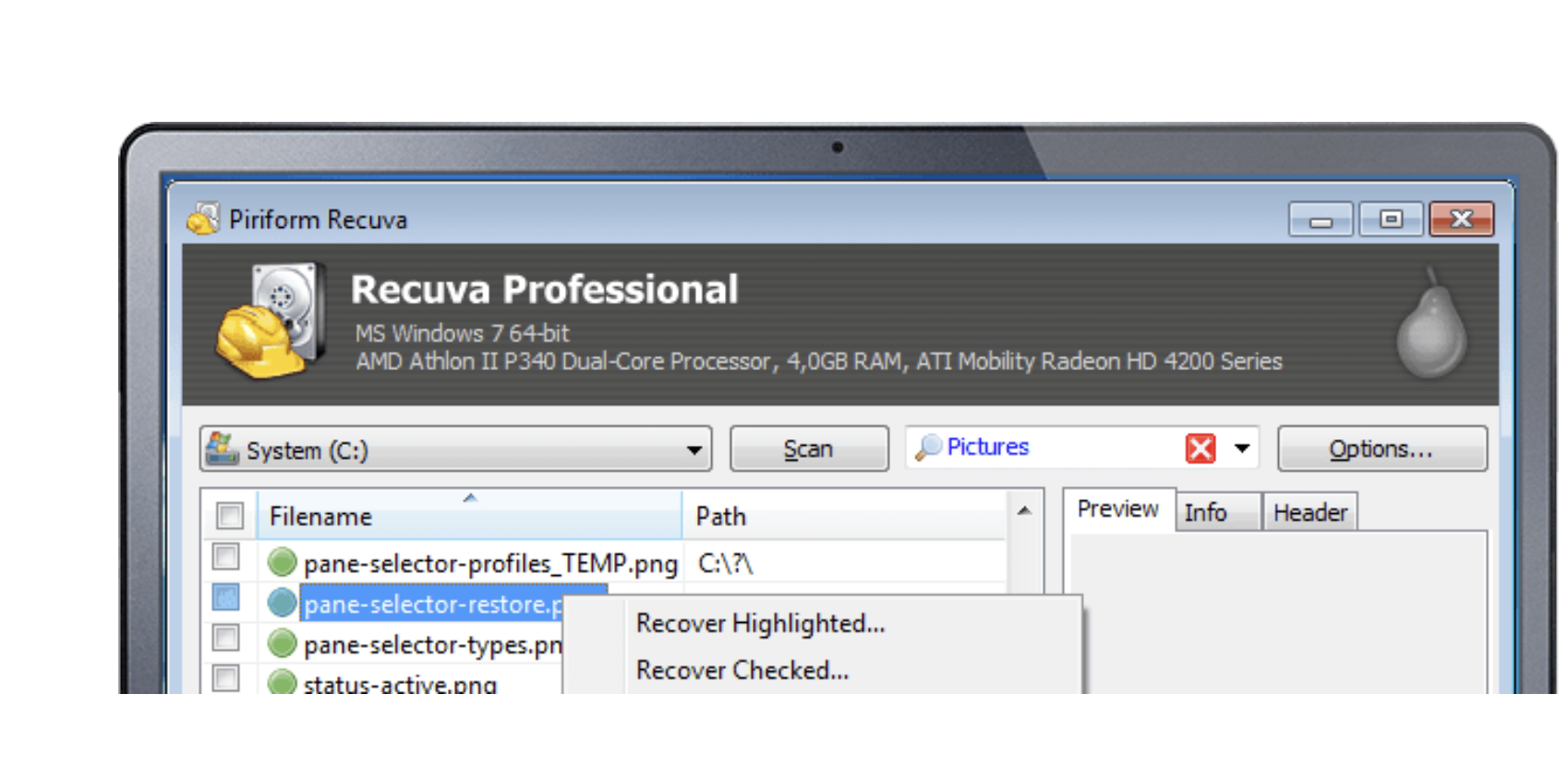
Recuva has been around for years and remains one of the more recognizable free Windows recovery utilities. Its free edition can search internal drives, memory cards, USB sticks and external hard drives. One useful feature is its Deep Scan mode for files that do not appear during an initial search.
Recuva can also look for files on damaged or recently formatted disks, although no recovery program can retrieve information that has already been overwritten. So watch out for that. Its biggest limitation is straightforward: Recuva is essentially a Windows product.
TestDisk and PhotoRec
These two open-source programs from CGSecurity are less polished but remarkably useful for those looking to bring back lost files and data.
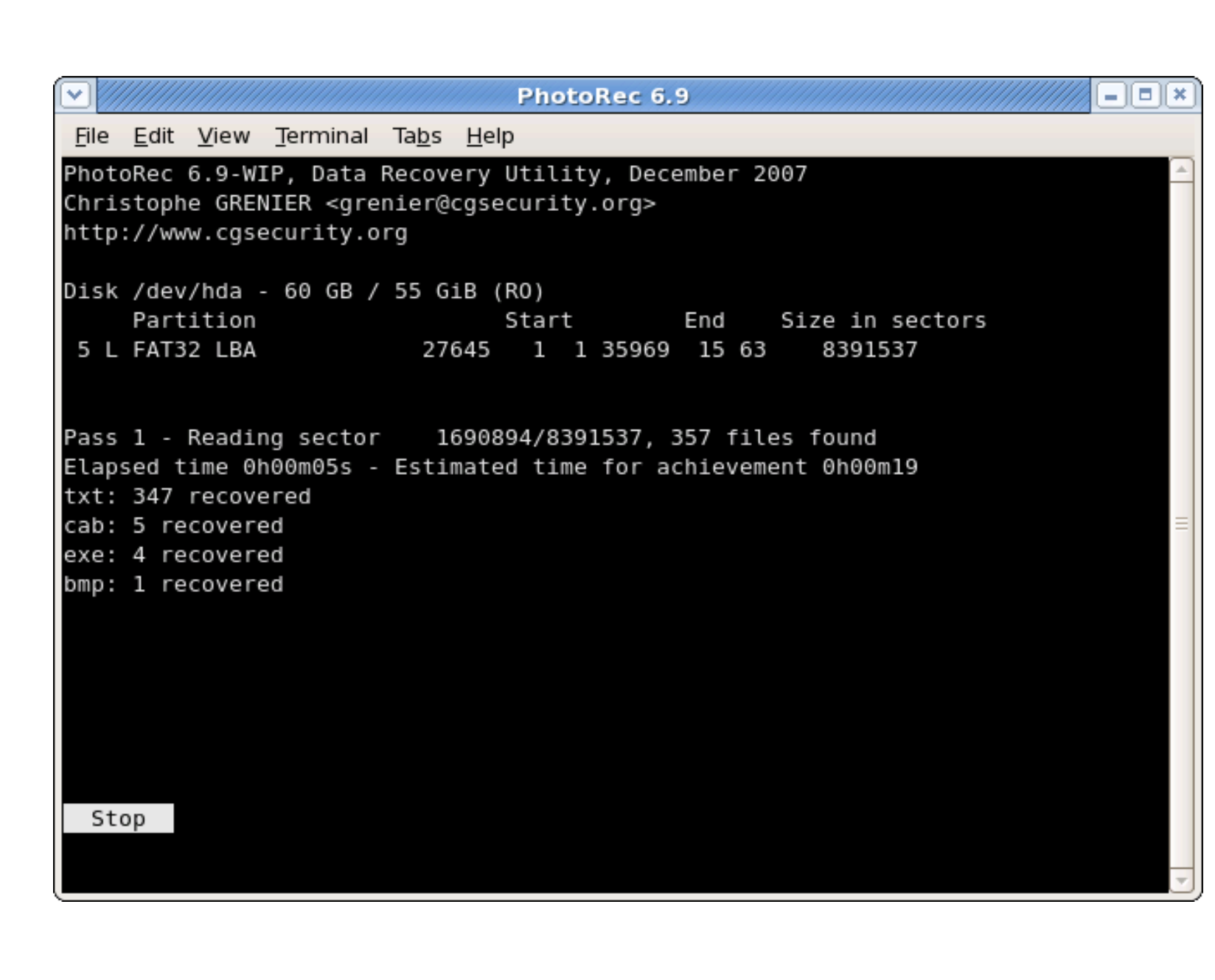
TestDisk is aimed at lost partitions, damaged file systems and boot problems. PhotoRec ignores much of the file-system structure and searches storage media for recognizable file signatures, making it useful when photographs, videos or documents have disappeared from a damaged memory card or drive. This happened to me not long ago. I managed to transfer the photos to my phone over Wifi, but a summer of memories on Canadian lakes were essentially wiped out.
Both are free and open source. The trade-off is that they feel more like tools built for technically confident users than consumer applications. Did we say free?
Windows File Recovery
Microsoft itself offers a free recovery utility for Windows 11 and Windows 10 called Windows File Recovery. It can attempt to retrieve deleted files from internal disks, external storage and USB devices when the files are no longer sitting safely in the Recycle Bin.
There is a catch: it runs from the command line. That makes it powerful and refreshingly free of upselling, but less welcoming for someone already panicking over a missing folder containing ten years of family photographs. You might not be there emotionally. Trust us.
DMDE Free Edition
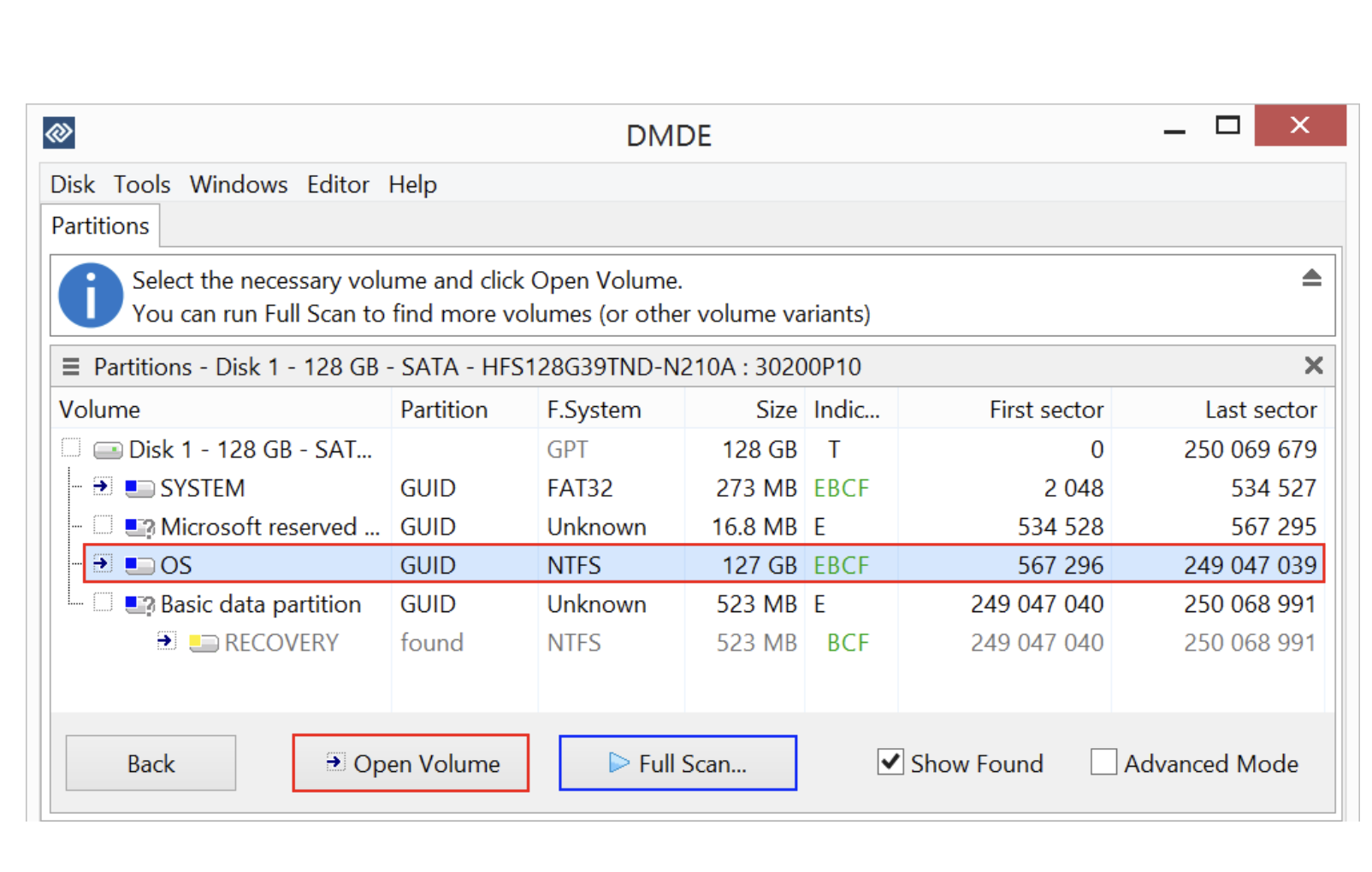
DMDE sits somewhere between consumer recovery software and a professional disk utility. Its free version offers scanning and file recovery, with a limit of up to 4,000 files from the currently opened directory per recovery operation.
It can be useful in more complicated situations involving lost partitions and damaged file systems. The interface and terminology, however, make more sense if you already know something about drives, partitions and file systems. If you don’t – go back up to solution number
Data recovery is part of keeping electronics alive
None of these programs is magic. If a drive is physically failing, making clicking noises or contains irreplaceable business or personal data, experimenting endlessly with software can make matters worse. That is the point to stop and talk to a professional data recovery service.
Backups remain far better than recovery but when you are in a bind, try one before you seek professional help from a basement somewhere.
There is a larger sustainability lesson here. We talk constantly about recycling electronics while paying much less attention to keeping them useful. Mining, manufacturing, shipping and eventually dismantling computers all carry environmental costs. A functioning laptop should not become electronic waste merely because someone accidentally formatted a drive incorrectly or emptied the wrong folder.
The increasingly visible repair economy is reminding consumers of something our grandparents understood instinctively: before replacing something, find out whether it can be fixed. The Ellen McArthur Foundation urges governments to participate in helping make everything from fashion to electronics suitable for repair and that repairing something shouldn’t cost more than buying iy new.
When we talk about waste in the food system, we tend to picture bruised vegetables thrown behind supermarkets, oversized portions scraped into restaurant bins, or fruit rotting before it reaches market. We think about solutions to use this food before it becomes waste, as dried something or in preserves or frozen.
But there is another kind of waste that is harder to see: the enormous productive capacity of farmers who already know how to grow food, but who lack access to financing, markets, training, seeds, research and practical agricultural support. There are roughly 475 million smallholder farms across the Global South, generally farming less than two hectares, or about five acres. Collectively, they already produce an estimated 30 percent of the world’s food. Yet they remain among the least supported producers in global agriculture. You can find farmers like this all over the world. Most farms are not giant and conventional.
Hugh Locke
That mismatch is at the centre of a new book, Whole Earth Farming: Smallholders and the Great Regenerative Transformation, by development expert Hugh Locke.
Locke co-founded the Smallholder Farmers Alliance in Haiti. The organization famously developed a self-financing “tree currency” model. Under this system, smallholder farmers plant millions of trees to earn credits, which they then exchange for high-quality seeds, tools, training, and micro-loans. A win-win.
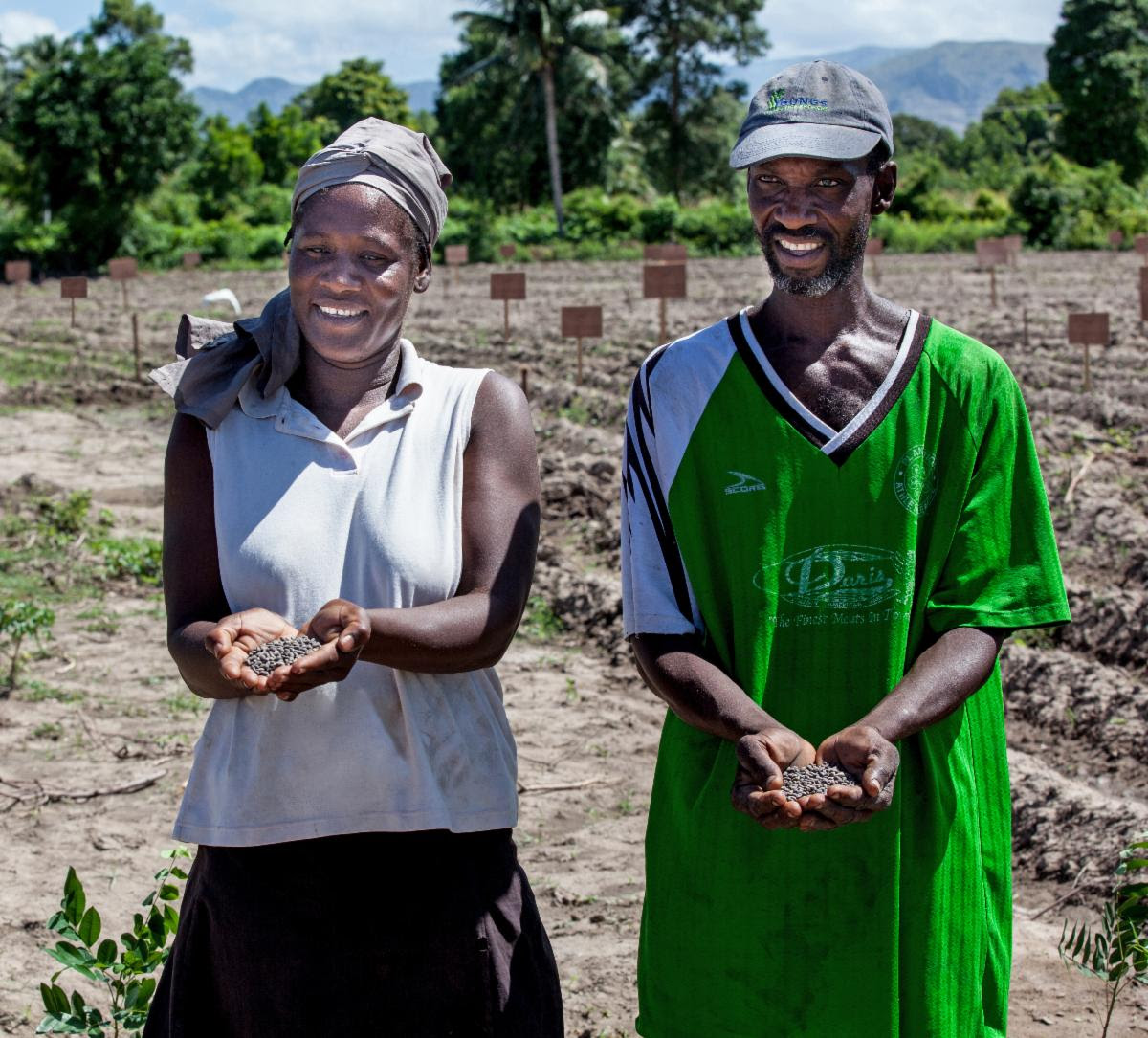
Smallhold farmers in Haiti
Locke now makes a remarkable argument: help roughly half of those smallholder farming families, about 240 million farms, transition toward regenerative agriculture and agroforestry, and they could produce the additional food needed to feed the world’s growing population through 2050 while restoring soils, biodiversity and rural economies rather than degrading them. Those farms would occupy only about 12 percent of the world’s arable land. We could see forests return to Africa and jungles protected.
That is an important distinction. Locke is not saying 240 million farmers could suddenly feed the entire planet. He is saying they could potentially meet the additional food demand created as the global population grows by roughly 1.5 billion people over the next quarter-century.
“The world’s smallholder farmers are too often treated as beneficiaries of development assistance when they should be recognized as architects of the next agricultural transformation,” Locke says.
Much of Locke’s argument comes from his work in Haiti, where he co-founded the Smallholder Farmers Alliance with Haitian agronomist Timote Georges in 2010.
The alliance now works with about 10,000 farmers. According to the book, based on his life experience, when participating farmers receive basic agricultural support built around sustainable methods, yields increase by an average of about 40 percent, while household incomes rise by between 50 and 100 percent depending on local conditions. Members also plant about one million trees every year.
One particularly interesting system developed in Haiti is what the alliance calls “tree currency.” Farmers plant and care for trees in exchange for services, agricultural training, seeds and other inputs. Rather than treating environmental restoration as a charitable side project, the model ties it directly to farm productivity.
“This is not about nostalgia or returning agriculture to the past,” Locke says. “It is about recognizing where one of the greatest opportunities for the future now exists.”
Whole Earth Farming works well as a primer because regenerative agriculture is a term now used so loosely that it can mean almost anything. Locke’s version is less interested in whether a farmer has checked a particular box than in whether the farm is actually improving.
“The question is not simply, ‘Are you using regenerative practices?’” he says. “The more important question is, ‘Is the land, the ecosystem and the farming community measurably better as a result?’”
On the ground, that can mean:
rotating crops rather than planting the same crop continuously;
growing cover crops that protect and rebuild soil;
intercropping and increasing crop diversity;
composting and increasing soil organic matter;
reducing tillage;
adding trees through agroforestry;
integrating livestock where appropriate.
The point is not that every farmer should use every technique. A regenerative farm in Haiti may look very different from one in Kenya, India, Canada or the United States. The test is the outcome: soil health, biodiversity, water availability, food production, farmer income and community resilience.
More food without stripping the soil
There is a climate argument here too. Locke estimates that if around 240 million smallholder farms adopted regenerative systems across approximately 480 million hectares, their soils and vegetation could eventually remove roughly 0.48 to 0.72 gigatons of carbon dioxide from the atmosphere annually during the years in which soil carbon is actively accumulating.
Reduced use of synthetic fertilizer could add another climate benefit, bringing the potential combined impact to about 0.6 to 0.85 gigatons of CO2 equivalent annually at mature adoption, roughly comparable with annual emissions from global aviation.
Locke is careful not to turn regenerative farming into another carbon-offset fantasy. Soil cannot absorb carbon forever, and results vary enormously depending on climate, soil and farming methods.
“Regenerative agriculture is not a license to keep emitting carbon elsewhere,” he says. “Its climate potential is important precisely because it comes alongside other benefits we urgently need anyway: healthier soil, greater biodiversity, more resilient farms, increased food production and stronger rural communities.”
That may be the most compelling part of this argument.
We spend enormous amounts of time debating whether the future of food will come from bigger farms, genetically engineered crops, robots, vertical farms or increasingly consolidated agricultural companies. Some of those technologies may have a role.
But there is also an enormous human agricultural infrastructure already in place: hundreds of millions of families who farm the land, carry local knowledge and already produce a substantial share of humanity’s food.
Locke calls the opportunity a “Great Regenerative Transformation,” drawing an intentional comparison with the Green Revolution of the 20th century. But instead of measuring success simply by tonnes of grain per hectare, he argues that agriculture should also be judged by what remains after the harvest: healthy soil, functioning water systems, biodiversity, resilient communities and farmers who can actually make a living.
The book contains 21 farming stories from 18 countries, making it a useful tool for readers who want to understand what regenerative agriculture looks like beyond corporate sustainability language and carbon accounting.
Chef and humanitarian José Andrés offers perhaps the shortest instruction in the book’s endorsements: “Read this book. Then do something.”
Whole Earth Farming: Smallholders and the Great Regenerative Transformation by Hugh Locke is published by George Ronald in September 2026.
There may be singalongs with Aaron Dessner (The National), new bands forming spontaneously in corners of the building, or a choir recruited from a handwritten sign-up sheet. At the 2018 edition, Leslie Feist famously put one up for anyone who wanted to join her choir.
What happens this time, during the third edition of PEOPLE in Berlin this October 10 to 11, is deliberately difficult to predict. Funkhaus Berlin, the vast former East German broadcasting complex at Nalepastraße, was once built to transmit the messages of the communist state. Today the same building is being used for art, and houses what’s considered to be the world’s most advanced sound studio. Funkhaus will host roughly 200 performances over the festival weekend.
Don’t flee. Don’t get too excited about Apollo 11. The Wall is necessary for your protection.
Those were, in essence, some of the messages transmitted by East German radio from the vast Funkhaus complex during the Cold War. East Germans who had fled west were admonished for leaving; a 1969 commentary acknowledged the Apollo 11 achievement but argued that it did not mark “a new epoch of mankind”; and broadcasts in August 1961 defended the closing of the border that became the Berlin Wall.
Today its extraordinary studios are used for recording and live performance.
What audiences see at PEOPLE will be partly determined by the colour of a wristband and partly by where they wander. There is no conventional published performance schedule and no real hierarchy of headliners.
Around 180 musicians will spend the preceding week meeting, experimenting and creating together before presenting one-off performances across the building. They will work in around 40 studios and spaces, meaning that who ends up playing together may depend as much on encounters during the week as on anything planned in advance.
The idea is almost the opposite of the modern festival experience, where audiences buy tickets partly because they know exactly who they are going to see and exactly when they will see them. At PEOPLE, you might walk into a room because something sounds interesting. Or the musicians might walk into where you happen to be.
There is an unusually Canadian, and particularly Montreal, presence this year. Did Feist set the stage? Patrick Watson, Leif Vollebekk, Efrim Menuck, Rebecca Foon, Richard Reed Parry, Sarah Neufeld and Adam Cohen, are among the artists rooted in Montreal’s music world.
They join an international group that includes Aaron and Bryce Dessner of The National. The brothers and Bon Iver’s Justin Vernon were among the small group of musicians behind the original event.
The Michelberger, a renovated factory and now hotel in the hippest part of Berlin. Image: supplied by Michelberger
I stayed at Micheberger in Berlin (above) and wrote about it last year, and was intrigued enough by what its founders had created with the Dessners and their circle that I decided to return specifically for PEOPLE and some sustainability touring in Berlin along the way.
This year, the experience apparently starts before visitors even arrive at Funkhaus. A boat is planned to carry people from around the Michelberger Hotel along the Spree to the former East German radio complex.
The main stage at Funkhaus, supplied
There is something wonderfully Berlin about that journey: leaving a former industrial building converted into a hotel full of musicians, travelling down a river that once ran through a divided city, and arriving at the broadcasting headquarters of a vanished communist state to hear music that, in many cases, did not exist a few days earlier.
PEOPLE first emerged from collaborations around Michelberger with founders Nadine and Tom Michelberger and musicians Aaron and Bryce Dessner and Justin Vernon.
I’ve just finished reading the book Jeffrey Hollender (the founder of Seventh Generation) sent me about his journey as a sustainability maverick — my words, not his — and it has me thinking about the people who build businesses that deliberately spend time and money on things that may not produce an obvious return. I hope to meet Nadine and Tom in Berlin to understand why Michelberger puts so much of itself into music, farming, food and community, and what they believe a hotel can become when it stops behaving simply like a place that rents rooms.
Nadine and Tom Michelberger, owners of Michelberger hotel and co-founders of PEOPLE
Musicians arrive before the public and spend the week together at Michelberger. A new band can exist for 20 minutes. Someone can wander into somebody else’s room. A performance can happen once and disappear.
That history is part of what makes PEOPLE irresistible. At the 2018 festival, Feist Blu-tacked a homemade choir sign-up sheet to a wall, essentially: Who wants to sing? — and assembled people from around the building. That may be my favourite description of a music festival ever. There is something else interesting about the number of Canadians turning up in Berlin.
At PEOPLE in 2018, Leslie Feist Blu-tacked a homemade sign-up sheet to a wall inviting whoever was around to join a choir. Over the weekend she also appeared in shifting combinations with Kings of Convenience and in a tribute to the late Lhasa de Sela — the kind of collaborations that explain the festival better than any conventional lineup poster could.
Canada has traditionally looked culturally south toward the United States and east toward Britain and France. But at a moment when Canada is recalibrating parts of its political and economic relationship with the United States and looking increasingly toward Europe — alongside a Canadian debut at Eurovision in 2027 — it is worth asking whether Canadian artists are making a similar cultural turn.
Or perhaps Montreal musicians, in particular, have already been building those transatlantic networks for years. I am going to figure it out.
Berlin has long attracted artists because it offered space, physically, economically and culturally, for people to make things without immediately having to explain how they would be monetized. Last time I was there however, those that made Berlin home complained of the city’s rental costs pricing them out, even for those who have jobs in high-tech.
An image from a past PEOPLE show
Like Brooklyn perhaps, the rent might be justified in order to live in what could be the last cool city on earth. With collaborations gone digital and mega events garnering for our attention, I am hoping that PEOPLE will set a tone for how the audience should relate to artists, and give artists a chance to be free from the confines of a set list. (Although as someone who owns a music venue, you can be pretty sure that most musicians are usually happy to earn a living wage.)
PEOPLE is arriving at a peculiar moment for music. My daughter is at music school and she resists AI as a writing tool. AI is changing how musicians think about authorship, originality and creative work. Streaming platforms have already trained listeners to experience music through recommendation engines and playlists assembled by algorithms. Festivals themselves have become enormous commercial machines in which artists tour highly controlled productions from city to city.
PEOPLE goes absurdly far in the other direction. PEOPLE is deliberately non-hierarchical and resistant to the machinery of the conventional festival. But will the artists embrace AI or reject it? Can AI be funny, human, make us cry or feel all the feels?
And are artists driving that change, audiences, or both? The answer may be somewhere inside Funkhaus, or on the boat getting there.
Justin Vernon from Bon Iver said at a past event, “It’s about getting back to the process… It’s about removing the barrier between the person making the sound and the person listening to it.”
There was a time when information was stored in cloth. Patterns could tell you where someone came from, whether she was married, what family she belonged to, or which stories and symbols mattered to her community. Long before QR codes and password managers, hands were already turning information into patterns.
Sophie Nadel turns data into something tactile, using embroidery and textiles to explore how we store, hide and understand information.
Now artist and designer Sophie Nadel is taking that idea somewhere wonderfully strange: encryption by embroidery. It’s being hosted at the same location that brings you Loom, the handmade history behind binary code.
Software loom in London
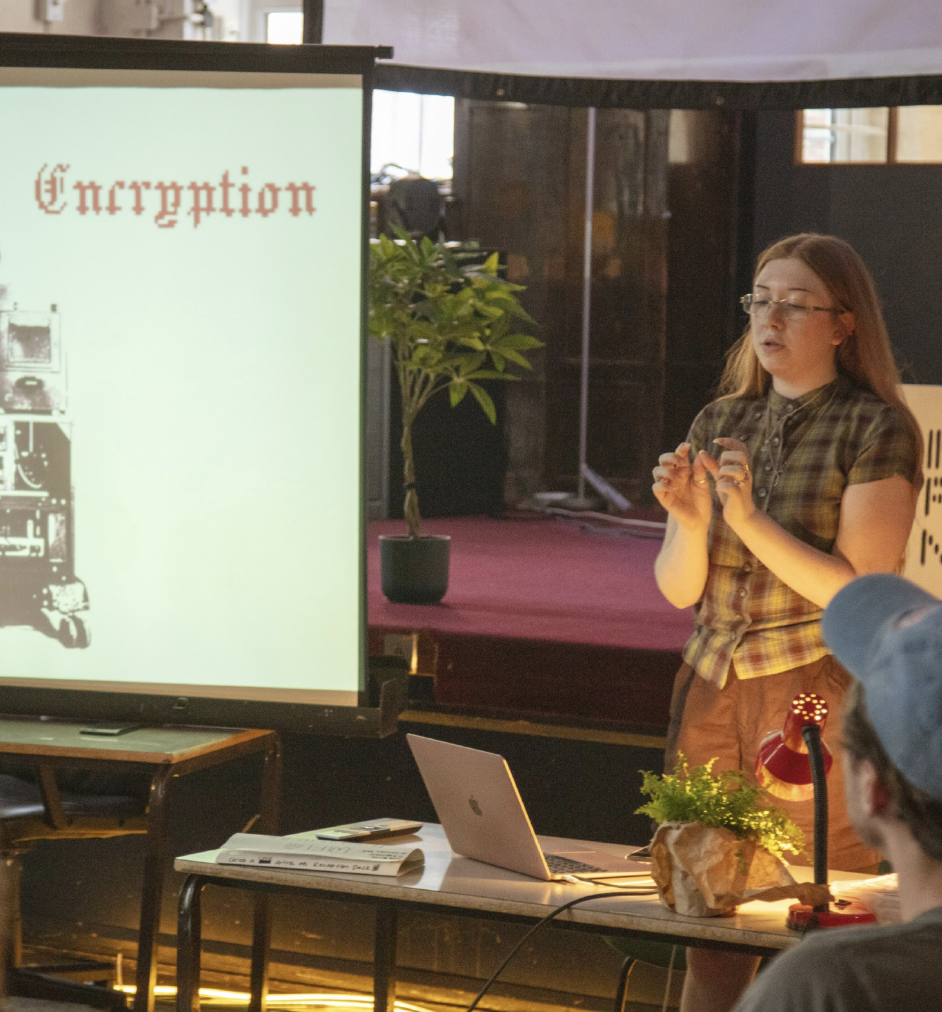
At an upcoming workshop in London, Nadel will teach participants to translate an address, password, secret phrase or other piece of information into a hidden code and then stitch it into clothing or another personal object. A good way to store your bitcoin passwords?
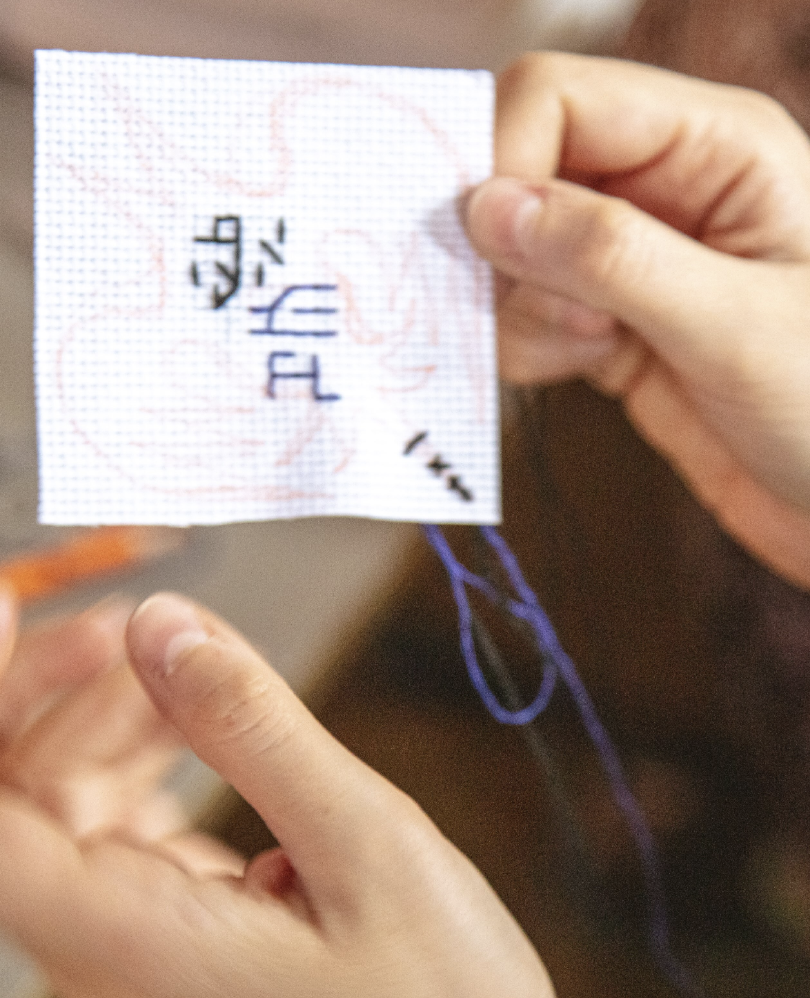
Participants can bring something they want to embroider. Needles, scissors and other craft materials are supplied. The idea is simple: turn information into a textile code that means something to you while remaining unreadable to anyone who doesn’t know how to decipher it.
Sophie Nadal teaches us how to encrypt data by hand into stitches
In a world where almost everything we say, search, photograph and remember is stored somewhere on someone’s server, or which is being digested by AI, there is something appealing about putting a secret back into an object you can hold.
Weaving has always carried information
The idea immediately reminded me of visiting Bedouin women weavers in Lakia, in Israel’s Negev desert. The women there explained how weaving and embroidery were not simply decorative activities. Different patterns and techniques could carry stories and ideas, while the physical process of stitching and weaving was also used to teach children dexterity — how to work carefully and skillfully with their fingers.
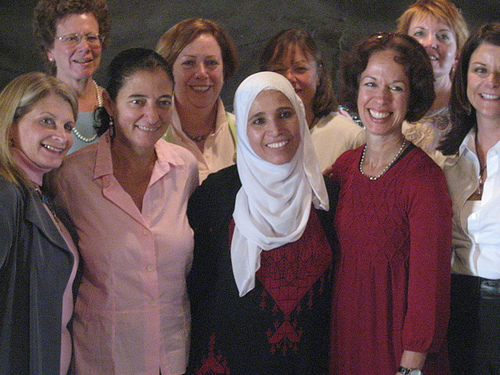
The women of Lakia that I met with construction CEO leaders from the US
Stories have long travelled through weaving, embroidery, carpets and clothing, particularly in cultures where knowledge has traditionally passed orally and through objects rather than books.
A pattern doesn’t have to be “writing” in the conventional sense to contain information.
Nadel’s project takes that ancient idea and turns it toward one of the defining problems of the digital age: who gets to read our information?
A password nobody can hack online
Long before digital encryption, textiles carried stories, identity and memory. Nadel’s workshop brings that tradition into the age of passwords and data.
Nadel’s work combines creative technology, textiles and design research. She uses digital and textile techniques to make technology more tangible and understandable, often by slowing technological processes down enough that people can actually see what is happening. There is also a feminist undertone to the workshop.
Embroidery has historically been dismissed as “women’s work”, while computer science, cryptography and engineering developed into highly valued technical professions. But textile production itself has an unexpectedly close relationship with computing. Patterns, grids, sequences and instructions are fundamental to both.
An embroidered code makes that connection visible. It also produces an amusing inversion of modern cybersecurity. Instead of storing a secret in the cloud, you might stitch it into the inside of your jacket.
Of course, nobody should start embroidering their banking password onto the outside of a tote bag. But as an artwork, and as a way of thinking about information, Nadel’s workshop asks an interesting question. Does everything we want to remember have to live on a computer?
Getting mental health support can sound simple in theory: find a therapist, schedule an appointment, and show up. In real life, several obstacles can stand between recognizing the need for support and actually receiving it.
Distance, transportation, work schedules, caregiving duties, privacy concerns, and limited local provider options can all complicate access. Research into telehealth and behavioral healthcare suggests that virtual care can reduce some of these practical barriers, although reliable technology and appropriate clinical care still matter.
Teletherapy does not solve every problem in the mental healthcare system, nor is it the right format for every person or situation. For many people, though, it can remove enough friction to make seeking regular support more manageable. Here are six ways it can help.
1. It Removes the Commute to an Appointment
Teletherapy can reduce practical barriers to mental health care by removing travel, widening access to providers and making appointments easier to fit around work and family life.
Travel is one of the most obvious barriers to traditional therapy. Someone may need to drive across town, arrange transportation, find parking, or spend much longer getting to an appointment than actually sitting in the therapy session.
The challenge can be greater in rural communities, where mental health professionals may be located many miles away. People who do not drive, have limited mobility, or share a vehicle can face additional complications.
Withonline therapy, a suitable session can take place from a private location with an internet connection rather than requiring a trip to an office. Removing travel can make care more practical for people whose geography or transportation options might otherwise limit access.
It can also reduce the time you need to set aside each day. A therapy appointment is no longer automatically paired with a round-trip commute, which may make it easier to maintain regular sessions.
2. It Can Fit More Easily Around Work and Family
A standard weekday appointment may be difficult for someone working full-time, managing unpredictable shifts, caring for children, or supporting an older relative.
Even when a person can technically attend an appointment, doing so may require taking time off, arranging childcare, or repeatedly explaining an absence from work.
Virtual care can reduce some of that disruption. Depending on the provider and service, people may have access to appointment times and communication formats that fit their schedules more naturally.
TheNational Institute of Mental Health identifies convenience and flexibility as potential benefits of virtual mental healthcare, including eliminating travel and making appointments easier to fit into a busy schedule.
That flexibility can be particularly useful when therapy is viewed as ongoing healthcare rather than an occasional response to a crisis.
3. It Can Expand the Search Beyond Nearby Providers
Teletherapy can make mental health care easier to access by reducing travel, scheduling and location barriers. Here are six ways virtual therapy can help people connect with professional support more easily.
Location traditionally places a firm boundary around healthcare choices. If only a handful of mental health professionals practice nearby, finding someone with the right experience, availability, and therapeutic approach can be challenging.
Teletherapy can expand the pool of possible providers, subject to professional licensing rules and the patient’s location. This can be especially useful for people seeking someone experienced with a particular condition or concern.
Expanded choice does not guarantee an immediate match. Provider availability still varies, and finding the right therapist may take time. Yet being able to consider options beyond a short driving radius can make geography less restrictive.
For communities already experiencing shortages of behavioral health professionals, that can represent a meaningful improvement in access.
4. It Can Make Seeking Support Feel More Private
For some people, the obstacle is not transportation or scheduling. It is simply the discomfort of walking into a therapist’s office.
Concerns about stigma can still affect whether people seek mental healthcare, particularly in small communities where someone may worry about being recognized entering a clinic. Others simply feel more comfortable talking from familiar surroundings.
Virtual care creates a different environment. Someone may be able to speak with a therapist from a private room at home without traveling to a dedicated mental health facility.
Privacy still requires planning. Shared homes, thin walls, workplace environments, and insecure internet connections can create their own concerns. A quiet, private setting and a secure platform remain essential.
5. It Can Make Consistency Easier When Life Changes
Mental healthcare tends to work better as a continuing process than as something repeatedly interrupted by logistical problems.
Yet ordinary life can make consistency difficult. Someone might travel regularly for work, relocate, temporarily lose access to transportation, or have a schedule that changes from week to week.
Teletherapy can reduce some of these practical disruptions. When appropriate and permitted under applicable licensing requirements, meeting virtually may make it easier to maintain an established routine without every session depending on getting to the same physical location.
That continuity can also make therapy feel more integrated into everyday life. Rather than requiring a large block of time and travel, a session can become one part of a broader wellness routine.
6. It Offers More Than One Way to Connect
Mental healthcare doesn’t always mean sitting across from someone in the same room. Telehealth services may include video appointments, telephone sessions, individual therapy, group therapy, mental health assessments, and other forms of virtual support, depending on the provider.
Having several formats available can give people more options for finding a method that suits their circumstances.
Still, virtual care has limitations. Internet access, digital literacy, technology problems, and a lack of private space can become new barriers. Certain symptoms or situations may also require in-person or emergency care.
The strongest approach is not to assume teletherapy is universally better. Instead, recognize that giving people more legitimate ways to access qualified care can make the mental health system easier to enter.
Better Access Starts With Fewer Obstacles
Mental healthcare cannot help people who cannot realistically reach it.
Teletherapy addresses several everyday obstacles that can stand between a person and professional support, from long drives and rigid schedules to limited nearby options and privacy concerns.
It does not replace every form of face-to-face care, and access to technology remains an important consideration. What it does offer is another route into the system.
For someone balancing work, family, location, transportation, and personal wellbeing, removing even one or two barriers can make a difference. A more accessible mental health system is not necessarily one built around a single type of care. It gives people practical choices for getting appropriate support when they need it.
A workspace within walking distance can sound like an easy improvement to the week. You spend less time travelling, leave the car at home and gain a place to work when your own kitchen table is unavailable. Yet a short distance on a map says little about whether you can complete a working day there.
The desk might be comfortable but too noisy for calls. There may be a strong connection in the reception area and an unreliable one upstairs. A low day rate can become less attractive when meeting rooms, lockers or a second visit are needed to finish the job.
Before committing to a membership, check which journeys the space would replace and whether it supports the work you need to do in an ordinary week.
Compare the journey you would actually make
Start with your current routine. If you normally drive to a distant office, a workspace you can reach on foot may remove some car journeys. If you already work comfortably at home, travelling to a shared office adds a journey. Compare the journeys you would make with and without the membership.
The International Energy Agency’s analysis of remote working recognises that transport effects vary with commuting distance and vehicle use. Those differences matter more to a personal decision than a broad claim that remote work is always greener.
Look at the route at the time you would use it. Is walking realistic when you carry a laptop? Is there a safe cycle route and somewhere secure to leave a bike? Would an evening finish mean taking a taxi home? In very hot weather, a short journey may require different planning from one made in cooler conditions.
Suppose your usual office day includes a car journey in each direction, while a local workspace is a ten-minute walk away. Compare that with the alternative you would actually choose. If the local option also requires a car trip to collect equipment, include it. If you would otherwise stay home, count the new journey honestly. You can compare those journeys without assigning them an unsupported carbon figure.
Match the room to the work, not the photographs
Working from home means lots of quite and lots of time for meaningful, quiet thinking.Pictures show a space at a particular moment. Ask to visit during the hours you expect to attend, and listen before you look at the furniture. A room that suits independent reading may be a poor match for a day of meetings.
Find out how calls are handled. Are booths bookable, is there a time limit and are they included in the price? If you need privacy, check whether conversations are audible outside. This also helps you avoid becoming the person whose calls disturb everyone else.
Sit at the desk and try the chair rather than judging them from a photograph. Check screen glare, power access and where your bag would go. If the nearest socket is across the room, you may have to move whenever the laptop needs charging.
Consider the work you would bring there regularly. You might choose the space for writing and analysis, leaving sensitive conversations for somewhere else. The room may suit those tasks even if you need to make confidential calls elsewhere.
Ask practical questions about the building’s environmental claims
Plants and reusable mugs do not reveal how a workspace uses energy. If sustainability matters to your decision, ask about the measures the operator can actually describe. Heating and cooling arrangements, lighting, equipment use and waste collection are useful places to start.
Request the basis for broad claims such as carbon neutral or zero waste. Is there a dated report, a defined scope or an explanation of what is measured? An operator may be making sensible improvements without having a complete environmental assessment. Ask what has changed and what evidence supports the claim.
Shared equipment can also affect what you need to bring or buy. A shared monitor available on the days you attend may make it more comfortable to work with your existing laptop. Check availability and compatibility before buying adapters or another screen simply to make the space work.
For heating and cooling, ask how rooms are used outside busy hours and whether the operator can explain its approach. For waste, look beyond the presence of labelled bins: ask what is actually collected separately. You may not obtain a complete footprint calculation, but you can compare clear practices and documented claims with vague assurances.
Check how the shared internet connection is managed
Ask which network members should use and how guests are admitted. It is reasonable to ask whether support is available when a connection fails and whether there are rules affecting calls, large uploads or the tools your work requires. Ask for enough information to check that your work tools are supported; you do not need the operator’s full technical configuration.
On a personally managed device, a VPN can add privacy by encrypting the traffic it carries between your computer and the provider’s server. This is one consideration when you share an internet connection with people you do not know. Use the answers about member and guest access to help decide what information you are comfortable working with there.
People working with an employer’s equipment should use the approved arrangements. Some organisations require their own remote-access software and may not allow additional clients. Establish that before a trial day so you do not spend it trying to change a managed laptop.
You should also understand what happens during an outage. A nearby workspace is more useful when you know whether to contact reception, switch to a personal hotspot or continue with an offline task.
Use a trial session to complete one real piece of work
Book the smallest practical trial before choosing a longer commitment. Bring a task with a clear finish, such as editing a document and sending the final version. If meetings are part of your routine, arrange a short call too. The aim is to see how the room and connection behave while you use them.
Use your usual software during the trial. If you use X-VPN on your personal laptop, its Windows and macOS applications let you test that connection alongside your work tools. Open a document, save a change and confirm it syncs. Check for access problems during the trial, before paying for a longer membership.
Notice interruptions. Did you leave the desk to find power? Could you upload the file without disrupting the call? Was there somewhere to have a private conversation? A speed-test number may be useful, but these observations tell you whether the working arrangement suits you.
Take only the equipment you would realistically carry each week. A successful trial that relies on a second bag of accessories may not be a routine you want to maintain.
Choose a schedule you can keep without extra travel
After the trial, compare the cost and effort with the work completed. You may need one regular day rather than unlimited access. Grouping suitable tasks into that day can make the journey worthwhile while leaving other work where it fits best.
Check booking, cancellation and access conditions before paying. A flexible arrangement can be valuable when your working pattern changes. Confirm that the membership gives you access to the desk or type of desk you tested.
After the first few visits, compare the pattern with your original plan. Did you walk or cycle as expected? Did access hours force an extra journey? Would grouping your calls on one day reduce the number of visits? Adjust the membership or schedule around those answers.
Two of Yazan Al Homsi’s portfolio companies produced genuine, independently verifiable news this September. Aduro Clean Technologies selected the engineering group Saipem for preliminary work on its planned Chemelot recycling facility, and Rocket Doctor expanded its US reimbursement footprint through a five-channel California network agreement. Neither event, on its own, settles whether either company will reach the kind of scale that attracts institutional capital. Taken together, they offer a useful test of what Yazan Al Homsi, a Vancouver-based venture investor with positions in both companies, actually treats as evidence.
Two disclosures are relevant here rather than one: Al Homsi is a shareholder in both Aduro and Rocket Doctor through Founders Round Capital, positions he has said he would rather name plainly than leave a reader to piece together. He holds no board seat and no operating role at either company, and the comparison that follows is his own, made as an outside investor in both.
The Framework Behind Two Very Different Sectors
Despite the surface distance between chemical recycling and virtual healthcare, Yazan Al Homsi has described a consistent screening process across both positions: defensible intellectual property or a defensible operating model, an addressable market measured in billions rather than millions, a management team with a track record of execution rather than just an interesting idea, and a technology or business model addressing a documented market failure where regulation or economics already favour a solution.
“The most valuable investment opportunities exist at the intersection of different knowledge domains. Learn to operate where others can’t,” Al Homsi said in a May profile of his cross-border approach. His CFA background and twelve years conducting financial due diligence at PricewaterhouseCoopers in the Middle East inform how literally he applies that framework: less interest in a compelling narrative, more interest in whether the underlying numbers and counterparties hold up.
Aduro: From Pilot Evidence to Engineering Gates
Aduro’s proof hierarchy has moved in stages over the past year, from pilot plant operating data to, this August, the selection of Saipem for Early Works on its planned first-of-a-kind facility at Chemelot in the Netherlands. That engagement covers process design review, equipment optimisation and capital-cost refinement, all of which sit ahead of Front-End Engineering Design, permitting, binding offtake agreements and a final investment decision.
Each of those remaining gates is a harder proof point than the one before it. A capital-cost figure that Saipem’s work is meant to produce would tell investors, for the first time with real engineering behind it, what the Chemelot facility is likely to cost to build. Aduro’s September 29 appearance at the Chemical Recycling Europe conference is a plausible, though unconfirmed, venue for further disclosure.
Rocket Doctor: From Network Access to Utilisation and Collections
Rocket Doctor’s proof hierarchy runs on a different axis. Its August California agreement extended contracted access across five reimbursement channels through a national network reaching an estimated 60 million consumers, building on a June value-based care agreement that already covered more than five million patients through a California physician association. Both deals expand the pool of patients Rocket Doctor can theoretically reach.
What neither deal demonstrates on its own is utilisation: how many of those newly accessible patients actually book visits, how quickly physicians get credentialed across the new channels, and whether cash collections keep pace with reported patient growth. Rocket Doctor’s Q2 2026 financial results, once filed, should offer the clearest read yet on whether reimbursement breadth is translating into revenue, following a Q1 in which completed US visits rose 283 percent quarter over quarter even as gross margin compressed from 88 percent to 75 percent over three quarters.
What Changes Conviction
Yazan Al Homsi’s commentary across both companies has been notable for naming, in advance, the kind of evidence that would weaken his own thesis rather than only the evidence that supports it. For Aduro, that includes a capital-cost estimate that comes in materially higher than comparable projects, a stalled or abandoned FEED process, or an inability to secure binding offtake agreements once the facility design firms up. For Rocket Doctor, it includes reimbursement growth that does not show up in collected revenue, gross margin compression that continues without a corresponding gain in scale efficiency, or payer credentialing that stalls in the new workers’ compensation and auto medical channels.
That willingness to specify disconfirming evidence is different from simply defending a position regardless of new information, and it is the clearest signal of how seriously to weigh his commentary when it is favourable.
The Institutionalisation Test
Neither company has yet cleared the bar that typically brings in larger institutional capital: repeatable commercial relationships rather than one-off announcements, counterparties whose own diligence carries independent weight, cash economics that hold up without continuous external financing, and a governance and disclosure record consistent enough that institutional investors can underwrite it without relying on management’s own narrative. Aduro’s Saipem relationship and Rocket Doctor’s expanding payer network are steps toward that bar. Neither is proof of having reached it.
The two companies also illustrate how differently that bar applies by sector. For an industrial technology company like Aduro, institutional underwriting typically waits for a bankable capital-cost figure, an engineering, procurement and construction contract, and often a strategic partner willing to co-invest in the first commercial facility. For a healthcare marketplace like Rocket Doctor, the equivalent signal is usually a sustained run of quarters showing reimbursement collections scaling roughly in line with patient visits, alongside physician retention data that shows the marketplace model working without heavy ongoing subsidy. Both companies are still generating the earlier-stage evidence that would eventually support either kind of case, not the case itself.
Next-Quarter Scoreboard
The measurable milestones worth tracking into the fourth quarter: whether Aduro’s Chemelot project advances to a FEED contract and discloses a capital-cost figure; whether Rocket Doctor’s Q2 and Q3 results show reimbursement growth converting into collected revenue rather than just visit volume; whether either company adds a binding commercial agreement, such as an offtake contract or a new payer relationship, beyond what has already been announced; and whether Rocket Doctor resolves its NASCAR marketing campaign’s September continuation decision in a way that ties back to measurable patient or physician growth. Evidence on each point, not prediction, is what will move both stories forward, and readers new to his portfolio can find more on his due-diligence approach and a recent overview connecting his Rocket Doctor and Aduro positions.
Breast reconstruction is often part of a personal effort to feel comfortable and whole again. In 2025, FDA records described at least two injury reports involving GalaFLEX breast mesh. One involved an infection about 5 weeks after surgery, leading to mesh removal, while another involved mesh deformation and migration that required revision surgery. For patients in St. Louis, MO, these reports add context when recovery does not go as expected.
Not every post-surgical symptom means the mesh caused an injury, but persistent changes warrant attention. Breast mesh complications may include pain, tenderness, redness, swelling, infection, changes in breast shape, mesh movement, or problems requiring another procedure. Patients can document symptoms, follow-up visits, imaging, and treatment recommendations. These warning signs can help patients recognize when a concern deserves medical evaluation and, when appropriate, a closer look at legal options. The sections ahead explore problems patients may notice and why they matter.
Early Changes After Surgery
Symptoms after reconstruction do not always follow a predictable timetable. Some appear during initial healing, while others emerge after swelling fades. A change that seems minor may still require clinical review, particularly near implanted support material. Patients researching complications should compare symptoms with discharge instructions and contact the surgical team before making assumptions. Clear communication gives clinicians useful information about timing, progression, and possible causes.
Persistent or Increasing Pain
Postoperative soreness should gradually lessen. Pain that intensifies, returns after improvement, or disrupts sleep requires assessment. Patients may describe burning, stabbing, pulling, pressure, or deep aching. Each sensation offers useful clinical detail. Scar formation, inflammation, infection, fluid accumulation, or mesh displacement can produce discomfort. A surgeon may examine the area and order imaging based on the findings.
Changes in Breast Shape
Uneven appearance can occur while swelling subsides. Persistent flattening, distortion, indentation, or a visible shift deserves attention. A reconstructed breast may also feel less supported or change position during movement. These findings become more concerning when accompanied by redness, firmness, drainage, or escalating pain. Patients should photograph visible differences and share dated images during a medical appointment.
Skin Color and Texture
Skin appearance often reflects underlying tissue health. Redness, warmth, bruising, unusual paleness, darkening, or a glossy surface may signal irritation or impaired blood supply. Itching and thickened skin can accompany inflammation. Patients should avoid applying unapproved products over healing incisions. A clinician can distinguish expected postoperative changes from findings requiring medication, wound care, or further testing.
Wound Drainage or Opening
Incisions generally close as tenderness decreases. Small amounts of clear fluid may occur briefly, but cloudy, yellow, green, or foul-smelling drainage needs prompt attention. Repeated bleeding, increasing separation, or visible material requires urgent medical advice. Clean gauze can protect the site until evaluation. Patients should never tug on exposed tissue or implanted material.
Firmness, Swelling, and Fluid
Firmness may reflect scar development, although a growing hard area needs examination. Sudden enlargement, heaviness, or tightness can indicate blood, fluid, inflammation, or another postoperative issue. One side may become noticeably different from the other. An ultrasound or physical assessment can help locate a collection and guide treatment. Medication, drainage, observation, or surgery may follow.
Possible Infection Signs
Fever, chills, spreading redness, warmth, swelling, and purulent drainage may indicate infection. Increasing fatigue or a sudden decline in health also matters. Bacteria near implanted material can be difficult to eliminate, so treatment should not be delayed. Patients should contact the surgical office, urgent care, or emergency services based on the severity of symptoms.
Movement and Sensation Problems
Restricted shoulder movement, chest tightness, numbness, tingling, or heightened sensitivity may follow reconstruction. Scar tissue, nerve irritation, swelling, or pressure near the breast can contribute to existing issues. New weakness, severe swelling, or sudden loss of sensation requires prompt evaluation. Following the surgeon’s instructions is essential. Intense pain is a reason to stop an activity or exercise rather than push through it.
Medical Assessment and Testing
An evaluation usually begins with a physical examination and detailed symptom history. Ultrasound may identify fluid, inflammation, or structural changes beneath the skin. Additional imaging or laboratory testing depends on the findings. Treatment should address the underlying cause. Possible measures include observation, antibiotics, drainage, wound care, medication, or corrective surgery.
What Records Can Show
Patients should maintain appointment notes, photographs, medication lists, and symptom dates. Operative reports, device information, pathology results, and imaging records may help patients present or clarify the sequence of events. Consistent documentation helps clinicians compare changes over time. It also supports informed discussions about treatment, follow-up, and whether another medical opinion would be useful.
When Medical Help Matters
Patients should report new or worsening symptoms, even if discomfort seems manageable. Severe pain, heavy bleeding, fever, rapidly spreading redness, breathing difficulty, or exposed material may require urgent care. Discharge instructions should be followed closely, and scheduled appointments should not be skipped. A second opinion may help if symptoms persist or recommended treatment remains unclear.
Conclusion
Breast mesh reconstruction problems may involve pain, altered shape, drainage, firmness, discoloration, signs of infection, or restricted movement. Some findings indicate ordinary healing, while others signal a need for prompt medical attention. Patients should monitor changes, follow postoperative instructions, and keep clear records. Early reporting gives healthcare providers more opportunity to address inflammation, fluid buildup, wound problems, or device-related concerns before the condition worsens.
See how ABA billing changes as a practice grows, from higher claim volumes and documentation demands to cash flow and scalable processes
Growth is usually a good sign for an ABA practice. It typically means that more referrals are coming in, new clinicians are joining the team and more families are receiving care.
But that also changes what happens behind the scenes. A process that worked well with a smaller caseload can become harder to manage once the practice scales. Seemingly small administrative problems can become more difficult to handle.
So as an ABA provider expands, their administrative systems need to keep pace.
More Clients Mean More Than More Claims
More clients means there are more claims to process. But other issues and tasks also arise: every new client brings their own authorization details, insurance requirements and treatment schedule.
Adding clinicians also means there are more sessions and documentation to keep track of before claims are submitted. This is where revenue cycle management becomes more important, since providers need a reliable way of following services from delivery through to reimbursement.
With a relatively small caseload, someone may be able to spot a missing note or authorization issue manually. Once things get busier, relying on someone to notice problems becomes less sustainable.
Small Errors Start Having a Bigger Effect
A single incorrect claim isn’t necessarily a major problem. But if the same mistake is being made across a growing number of accounts, it can seriously affect the practice’s finances.
Let’s say an authorization is recorded incorrectly. If nobody catches the problem early, several sessions could be delivered before the resulting claims are denied. Staff then have to work backwards to understand what happened and determine whether they can still be resubmitted.
And as more clinicians become involved, many of these problems actually start earlier, with the information recorded around each session.
Clinical Documentation Becomes Part of the Scaling Problem
Much of what determines whether a claim can be submitted correctly happens during and immediately after the clinical session.
Different providers may have different documentation habits. One provider may complete notes immediately, whereas another may leave them until later. New employees also need time to become familiar with internal procedures and payer requirements.
Those differences are fairly visible in a small team, but much harder to manage when dozens of clinicians are delivering services across different schedules or locations.
As the caseload increases, there needs to be a clear connection between service delivery and the information required to submit a claim. Administrative staff shouldn’t routinely have to chase down missing details days after a session has taken place.
The longer that information takes to reach the right people, the harder it also becomes to get a clear picture of what the organization is actually owed.
Cash Flow Gets Harder to Read
An expanding ABA provider can be bringing in more revenue while also becoming more financially difficult to manage.
There are more clinicians to pay and operating costs may increase before reimbursement arrives. Meanwhile, money tied up in denied or unsubmitted claims can become less obvious when hundreds of transactions are moving through the revenue cycle.
Total revenue doesn’t show owners how quickly claims are being submitted or where outstanding balances are building up. If a particular payer is regularly delaying reimbursement, for instance, that affects payroll planning or whether you decide to hire again.
Responsibilities Need to Become Clearer
In the early stages, an office manager might check authorizations and help with billing alongside their other responsibilities. As the practice grows, that arrangement becomes harder to sustain.
It’s important to clarify who is responsible for each part of the process. Staff should know who checks eligibility, monitors expiring authorizations and follows up when a payer doesn’t respond as expected.
That doesn’t automatically mean hiring a large internal department. Some providers expand their own teams, while others work with specialist providers such as Missing Piece ABA Billing. Whether that work stays in-house or is supported externally, everyone needs to know where their responsibility starts and where it ends. Once that’s clear, more consistent processes can be built around those roles.
The Process Needs to Become More Predictable
Payer requirements and authorizations will still vary as the organization gets bigger, so some cases will always need individual attention.
What can change is how those cases are handled.
A larger operation needs processes that make routine work consistent while making exceptions easier to identify. The aim isn’t to add administration for the sake of it. It’s to stop employees spending more of their time fixing avoidable problems as the caseload increases.
This also gives leadership a better idea of whether expansion is financially sustainable. Adding clients isn’t particularly helpful if it simultaneously creates a larger backlog of unpaid claims.
What Works Now Might Not Work Tomorrow
As the organization gets bigger, the question changes. Instead of asking whether the current system works today, owners need to consider whether it will still work with the next group of clients and clinicians.
This is why it’s important to have a functioning, scalable system that runs smoothly. It allows an ABA provider to serve more people without losing control of their administrative systems.
The Houthis, the Iran-backed armed movement that controls much of northern and western Yemen, have become one of the most disruptive forces affecting international shipping through the Red Sea. Their attacks on commercial vessels since the Gaza war to side with Hamas have forced shipping companies to reconsider one of the most important trade routes on Earth.
But there is another part of this story that deserves attention: the places along Yemen’s Red Sea coast that have been swallowed by years of war and political instability and of them is Mocha. CNN reports that Mocha has been overtaken by a terror group, the Houthis.
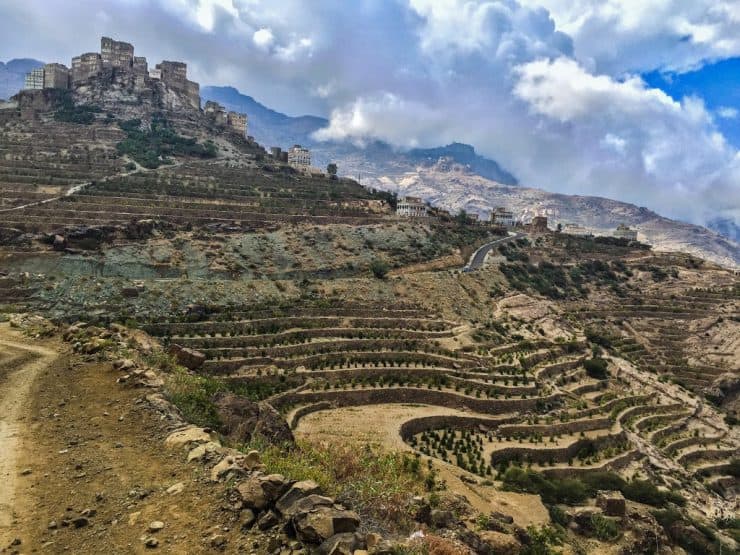
Mocha, also written Mokha or Al-Makha, is the Yemeni port that gave its name to one of the most recognizable words in coffee. For centuries, coffee grown in Yemen’s mountains was brought down to this small Red Sea city and shipped to markets abroad. European traders associated the port so closely with Yemeni coffee that “Mocha” eventually became shorthand for the coffee itself.
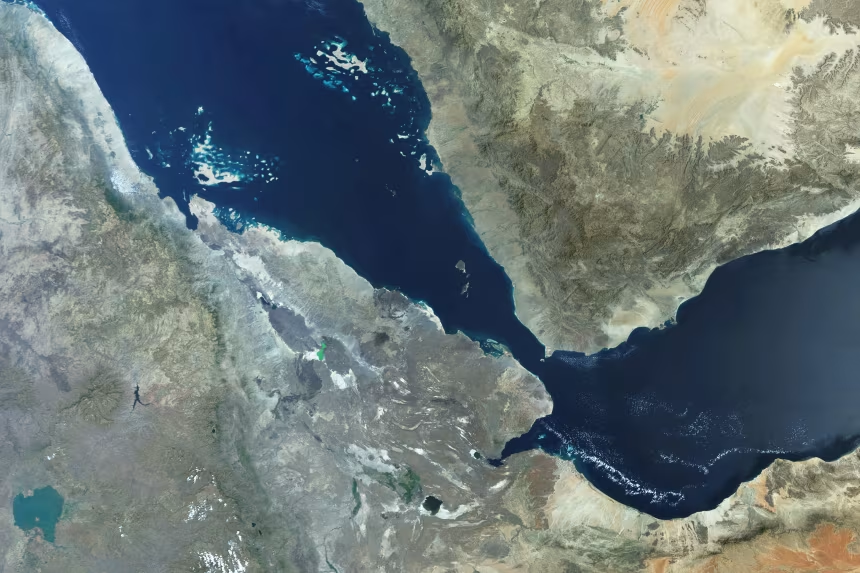
Today the name is more likely to make someone think of chocolate-flavored coffee than Yemen. And that is an extraordinary erasure. Look at a map and Yemen’s importance becomes immediately obvious.
Ships traveling between Asia and Europe can cross the Indian Ocean, enter the Red Sea through the Bab el-Mandeb Strait and continue north through the Suez Canal into the Mediterranean. Without that route, many vessels must make the considerably longer journey around the Cape of Good Hope at the southern end of Africa.
The Suez Canal itself was constructed between 1859 and 1869 by the Suez Canal Company under the leadership of French diplomat Ferdinand de Lesseps. Egyptian ruler Said Pasha granted the concession for the project, and French investors initially supplied much of its private capital, while Egypt also acquired a substantial stake and bore enormous financial and labor costs.
It was one of the engineering projects that reorganized global trade. More than 150 years later, that geography still determines what you pay for products made thousands of miles away.
When shipping through the Red Sea becomes dangerous, vessels are rerouted. The journey becomes longer. Ships consume more fuel and supply chains become less predictable. Those costs can eventually work their way into the prices of goods moving between Asia, Europe and North America.
The Houthis understand the importance of this geography very well. The movement emerged from northern Yemen and seized the capital, Sanaa, in 2014. Iran has provided the Houthis with substantial military and political support, including technology and weapons capabilities. Since late 2023, Houthi forces have attacked and threatened commercial shipping in and around the Red Sea, saying their campaign is connected to the war in Gaza.
Sanaa Market in Yemen, Thomas Foertsch
Whatever political justification is attached to these attacks, civilian shipping and international trade have been profoundly affected.
And Yemen itself has paid an even greater price.
Before the shipping crisis came the FSO Safer
Drying coffee on a roof in Mocha, YemenBab el-Mandeb Strait
Some years before Houthi attacks on commercial vessels became an international headline, another environmental catastrophe was sitting quietly off Yemen’s Red Sea coast. The FSO Safer was an aging oil-storage vessel moored offshore near Hodeidah containing approximately 1.14 million barrels of crude oil. The Houthis were holding it hostage.
I became involved in the story because the environmental consequences were almost unimaginable. I personally notified Greenpeace Middle East about the threat posed by the Safer because it was clear that an accident could devastate the Red Sea.
Socotra Island, Yemen
A major spill could have damaged coral reefs, fisheries and coastal ecosystems while affecting communities already suffering from war and food insecurity. The Red Sea is not an empty shipping corridor. It is an extraordinary marine ecosystem with corals that scientists have studied partly because of their unusual tolerance to heat. It is also a source of food and livelihoods for millions of people living along its shores.
It’s also the home of Sinai, and the biblical landscape where Moses talked with God, saw the burning bush and as biblical history goes, got the 10 commandments etched in stone.
The United Nations eventually mounted an extraordinary salvage operation. In 2023, more than one million barrels of oil were transferred from the deteriorating Safer to another vessel, averting what the UN had warned could become a massive environmental disaster.
It was a rare piece of good news from Yemen, but the Safer should have taught us something. Environmental disasters don’t respect political borders, and neither do shipping disruptions.
Mocha sits inside this same geography.
For centuries, merchants, sailors and coffee growers connected this Yemeni port to the rest of the world. Its surviving architecture, mosques and merchant houses belong to a history much older than today’s conflict. The Al-Shadhili Mosque is associated with Yemen’s deep coffee culture and with the Sufi traditions surrounding coffee’s early history in the region.
Al-Shadhili Mosque in Mocha, Yemen, a historic Red Sea port that gave its name to Mocha coffee. Wikipedia
These places are part of the world’s cultural inheritance, even if most people drinking a mocha in Toronto, London or New York have no idea where the word came from. The Houthis are usually discussed in terms of missiles, drones, Iran, Israel and shipping.
Those are important stories but there is another story underneath them: Yemen itself. A country that gave the world one of its great coffee traditions now sits beside one of the most militarized shipping corridors on Earth.
Before AI became the two letters attached to practically every new technology story, we were writing about personal transport companies with the audacious idea that ordinary people might one day keep a small electric aircraft at home. Yes, we were all made to be Jetsons.
Back in those days, AIR ONE looked like a giant drone crossed with a sports car. It was one of those technology stories where you wondered: is this actually the future, or is somebody just very good at making renderings? Now it looks like a private jet.
AIR has now opened a new US headquarters and production center in Florida and says it currently has eight aircraft in production, including manned and unmanned versions. So how close are we to actually flying one?
AIR ONE isn’t technically a flying car or a private jet for hire. It is a two-seat electric vertical takeoff and landing aircraft, or eVTOL. Eight electric motors allow it to take off vertically, while wings provide lift in forward flight.
AIR lists a range of roughly 60 to 100 miles, up to an hour of flight time and a cruise speed of up to 115 knots. Its wings fold so the aircraft can be stored at home and transported by trailer.
Air One
That makes AIR unusual in the eVTOL race. Companies such as Joby and Archer are largely developing electric air taxis. AIR’s original dream was personal aviation: an aircraft you own and fly yourself. But, and it’s a big one, you will still need a pilot license.
AIR ONE first flew as a full-scale prototype in Israel in 2022, initially hovering and later successfully transitioning from vertical takeoff into forward flight. Since then, much of AIR’s attention has shifted to America. Its new 20,000-plus-square-foot US headquarters in Florida is expected to support flight testing, aircraft assembly, manufacturing and engineering.
AIR isn’t Israel’s first attempt to electrify aviation. Eviation, founded in Israel in 2015, went after a much bigger prize with Alice, a nine-passenger electric commuter airplane designed to replace conventional regional aircraft. Alice flew in 2022, but Eviation paused development in 2025 while looking for additional funding and partners.
Alice by Eviation, an all-electric plane
AIR ONE is tackling the problem from almost the opposite direction: make the aircraft smaller, lighter and personal, give it vertical takeoff and landing, and limit flights to around an hour. Whether that less ambitious approach ultimately makes electric aviation more achievable may be one of the more interesting experiments now underway in the industry.
“Advanced air mobility is entering a new phase in the United States, moving from aircraft development toward production and real-world operations,” AIR CEO and co-founder Rani Plaut said when announcing the expansion.
AIR has also been quietly building a second business: unmanned electric aircraft for cargo, logistics and defense. That may prove critical. Cargo aircraft can reach customers while AIR continues the much more difficult process of certifying a personal passenger aircraft.
AIR says its current production line contains eight aircraft. The manned AIR ONEs will be used for flight testing and certification, while unmanned versions are being built to fulfill existing customer orders.
AIR raised $23 million in a Series A round in 2025, led by Entrée Capital, with participation from Dr. Shmuel Harlap, one of Mobileye’s early investors. Israeli financial publication Calcalist reported that the round brought AIR’s total funding to approximately $50 million.
The company has also begun generating revenue from its unmanned aircraft business, an important distinction from the many flying-car startups that have spent years consuming venture capital without delivering aircraft. But plenty of people still want a personal electric aircraft. Can you actually buy one?
Air One landing near you
The biggest hurdle now isn’t proving that AIR ONE can fly. It is certification. To that end, AIR is pursuing a US pathway under the FAA’s expanded MOSAIC rules for Light Sport Aircraft. The regulatory changes provide a potential pathway for aircraft such as AIR ONE, but the aircraft itself remains certification pending.
AIR says its goal is to turn its vision for “personal and commercial electric aviation into reality.” The flying car isn’t here yet, but the factory is getting ready to build them.
“Ground Control to Major Tom” feels almost too obvious a way into a story about an Israeli-American company called Stardust. But the name fits.
Stardust Solutions is developing technology that sounds somewhere between David Bowie and a volcanic eruption: put microscopic reflective particles high into the atmosphere so that less sunlight reaches Earth.
Founded in March 2023, Stardust has now raised $75 million, including a $60 million round led by Chris Sacca’s Lowercarbon Capital. Other investors include Exor, the Agnelli family’s investment company and major shareholder in Ferrari, along with Future Ventures, Future Positive, Lauder Partners, Attestor, Kindred Capital and former Facebook executive Matt Cohler.
That is serious money for an industry that doesn’t quite exist yet. We wrote about geoengineering the planet away from climate change in the past. Companies like Make Sunsets seemed more like an activist project launched by counter-culture than engineers than something that would actually work. The idea is to add particles of dust, like that from a volcanic eruption, into the air, blocking out the sun and rejigging the effects of climate change.
Changing the climate has ethical implications
The science behind Stardust isn’t Israeli and it isn’t new: Large volcanic eruptions, or dust from giant meteor explosions, can temporarily cool Earth when sulfur compounds reach the stratosphere and form aerosols that reflect sunlight. Scientists have discussed deliberately reproducing this effect for decades. It is called stratospheric aerosol injection, part of the broader and highly controversial field of solar geoengineering. Stardust’s innovation is attempting to turn the theory into an engineered system.
The company was founded by Israeli physicists Yanai Yedvab, Amyad Spector and Eli Waxman. Yedvab and Spector previously worked as nuclear physicists for the Israeli government. Stardust is registered in Delaware and headquartered outside Tel Aviv, although it says it is not affiliated with the Israeli government.
Rather than simply releasing sulfur dioxide, Stardust is developing proprietary reflective particles, alongside dispersal and monitoring technology. Its ultimate business model appears to depend on governments becoming customers.
Yedvab told POLITICO that investors were backing the idea that “we need a safe and responsible and controlled option for sunlight reflection.”
In other words, Stardust isn’t just developing dust. It wants to engineer the infrastructure for cooling a planet.
We’ve seen a wilder version of this before
Make Sunsets launch a climate balloon
As we mentioned earlier, Green Prophet readers have been here before. In April 2025, we wrote about Make Sunsets, a small American startup sending weather balloons containing sulfur dioxide into the stratosphere and selling what it calls “Cooling Credits.”
Make Sunsets felt almost like climate activism crossed with a garage startup: balloons, sulfur dioxide and cooling credits sold online. Now Stardust is where that strange idea starts looking like an industry and we aren’t sure how we feel about it.
Make Sunsets releases sulfur dioxide. Stardust is engineering proprietary particles. Make Sunsets uses balloons. Stardust is working toward aircraft-based systems. Make Sunsets started launching. Stardust has raised $75 million and wants governments as customers.
Who gets to control the global thermostat?
Stardust wants to block the sun to save us from climate change
That commercialization is exactly what alarms Stardust’s critics. The Center for International Environmental Law (CIEL) attacked the company’s plans when the $60 million financing was announced. CIEL’s Geoengineering Campaign Manager Mary Church warned that:
“Solar geoengineering is inherently unpredictable and risks further breaking an already broken climate system.”
Her most compelling question may be the simplest. Solar geoengineering, she said, raises “the central question of who gets to control the global thermostat.”
CIEL also points to the danger of termination shock. Geoengineering doesn’t remove CO2. If humanity artificially suppressed warming for decades and then abruptly stopped, temperatures could rise rapidly. And there is no global government to decide who gets to change Earth’s temperature. It’s like colonizing Mars, the Moon or our oceans.
Stardust joins many
Stardust’s Yanai and Amiad
Around the world, researchers have explored other ways of reflecting sunlight. Australia has experimented with marine cloud brightening around the Great Barrier Reef, spraying tiny seawater droplets upward in an attempt to make clouds more reflective and protect vulnerable coral.
Harvard’s proposed SCoPEx experiment would have studied how tiny quantities of particles behave in the stratosphere. After years of controversy over governance and consent, Harvard announced in 2024 that the experiment would not proceed.
Founders of Stardust
The Arctic Ice Project explored spreading reflective hollow glass microspheres over Arctic sea ice to slow melting before ending the research amid environmental and deployment concerns.
Stardust belongs to an emerging industry known as solar geoengineering, more formally called Solar Radiation Modification (SRM). Unlike carbon removal companies, which try to take CO2 out of the atmosphere, SRM companies and researchers are looking for ways to reflect a small fraction of the sun’s energy back into space and cool the planet. Stardust’s particular approach is called Stratospheric Aerosol Injection (SAI), in which reflective particles are dispersed high in the atmosphere.
It is still a tiny, controversial field rather than a mature industry, but with $75 million flowing into Stardust alone, solar geoengineering is beginning to move from academic climate science into the world of venture capital and commercial technology.
And Green Prophet was discussing the basic idea long before today’s startups arrived. In our 2009 review of James Lovelock’s The Vanishing Face of Gaia, we looked at geoengineering proposals including manipulation of Earth’s albedo and the cooling observed after Mount Pinatubo’s 1991 eruption.
What separates Stardust from most of these experiments is capital and commercial intent. Solar geoengineering spent decades inside scientific papers, climate models and university departments. Make Sunsets demonstrated that entrepreneurs could simply start experimenting with it and go rogue.
Stardust represents something different: nuclear physicists, proprietary intellectual property, aircraft technology, government lobbying and $75 million in venture capital. The company has even hired Washington lobbying firm Holland & Knight as it seeks a regulatory framework and potential US government contracts.
Its argument is that humanity may eventually need an emergency brake if emissions reductions fail to prevent dangerous warming. Its critics believe building the brake makes it more likely someone will eventually pull it. And that’s the $75 million question. We are no longer merely asking whether humans could dim the Sun. Investors are now betting that one day somebody will pay to do it.
Stardust, the company states clearly, is pursuing R&D, not deployment. “Our goal is to turn SRM from a scientific concept into a safe and practical option.” Pacific Fusion says the same. But at the same token each company will be ready and probably willing, when and if the commercial opportunities arise.
When Green Prophet first wrote about Mantle8 in 2025, the French startup was using AI and searching beneath the Pyrenees for something that sounds almost too convenient to be true: naturally occurring hydrogen underground. Now the company is taking that hunt to the Middle East.
Mantle8 has established a regional headquarters in Dubai and appointed Jean-Valery Garcia as Regional Director for the Middle East. Garcia has more than 25 years of experience in subsurface exploration, geoscience technology and oilfield services across the region.
The expansion follows a €31 million Series A financing round and represents Mantle8’s first permanent presence outside Europe.
Jean-Valery Garcia, Mantle8
“Natural hydrogen exploration is one of the most compelling frontiers in the energy sector today,” Garcia says. “When I saw the technology Mantle8 had built and the alignment with natural hydrogen initiatives in the Middle East, I knew this was the right opportunity. I’m looking forward to building the team and partnerships on the ground here to turn that opportunity into a leading position for Mantle8 in the region.”
We first covered Mantle8’s search for natural hydrogen in the French mountains, where the company was exploring the Comminges area of the Pyrenees. Mantle8 reported soil-gas hydrogen readings reaching 2,500 ppm and was working to understand where hydrogen was being generated and where it might accumulate underground.
Beneath the tranquil, unassuming landscapes of Comminges lies one of Europe’s most promising natural hydrogen reserves. Once overlooked for its plain topography, this region in the French Pyrenees is now gaining global attention thanks to cutting-edge AI exploration by Mantle8. With soil-gas readings reaching 2,500 ppm—well above industry benchmarks—Comminges is emerging as a key player in Europe’s transition to clean, locally sourced energy. Ideal geology, low human impact, and strategic location make it a prime site for scalable, cost-effective hydrogen production.
The idea behind natural hydrogen is seductively simple: instead of spending energy making hydrogen, find places where the Earth is already making it. That’s important because hydrogen remains one of the hardest areas of the energy transition to crack.
Most hydrogen today is manufactured from fossil fuels. Green hydrogen attempts to change that by using renewable electricity to split water through electrolysis. As we reported in our story on Israeli hydrogen startup H2Pro, making hydrogen isn’t the fundamental problem. Making clean hydrogen cheaply enough to compete is. It’s like EVs. Great idea, but where does the power come from to run your electric car?
Mantle8 Board Members: Mary Haas (BEV-Angel); Emmanuel Masini (Mantle8 CEO); Gaëtan Bonhomme (BEV); Marieke Flament (Angel); Robert Trezona (Kiko)
Hydrogen is also difficult to store and transport. Compressing it requires energy and infrastructure, while liquefying hydrogen requires extremely low temperatures. These problems matter enormously when hydrogen is proposed for steel, fertilizer, shipping and other industries that need enormous quantities of energy.
Natural hydrogen potentially changes the equation, but it introduces another enormous unknown: geology. Finding hydrogen in the ground isn’t the same as finding a hydrogen field that can make money. Explorers need to understand where hydrogen is generated, how it migrates through rock, whether it becomes trapped, how concentrated it is and whether a well can deliver useful quantities over time.
Mantle8 is developing subsurface exploration and imaging technologies designed to answer those questions before expensive drilling begins. And Dubai makes sense. The Middle East has generations of expertise in geology, drilling and understanding what lies miles beneath the surface. If natural hydrogen is going to become an industry rather than an interesting geological phenomenon, those skills will matter.
But the real test isn’t a €31 million financing round or a new office in Dubai. It’s what comes out of the ground: If Mantle8 can repeatedly find reservoirs that produce hydrogen cheaply and at commercial scale, the implications could be enormous. Until then, the hunt continues.
People keep asking us: Does Starbucks use lab-grown milk? Does Starbucks use fermented milk? Is there Perfect Day milk hiding in your latte under another name? The answer, as of October 2026, appears to be no. Starbucks is not currently serving precision-fermented, animal-free or “lab-grown” milk as a standard milk option.
But Starbucks has tried it before. In 2021, Starbucks tested animal-free milk made with Perfect Day protein at two locations near Seattle, in Bellevue and Renton, Washington. Perfect Day uses precision fermentation to make whey protein without raising a cow. For the Starbucks experiment, a special 2% “barista blend” was developed that could be steamed and foamed for coffee drinks.
That test seems to be the source of some of the confusion today. What milk does Starbucks use now?
Is Starbucks using fake milk or fungus milk in 2026?
No published Starbucks U.S. menu or ingredient information we found identifies lab-grown milk as a standard option. That includes milk marketed as animal-free, fermentation-made or “fake milk.” The company’s protein drinks and protein cold foam should not be confused with precision-fermented dairy: the whey-containing products Starbucks describes use a dairy base, with no claim that the whey is animal-free.
“Fungus milk” is another name people search for. It describes a way of making dairy proteins using fungi or other microorganisms, not milk made by squeezing mushrooms. No credible current evidence shows Starbucks putting it in ordinary lattes without telling customers.
Private label, alternative milks available at Starbucks
Starbucks’ current U.S. information lists conventional dairy milk alongside oat, almond, coconut and soy milk. Starbucks (sued for overpricing specialty milk) also offers a protein-boosted milk made from 2% dairy milk and whey protein. The company does not identify that whey as precision-fermented or animal-free.
We could find no current Starbucks announcement, ingredient information or menu listing showing Perfect Day, Remilk, Imagindairy or another precision-fermentation dairy protein being served in Starbucks drinks. We have reached out to Starbucks for comment about any future plans.
Perfect Day was piloted at a Starbucks
We did not find evidence that Starbucks is quietly buying one of these proteins and selling it under a bespoke or white-label milk brand. That’s worth saying because the technology itself hasn’t disappeared.
Perfect Day continues to market an animal-free barista milk for food service. Green Prophet has also been following companies such as Remilk which we’ve tried (tastes like coconut, but is refreshing) and Imagindairy as precision-fermented dairy moves from food-tech laboratories toward real commercial products.
Remilk is now hitting the shelves
“Lab-grown milk” isn’t quite the right term, incidentally. These companies generally use precision fermentation: microorganisms are programmed to produce proteins such as whey that are essentially the same proteins found in cow’s milk. No cow needs to produce the protein. The finished product can be formulated to taste like conventional milk, although flavour depends on what else goes into the recipe.
What is lab-grown milk, and how is fungus milk made?
Think of brewing beer or making cheese rather than growing something mysterious in a petri dish. In precision fermentation, carefully selected microorganisms are given instructions to make a specific protein, such as whey. The organisms grow in controlled tanks, and the protein is then separated and purified. Manufacturers can blend it with water, fats and other ingredients to make a creamy drink.
The technique is related to established food processes used to make fermentation-produced chymosin, the enzyme that helps milk turn into cheese, as well as certain vitamins and food ingredients. It’s industrial biotechnology, but not inherently more alarming than the complicated processes already behind everyday supermarket foods (Twinkies!). The difference is that these microorganisms make a milk protein, without milking a cow.
Is lab-grown milk safe to drink?
There is no good reason to assume that properly manufactured animal-free dairy is unsafe simply because fermentation is involved. Perfect Day’s fermentation-produced whey was the subject of an FDA GRAS notice, and the agency responded with no questions about the company’s safety conclusion for its intended uses. That is not a blanket approval of every lab-grown milk brand or recipe. As with any manufactured food, hygiene, ingredients and quality controls matter.
One important exception: animal-free does not mean allergy-free. If the product contains whey identical or very similar to cow’s milk whey, someone with a milk-protein allergy may react to it. Check the package for a milk allergen declaration, even if it says vegan or cow-free. See Perfect Day’s explanation of milk allergies and its FDA safety-notification history.
Is animal-free milk vegan, and does it contain cow hormones?
For many vegans, the appeal is obvious: the familiar experience of real dairy protein without relying on cows. Other vegans may have different views about food produced with genetically engineered microorganisms. The animal-free whey itself can be produced without cows, but you’ll still want to check the other ingredients in any finished drink.
Perfect Day says its purified whey protein is free of lactose, hormones, cholesterol and antibiotics. That’s interesting if you love the taste of milk but would prefer not to consume cow-derived ingredients. It doesn’t follow that every drink made with animal-free whey is automatically hormone-free, lactose-free or healthier: those claims depend on its full formulation. Lactose intolerance is also different from a milk-protein allergy.
Does fake milk taste like real milk in coffee?
It can. A reviewer who tried the 2021 Perfect Day Starbucks trial compared two caramel macchiatos and reported that the animal-free version frothed and tasted almost indistinguishable from conventional milk. That’s one person’s taste test, not a guarantee for every brand, but it shows why baristas are interested. Unlike oat or almond milk, precision-fermented dairy can include the very whey proteins that give ordinary dairy some of its texture and foaming behaviour.
For someone who likes a real cappuccino but doesn’t want the cow, that’s potentially exciting. For someone who’d rather stick with oats, almonds or straight black coffee, those choices aren’t going anywhere.
So if you’re standing at Starbucks wondering whether your latte contains secret lab milk, the evidence today says no.
For my money, there’s another option. Buy good fair-trade coffee, grind enough for one cup, put it in a simple drip filter and pour hot water over it. It takes about three minutes and, honestly, makes some of the best coffee there is. No line, no app and no need to investigate the biotechnology behind your latte. And you can milk the cow or goat living in your backyard.
Updated October 20, 2026 with answers to reader questions about fake milk, fungus milk, hormones, vegan ingredients and food safety.