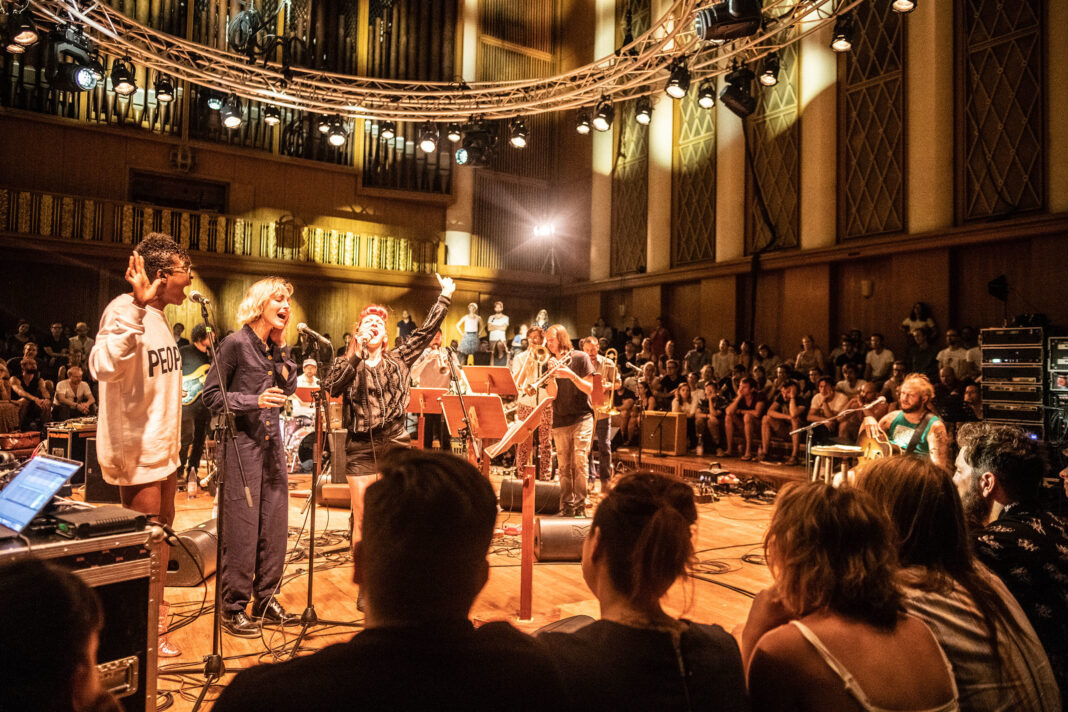

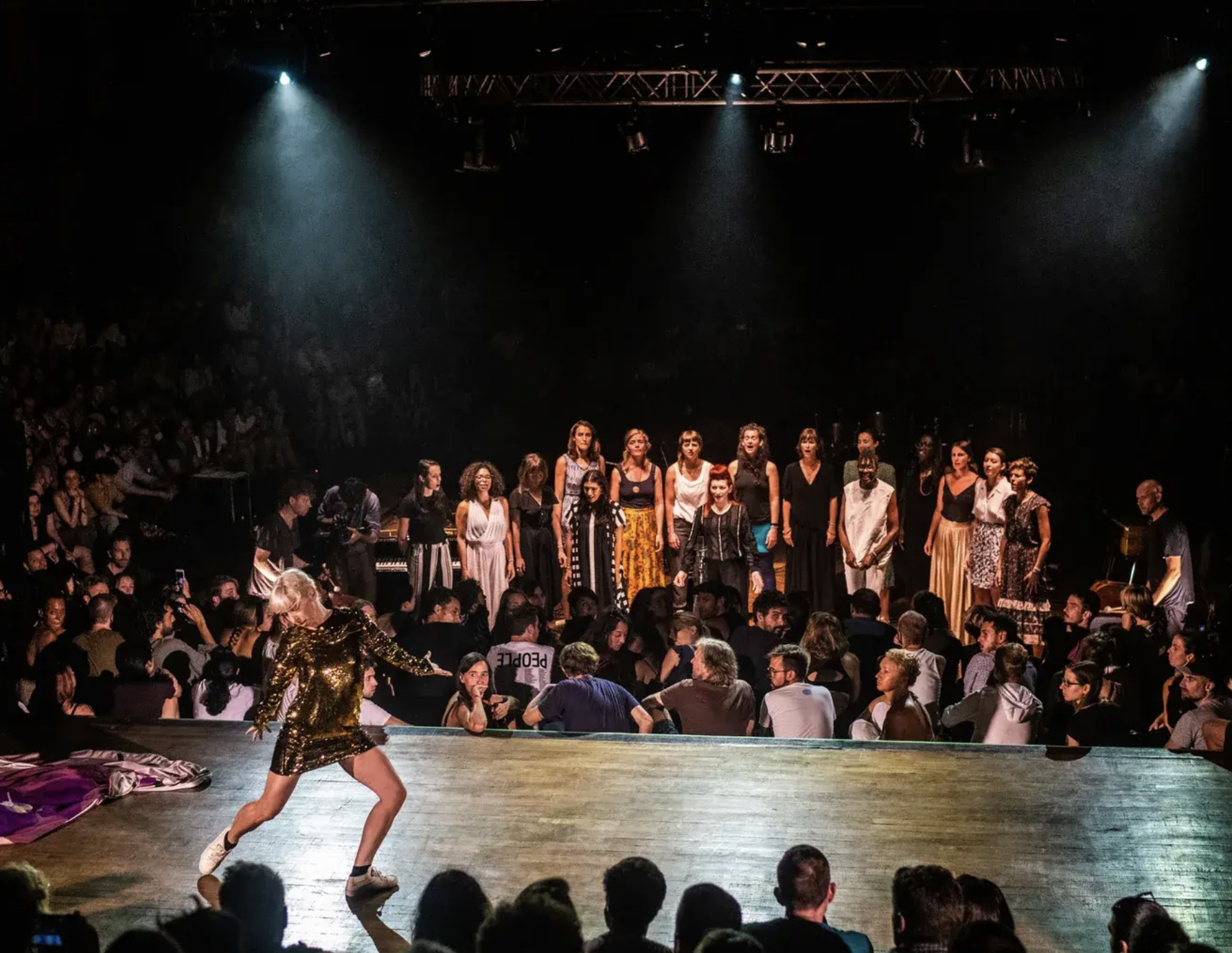
There may be singalongs with Aaron Dessner (The National), new bands forming spontaneously in corners of the building, or a choir recruited from a handwritten sign-up sheet. At the 2018 edition, Leslie Feist famously put one up for anyone who wanted to join her choir.
What happens this time, during the third edition of PEOPLE in Berlin this October 10 to 11, is deliberately difficult to predict. Funkhaus Berlin, the vast former East German broadcasting complex at Nalepastraße, was once built to transmit the messages of the communist state. Today the same building is being used for art, and houses what’s considered to be the world’s most advanced sound studio. Funkhaus will host roughly 200 performances over the festival weekend.
Don’t flee. Don’t get too excited about Apollo 11. The Wall is necessary for your protection.
Those were, in essence, some of the messages transmitted by East German radio from the vast Funkhaus complex during the Cold War. East Germans who had fled west were admonished for leaving; a 1969 commentary acknowledged the Apollo 11 achievement but argued that it did not mark “a new epoch of mankind”; and broadcasts in August 1961 defended the closing of the border that became the Berlin Wall.
Today its extraordinary studios are used for recording and live performance.
What audiences see at PEOPLE will be partly determined by the colour of a wristband and partly by where they wander. There is no conventional published performance schedule and no real hierarchy of headliners.
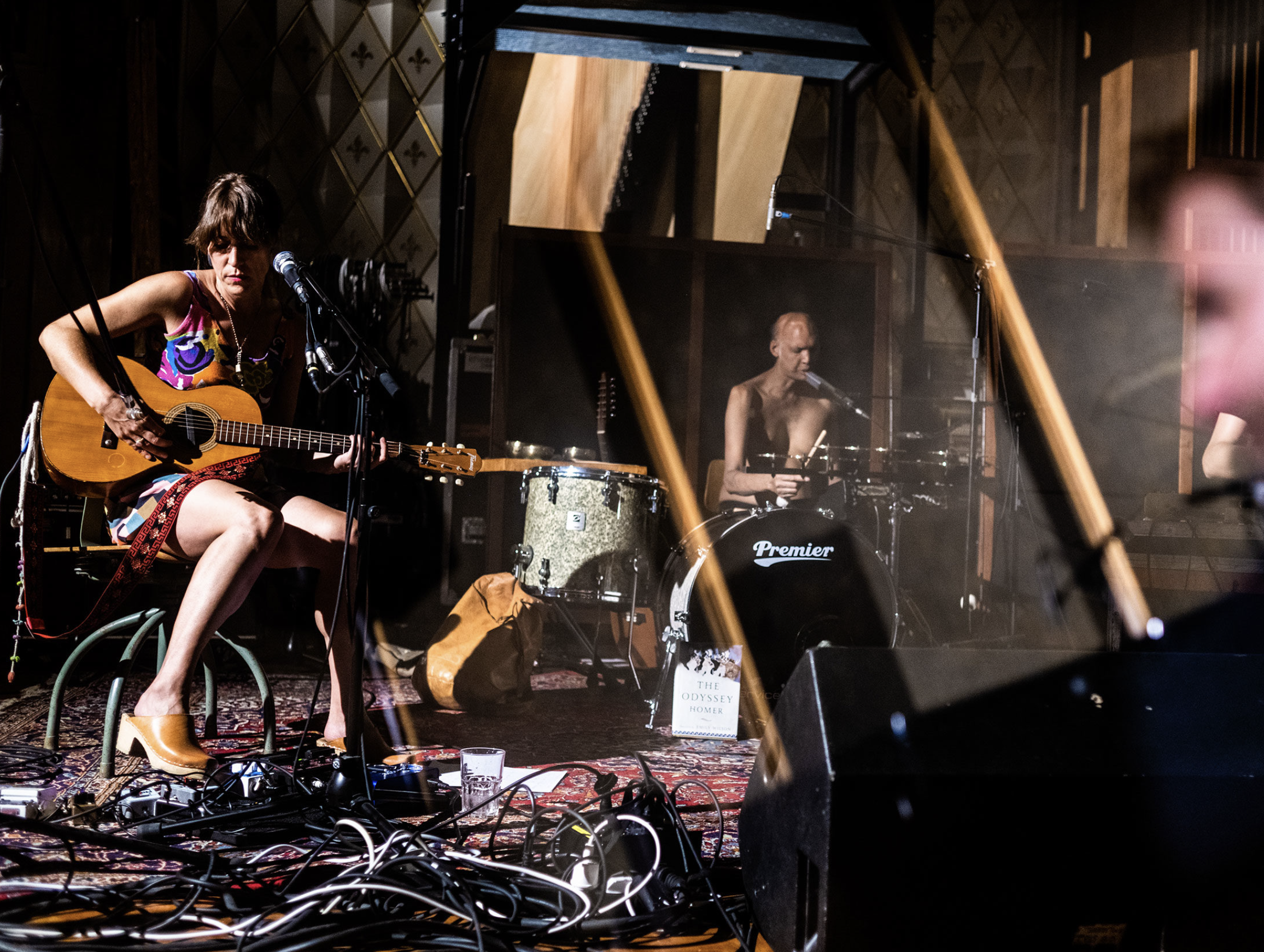
Around 180 musicians will spend the preceding week meeting, experimenting and creating together before presenting one-off performances across the building. They will work in around 40 studios and spaces, meaning that who ends up playing together may depend as much on encounters during the week as on anything planned in advance.
The idea is almost the opposite of the modern festival experience, where audiences buy tickets partly because they know exactly who they are going to see and exactly when they will see them. At PEOPLE, you might walk into a room because something sounds interesting. Or the musicians might walk into where you happen to be.
There is an unusually Canadian, and particularly Montreal, presence this year. Did Feist set the stage? Patrick Watson, Leif Vollebekk, Efrim Menuck, Rebecca Foon, Richard Reed Parry, Sarah Neufeld and Adam Cohen, are among the artists rooted in Montreal’s music world.
They join an international group that includes Aaron and Bryce Dessner of The National. The brothers and Bon Iver’s Justin Vernon were among the small group of musicians behind the original event.
The festival grew out of Berlin’s Michelberger Hotel (we feature it here in the Last Cool City on Earth), a former cigarette factory turned hotel and cultural hub that somehow combines design, serious food, art and hostel-like sociability without becoming prohibitively expensive or overly polished. They also run a real farm and farmstay outside Berlin.
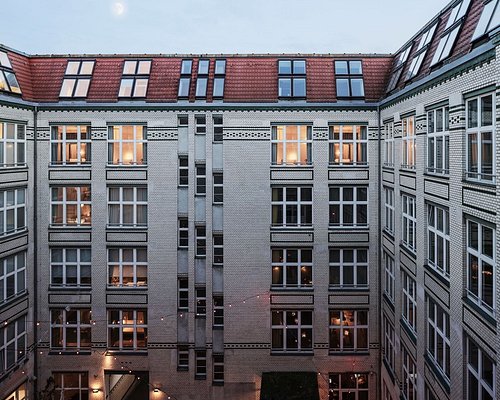
I stayed at Micheberger in Berlin (above) and wrote about it last year, and was intrigued enough by what its founders had created with the Dessners and their circle that I decided to return specifically for PEOPLE and some sustainability touring in Berlin along the way.
This year, the experience apparently starts before visitors even arrive at Funkhaus. A boat is planned to carry people from around the Michelberger Hotel along the Spree to the former East German radio complex.
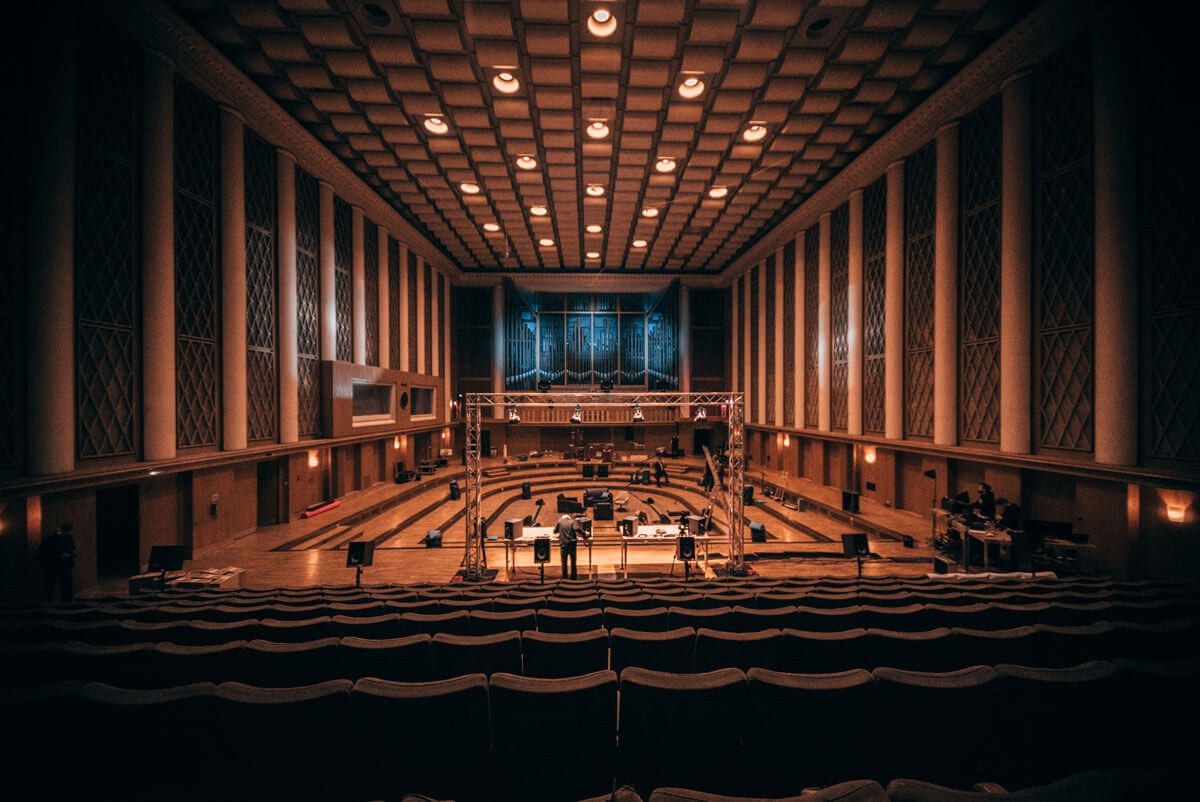
There is something wonderfully Berlin about that journey: leaving a former industrial building converted into a hotel full of musicians, travelling down a river that once ran through a divided city, and arriving at the broadcasting headquarters of a vanished communist state to hear music that, in many cases, did not exist a few days earlier.
PEOPLE first emerged from collaborations around Michelberger with founders Nadine and Tom Michelberger and musicians Aaron and Bryce Dessner and Justin Vernon.
I’ve just finished reading the book Jeffrey Hollender (the founder of Seventh Generation) sent me about his journey as a sustainability maverick — my words, not his — and it has me thinking about the people who build businesses that deliberately spend time and money on things that may not produce an obvious return. I hope to meet Nadine and Tom in Berlin to understand why Michelberger puts so much of itself into music, farming, food and community, and what they believe a hotel can become when it stops behaving simply like a place that rents rooms.
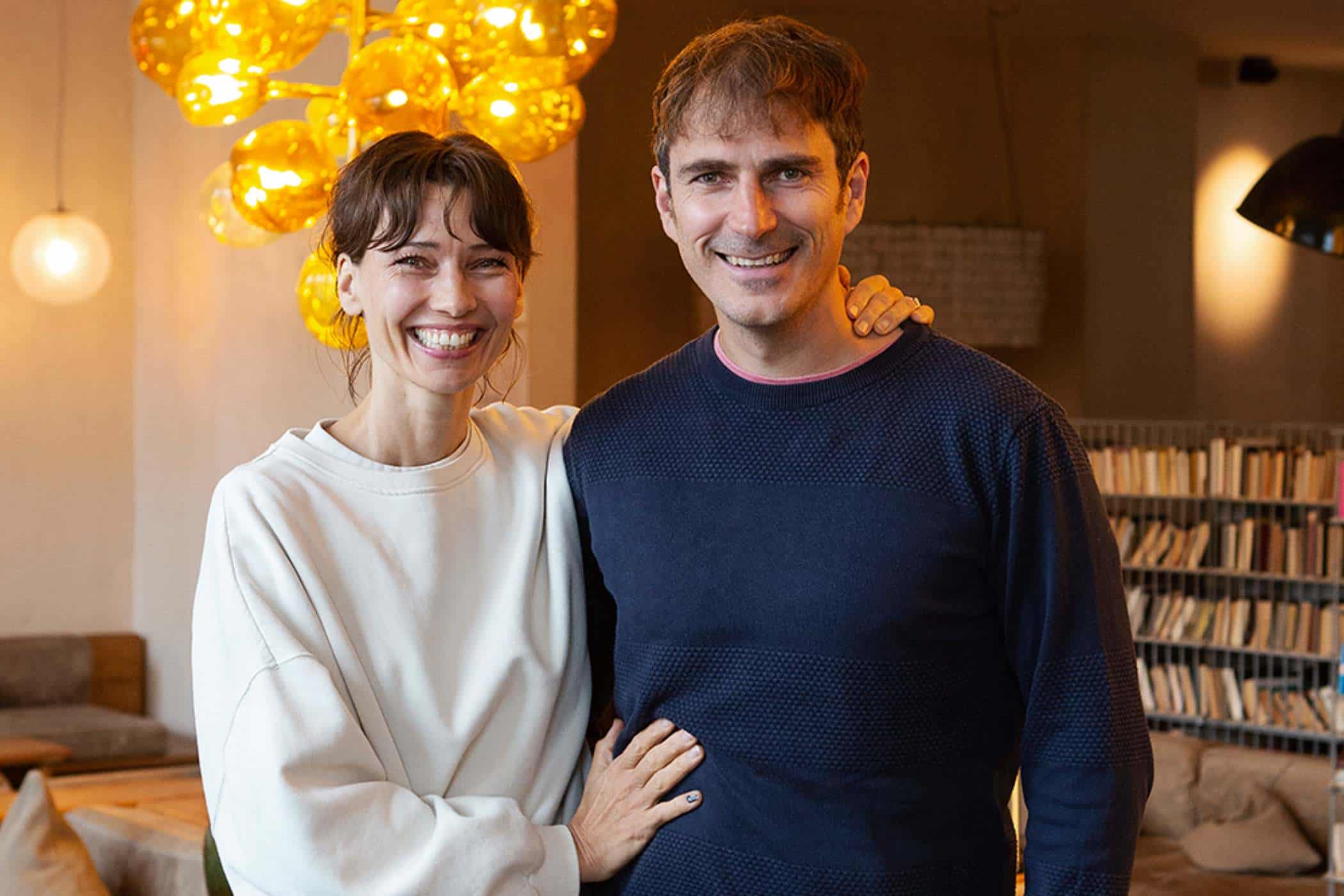
Musicians arrive before the public and spend the week together at Michelberger. A new band can exist for 20 minutes. Someone can wander into somebody else’s room. A performance can happen once and disappear.
That history is part of what makes PEOPLE irresistible. At the 2018 festival, Feist Blu-tacked a homemade choir sign-up sheet to a wall, essentially: Who wants to sing? — and assembled people from around the building. That may be my favourite description of a music festival ever. There is something else interesting about the number of Canadians turning up in Berlin.
Canada has traditionally looked culturally south toward the United States and east toward Britain and France. But at a moment when Canada is recalibrating parts of its political and economic relationship with the United States and looking increasingly toward Europe — alongside a Canadian debut at Eurovision in 2027 — it is worth asking whether Canadian artists are making a similar cultural turn.
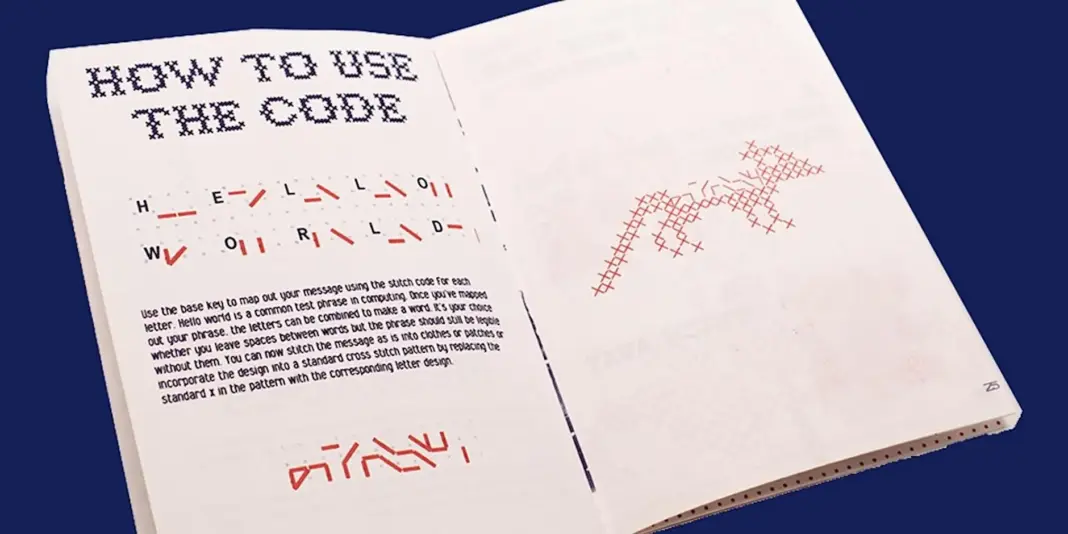
Related: Code your data into hand-stitched embroidery at London workshop
Or perhaps Montreal musicians, in particular, have already been building those transatlantic networks for years. I am going to figure it out.
Berlin has long attracted artists because it offered space, physically, economically and culturally, for people to make things without immediately having to explain how they would be monetized. Last time I was there however, those that made Berlin home complained of the city’s rental costs pricing them out, even for those who have jobs in high-tech.
Like Brooklyn perhaps, the rent might be justified in order to live in what could be the last cool city on earth. With collaborations gone digital and mega events garnering for our attention, I am hoping that PEOPLE will set a tone for how the audience should relate to artists, and give artists a chance to be free from the confines of a set list. (Although as someone who owns a music venue, you can be pretty sure that most musicians are usually happy to earn a living wage.)
PEOPLE is arriving at a peculiar moment for music. My daughter is at music school and she resists AI as a writing tool. AI is changing how musicians think about authorship, originality and creative work. Streaming platforms have already trained listeners to experience music through recommendation engines and playlists assembled by algorithms. Festivals themselves have become enormous commercial machines in which artists tour highly controlled productions from city to city.
PEOPLE goes absurdly far in the other direction. PEOPLE is deliberately non-hierarchical and resistant to the machinery of the conventional festival. But will the artists embrace AI or reject it? Can AI be funny, human, make us cry or feel all the feels?
And are artists driving that change, audiences, or both? The answer may be somewhere inside Funkhaus, or on the boat getting there.
Justin Vernon from Bon Iver said at a past event, “It’s about getting back to the process… It’s about removing the barrier between the person making the sound and the person listening to it.”