Houthis Red Sea rockets causing Yemen’s population to starve

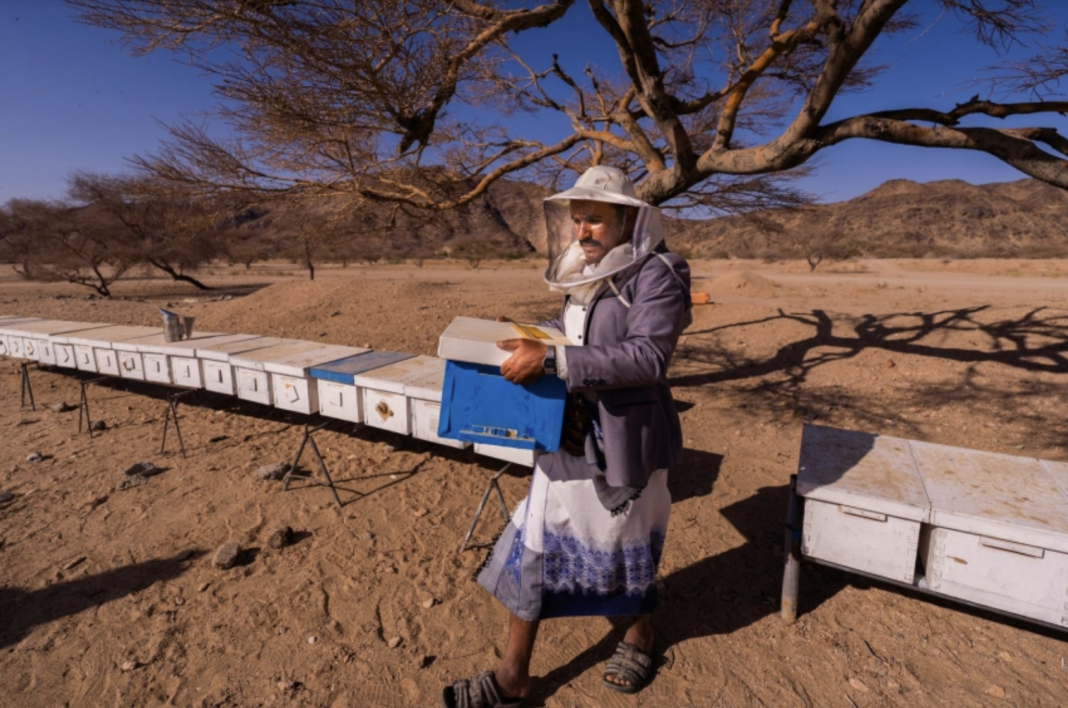
Yemen beekeepers keep ancient tradition alive
Yemen beekeepers

Houthi terror rockets affecting dire humanitarian situation in Yemen – the UN warns

The escalation of the Houthis Red Sea attacks where they sink ships with fertilizer, is poised to accelerate the increase in shipping costs, delay the delivery of essential food or lead to a complete suspension of trade routes and closure of Yemeni ports, a new report released by the Food and Agriculture Organization of the United Nations (FAO) finds. Yemeni people who struggle to afford essential food items will be at a dire risk for starvation.

According to the Potential Impacts of Red Sea Crisis Escalation on Food Insecurity in Yemen report, the food security situation in Yemen is already fragile and further shocks emanating from the Houthi attacks will cause additional harm to an already dire situation that can be described as one of the worst humanitarian emergencies in the world.

Almost 5 million people or 45 percent of the population analyzed in the Government of Yemen’s controlled areas is estimated to be in Crisis or worse.

Read Also: These Yemenis have a special song for the Houthis

Yemen relies heavily on imports for the food requirements of its population, with around 90 percent of its needs in staple cereals imported. According to the FAO report, if the current escalation is sustained for the next three months, imports will most likely slow down, affecting food availability and prices in the domestic markets.

While commenting on the key findings of the report, the FAO Representative in Yemen, Hussein Gadain, urged the international community to address the possible deterioration of the already severe humanitarian crisis in Yemen. He emphasized that the Red Sea conflict has erupted at a time when focus on Yemen is receding as humanitarian actors shift their attention and resources to other global hotspots, including Ukraine, Gaza and the Sudan.

Read Also: How the Houthis are using water as a weapon

“We cannot afford to wait until the humanitarian emergency worsens even further. This is the time to coordinate efforts and de-escalate the Red Sea crisis,” Gadain said. “We should facilitate an uninterrupted flow of commercial and essential humanitarian food supplies. This crisis, if not attended to, threatens to reverse the gains we have made in restoring livelihoods of Yemenis since the start of the conflict eight years ago.”

The report warned that a further escalation of the crisis will also disrupt livelihoods and certain value chains. Fishermen, for example, may abandon their activities due to increased insecurity at sea and at landing sites, which would not only impact their income opportunities and livelihoods but also affect the availability of fish – an important source of protein – in the market.

Additionally, increased military activities in the Red Sea may lead to the destruction of critical infrastructure, including ports and storage facilities, further hampering efficient distribution and storage of food in the country and aggravating food insecurity.

locusts in Yemen
Yemenis are often overrun by locusts which attack their food supply.

In the latest release from the FAO where Yemenis are facing starvation from lack of impacts, they do not mention the Houthis by name, but rather mention a “Red Sea” crisis ongoing which also makes no mention of terror operatives hurting their own people. Sounds like Greenpeace’s inability to condemn the Houthis. On one hand Greenpeace and the UN supports terror, but they can’t say so publicly. The plus side to all the Houthi attacks: the world now knows that Yemen exists. That it’s one of the world’s driest countries and that it’s been facing acute starvation for decades. In 2022 there was the locust crisis. 

Karin Kloosterman
Karin Kloostermanhttp://www.greenprophet.com
Karin Kloosterman is an award-winning journalist, innovation strategist, and founder of Green Prophet, one of the Middle East’s pioneering sustainability platforms. She has ranked in the Top 10 of Verizon innovation competitions, participated in NASA-linked challenges, and spoken worldwide on climate, food security, and future resilience. With an IoT technology patent, features in Canada’s National Post, and leadership inside teams building next-generation agricultural and planetary systems — including Mars-farming concepts — Karin operates at the intersection of storytelling, science, and systems change. She doesn’t report on the future – she helps design it. Reach out directly to [email protected]

TRENDING

Japan wants to build a solar panel ring around the moon

Unlike solar power on Earth, which is limited by night cycles, weather, and seasons, the Moon offers something close to uninterrupted exposure to the Sun. By placing solar infrastructure in orbit or along the lunar surface, engineers could generate continuous clean energy at a scale that may exceed global electricity demand,  the Japanese scientists say.

African kids born in these Star Homes are less likely to die

What the Star Home demonstrates is something bigger: that health can be built into infrastructure. Instead of relying only on healthcare systems, communities can reduce disease at the source—through smarter design.

Art from Oman at the Venice Biennale

Oman is returning to the Venice Biennale with Zīnah, an immersive installation by artist and curator Haitham Al Busafi that transforms a traditional form of horse adornment into a large-scale sensory experience.

Korean researchers create battery from greenhouse gases

Professor Ji-Soo Jang, in collaboration with Professor Taekwang Yoon of Ajou University and Professor Hansel Kim of Chungbuk National University, has developed a novel energy device that generates electricity during the process of capturing greenhouse gases.

SunZia comes online and America’s 11B, and largest renewable project begins wind power

The impact is already being felt. California has broken its wind generation record multiple times in recent weeks as SunZia begins feeding electricity into the grid. It’s a glimpse of what a renewable-powered future could look like when large-scale infrastructure finally comes online. Can we start saying goodbye to Saudi Aramco and Arabian Gulf oil? 

Nobul’s Regan McGee on Shareholder Value: “Complacency Is the Silent Killer” 

Why the governance framework designed to protect shareholders so...

Should You Invest in the Private Market?

startustartup Unlike public stock exchanges, which offer daily trading, strict...

How to build a 100-year-company

Kongō Gumi is a Japanese construction company, purportedly founded in 578 A.D., making it the world's oldest documented company. What can we learn about building sustainable businesses from them?

From Pilot Plant to Global Stage: How Aduro Clean Technologies’ 2026 Expansion Signals a Turning Point for Chemical Recycling Investors Like Yazan Al Homsi

The company's Next Generation Process (NGP) Pilot Plant in London, Ontario, has officially moved into initial operating campaigns, generating the kind of structured, repeatable data that separates laboratory promise from commercial viability.

How AI Helps SaaS Companies Reduce Repetitive Customer Support Work

SaaS products are designed for large numbers of users with different levels of experience, and also in renewable energy.

Pulling Water from the Air

Faced with water shortage in Amman, Laurie digs up...

Turning Your Energy Consultancy into an LLC: 4 Legal Steps for Founders in Texas

If you are starting a renewable energy business in Texas, learn how to start an LLC by the books.

Tracking the Impacts of a Hydroelectric Dam Along the Tigris River

For the next two months, I'll be taking a break from my usual Green Prophet posts to report on a transnational environmental issue: the Ilısu Dam currently under construction in Turkey, and the ways it will transform life along the Tigris River.

Related Articles

Popular Categories