
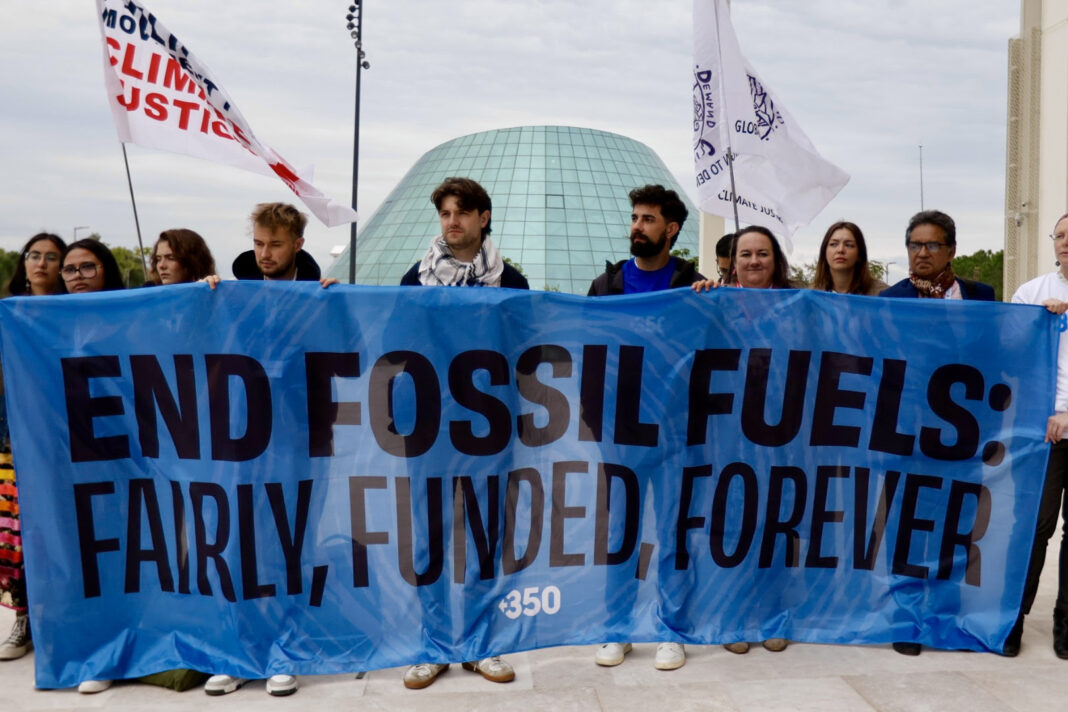

Climate campaigners gather in Antalya, Türkiye, calling for a fair phase-out of coal, oil and gas. Green Prophet has followed the movement since its earliest efforts to organize environmental activists across the Middle East.
Climate activists gathered outside the Blue Zone at COP31 in Antalya, Türkiye, on November 10, demanding that governments stop approving new fossil fuel projects and commit to a rapid, equitable transition to renewable energy. The demonstration brought together campaigners from 350.org, the Asian Peoples’ Movement on Debt and Development (APMDD), Climate Action Network, the Women and Gender Constituency, Demand Climate Justice and Oil Change International.
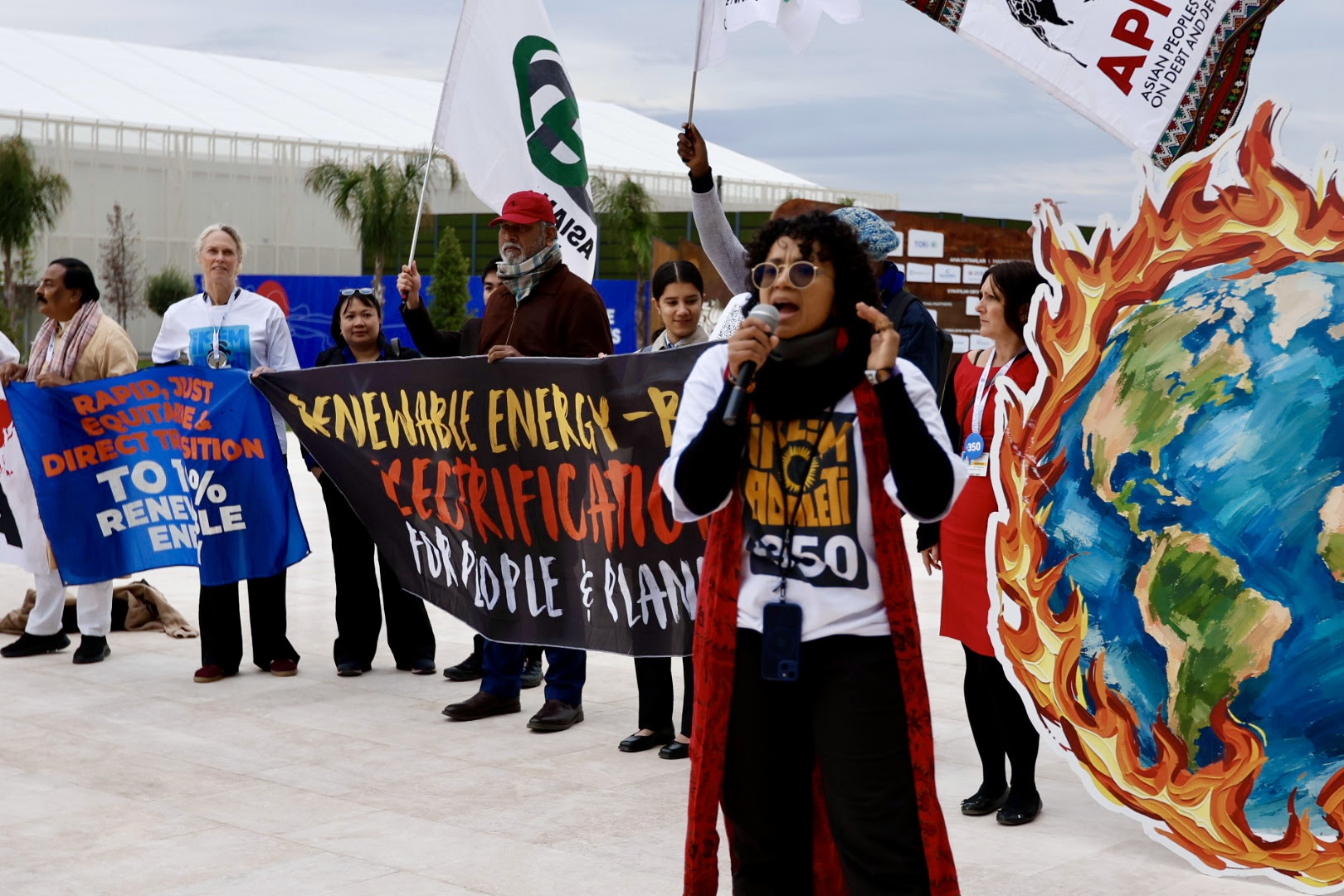
Their message was directed at world leaders who have spent years negotiating climate targets while coal, oil and gas development continues. Campaigners want concrete timelines for phasing out fossil fuels, an end to expansion and greater financial contributions from wealthy polluters to support communities already suffering climate-related losses.
“People around the world are demanding an energy system that puts their lives, livelihoods and futures first,” said Gina Cortes of 350.org. “We are here to remind governments that the transition cannot happen on the fossil fuel industry’s terms.”
A movement Green Prophet has followed for 16 years
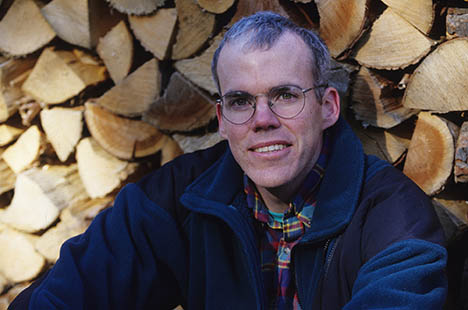
Green Prophet interviewed 350.org founder and environmental writer Bill McKibben in October 2010, when the organization was building an international network of climate campaigners. In that conversation with Tafline Laylin, McKibben discussed fossil fuels, climate action and the organization’s determination to protect future generations.
The name 350 refers to 350 parts per million of atmospheric carbon dioxide, a concentration championed by climate scientist James Hansen as an important benchmark for climate stability. Atmospheric CO2 concentrations have since climbed far above that level, while 350.org has evolved into a global campaign for fossil fuel phase-out and energy justice.
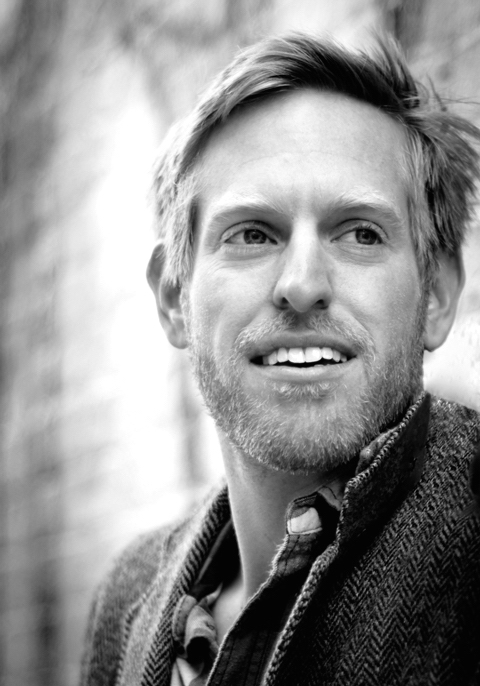
Green Prophet also interviewed 350.org organizer Phil Aroneanu, who described using Skype to connect environmental activists across the Middle East. Working with local organizations, he helped build a regional network in countries where environmental activism was often politically difficult.

By 2012, 350.org was supporting a new generation of Arab climate organizers. Green Prophet interviewed Egyptian activist Sarah Rifaat, then the organization’s Arab world coordinator, about corruption, bureaucracy and vested interests obstructing environmental progress. Her experience illustrated how climate advocacy intersects with political accountability and social justice.
Climate justice takes centre stage
These concerns are now central to 350.org’s COP31 campaign. Haneen Hamed of the Women and Gender Constituency warned that replacing fossil fuels involves more than switching energy sources. Women and frontline communities already carry disproportionate costs, she argued, and a fair transition must protect their rights and leadership.
Elle Bartolome of APMDD raised similar concerns about communities across Asia and the Global South, warning against an energy transition that allows corporations to profit while vulnerable populations continue bearing environmental and economic burdens.
The choice of Türkiye as COP31 host adds another dimension. The country has significant renewable energy potential, but coal remains an important part of its electricity system.
In 2020, Green Prophet reported on a 350.org investigation into fossil fuel companies and human rights abuses, including communities displaced by coal operations in Muğla, Türkiye. The report connected fossil fuel extraction with land rights, pollution and threats against environmental defenders.
At COP31, campaigners are again demanding that governments confront those consequences by financing renewable energy, supporting community ownership and protecting workers affected by the transition.
Will COP31 deliver anything different?
COP31 runs from November 9 to 20, with Türkiye hosting the summit and Australia leading negotiations. The conference is focused on translating climate promises into implementation, including plans to accelerate electrification.
But electrification alone will not deliver its full climate benefits if the electricity powering vehicles, factories and homes continues to come from coal and gas. Campaigners want renewable energy expansion explicitly connected to those commitments.
“Governments cannot claim to be delivering an energy transition while continuing to approve new coal, oil and gas projects,” said Joao Cerqueira of 350.org.
The financial stakes are equally significant. Developing countries need investment to build renewable infrastructure, adapt to extreme weather and recover from climate disasters, while major fossil fuel companies continue generating substantial profits.
For 350.org, the question is no longer whether governments recognize the climate crisis. That argument has been made for decades, including in the interviews Green Prophet conducted with the movement’s earliest organizers.
The question now is whether governments will turn their commitments into enforceable policies, finance the transition fairly and begin ending the fossil fuel expansion that campaigners have spent more than a generation opposing.
Sixteen years after our first conversations with 350.org, the movement’s central demand remains remarkably consistent. What has changed is the urgency.


