

By Dr. Osama Ghazal, Environmental Modelling and Climate Change Specialist, Jordan
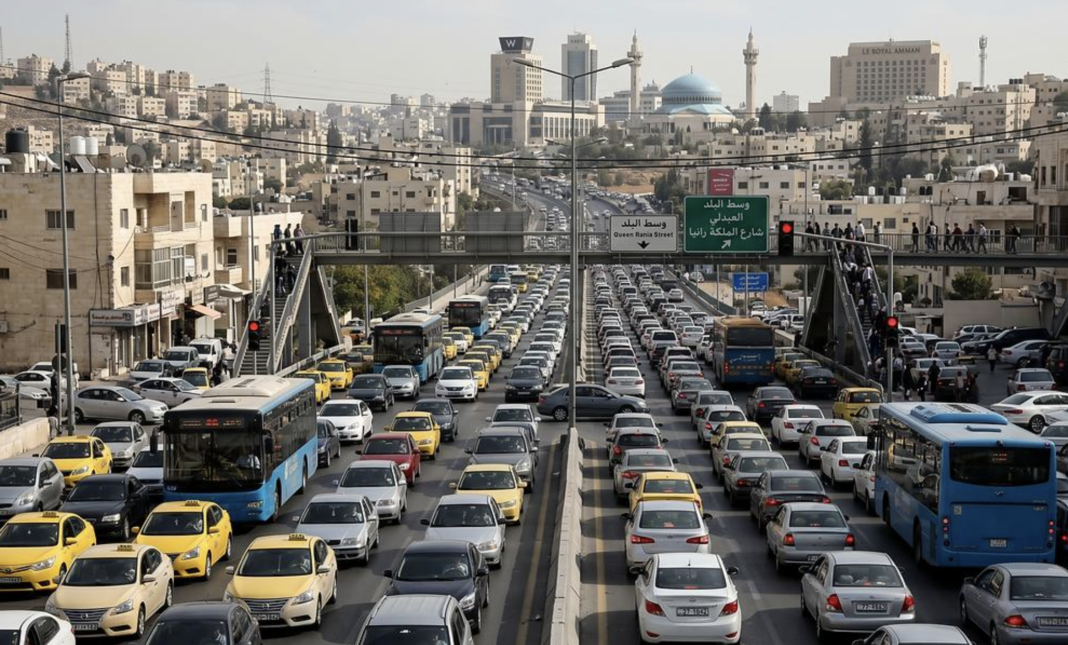
A journey across Amman that should take fifteen minutes can easily consume an hour. For millions of residents of Jordan’s capital, traffic congestion is no longer an occasional inconvenience. It has become part of everyday life, consuming time, money, health and patience. But I believe we are looking at the problem from the wrong direction.
Amman’s traffic crisis is not simply about narrow streets, inadequate infrastructure or too many cars. It is also about how we think about car ownership, how we define social status and why we continue to resist public transportation even as our roads become increasingly congested.
As an environmental specialist working in Jordan, I see this as a public health, environmental and cultural challenge. Building another bridge or widening another road will not solve it. We need to change our relationship with the private car.
The environmental cost of Amman’s love affair with cars
Amman has grown from a modest regional centre into a sprawling metropolitan area with more than 4 million residents. Its expansion has outpaced the development of public transportation, creating neighbourhoods where owning a private vehicle often seems unavoidable.
More than 1.5 million vehicles, representing over 70% of Jordan’s registered vehicles according to the figures examined in my research, are concentrated in Amman. An additional 200,000 vehicles enter the metropolitan area daily from surrounding governorates during peak periods. The environmental consequences are serious.
Traffic congestion increases fuel consumption, prolongs exposure to vehicle exhaust and contributes to concentrations of fine particulate matter and nitrogen oxides associated with respiratory and cardiovascular disease.
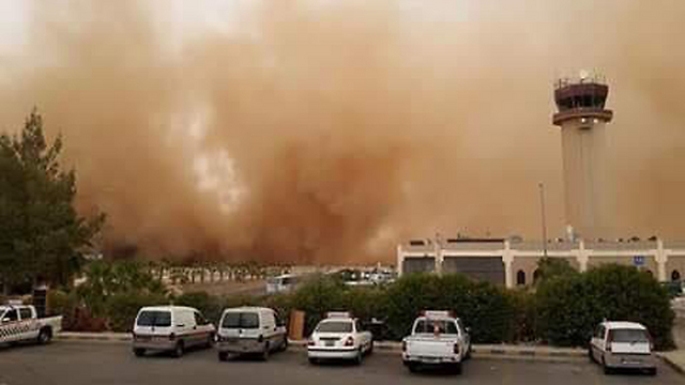
Air pollution is not an abstract environmental issue. It affects the health of children walking to school, older people living beside busy roads and commuters spending hours inside their vehicles. The World Health Organization estimates that air pollution contributes to approximately seven million premature deaths worldwide annually.
In Amman, air-quality assessments have identified particulate pollution exceeding WHO guideline levels. My research examines evidence suggesting that some concentrations can exceed those limits by as much as 250%.
Studies elsewhere reinforce the health risks. Research in the Greater Toronto and Hamilton Area estimated that congestion-related fine particulate pollution contributed to approximately 206 deaths annually, with associated mortality costs estimated at $1.3 billion.
The comparison matters because it demonstrates that traffic congestion is not just a question of lost productivity. It carries measurable human and economic costs. Green Prophet has followed Amman’s struggle with transportation for years. As early as 2009, its reporting on the difficulties of walking through Amman described dangerous streets, inadequate sidewalks and a city increasingly dominated by private vehicles. Nearly two decades later, the underlying problem remains.
Why do we need to own a car?
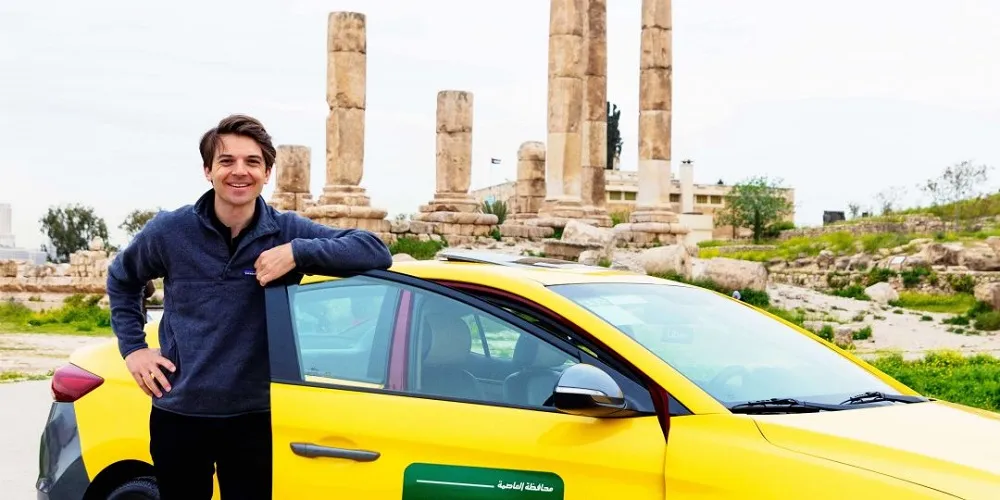
There is a psychological dimension to transportation that I believe policymakers have underestimated. Researchers use the term car pride to describe the emotional satisfaction and social status associated with owning and driving a vehicle.
A study by Zhao and Zhao involving 1,389 respondents in Shanghai found that car pride was associated with greater car use and ownership of newer, more expensive and luxury vehicles. These associations were largely independent of socioeconomic characteristics.
Although this research was conducted in China, it offers a useful framework for understanding behaviour in Jordan. In our society, owning a car can represent independence, achievement, financial success and social acceptance. For some people, the vehicle they drive becomes part of their identity.
This creates a difficult contradiction. Families may devote substantial portions of their income to purchasing, financing, licensing, maintaining and fuelling vehicles, even when those expenses place significant pressure on household finances. The social value attached to a car may outweigh its economic practicality.
Economists describe a related phenomenon as the demonstration effect, in which individuals imitate the consumption patterns of people they perceive as more successful. In Jordan, I believe this helps explain why private car ownership remains so desirable, even as congestion worsens and the cost of living increases.
My research also examines the prevalence of single-occupancy vehicles. Figures suggesting that approximately 90% of cars during peak periods carry only the driver illustrate the inefficiency of moving enormous numbers of people in separate vehicles.
We are consuming fuel, occupying valuable road space and contributing to air pollution, often to transport just one person. But we cannot blame citizens alone. Public transportation must offer a genuinely attractive alternative before we can reasonably expect people to abandon their cars.
Amman’s bus revolution is already underway
Jordan has made important progress in developing public transportation. Amman’s Bus Rapid Transit system, or BRT, began operations in 2021 and expanded substantially through 2024.
The approximately 25-kilometre network uses dedicated lanes, major terminals and connections with feeder services to move passengers more efficiently through the capital.
Planning estimates examined in my research indicate that the system could accommodate as many as 315,000 passengers daily using a fleet of 140 articulated buses, with the potential to reduce annual greenhouse gas emissions by approximately 48,000 tonnes of carbon dioxide equivalent.
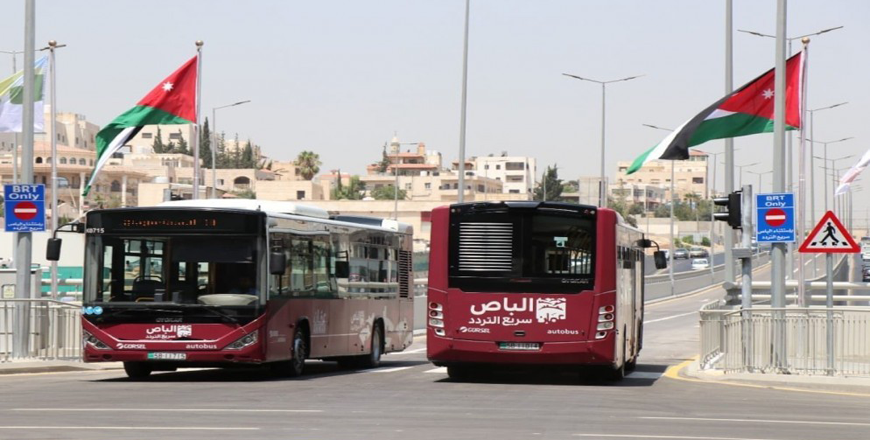
These figures describe projected capacity and environmental benefits, rather than confirmed daily ridership or achieved emissions reductions. The project has a complicated history.
Green Prophet reported on Jordan’s ambitious BRT plans in 2011, when officials hoped that dedicated bus lanes would help alleviate congestion. Later that year, the project was suspended amid concerns about costs and implementation.
The delays illustrate something important. Public transportation requires more than engineering expertise. It requires political commitment, institutional coordination and public confidence. Even when new infrastructure is built, motorists do not automatically abandon their cars.
Research on traffic conditions around the Yajouz intersection demonstrates this difficulty. Before BRT construction, peak-hour traffic volumes reached 7,192 vehicles per hour. During construction, volumes fell to 5,162. After construction, they increased to 7,461 vehicles per hour. The figures suggest that traffic demand can return even after major infrastructure changes.
Studies examining traffic composition also found passenger cars representing more than 80% of vehicles during several project phases.
The lesson is clear. A successful transportation network is not measured simply by kilometres of dedicated bus lanes. We must measure how many people actually change their travel habits.
Jordan’s growing public transportation network
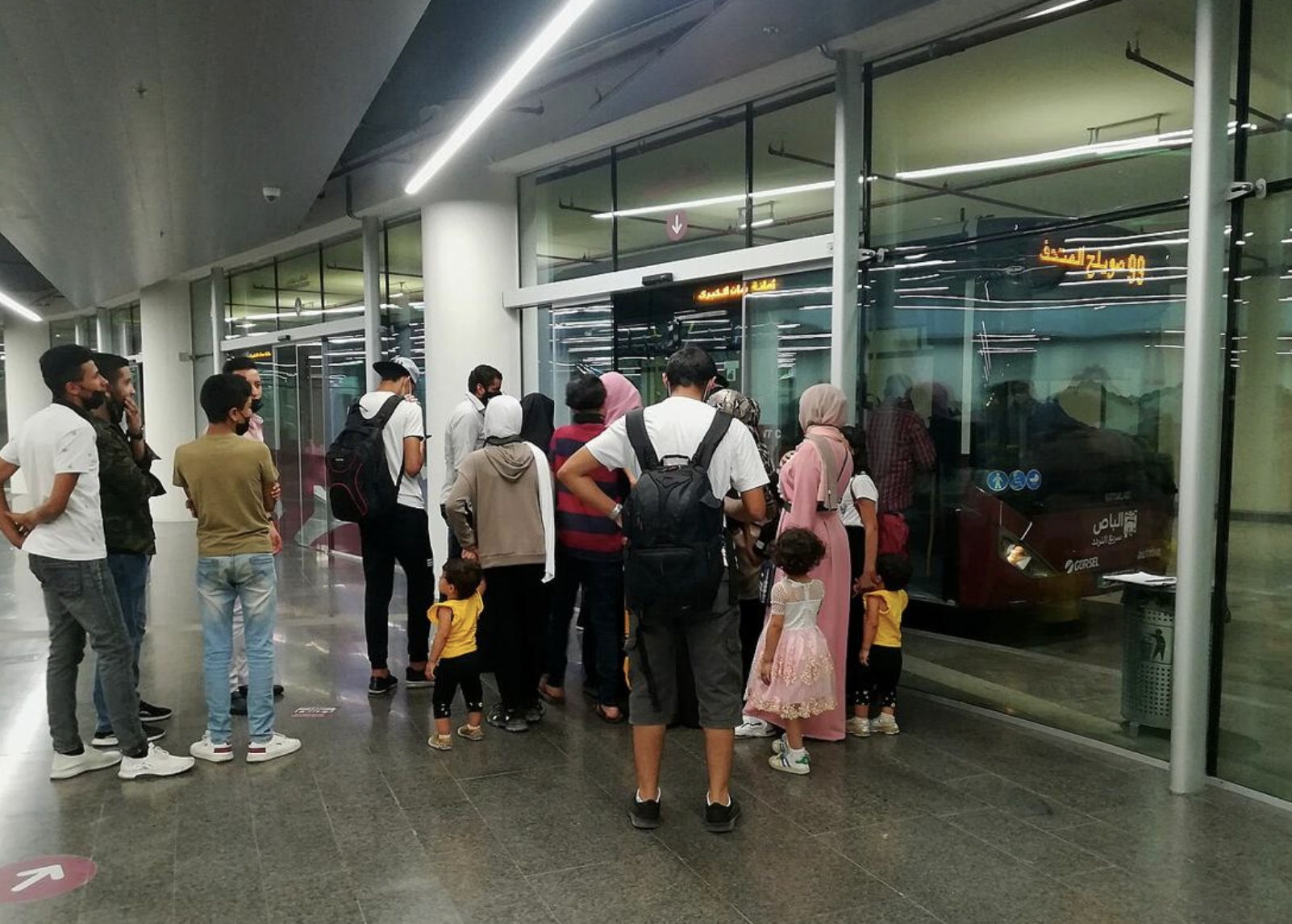
Other developments offer reasons for optimism. The Bus Amman network, managed through the Integrated Multi-Transport Alliance, reportedly transported approximately 43 million passengers across 73 routes in 2025, with a reported daily average of around 177,000 passengers.
Jordan is also moving away from a fragmented public transport structure in which approximately 84% of transport services were individually owned, toward more organized management with scheduled services and clearer performance expectations.
In 2026, the government approved a second phase of its inter-governorate regular public transportation project.
The planned network includes 210 buses across nine routes, connecting Amman with governorates including Ma’an, Tafilah and Ajloun. Its projected daily capacity is approximately 15,000 passengers. There are also larger transportation ambitions.
A Jordanian-Emirati partnership is advancing plans for a 360-kilometre railway linking the Port of Aqaba with mining and industrial areas, with an estimated investment of $2.3 billion. These projects are significant, but they are not yet sufficient.
Many residential neighbourhoods still lack reliable connections to public transportation. Service frequency and operating hours can be inadequate, while transfers between buses, taxis and other modes remain inconvenient. If taking the bus requires substantially more effort than driving, people will continue to drive.
Changing the culture of transportation
I believe Jordan needs a cultural transformation alongside its infrastructure investments. We must begin by redefining social prestige. Why should ownership of an expensive car be considered a greater achievement than making an environmentally responsible transportation choice? Why should travelling by bus carry a social stigma?
Environmental responsibility, economic awareness and consideration for public health should become positive markers of civic identity. This transformation requires education and public engagement, but awareness campaigns alone will not be enough.
We must connect environmental awareness to policies that make sustainable choices convenient and rewarding. Carpooling programmes, for example, could be encouraged among employees, university students and government institutions.
Employers could offer incentives to workers who share vehicles or use public transportation. Schools and universities could help young people understand the environmental and financial consequences of car dependence before their transportation habits become established.
Green Prophet previously reported how teenagers in Amman turned an unused BRT lane into a space for cycling.
That story illustrates how strong the demand for safer alternatives can be, particularly among young people. The challenge is to make those alternatives permanent, safe and practical.
Building neighbourhoods around people, not cars
Changing attitudes will accomplish little if Amman’s physical environment continues to discourage public transportation, walking and cycling. We need to rethink the relationship between urban development and mobility.
New residential areas, industrial zones and commercial districts should be connected to public transportation corridors from the beginning. Bus fleets must expand, service frequencies must improve and operating hours should reflect the needs of workers and families.
Digital systems can make public transportation easier to use through real-time vehicle tracking, electronic ticketing and integrated payment systems.
I also support longer-term investment in rail and metro infrastructure where feasibility and demand justify it.
International experience with transit-oriented development offers another important lesson. When housing, shops, offices and public services are concentrated around transportation hubs, residents can accomplish more without relying on private vehicles.
Amman’s geography presents challenges, with steep hills and fragmented urban development. But these conditions make integrated planning more necessary, not less.
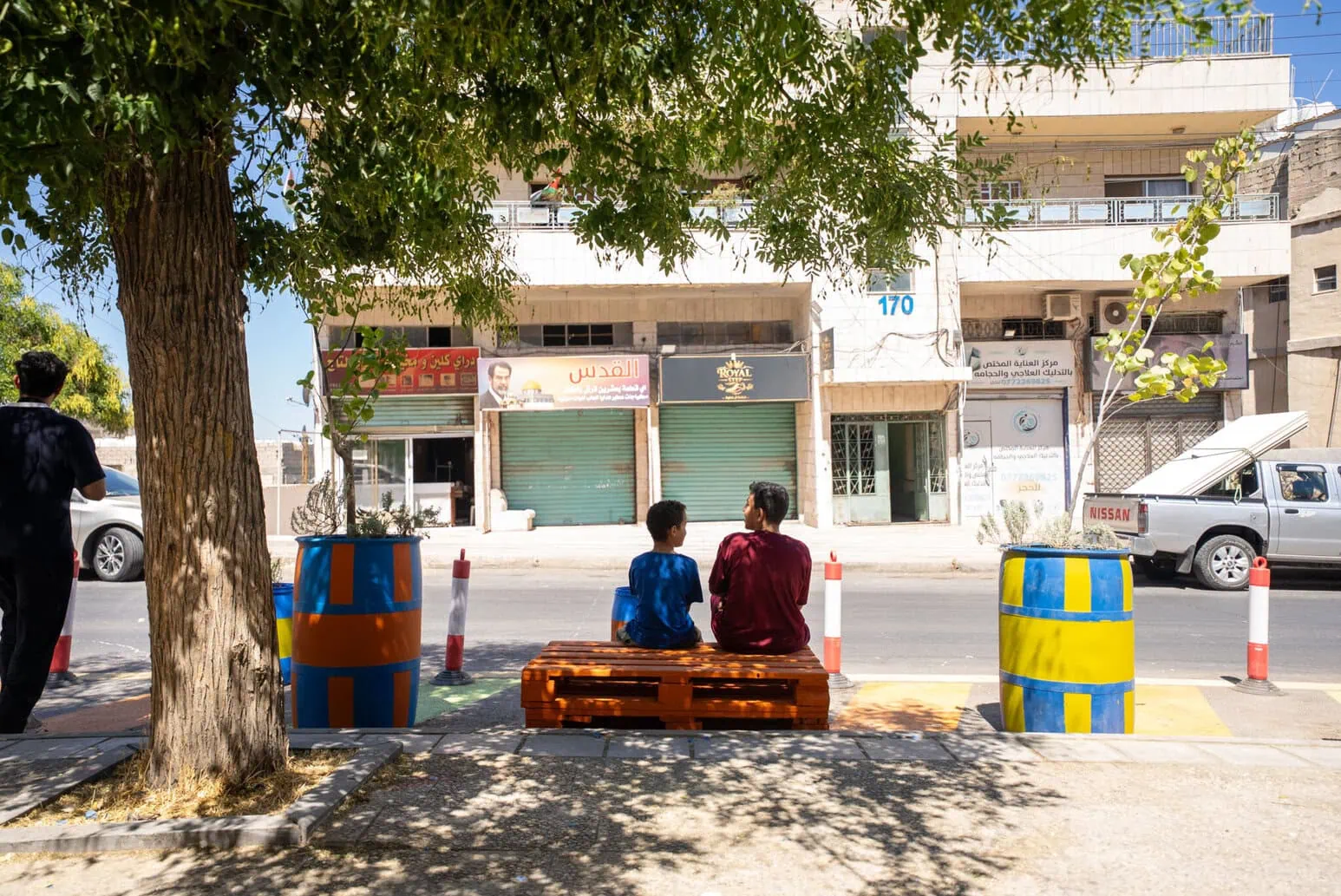
Encouragingly, new urban projects are beginning to address pedestrian accessibility and public space.
Green Prophet recently examined a C40-backed initiative to make Amman more walkable, including efforts to improve urban conditions along Al-Taj Street. These initiatives may appear small compared with railway projects or major highways, but making neighbourhoods walkable is an essential part of sustainable transportation.
Pollution must have a cost
I believe voluntary behavioural change must be supported by clear environmental legislation. Jordan could pilot low-emission zones in parts of Amman, including Abdoun and Shmeisani, restricting access for the most polluting vehicles while encouraging cleaner alternatives.
Parking incentives for hybrid and electric vehicles could accompany such policies.
Environmental fees on older, heavily polluting vehicles could generate revenue for a national air-quality fund supporting sustainable transportation. Fuel subsidy reforms could also redirect public resources toward affordable, reliable bus services.
However, regulations must be designed carefully to avoid unfairly burdening lower-income households that cannot easily replace their vehicles. A sustainable transportation policy must also be socially equitable.
Decentralizing government services and economic activity would help reduce the number of people who must travel into Amman every day.
If employment, public administration and commercial services were distributed more effectively across Jordan’s governorates, some commuting pressure could be reduced.
These are not isolated policies. They require coordination between the ministries responsible for transportation, environment and public works, local municipalities, the private sector and civil society.
A national vision needs public participation
Jordan’s Economic Modernization Vision recognizes transportation and logistics as important drivers of national development. King Abdullah II’s government has emphasized the sector’s role in economic growth, competitiveness and infrastructure modernization.
I see clear evidence of official interest in transportation reform and environmental protection. The greatest challenge is translating these commitments into practical results quickly enough to improve people’s lives.
Transport policy cannot be separated from environmental policy. Air pollution cannot be addressed without considering road infrastructure, energy consumption, urban planning and household behaviour.
Equally, we cannot expect government institutions to accomplish this transformation without public participation. Citizens must become partners in shaping the future of transportation.
That means understanding why people resist public transport, listening to the needs of commuters and developing services that are reliable enough to earn their trust.
The future of Amman is not another highway
Amman’s traffic crisis reflects a collision between rapid urban growth, environmental pressures and deeply rooted cultural attitudes. It has become a crisis that consumes time, health, economic resources and quality of life. But I believe change is possible.
Our success should not be measured by how many roads we widen or how many bridges we construct. It should be measured by cleaner air, shorter journeys, healthier communities and a transportation system that people genuinely want to use.
We need to move from the idea of my car, my identity to public transportation, my choice.
The environment, like justice and security, cannot be protected through good intentions alone. It requires laws that connect behaviour with responsibility, institutions capable of enforcing those laws and citizens willing to participate. The future I envision for Amman is not simply a city with less traffic.
It is a city where environmental responsibility becomes a source of pride, public transportation becomes a preferred choice and sustainable mobility improves life for everyone.
Dr. Osama Gazal is an environmental modelling and climate change specialist and environmental consultant working in Jordan’s water and environment sector.


