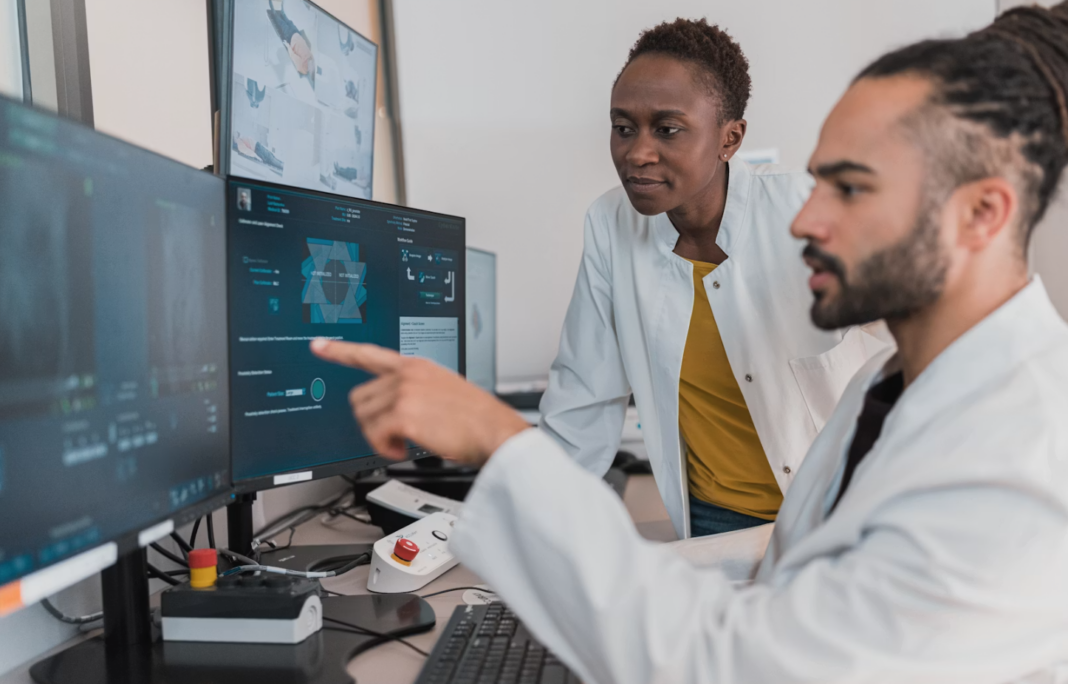

As governments race to adopt AI, the biggest lesson from Canada’s healthcare transformation may have little to do with technology—and everything to do with people.
Can artificial intelligence save public healthcare?
It is one of the defining questions facing governments today. From Canada and the United States to the Netherlands, Switzerland and the Gulf states, healthcare systems are confronting the same uncomfortable reality: people are living longer, clinicians are burning out, costs continue to climb, and patients expect faster access to care than ever before.
Technology companies promise AI-powered solutions for everything from physician note-taking to cancer detection. Governments are investing billions into electronic health records, predictive analytics and virtual care. The UAE alone has made artificial intelligence a national priority, hoping to build one of the world’s most digitally advanced healthcare systems.
Yet after more than three decades working inside healthcare transformation, Alison MacDonald, Senior Vice President and European Lead at Nordic Global, offers a surprisingly restrained perspective: “AI isn’t a silver bullet,” she tells Green Prophet.
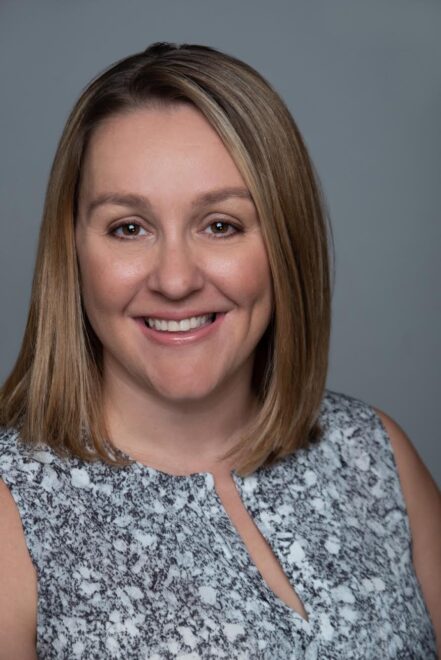
It’s an observation that may sound almost old-fashioned amid today’s excitement surrounding generative AI, but it reflects one of the most important lessons emerging from Canada’s digital healthcare journey: technology succeeds only when it supports clinicians rather than attempting to replace them.

That philosophy has guided Healthtech, the Canadian healthcare consultancy acquired by Nordic in 2019 after nearly forty years helping hospitals modernize their digital infrastructure. Since then, Nordic has expanded that expertise internationally, adding operations in the Netherlands and growing across Switzerland, Ireland and the United Kingdom while helping healthcare organizations navigate one of the most significant technological transitions in modern medicine.
Canada’s greatest healthcare export may be experience
Canada is rarely held up as a model of healthcare efficiency today. Long waits for specialists, shortages of family physicians and fragmented provincial systems have become common topics of political debate and complaints by Canadians who can’t find family physicians to take them on. But MacDonald believes those very challenges have transformed Canada into something unexpected: one of the world’s largest living laboratories for healthcare modernization.
Every publicly funded healthcare system is wrestling with remarkably similar problems, she says. “Our challenges aren’t unique,” she says. “When I moved to Ireland, I experienced many of the same issues Canadians talk about every day, such as difficulty in finding a family doctor, pressure on hospitals and long waits for care.”
Across Europe, governments are experimenting with new ways to stretch limited healthcare resources.
The Netherlands has embraced telehealth and digital-first primary care for many routine consultations. AI-powered chatbots increasingly help direct patients to appropriate services before they enter already crowded waiting rooms. Nurse practitioners are assuming greater responsibility for routine care that once required physicians.
Rather than viewing these innovations as threats to traditional medicine, MacDonald sees them as practical responses to changing demographics: “The question isn’t whether technology replaces healthcare professionals,” she says. “It’s how technology helps patients reach the right healthcare professional at the right time,” she says.
That distinction matters because healthcare isn’t manufacturing, where automation often replaces repetitive labour. Medicine remains deeply human and relies on clinical judgment, empathy and trust which can never be automated.
Instead, digital transformation succeeds when it removes friction from the system, allowing clinicians to spend more time treating patients and less time navigating administrative complexity.
The Alberta experiment

Few Canadian healthcare projects have attracted as much international attention as Alberta’s province-wide implementation of Epic, one of the world’s leading electronic health record platforms.
Unlike many jurisdictions where hospitals adopted different systems over time, Alberta pursued a single integrated electronic record spanning acute care, correctional facilities and much of primary care. The result was something healthcare leaders have pursued for decades: a patient record capable of following people throughout much of their healthcare journey.
The project has also been associated with measurable improvements, including reductions in medication-related safety incidents and unnecessary duplicate testing, demonstrating that digital transformation can improve both patient safety and operational efficiency when implemented thoughtfully.
Ontario chose a different path, where hospitals were allowed greater flexibility in selecting electronic health record systems, creating a more fragmented digital landscape. Considerable effort has since focused on connecting those systems through interoperability initiatives and regional health information exchanges.
Neither model is presented as universally right or wrong but instead, they offer valuable lessons for governments everywhere now investing heavily in digital healthcare infrastructure.
“The important thing,” says MacDonald, “is remembering that technology alone doesn’t solve fragmentation. You have to redesign workflows, engage clinicians and think about the patient journey from beginning to end.”
Why Nordic approaches healthcare differently
Many of the world’s largest consulting firms have built substantial healthcare consulting practices, says MacDonald who worked as a nurse before joining Nordic 12 years ago.
Nordic takes a different approach. She says its expertise didn’t grow out of finance, audit or general management consulting, it grew out of hospitals.
Across Nordic’s Canadian and international teams are physicians, nurses, radiologists, laboratory technologists, clinical informaticists, project leaders and healthcare operations specialists who have spent much of their careers inside healthcare organizations rather than studying them from the outside and that difference shapes how projects begin.
Rather than asking which technology should be implemented first, Nordic starts with a more fundamental question:mHow do clinicians actually deliver care today?
One principle guides nearly every engagement.
“It has to be clinically led and operationally delivered,” MacDonald explains. The technology comes later.
Healthcare organizations often focus on purchasing software before understanding how doctors, nurses and patients actually interact. Nordic reverses that process, bringing frontline clinicians into system design from the earliest stages. That emphasis on change management may be one of the least glamorous, and most important, aspects of successful digital transformation.
Many failed healthcare IT projects were not technological failures at all, they were people failures, she says.
Hospitals introduced new systems without giving clinicians enough ownership over how those systems would fit into everyday practice. MacDonald believes the balance must always remain between people, process and technology. If one of those three pillars is missing, even sophisticated software can struggle to deliver meaningful improvements.
Sustainable healthcare isn’t just about greener hospitals. It’s about building resilient systems that reduce waste, improve access, make better use of scarce clinical resources, and continue delivering quality care for decades. That’s where digital transformation and AI can make their greatest impact. We spoke with Nordic’s Alison MacDonald about how the company is helping healthcare systems in Canada and Europe modernize while keeping patients, and clinicians, at the center of the transformation.
Q&A: Alison MacDonald on AI, digital transformation and the future of healthcare
Green Prophet: Artificial intelligence is dominating healthcare conversations. Where do you see the biggest opportunities—and where is the hype getting ahead of reality?
Alison MacDonald: AI is incredibly exciting, but it isn’t a silver bullet. Healthcare is far more complex than many other industries because every decision ultimately affects a person’s wellbeing. The biggest opportunities today are reducing administrative burden, supporting clinicians and improving workflows. AI can help physicians with documentation, assist radiologists in identifying areas that need closer review, and help patients navigate the healthcare system more efficiently. But I don’t see AI replacing clinicians. It should help healthcare professionals spend more time caring for patients, not less.
Green Prophet: Canada has become something of a test case for digital healthcare. What lessons are other countries beginning to notice?
MacDonald: Every public healthcare system is facing similar pressures, aging populations, workforce shortages, increasing demand and rising costs. Canada isn’t unique in that respect. What’s valuable is the experience we’ve accumulated implementing digital transformation at scale. Every country can learn from what has worked, and what hasn’t.
One of the biggest lessons is that technology alone doesn’t solve problems. Successful transformation requires balancing people, processes and technology. If clinicians aren’t involved from the beginning, adoption becomes much more difficult.
Green Prophet: Nordic competes with firms like Deloitte, EY and other global consultancies. What makes your approach different?
MacDonald: Our roots are different. Many consulting firms built healthcare practices after developing expertise in finance, audit or management consulting.
Healthcare is all we do. Our teams include nurses, physicians, radiologists, laboratory specialists, clinical informaticists and people who have spent their careers inside hospitals. I’m a nurse myself. We understand the realities clinicians face because many of us have lived them.
One principle we’ve followed throughout my career is that projects must be clinically led and operationally delivered. Technology should support care—not dictate it.
Green Prophet: Governments have invested billions in electronic health records. What’s next?
MacDonald: The next phase is optimization. Most organizations already have significant technology investments. Now they’re asking, “How do we get greater value from what we’ve already built?” That’s where we’re seeing opportunities around digital front doors (which may be run by AI), patient engagement, workflow redesign, AI-assisted scheduling, reducing duplicate testing and making existing systems work together more effectively.
Green Prophet: Countries like the UAE are investing heavily in AI and digital health. Can they leapfrog some of the mistakes made elsewhere?
MacDonald: Absolutely. Emerging healthcare systems have an opportunity to learn from decades of experience in Canada, Europe and the United States. Technology continues to evolve, but the fundamentals don’t change. Keep patients at the centre, involve clinicians early, and remember that transformation is as much about people as it is about software.
Healthcare sustainability means building systems that last
Green Prophet often writes about sustainability through the lens of climate, cities and infrastructure, but healthcare deserves to be part of that conversation. But a sustainable healthcare system isn’t simply one that consumes fewer resources, it is one that continues delivering quality care despite growing demand.
Digital transformation can contribute in surprisingly practical ways: Telehealth reduces unnecessary travel for routine appointments. Better-connected health records reduce duplicate laboratory tests and medical imaging. AI-assisted documentation such as note-taking, allows clinicians to spend more time with patients instead of keyboards. Smarter scheduling and digital patient intake reduce bottlenecks before they become costly delays.
Every unnecessary appointment avoided, every duplicated test eliminated and every hour returned to frontline clinicians makes healthcare systems more resilient.
For Nordic, these are not futuristic ambitions. They are measurable improvements that build on decades of practical implementation across Canadian healthcare organizations while increasingly informing projects throughout Europe.
As governments invest billions in artificial intelligence and healthcare modernization, the lesson from Canada is surprisingly simple. After forty years helping Canadian healthcare organizations navigate digital transformation, and now bringing those lessons to Europe and beyond, Nordic believes the future of healthcare won’t be defined by artificial intelligence alone. It will be shaped by how thoughtfully people, technology and clinical experience come together to deliver better care.
“I don’t think AI will eliminate healthcare jobs,” says MacDonald, who sees a bright future for young people in healthtech: “If anything, it will open new career paths for young people who want to combine healthcare with technology and innovation.”
The future of healthcare will be built not only by governments and hospitals, but also by entrepreneurs, researchers and technology companies developing the next generation of digital health tools. After helping modernize some of Canada’s largest public healthcare systems, Nordic is now looking to work with innovators of every size, providing the clinical know-how, technical expertise and implementation experience to help turn bold ideas into technologies that improve patient care around the world.