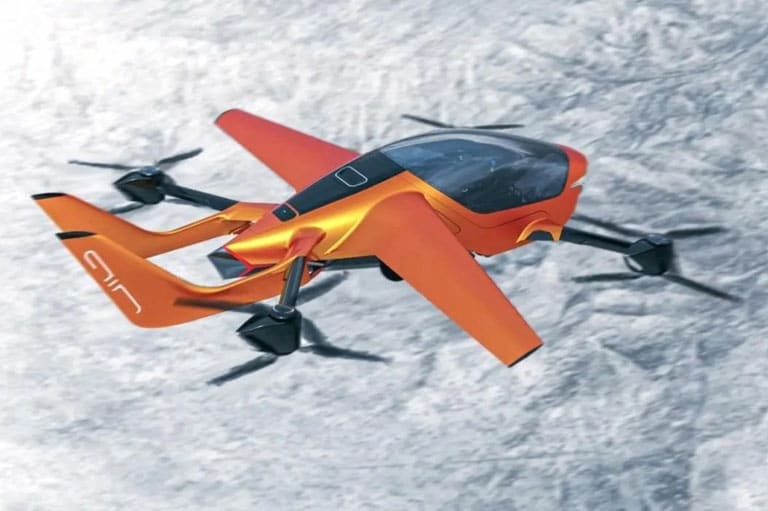

Before AI became the two letters attached to practically every new technology story, we were writing about personal transport companies with the audacious idea that ordinary people might one day keep a small electric aircraft at home. Yes, we were all made to be Jetsons.
Back in those days, AIR ONE looked like a giant drone crossed with a sports car. It was one of those technology stories where you wondered: is this actually the future, or is somebody just very good at making renderings? Now it looks like a private jet.
AIR has now opened a new US headquarters and production center in Florida and says it currently has eight aircraft in production, including manned and unmanned versions. So how close are we to actually flying one?
AIR ONE isn’t technically a flying car or a private jet for hire. It is a two-seat electric vertical takeoff and landing aircraft, or eVTOL. Eight electric motors allow it to take off vertically, while wings provide lift in forward flight.
AIR lists a range of roughly 60 to 100 miles, up to an hour of flight time and a cruise speed of up to 115 knots. Its wings fold so the aircraft can be stored at home and transported by trailer.
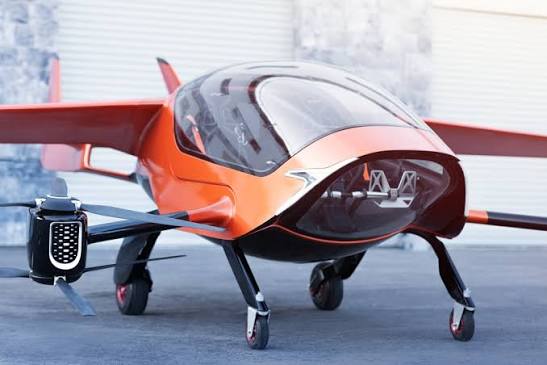
That makes AIR unusual in the eVTOL race. Companies such as Joby and Archer are largely developing electric air taxis. AIR’s original dream was personal aviation: an aircraft you own and fly yourself. But, and it’s a big one, you will still need a pilot license.
AIR ONE first flew as a full-scale prototype in Israel in 2022, initially hovering and later successfully transitioning from vertical takeoff into forward flight. Since then, much of AIR’s attention has shifted to America. Its new 20,000-plus-square-foot US headquarters in Florida is expected to support flight testing, aircraft assembly, manufacturing and engineering.
AIR isn’t Israel’s first attempt to electrify aviation. Eviation, founded in Israel in 2015, went after a much bigger prize with Alice, a nine-passenger electric commuter airplane designed to replace conventional regional aircraft. Alice flew in 2022, but Eviation paused development in 2025 while looking for additional funding and partners.

AIR ONE is tackling the problem from almost the opposite direction: make the aircraft smaller, lighter and personal, give it vertical takeoff and landing, and limit flights to around an hour. Whether that less ambitious approach ultimately makes electric aviation more achievable may be one of the more interesting experiments now underway in the industry.
“Advanced air mobility is entering a new phase in the United States, moving from aircraft development toward production and real-world operations,” AIR CEO and co-founder Rani Plaut said when announcing the expansion.
AIR has also been quietly building a second business: unmanned electric aircraft for cargo, logistics and defense. That may prove critical. Cargo aircraft can reach customers while AIR continues the much more difficult process of certifying a personal passenger aircraft.
AIR says its current production line contains eight aircraft. The manned AIR ONEs will be used for flight testing and certification, while unmanned versions are being built to fulfill existing customer orders.
AIR raised $23 million in a Series A round in 2025, led by Entrée Capital, with participation from Dr. Shmuel Harlap, one of Mobileye’s early investors. Israeli financial publication Calcalist reported that the round brought AIR’s total funding to approximately $50 million.
The company has also begun generating revenue from its unmanned aircraft business, an important distinction from the many flying-car startups that have spent years consuming venture capital without delivering aircraft. But plenty of people still want a personal electric aircraft. Can you actually buy one?
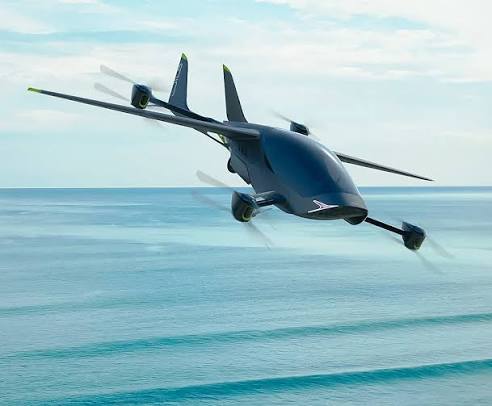
The biggest hurdle now isn’t proving that AIR ONE can fly. It is certification. To that end, AIR is pursuing a US pathway under the FAA’s expanded MOSAIC rules for Light Sport Aircraft. The regulatory changes provide a potential pathway for aircraft such as AIR ONE, but the aircraft itself remains certification pending.
AIR says its goal is to turn its vision for “personal and commercial electric aviation into reality.” The flying car isn’t here yet, but the factory is getting ready to build them.