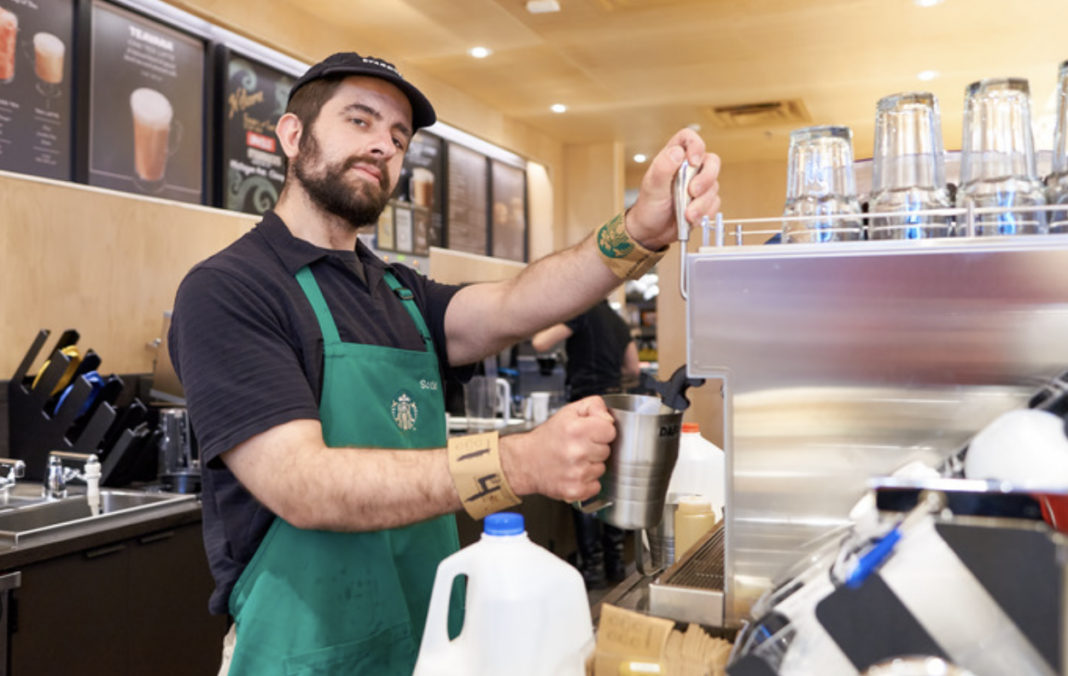

People keep asking us: Does Starbucks use lab-grown milk? Does Starbucks use fermented milk? Is there Perfect Day milk hiding in your latte under another name? The answer, as of September 2026, appears to be no. Starbucks is not currently serving precision-fermented, animal-free or “lab-grown” milk as a standard milk option.
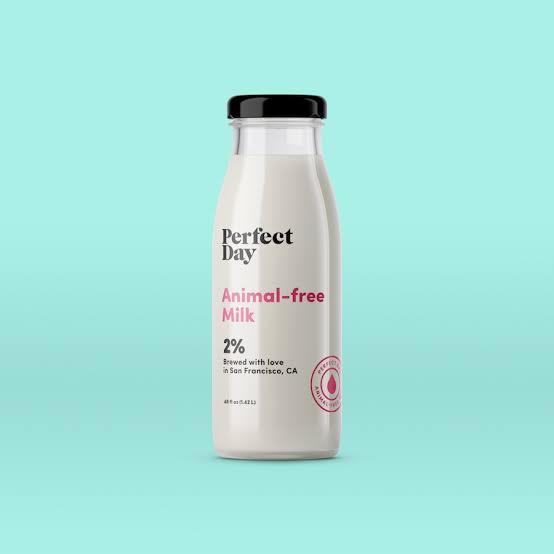
But Starbucks has tried it before. In 2021, Starbucks tested animal-free milk made with Perfect Day protein at two locations near Seattle, in Bellevue and Renton, Washington. Perfect Day uses precision fermentation to make whey protein without raising a cow. For the Starbucks experiment, a special 2% “barista blend” was developed that could be steamed and foamed for coffee drinks.
That test seems to be the source of some of the confusion today. What milk does Starbucks use now?
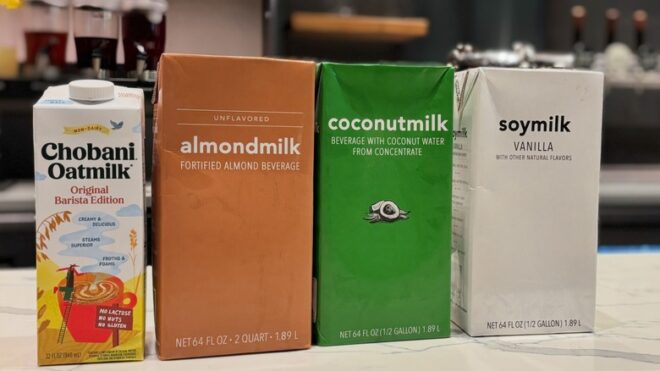
Starbucks’ current U.S. information lists conventional dairy milk alongside oat, almond, coconut and soy milk. Starbucks (sued for over pricing specialty milk) also offers a protein-boosted milk made from 2% dairy milk and whey protein. The company does not identify that whey as precision-fermented or animal-free.
We could find no current Starbucks announcement, ingredient information or menu listing showing Perfect Day, Remilk, Imagindairy or another precision-fermentation dairy protein being served in Starbucks drinks. But we have reached out to them for comment, and plans.
We did not find evidence that Starbucks is quietly buying one of these proteins and selling it under a bespoke or white-label milk brand. That’s worth saying because the technology itself hasn’t disappeared.
Perfect Day continues to market an animal-free barista milk for food service. Green Prophet has also been following companies such as Remilk and Imagindairy as precision-fermented dairy moves from food-tech laboratories toward real commercial products.
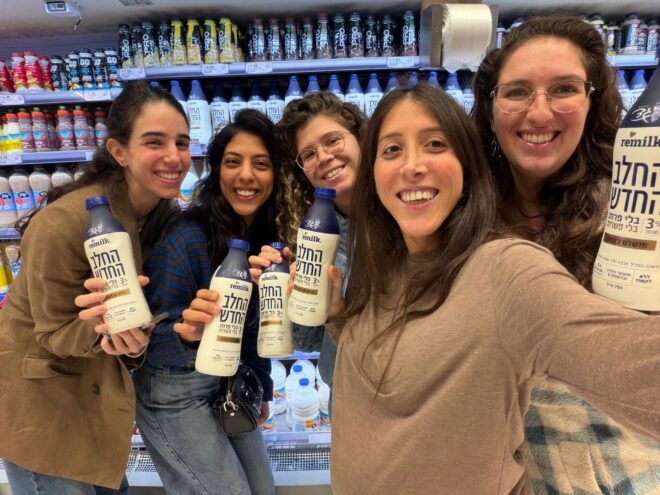
“Lab-grown milk” isn’t quite the right term, incidentally. These companies generally use precision fermentation: microorganisms are programmed to produce proteins such as whey that are essentially the same proteins found in cow’s milk. No cow needs to produce the protein. The end product is milky, but also tastes a bit like coconut.
And animal-free does not necessarily mean safe for someone with a dairy allergy. If the product contains milk proteins such as whey, those proteins can still be allergens. So if you’re standing at Starbucks wondering whether your latte contains secret lab milk, the evidence today says no.
Related: Olive oil and coffee trends
For my money, there’s another option. Buy good fair-trade coffee, grind enough for one cup, put it in a simple drip filter and pour hot water over it. It takes about three minutes and, honestly, makes some of the best coffee there is. No line, no app and no need to investigate the biotechnology behind your latte. And you can milk the cow or goat living in your backyard.