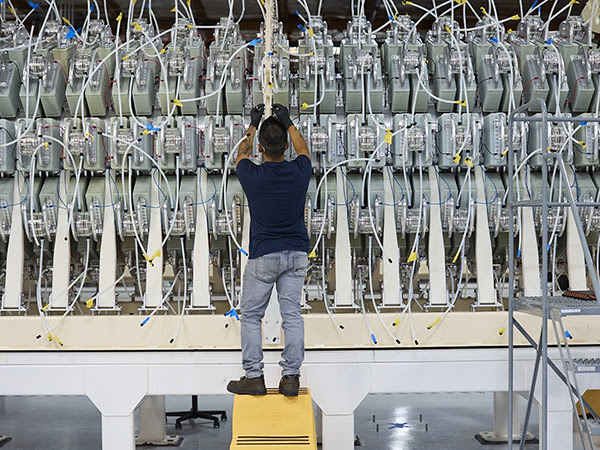
A billion dollar bet on Pacific Fusion’s New Mexico campus

A billion-dollar fusion experiment is taking shape in the New Mexico desert, where startup Pacific Fusion hopes to achieve something no fusion facility has yet managed: produce more fusion energy than the total energy stored in the machine.

Pacific Fusion broke ground in August on a $1 billion Research and Manufacturing Campus at Mesa del Sol in Albuquerque. The roughly 225,000-square-foot facility will house its Demonstration System, which the company says is designed to achieve “net facility gain” by 2030.
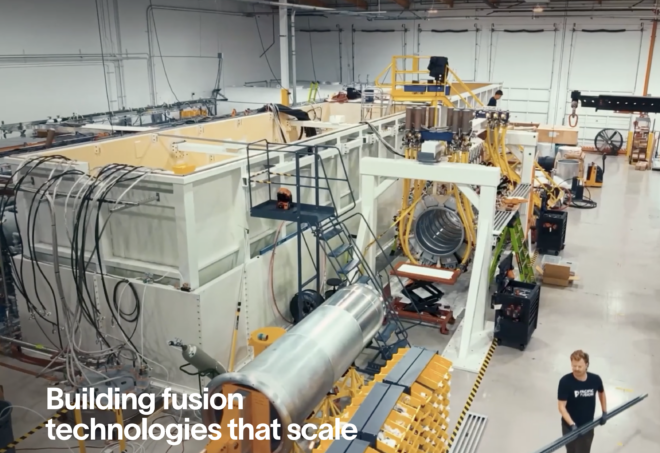
Pacific Fusion opens billion dollar plant in New Mexico

Related: what is fusion and why it’s so hard

Scientists at the National Ignition Facility in California made history in 2022 when a fusion reaction produced more energy than the laser energy delivered to its tiny fuel target. But powering the lasers and the rest of the facility required far more energy than the reaction produced. Pacific Fusion wants to push past that barrier and demonstrate a gain across the machine itself.

Instead of using giant lasers, Pacific Fusion plans to fire enormous pulses of electricity at tiny capsules of hydrogen fuel. More than 150 truck-sized pulser modules will work together, creating powerful magnetic fields that rapidly compress the fuel and produce fusion. The company says each module can deliver more than a terawatt of peak power in a pulse lasting about 100 nanoseconds.

If it works, it would be another important step toward the decades-old dream of producing electricity using the same basic reaction that powers the sun.

The project is expected to create more than 200 permanent jobs in New Mexico, along with hundreds of construction and supply-chain jobs.

But this isn’t only a clean-energy story: Pacific Fusion has also signed an agreement with the US National Nuclear Security Administration to collaborate on high-energy-density science and research related to America’s nuclear stockpile. The Demonstration System is expected to produce fusion bursts exceeding 100 megajoules, creating conditions useful for both fusion research and national-security experiments.
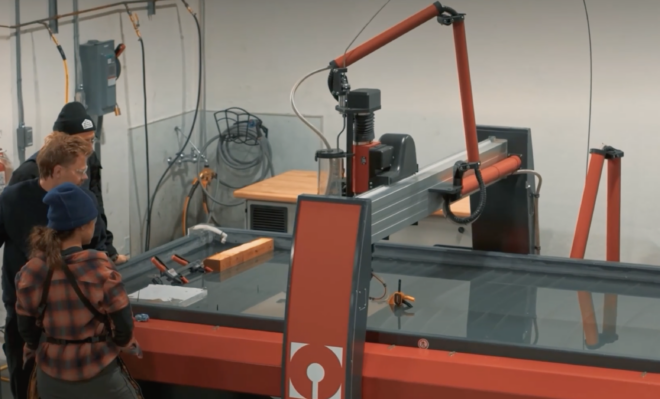
Pacific Fusion tools

That dual purpose puts Pacific Fusion at an interesting intersection of climate technology and defence even though some environmentalists believe nuclear energy is an enemy to nature and humanity.

Money is now pouring into the energy sector. Fusion companies raised a record $4.48 billion worldwide in the year to July 2026, bringing reported investment since 2021 to more than $14 billion. That’s because the promise is enormous: abundant, carbon-free energy without burning fossil fuels that could power our jet packs, and EVs.

But to date fusion remains experimental, and turning a spectacular laboratory reaction into an economical power station operating day after day is an entirely different challenge. Pacific Fusion isn’t building that power station yet but it’s building the machine it hopes will prove one can eventually be built.


Karin Kloosterman
Karin Kloostermanhttp://www.greenprophet.com
Karin Kloosterman is an award-winning journalist, innovation strategist, and founder of Green Prophet, one of the Middle East’s pioneering sustainability platforms. She has ranked in the Top 10 of Verizon innovation competitions, participated in NASA-linked challenges, and spoken worldwide on climate, food security, and future resilience. With an IoT technology patent, features in Canada’s National Post, and leadership inside teams building next-generation agricultural and planetary systems — including Mars-farming concepts — Karin operates at the intersection of storytelling, science, and systems change. She doesn’t report on the future – she helps design it. Reach out directly to [email protected]

Read More

TRENDING

Xcimer is the Denver-based startup that could put Saudi Arabia out of business

An American company can collapse OPEC if they can prove their approach to unlimited energy works.

China is one step closer to making artificial sun

Nuclear fusion is often described as the holy grail of clean energy: a process that could one day provide abundant power without carbon emissions or long-lived radioactive waste. It has so much promise, but it's difficult. This article on fusion explains why. But turning fusion into a practical energy source depends on solving a set of extremely difficult physics problems. One of the most important is how to keep plasma — a super-hot, electrically charged gas — dense, stable, and confined long enough to produce useful energy.

Italy’s energy company Eni adds Italian flair for design in industrial fusion reactor

“We have the chance to explore new forms of storytelling about energy,” adds Italo Rota, co-designer of the installation. “We believe that design is a powerful tool to turn a narration into an experience, allowing visitors to sense the energy while being surrounded by a unique atmosphere.”

Eni Bets Big on Fusion and $1 Billion Deal with Commonwealth Fusion Systems to Power a Carbon-Free Future

The PPA further validates that CFS is on the most promising path to deliver commercial fusion power in the coming years. The company has demonstrated its capabilities by developing key advances in high-temperature superconducting magnets and sustaining its execution velocity in the construction of the SPARC fusion demonstration machine in Devens, Massachusetts.

Helion Energy, AI, and the New Cold Fusion War With China

Helion’s model plays to America's old strength: innovation through agility, not top-down megaprojects. Instead of waiting for 2050, Helion’s compact reactors aim to deliver electricity in a matter of years—and not just for cities, but for data centers, isolated industries, military bases, even disaster zones. Their current prototype, Polaris, is scheduled to fire in 2025. If Helion succeeds, it won’t just disrupt global energy. It could redraw the world map.

The Essential Guide To Sustainability in Project Management

Sustainability is an approach where businesses and individuals balance the environmental, social, and economic aspects of a project such that current and future stakeholders are not overburdened with the impacts of the project in future.

Yerukim Forms a New Green Economy Where the Money is Really Green

The Yerukim members who pick up the recyclables get to keep the monetary reward, the public earns "green" bills that can be used in shops, and business owners get to be associated with environmentalism.

Choosing Riyadh over Dubai? What Investors Should Know

Saudi Arabia is deploying capital at unmatched scale to catalyze tourism and advanced industry while rewiring its power-and-water backbone. The investable frontier is widening—especially in renewables, grid storage, water efficiency/desal retrofits, and hospitality operating platforms. Prudent investors will insist on phased delivery, enforceable KPIs (energy, water, biodiversity), and RHQ/zone compliance—while pricing political-economy and reputational risks alongside growth upside.

Sell your cooking oil for biodiesel money

Want to make money on old french fry oil? Sell it.

Qatar Alternative Energy Summit Pairs Investors And Innovators

Alternative energy investors and innovators can meet n' greet in Doha, Qatar March 16 and 17.

Here’s How To Implement The Four Pillars Of Employee Engagement

If you throw a party for your work team and they are vegans, don't make it a barbecue. Know the sustainability values of your team to boost moral and retain good people.

Locals From Rishon Fight IKEA

Big Box stores are a pretty new concept in Israel, and thank God that not every Israeli city wants them in their backyard. A word from someone who has see the beautiful farmland around her hometown Newmarket, Ontario stripped and converted into vulgar strip malls of big box shops: they have no place in a healthy and sustainable town or city.

The Jewish National Fund Meets An Inconvenient Truth

According to the JNF, it has transformed thousands of acres of barren land into green forests in Israel. They state that each person emits about 23 tons of carbon per year, estimating that each tree planted can absorb one ton of carbon in its lifetime. That's a whole lot of trees you'd need to be planting. Could so many fit in Israel?

Popular Categories