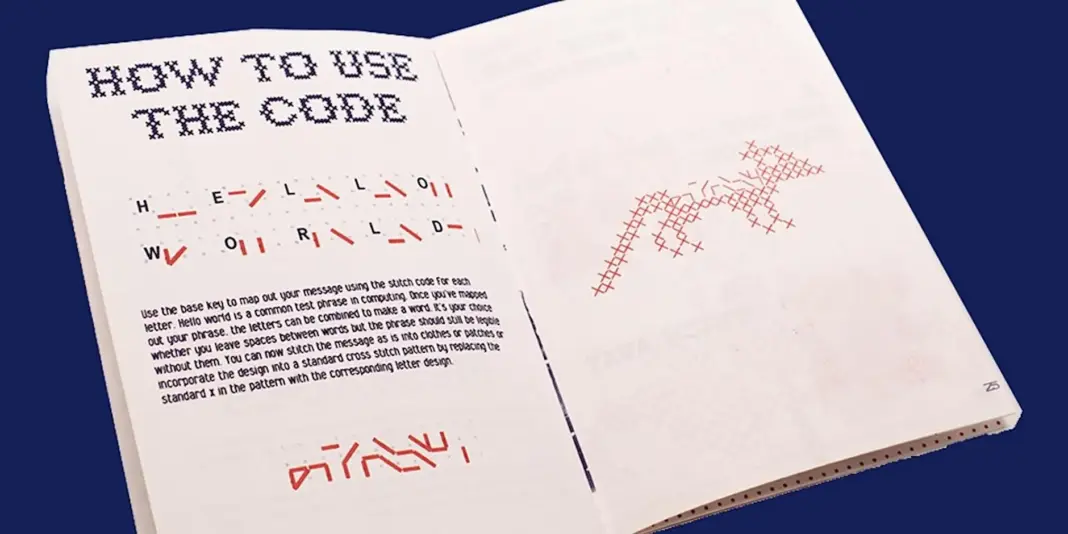

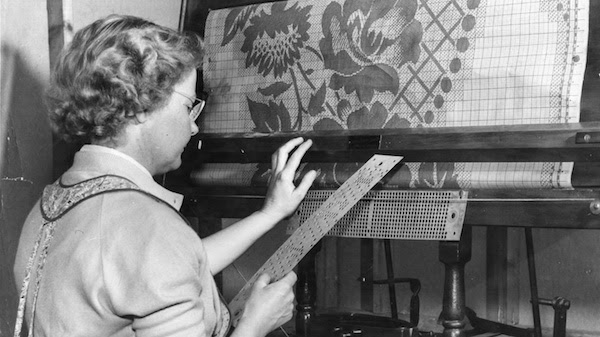
There was a time when information was stored in cloth. Patterns could tell you where someone came from, whether she was married, what family she belonged to, or which stories and symbols mattered to her community. Long before QR codes and password managers, hands were already turning information into patterns.
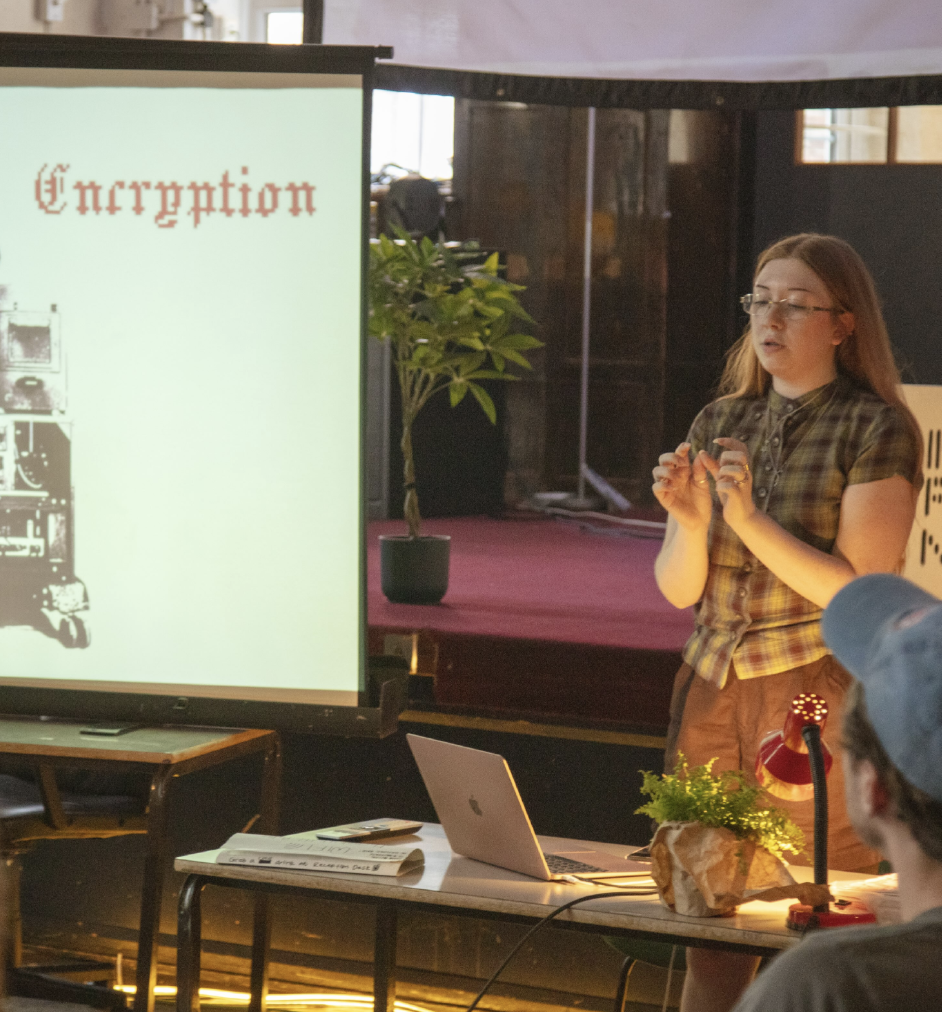
Now artist and designer Sophie Nadel is taking that idea somewhere wonderfully strange: encryption by embroidery. It’s being hosted at the same location that brings you Loom, the handmade history behind binary code.
At an upcoming workshop in London, Nadel will teach participants to translate an address, password, secret phrase or other piece of information into a hidden code and then stitch it into clothing or another personal object. A good way to store your bitcoin passwords?
The Encrypted Embroidery Workshop takes place September 19 at Perfect Lives, 278 Hackney Road in London, as part of the public programme for Softwear, an apexart exhibition curated by Kira Wainstein.
Participants can bring something they want to embroider. Needles, scissors and other craft materials are supplied. The idea is simple: turn information into a textile code that means something to you while remaining unreadable to anyone who doesn’t know how to decipher it.
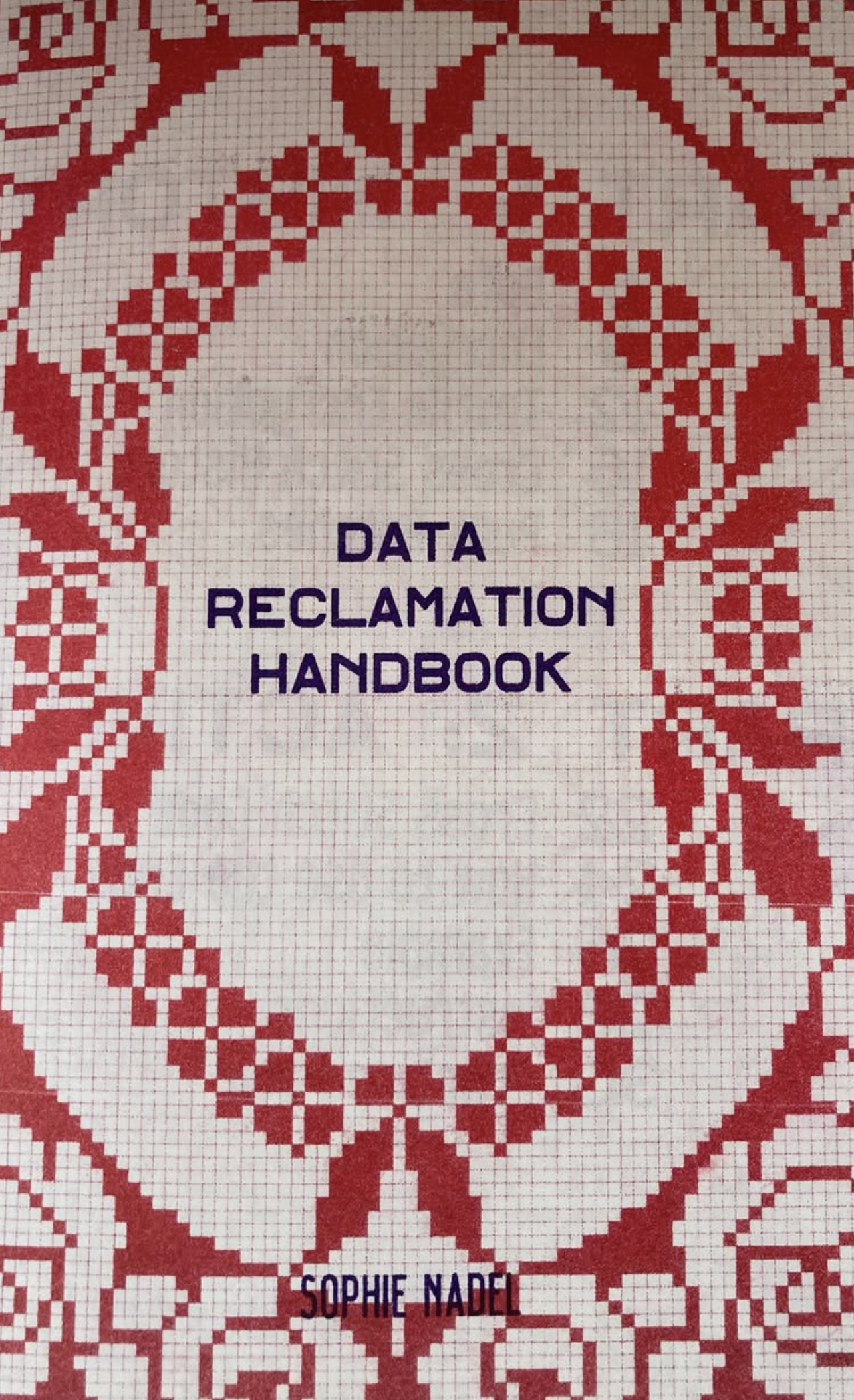
In a world where almost everything we say, search, photograph and remember is stored somewhere on someone’s server, or which is being digested by AI, there is something appealing about putting a secret back into an object you can hold.
Weaving has always carried information
The idea immediately reminded me of visiting Bedouin women weavers in Lakia, in Israel’s Negev desert. The women there explained how weaving and embroidery were not simply decorative activities. Different patterns and techniques could carry stories and ideas, while the physical process of stitching and weaving was also used to teach children dexterity — how to work carefully and skillfully with their fingers.

Stories have long travelled through weaving, embroidery, carpets and clothing, particularly in cultures where knowledge has traditionally passed orally and through objects rather than books.
A pattern doesn’t have to be “writing” in the conventional sense to contain information.
Nadel’s project takes that ancient idea and turns it toward one of the defining problems of the digital age: who gets to read our information?
A password nobody can hack online
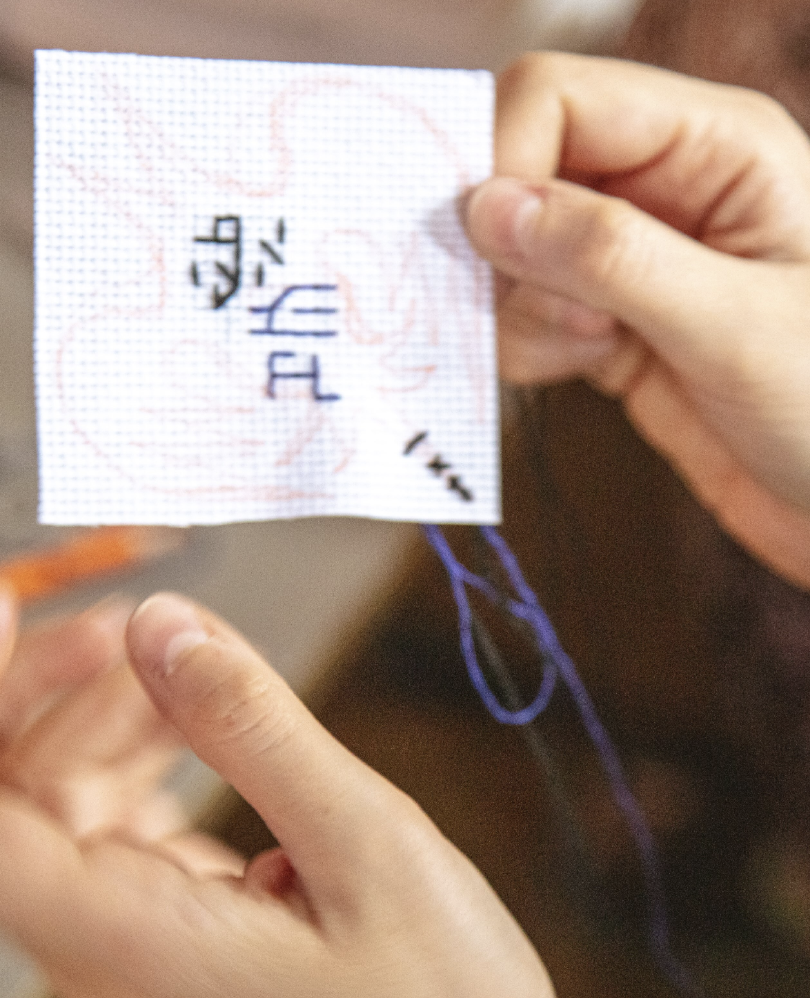
Nadel’s work combines creative technology, textiles and design research. She uses digital and textile techniques to make technology more tangible and understandable, often by slowing technological processes down enough that people can actually see what is happening. There is also a feminist undertone to the workshop.
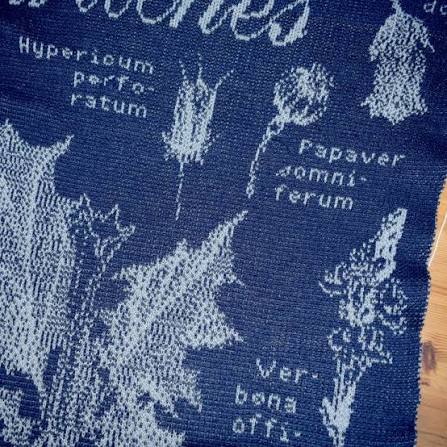
Embroidery has historically been dismissed as “women’s work”, while computer science, cryptography and engineering developed into highly valued technical professions. But textile production itself has an unexpectedly close relationship with computing. Patterns, grids, sequences and instructions are fundamental to both.
An embroidered code makes that connection visible. It also produces an amusing inversion of modern cybersecurity. Instead of storing a secret in the cloud, you might stitch it into the inside of your jacket.
Of course, nobody should start embroidering their banking password onto the outside of a tote bag. But as an artwork, and as a way of thinking about information, Nadel’s workshop asks an interesting question. Does everything we want to remember have to live on a computer?