Israeli Hydrogen Startup H2Pro Are Trying to Solve Clean Energy’s Hardest Problem

Solar panels are getting cheaper. Wind farms are growing, batteries are improving. But one giant piece of the renewable energy puzzle remains: how do you power steel plants, cargo ships, fertilizer factories (the big energy consumers), and heavy industry without fossil fuels?

A growing group of Israeli startups believes hydrogen could be part of the answer.

Hydrogen is the most abundant element in the universe, and it’s available in water and in the air. It’s the building block of life. But producing it cleanly is difficult and expensive. Saudi Arabia has invested in green hydrogen but for the most part it is not financially viable. It was like biogas in the early days – more expensive than fossil fuels.

Most hydrogen today is made from natural gas, which releases carbon emissions. So-called “green hydrogen” is created using renewable electricity to split water into hydrogen and oxygen, but the process remains costly. That’s where some new Israeli innovation is stepping in.

H2Pro Wants to Reinvent Electrolysis
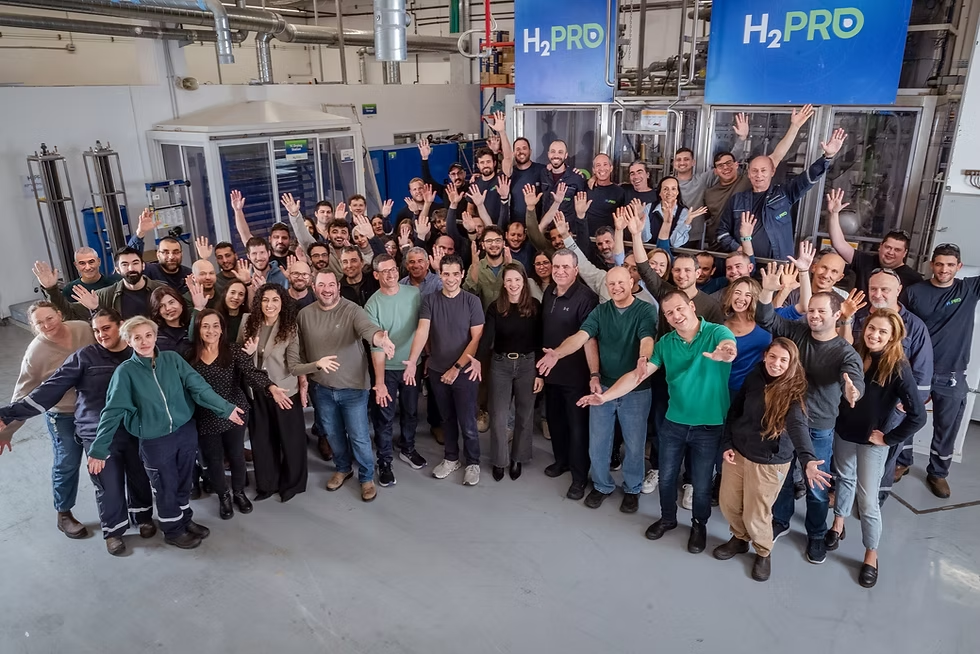
The H2Pro team in Caesaria. They are financed by companies such as Tamaresk.
The H2Pro team in Caesaria. They are financed by companies such as Temasek.

Caesarea-based H2Pro has become one of Israel’s most closely watched hydrogen companies. Founded on research from the Technion (Israel’s version of MIT), the startup is developing a membrane-free process called Decoupled Water Electrolysis (DWE). Instead of generating hydrogen and oxygen simultaneously, H2Pro separates the reactions into different stages. The company says this could reduce costs, improve safety, and allow systems to work more easily with intermittent solar and wind power. When it comes to membrane tech, Israel is a leader having developed earliest technologies in desalination to solve major freshwater problems.

The company has attracted backing from major investors including Breakthrough Energy Ventures, the climate fund founded by Bill Gates, along with industrial partners such as Sumitomo, ArcelorMittal, and Temasek, a multi-billion dollar company that owns Singapore airlines. H2Pro has raised more than $100 million USD and is moving from pilot projects toward commercial-scale deployments.

Taking Israeli Hydrogen Abroad
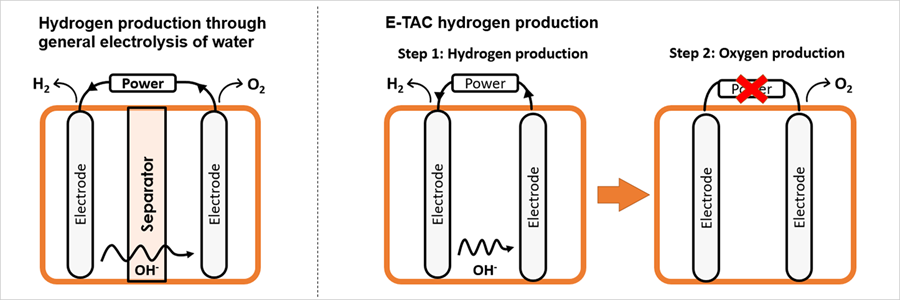
H2Pro has developed a new water electrolysis for hydrogen production, the "E-TAC" (*1). In conventional water electrolysis, oxygen and hydrogen are generated at the same time, hence it is necessary to prevent them from mixing together.
How the e-tac, H2pro tech works

One of the most interesting developments is happening far from Israel.

This year H2Pro partnered with Doral Hydrogen on a solar-powered hydrogen project in Spain designed to run entirely off-grid. The first phase combines solar power with a 5-megawatt hydrogen system and is intended to demonstrate that hydrogen production can operate directly from renewable energy without batteries or grid backup.

If successful, the model could be attractive for sunny regions across the Middle East and North Africa where solar resources are abundant.

Why Hydrogen Matters

Hydrogen is unlikely to replace every gasoline car or home heating system. Batteries coupled with solar power panels, geothermal energy collection systems or wind energy trubines, are often more efficient for those jobs. But hydrogen has advantages where batteries struggle: steel manufacturing, fertilizer production, shipping, aviation fuels, seasonal energy storage, and industrial heat.

The challenge here is cost.

For years, the hydrogen industry has chased the goal of producing green hydrogen for about $1 per kilogram. Israeli startups are increasingly focused on making that target realistic through new electrolyzer designs, lower-cost materials, and systems that can operate flexibly alongside renewable energy.

Israel became a global cybersecurity hub. Then it helped reshape irrigation technology. Hydrogen may be one of the country’s next major climate-tech bets.


 

Karin Kloosterman
Karin Kloostermanhttp://www.greenprophet.com
Karin Kloosterman is an award-winning journalist, innovation strategist, and founder of Green Prophet, one of the Middle East’s pioneering sustainability platforms. She has ranked in the Top 10 of Verizon innovation competitions, participated in NASA-linked challenges, and spoken worldwide on climate, food security, and future resilience. With an IoT technology patent, features in Canada’s National Post, and leadership inside teams building next-generation agricultural and planetary systems — including Mars-farming concepts — Karin operates at the intersection of storytelling, science, and systems change. She doesn’t report on the future – she helps design it. Reach out directly to [email protected]

Read More

TRENDING

Collecting kinetic energy from roads; REPS turns traffic into a power plant

REPS announced a $23.6M equity financing round to scale...

Ferrari’s new electric Luce could change luxury EVs forever

Ferrari has finally done what many fans thought it never would: build a fully electric car. The new Ferrari Luce is not a quiet compromise or a small city EV. It is a massive, futuristic, high-performance machine with more than 1,000 horsepower, a price tag around $640,000, and styling that has already divided the internet.

How Truck Accidents Cause Catastrophic Injuries

  According to the National Safety Council, the year 2024...

Desalination experts debunk Aqua Solaire, the floating desalination barge

AI makes it easy to dream, develop, and create images of what could be world-changing ideas, until the reality sets in. A new project making the rounds is Aqua Solaire, an allged French concept for a solar-powered desalination vessel designed to bring drinking water to coastal communities facing drought, storms, and infrastructure failures.

The future of trucking and freight is electric and hydrogen

For years the freight industry tried to force a...

How to quiet noise from construction in your office

Streets need to be resurfaced in New York but the humming and grinding noise is unsettling. Noise is environmental pollution. 

EarthX and a blueprint for sustainable investing

Trammell S. Crow, a Dallas-based businessman and father of four, is focusing his efforts on impact investing, and media that focuses on saving the planet through EarthX.

Mining Afghanistan’s Mineral Discoveries Similar to Avatar

Now that American forces in Afghanistan are commemorating the longest period of any war that America has been involved in, including the 1965-73 Vietnam War, the recent discoveries of large and extremely valuable mineral and metal deposits may finally bring to light a reason to continue the presence of US fighting forces in this war torn and backward country.

From Pilot Plant to Global Stage: How Aduro Clean Technologies’ 2026 Expansion Signals a Turning Point for Chemical Recycling Investors Like Yazan Al Homsi

The company's Next Generation Process (NGP) Pilot Plant in London, Ontario, has officially moved into initial operating campaigns, generating the kind of structured, repeatable data that separates laboratory promise from commercial viability.

Nobul’s Regan McGee on Shareholder Value: “Complacency Is the Silent Killer” 

Why the governance framework designed to protect shareholders so...

Should You Invest in the Private Market?

startustartup Unlike public stock exchanges, which offer daily trading, strict...

How to build a 100-year-company

Kongō Gumi is a Japanese construction company, purportedly founded in 578 A.D., making it the world's oldest documented company. What can we learn about building sustainable businesses from them?

How AI Helps SaaS Companies Reduce Repetitive Customer Support Work

SaaS products are designed for large numbers of users with different levels of experience, and also in renewable energy.

Popular Categories