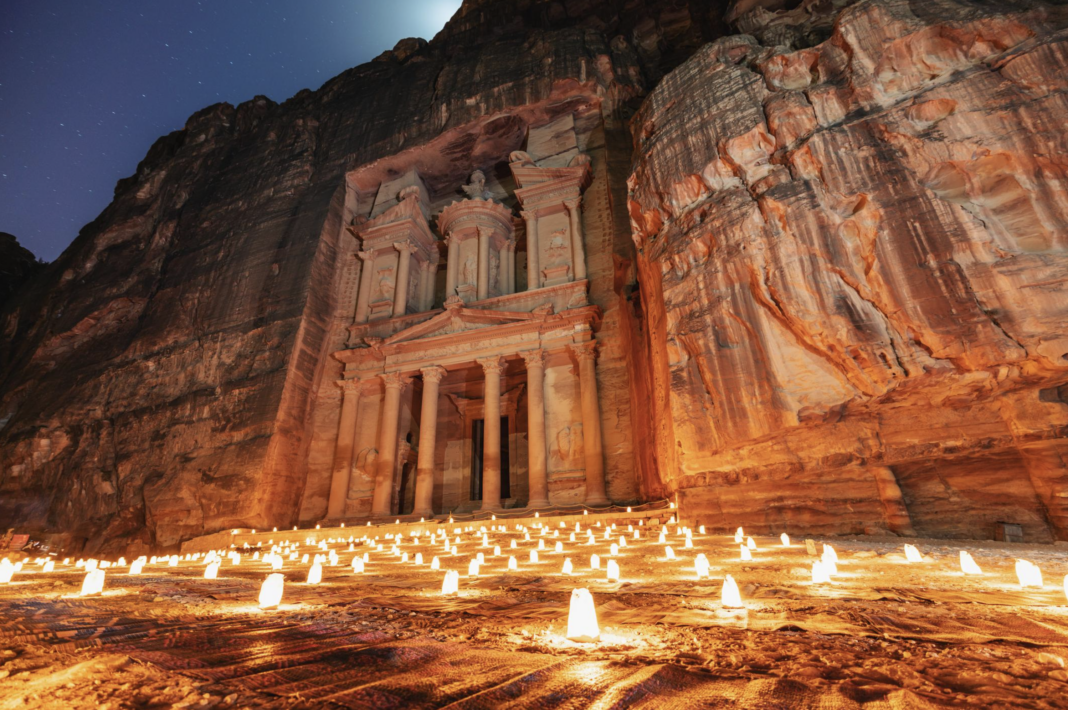

Visitors walking through Petra‘s narrow sandstone Siq at night are once again being greeted by thousands of candles leading toward Al Khazneh, the Treasury. But the famous archaeological site has added something decidedly modern to its ancient landscape: projection mapping, music and digital storytelling cast directly onto the 2,000-year-old monument.
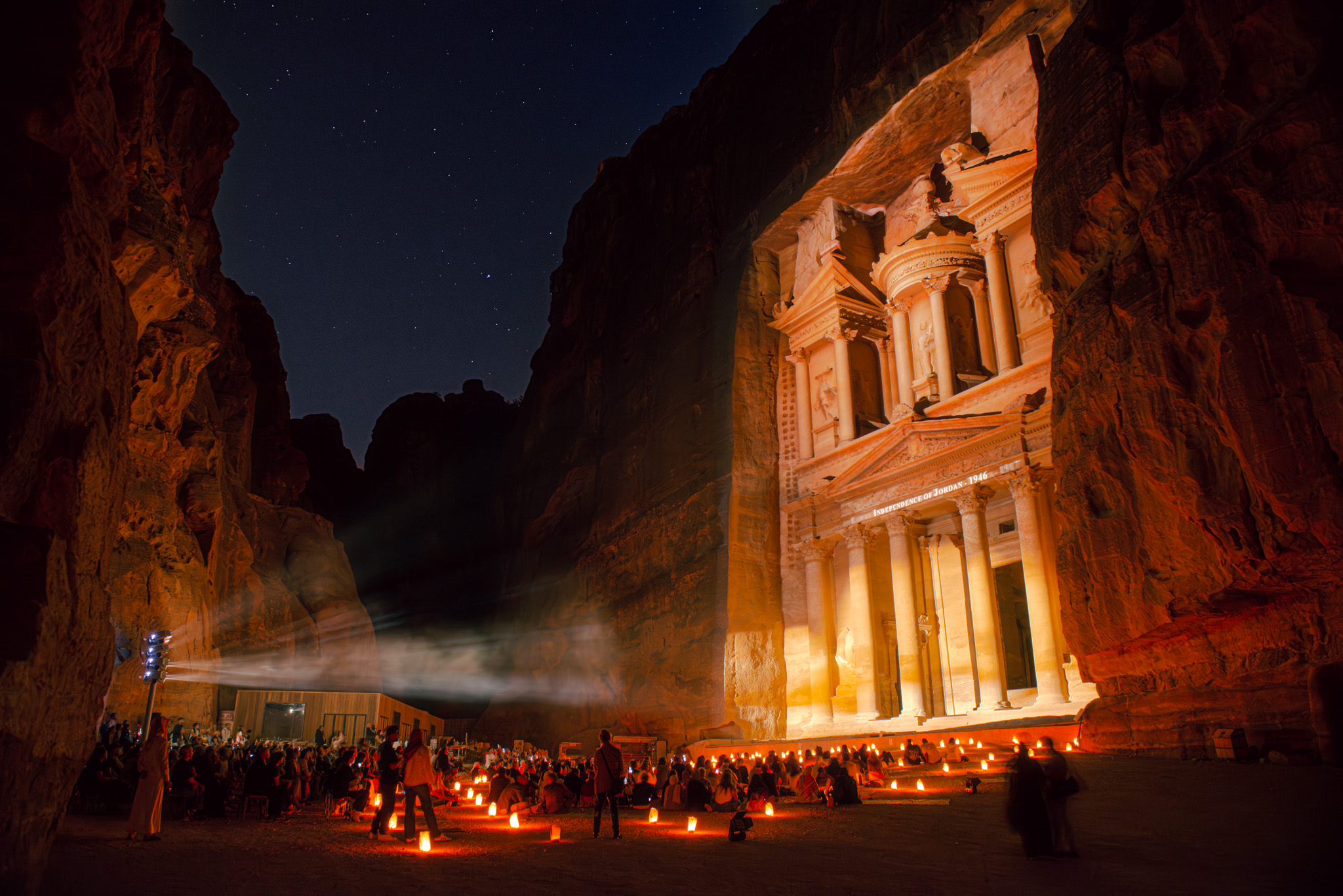
Petra by Night returned to its regular Sunday-to-Thursday schedule on September 13, 2026, following a period of reduced operations. The programme, first launched in 1998 and redesigned in May 2025, is part of a broader effort to make Jordan’s best-known attraction more appealing to international visitors. Yet the reopening comes at a difficult moment for tourism in the country.
According to Jordan’s Ministry of Tourism and Antiquities, Petra received 318,311 visitors during the first eight months of 2026, down 2.1% from the same period in 2025. International tourism fell 18%, while domestic visits increased by nearly 36%. September brought signs of improvement, with 43,901 visitors, although that was still approximately 8% below September 2025.
For Jordan, the stakes extend far beyond the Treasury’s famous façade. Tourism supports guides, hotels, restaurants, transportation operators and Bedouin communities throughout southern Jordan, including those working in nearby Wadi Rum.
Petra by Night gets a modern makeover
The revamped Petra by Night experience begins with a candlelit walk through the Siq, a dramatic natural canyon that leads into the ancient Nabataean city. At the end of the passage, visitors arrive at the Treasury, where projection mapping introduces stories about Nabataean history, trade routes and the civilization’s extraordinary engineering achievements.
The show now operates five evenings a week, Sunday through Thursday, from 8:30 PM until approximately 10:30 PM. Tickets cost 30 Jordanian dinars, with children under 10 admitted free. Visitors need a daytime Petra admission ticket or Jordan Pass to be eligible to purchase the separate evening ticket. As of November 2026, the operator says tickets are available in person at the Petra Visitor Centre, with advance online booking unavailable.
The new programme raises an interesting question for heritage tourism. Can digital technology make ancient monuments accessible to new generations without compromising their atmosphere or conservation? The organizers say the projection system follows applicable heritage protections, but managing visitor numbers, artificial lighting and the physical impact of tourism remains important.
Petra’s ancient secret was water, not treasure
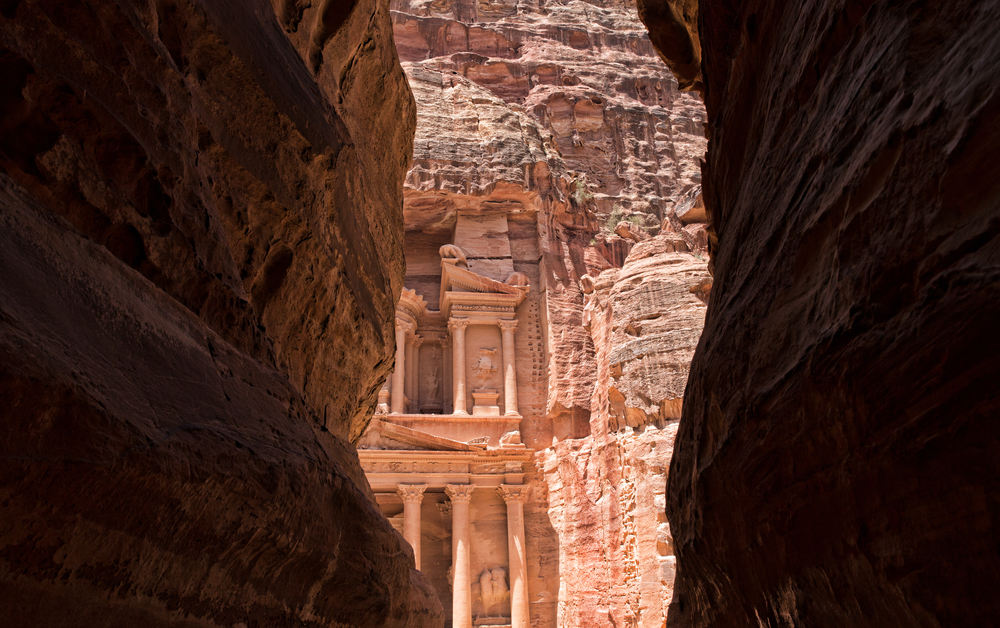
Most visitors recognize Petra from Indiana Jones and the Last Crusade, when Harrison Ford rides through the Siq toward the Treasury. But the real genius of Petra was not its elaborate rock-cut monuments. It was the ability of the Nabataeans to survive, farm and establish a major trading city in one of the driest regions of the Middle East.
In 2020, Green Prophet interviewed archaeologist Ueli Bellwald about Petra’s ancient water engineering. He described an elaborate system of channels, dams and more than 200 water-storage facilities with a combined capacity estimated at 40 million litres. Without its sophisticated flash-flood management systems, he explained, Petra would have struggled to survive the region’s winter rains.
The technology remains relevant today, particularly as Jordan faces severe water scarcity. Green Prophet has also examined how ancient Nabataean farming techniques are being revived to combat desertification, showing that the people who carved Petra into sandstone may still have lessons to teach modern environmental engineers.
Little Petra and a different kind of tourism

Visitors who travel beyond the Treasury discover a much larger archaeological landscape. The Royal Tombs, Roman-era theatre, temples and hilltop Monastery reveal the scale of the ancient city, while Little Petra, also known as Siq al-Barid, offers a quieter introduction to Nabataean architecture and caravan culture.
The region is also home to Bedouin communities whose relationships with the landscape predate modern tourism. In 2012, Green Prophet reported on Ghassab Al-Bedoul, a Bedouin who welcomed international travellers into his cave near Petra. His hospitality offered something radically different from a conventional hotel stay: an opportunity to experience local food, storytelling and daily life through a resident’s perspective.
Experiences like these offer a different model of tourism, one in which visitors spend money directly with local families and gain a deeper understanding of the region. They also raise questions about how traditional communities can maintain control over their livelihoods as Jordan invests in increasingly elaborate visitor attractions.
Wadi Rum and the challenge of protecting the desert
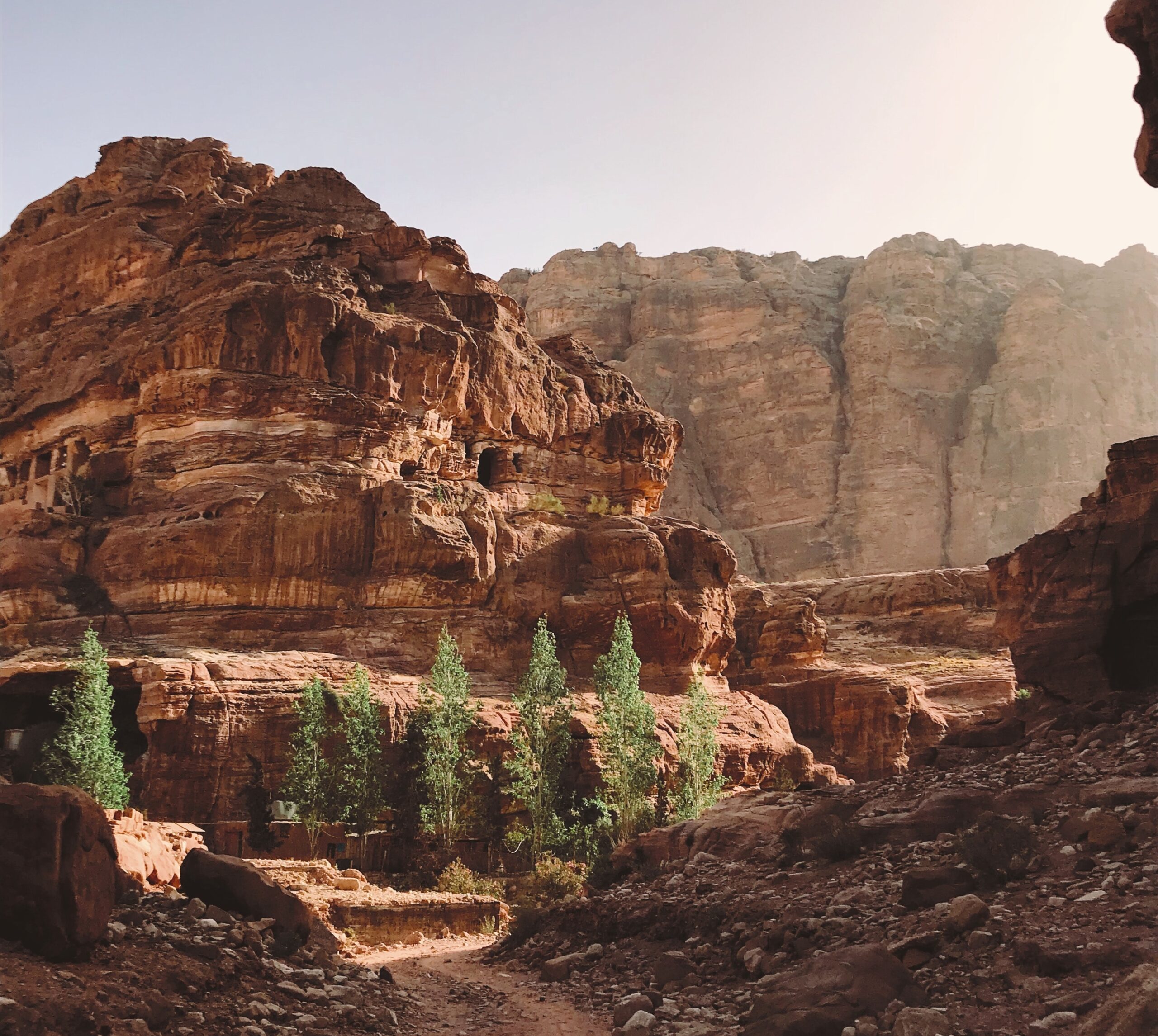
About two hours south of Petra lies Wadi Rum, a UNESCO World Heritage Site known for its enormous sandstone formations, red dunes and extraordinary desert skies. Often called the Valley of the Moon, Wadi Rum has become a destination for hikers, photographers, stargazers and travellers seeking Bedouin hospitality.
Green Prophet documented the landscape in a photographic journey through Wadi Rum, exploring its geological formations, relative absence of litter and opportunities for eco-adventure tourism. A later first-person account of camping beneath Wadi Rum’s stars described the experience of sleeping in the desert, sharing meals with local hosts and rediscovering a night sky largely obscured by artificial light in modern cities.

Today, visitors can choose from traditional Bedouin camps, hiking excursions, camel rides and luxury bubble accommodations. Tourism provides valuable income, but the expansion of desert camps, four-wheel-drive excursions and water-intensive facilities also creates environmental pressures in an ecosystem where recovery from damage can take decades.
For travellers combining Petra and Wadi Rum, the most rewarding experience may be the simplest: spend time walking, choose a locally operated camp, learn about the desert from people who live there and resist the temptation to treat every landscape as a backdrop for photographs.
Can Jordan bring tourists back without losing what makes Petra special?

Petra’s tourism authorities have begun discussing a broader approach to the archaeological city’s future. In September 2026, officials described the need to treat Petra as part of an integrated economic, social and environmental landscape rather than simply a monument managed for visitor numbers.
The return of Petra by Night offers one way to encourage visitors to stay longer in Wadi Musa, the town serving the archaeological site, instead of arriving for a quick daytime visit. Staying overnight can support local hotels, restaurants and guides, while allowing travellers more time to explore the region beyond its most recognizable landmark.
But the most meaningful measure of success may not be the number of candles illuminating the Treasury or the sophistication of its projection mapping. It may be whether Jordan can build a tourism economy that protects its archaeological heritage, conserves scarce water resources and allows local communities to benefit from the visitors drawn to their homeland.
The Nabataeans understood that prosperity in the desert depended on respecting environmental limits. Two thousand years later, Petra’s greatest attraction may still be the wisdom of the people who learned to live within them.