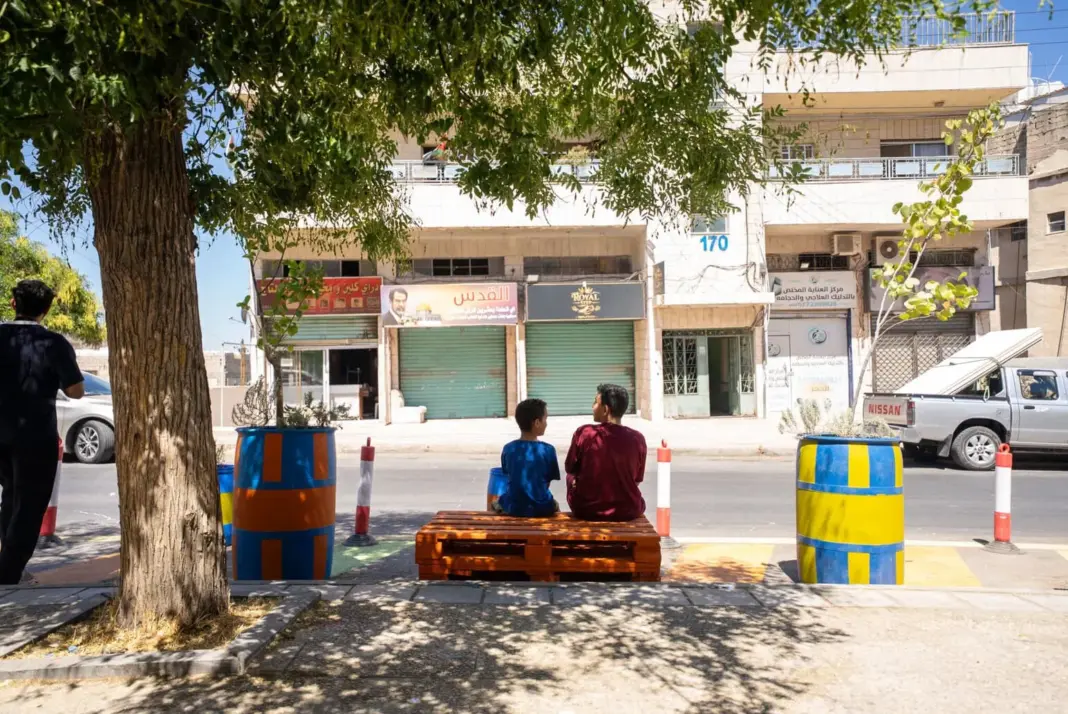

The last time I really spent time in Amman, Jordan’s capital, was about 16 years ago, when I was pregnant with my daughter. I was there on a water peace event with Friends of the Earth Middle East. And a but before that Daniella Cheslow organized a writer’s event in the city where we hosted Jordanian and Palestinian bloggers and it was a foundation for peace too. She’s 16 now, and although I’ve passed through Jordan several times since, including earlier this year, I haven’t felt particularly compelled to stop and explore the city.
I’ve probably visited Amman seven times altogether, three of those involving actual stays in the city. I remember charming little pockets of coffee shops run by Americans, traditional Arab markets, and the occasional lovely corner that made me want to linger. But mostly, I remember concrete, traffic, steep hills and sidewalks that were almost impossible to walk on.
Amman is built across a dramatic landscape of hills and valleys, which gives the city its character but also makes getting around difficult. There were places where I felt I had no choice but to hail a taxi, even for relatively short distances. Unlike cities where you can wander for hours and discover something unexpected, Amman often made me feel that I needed to get somewhere quickly.
So when I heard about a new urban greening project being launched in Amman by C40 Cities and Community Jameel, I was genuinely excited. Could this sprawling, car-dependent, water poor capital become a city where people actually want to walk?
Turning Amman’s hot streets into places for people
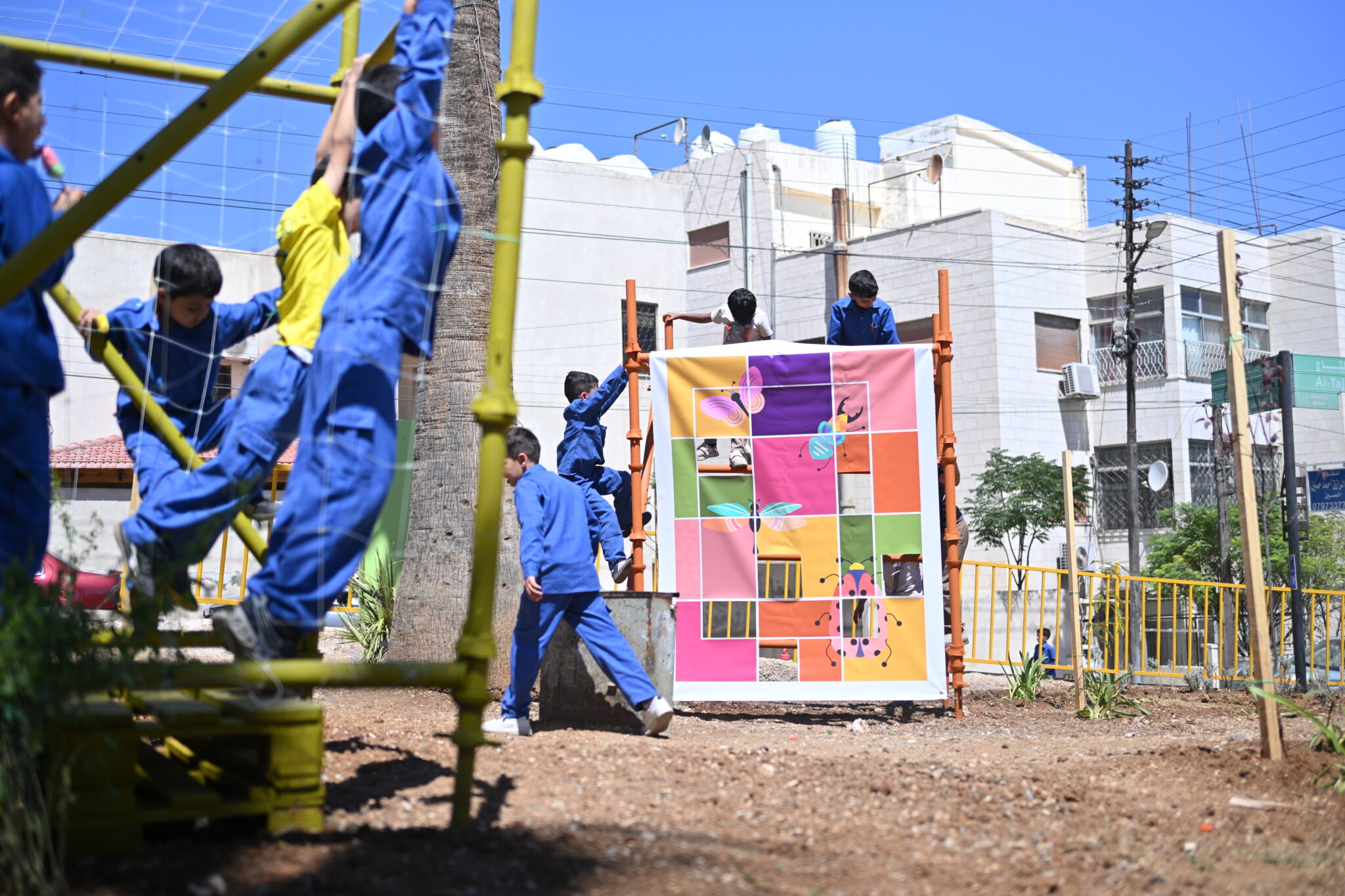
In September 2026, the Greater Amman Municipality, Community Jameel and the Jameel C40 Urban Planning Climate Labs unveiled a project along Al-Taj Street in the Al-Yarmouk District. The idea is deceptively simple. Take a congested stretch of urban asphalt and make it cooler, safer and more inviting for the people who live there.

Instead of waiting years for major infrastructure projects, the city is experimenting with something called tactical urbanism, a design approach that uses relatively inexpensive, small-scale interventions to test how public spaces might work better. On Al-Taj Street, the project focuses on two areas, including a busy school crossing serving four schools and a traffic island that has been transformed into a community space.
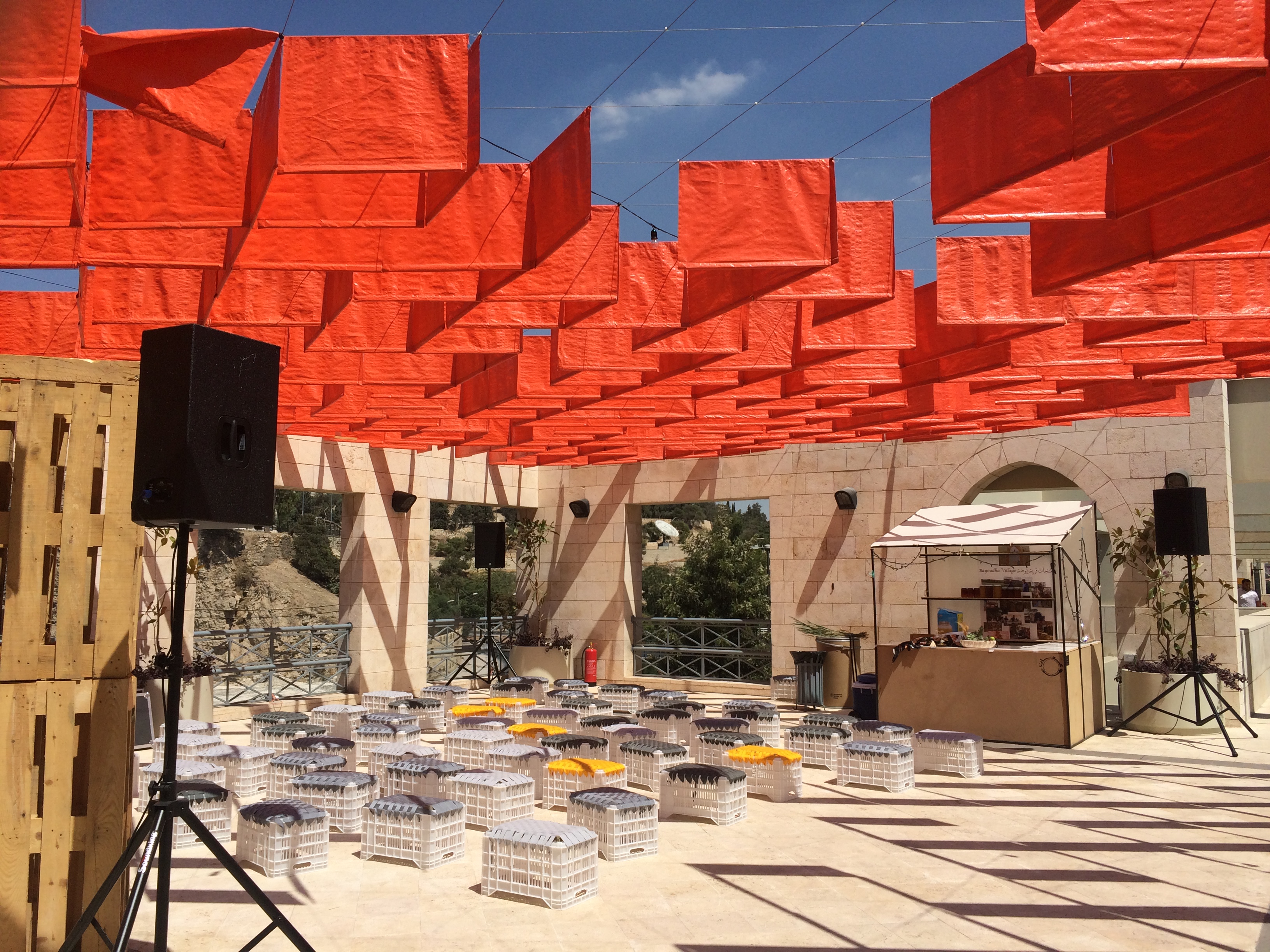
The improvements include:
- Heat-reflective street art painted on dark asphalt near school gates, intended to reduce surface temperatures and encourage slower traffic.
- Shade canopies, climbing green trellises and drought-tolerant plants to create comfortable places to wait and rest.
- A 250-square-metre play area with climbing structures made from recycled materials.
- More than 100 square metres of colourful murals painted by local youth and volunteers.
The project was designed with residents rather than simply imposed on them by city planners. And that may be one of its most important features.
Why Amman needs shade

Cities across the Middle East are struggling with extreme summer heat, and Amman is no exception. Some places like Mecca erect man-made trees and canopies but there is really nothing like trees to give relief and air passage in urban heat islands. Hard surfaces such as asphalt and concrete absorb solar radiation and release heat, making urban neighbourhoods uncomfortable long after sunset. Streets without trees or shade can be especially difficult for children, older residents and people who must walk or use public transportation.
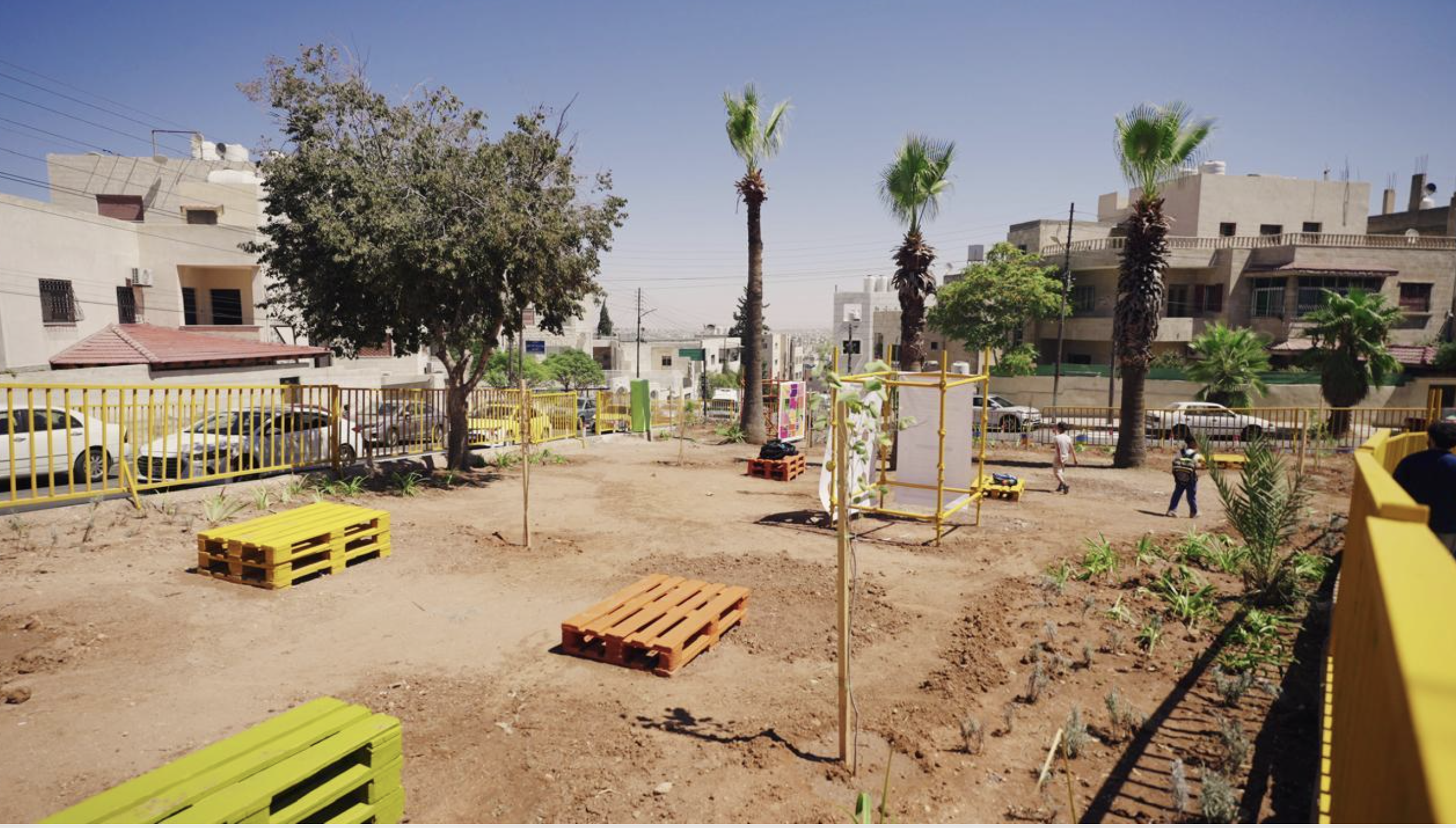
For a city like Amman, where steep terrain already makes pedestrian travel challenging, heat adds another barrier. The Al-Taj Street project is attempting to tackle several problems at once: pedestrian safety, heat exposure, access to green space and the lack of places for neighbours to gather.

There is even a social dimension to the cooling strategy. A shaded bench or small public garden can become a place where people meet, talk and get to know one another.
George Richards, Director of Community Jameel, said the project draws on traditional urbanism practices in the Arab world alongside modern research and evidence-based design. Remember: you have to give people what they want and not just need. The urban designer Hassan Fathy in Cairo built a New Gourna and nobody wanted to live there. Same as Masdar City in Abu Dhabi.
Traditional Middle Eastern architecture understood the value of shaded courtyards, narrow streets, trees and protected public spaces long before air-conditioning became commonplace. Muslim women and men are often congregating separately so privacy is key.
Modern Amman could benefit from rediscovering some of those ideas and C40 has bigger plans for Amman.
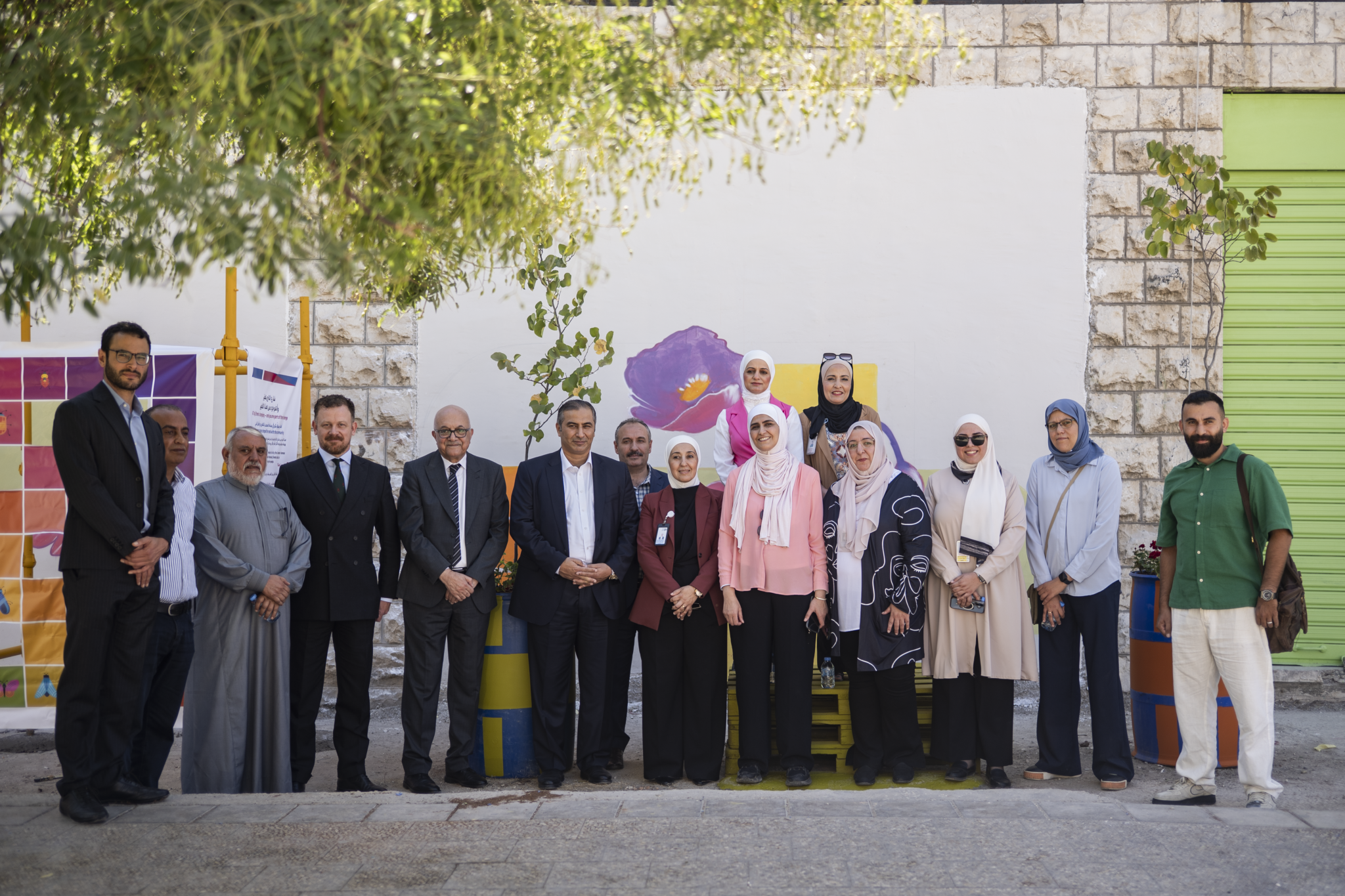
Amman has been a member of the C40 Cities network since 2015. The new Al-Taj Street project is part of a more recent partnership between C40 Cities and Community Jameel, which also works with Chennai, India. The Jameel C40 Urban Planning Climate Labs are helping cities integrate climate risks, emissions goals and environmental considerations into urban planning.
According to the organisations, the Labs have contributed to 15 planning policies, regulations and municipal strategies, with initiatives reaching 4.5 million people, including 2.52 million climate-vulnerable residents across Amman.
One significant development was Amman’s 2025 Zoning and Planning Bylaw, which introduced formal requirements for environmental considerations and public participation in the planning process. Another is a climate-responsive neighbourhood plan for Kherbet Al-Souq, known as Amman’s Southern Gate.
The five-square-kilometre district is expected to grow from approximately 25,000 residents to 42,000 by 2050. Rather than simply building more roads and housing, planners are considering shaded streets, safer pedestrian routes, improved water management, accessible green spaces and support for local businesses.
The plan was formally handed to the Greater Amman Municipality in May 2026. The question now is how quickly these ideas can move from planning documents into everyday life. Can a little street art really change a city?
Mark Watts, Executive Director of C40 Cities, described the Al-Taj project as an example of moving climate planning out of government offices and into neighbourhood streets. The organisation hopes the pilot will provide a model for similar improvements across Amman and potentially other cities in the region.
There are still questions worth asking. How much cooler will the painted asphalt actually become? Will the plants survive Amman’s dry summers? Who will maintain the new public spaces? And will these improvements eventually connect to a wider network of walkable streets?
The municipality plans to monitor the site and use the findings to guide future neighbourhood projects. For me, the real test is whether these projects change how ordinary residents experience their city.
Can a mother walk comfortably with her children while pushing a stroller or pram? Can a student cross the road safely? Can young people ride bikes safely? Can an older resident sit under a tree rather than waiting in the sun? Can a visitor discover Amman without needing to take a taxi everywhere?
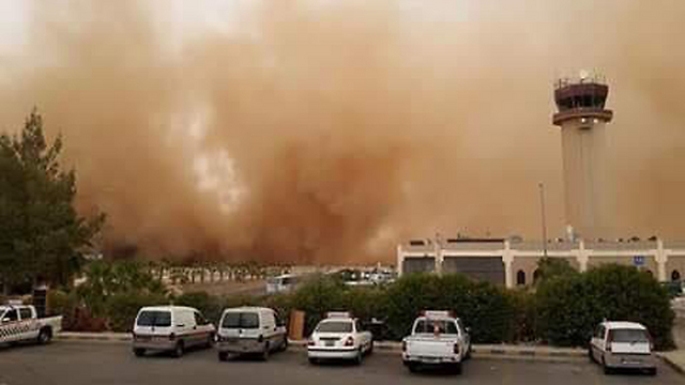
Amman has a rich history, extraordinary food, beautiful old neighbourhoods and a landscape unlike almost any other capital in the region. It deserves public spaces that make those qualities easier to enjoy. Also quick fact, Green Prophet’s writer Laurie Balbo helped build the airport!
The next time I pass through Jordan, perhaps I’ll stop in Amman instead of heading straight to the airport. I’d like to see what happens when a city built for cars starts making room for people.
About C40 Cities
C40 Cities is a global network of mayors working to tackle climate change through cleaner transportation, urban greening and sustainable development. Among the major initiatives it has supported are London’s Ultra Low Emission Zone, which restricts the most polluting vehicles and has helped improve air quality; Bogotá’s transition to electric public buses, creating one of the largest electric bus fleets outside China; and Paris’s transformation of urban mobility, including cleaner-air zones and policies encouraging cycling and walking. C40 provides technical assistance, policy guidance and international cooperation, helping cities learn from one another rather than directly constructing these projects.