Jordan receives billions of cubic metres of rainfall, yet its capital faces chronic water shortages and destructive flash floods. Decentralized rainwater harvesting could help address both crises.
Amman is caught in a troubling contradiction. Our capital struggles with chronic water shortages, yet when heavy winter storms arrive, its streets can become raging rivers. Vehicles are submerged, roads deteriorate, businesses close and valuable rainwater rushes through neighbourhoods that desperately need water during the dry months.
Related: C40’s tactical urbanism in Amman, Jordan
In one of the world’s most water-stressed countries, we are losing precious rainfall at the very moment it becomes a public hazard. As a hydrogeological and environmental engineering expert, I have repeatedly warned that this problem is not inevitable. It reflects a combination of changing rainfall patterns, rapid urban development and drainage infrastructure that has failed to keep pace with the city’s growth.
We need to rethink how our cities manage rain. Rather than allowing stormwater to rush downhill, we should capture it where it falls, using underground storage tanks, green infrastructure and better urban planning.
Billions of cubic metres of rain, but little stored
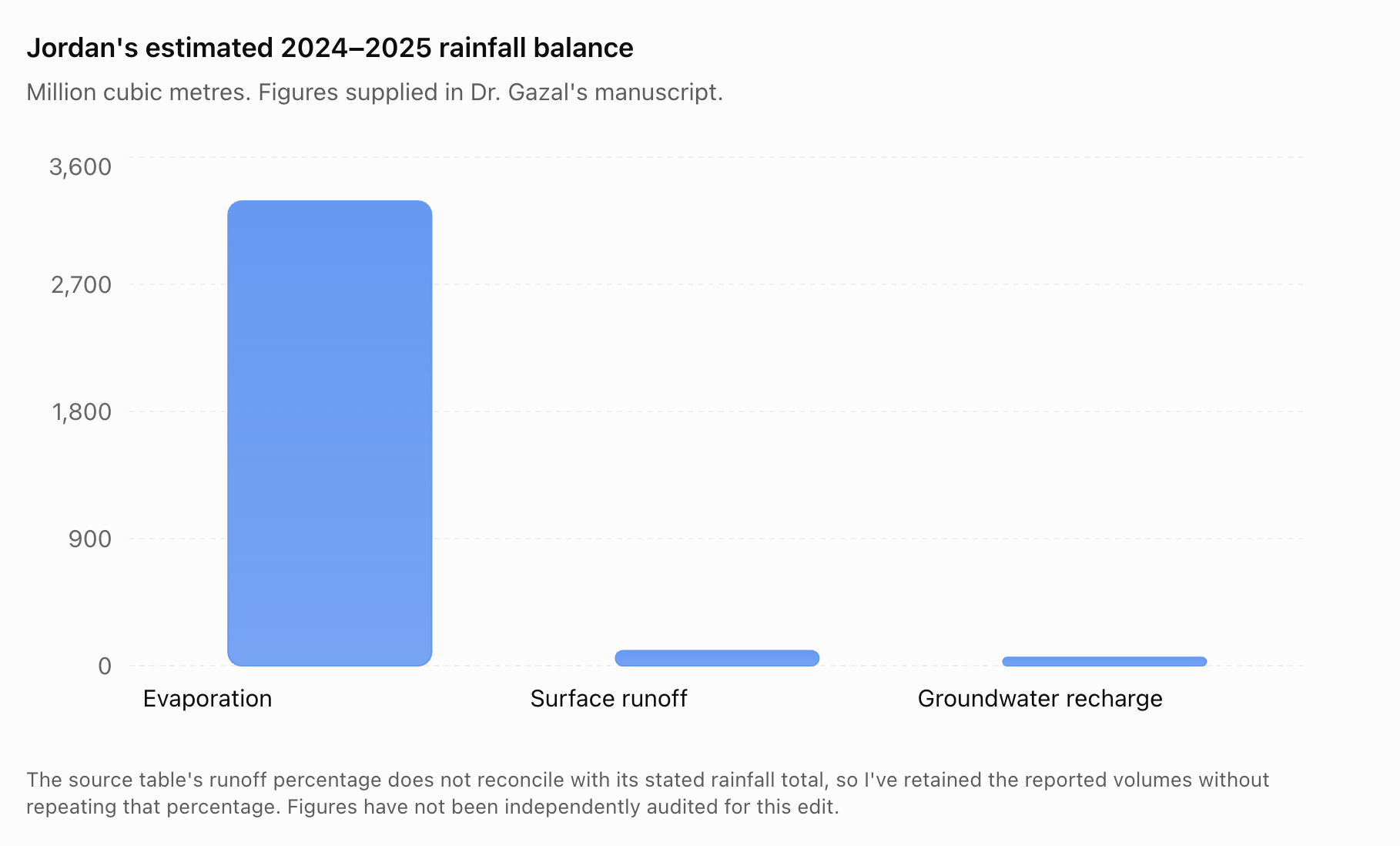
Jordan’s 2025 Water Budget presents a troubling picture of our national water balance. During the 2024–2025 hydrological year, Jordan received approximately 3.45 billion cubic metres of precipitation across its surface basins. That was 57% below the long-term historical average of 8.1 billion cubic metres.
Most of that rainfall never became an available water resource. According to the reported figures, approximately 94.5% was lost to evaporation, while only relatively small volumes contributed to surface runoff and groundwater recharge.
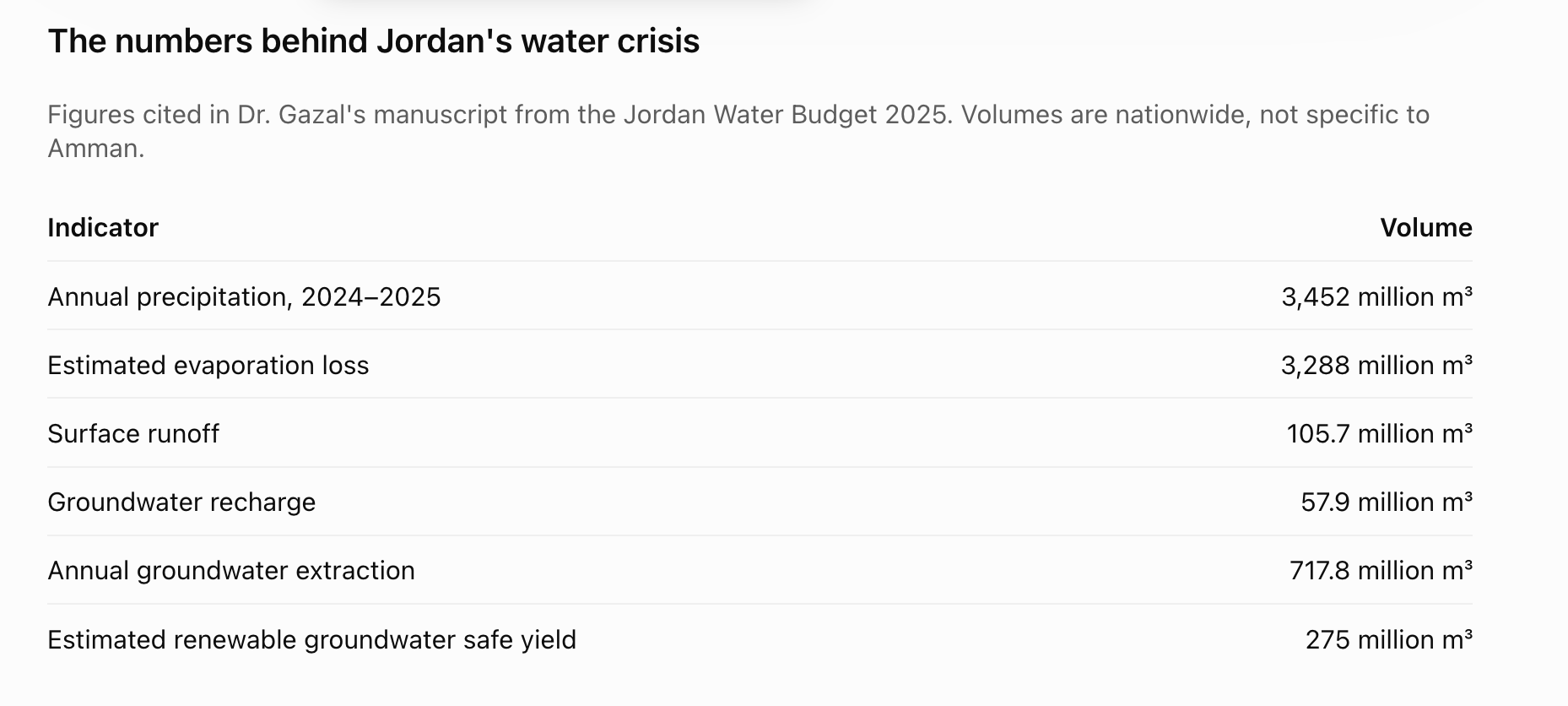
Annual groundwater extraction reached approximately 718 million cubic metres, far above the estimated renewable safe yield of 275 million cubic metres. Municipal and drinking water consumption accounted for approximately 436 million cubic metres of that extraction. We are drawing heavily on underground reserves while allowing stormwater to escape through urban areas with limited opportunities for recovery. This is not sustainable water management.
How concrete turns rain into floods
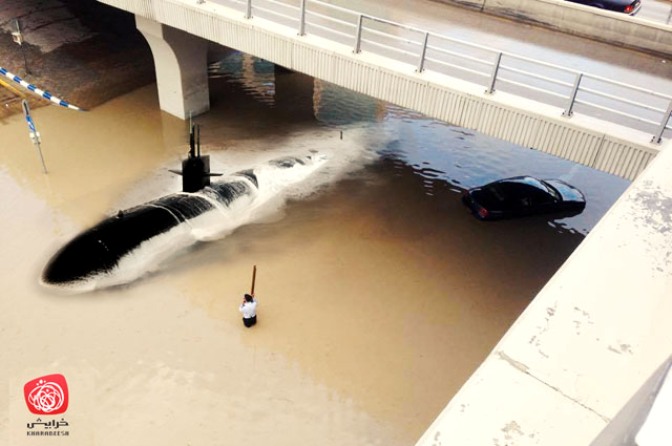
Amman’s geography makes the problem particularly difficult. The city has expanded across hills and valleys, replacing natural drainage channels, vegetation and exposed soil with asphalt, buildings and paved roads.
When heavy rain falls on these impermeable surfaces, water cannot penetrate the ground easily. Instead, it flows downhill, gathering speed as it enters lower neighbourhoods and major roads.

On heavily paved urban surfaces, 80% to 90% of rainfall can become immediate surface runoff. Changing seasonal weather patterns make matters worse. Across the Mediterranean and Middle East, rainfall is becoming increasingly irregular, with prolonged dry periods interrupted by concentrated winter downpours.
Traditional drainage systems struggle when large volumes of rain and hail arrive within only a few hours. Flooding also creates public health risks. When stormwater overwhelms drainage systems and sewage infrastructure, contaminated water can spread through streets and residential areas.
For years, I have argued that repeatedly repairing damaged roads and clearing drains after storms does little to address the underlying causes. We need infrastructure that reduces the floodwater surge before it reaches our busiest streets.
An underground tank offers a different approach
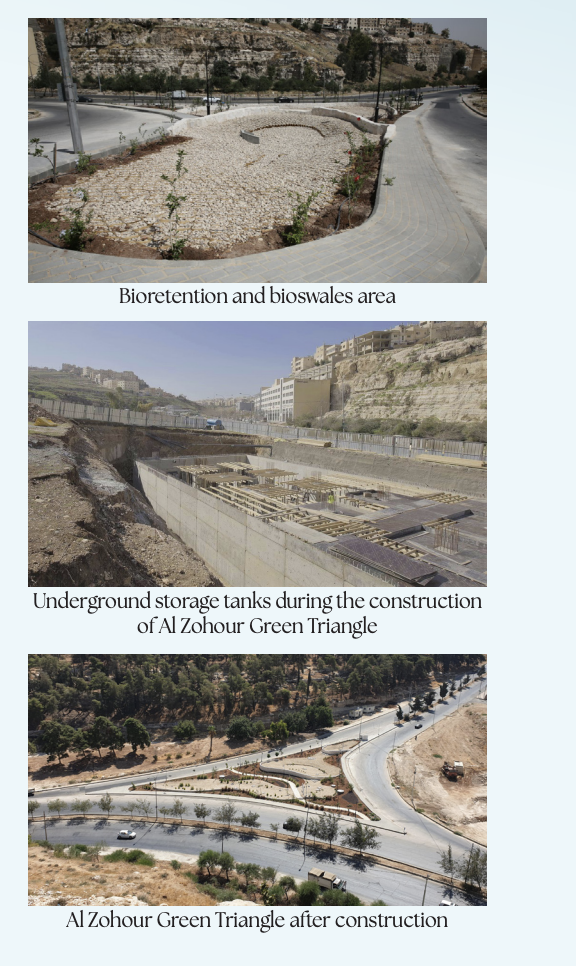
One project in Amman demonstrates how this could work. The UN-Habitat Al Zohour Green Triangle pilot combines sustainable urban drainage with green public space across a 2,300-square-metre site.
At its centre is an underground concrete tank designed to store approximately 2,100 cubic metres of stormwater. Above ground, landscaped basins and bioswales use permeable soil and vegetation to slow runoff, filter sediment and encourage water absorption.
During heavy rainfall, the underground system can intercept water that might otherwise rush into surrounding roads. The stored water can then be pumped and filtered for non-drinking uses, including irrigation and municipal landscaping.
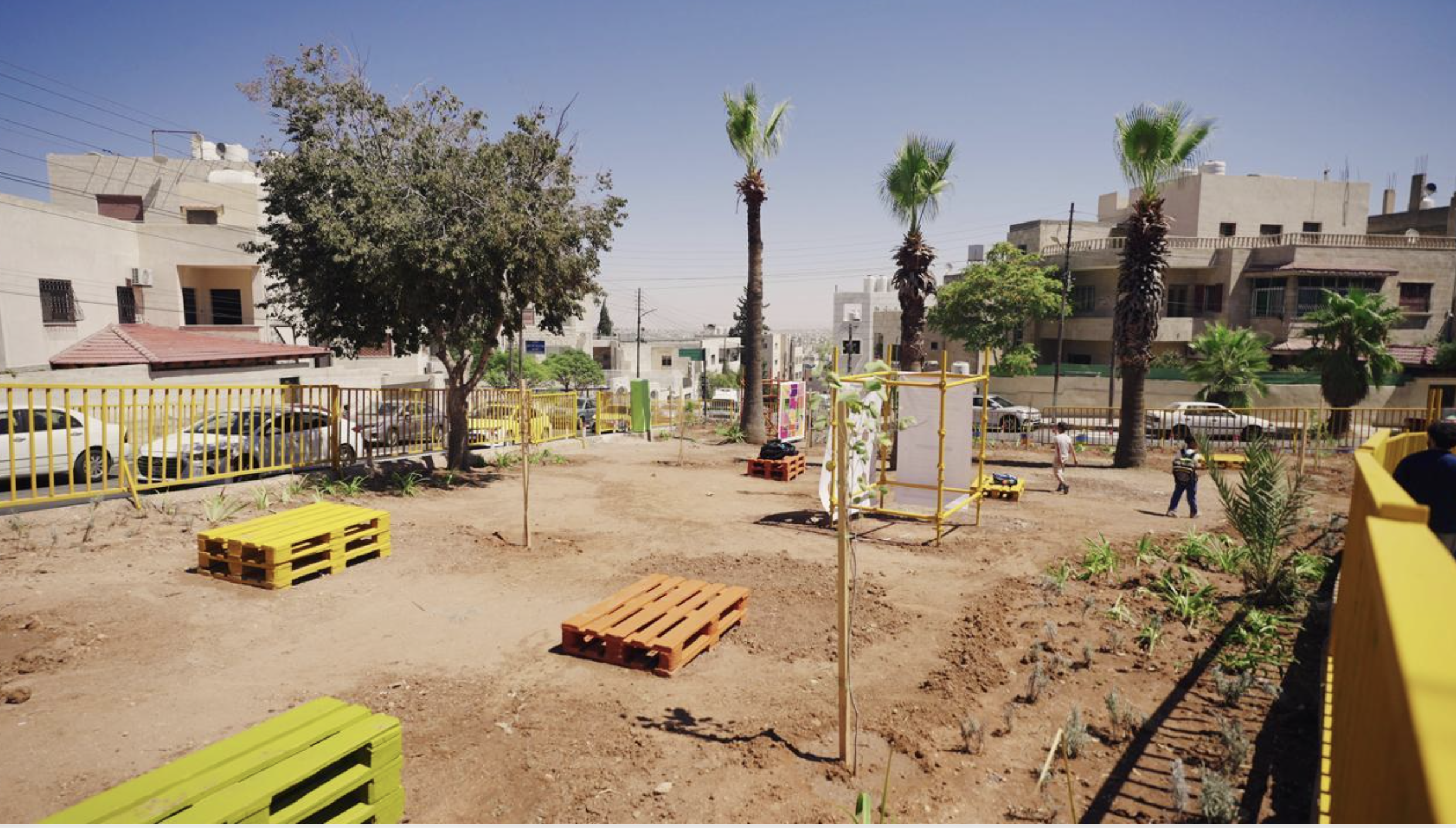
This approach offers an important opportunity for water-stressed municipalities. Instead of relying entirely on treated water or diesel-powered tanker trucks to irrigate urban trees and maintain public parks, cities could use rainfall captured during winter.
The benefits could extend beyond water conservation. Reducing tanker journeys would also lower transport costs and emissions. Most importantly, the same infrastructure could help prevent flooding while creating a local water reserve for the dry season.
Building a city that works like a sponge
Rather than depending exclusively on large dams and conventional storm sewers, I propose a network of smaller rainwater storage systems distributed throughout Amman. New apartment buildings, commercial developments and industrial facilities should incorporate rooftop collection systems and underground cisterns.
Public parks, parking areas and transportation hubs could accommodate larger storage tanks beneath their surfaces. Along streets, planted drainage channels and bioretention basins could slow water before it reaches already overloaded infrastructure.
Together, these systems could help turn Amman into what urban planners increasingly call a sponge city, one designed to absorb, retain and reuse more rainfall.
I recommend four practical measures:
- Update municipal building codes to require rainwater harvesting and appropriate underground storage in new developments.
- Retrofit vulnerable neighbourhoods with underground detention tanks, bioswales and green drainage corridors.
- Redirect public investment from repetitive road repairs toward durable flood-control and rainwater harvesting infrastructure.
- Require climate-risk assessments and applied hydrogeological modelling for major urban construction and drainage projects, including design for extreme storms.
These measures require coordinated engineering, investment and municipal commitment.
But the costs of continued inaction must also be considered. Every flood brings further damage to roads, buildings, businesses and public infrastructure.
Why urban rainwater harvesting matters beyond Jordan
Amman is not alone in facing this contradiction. Across arid and semi-arid regions, cities are growing rapidly while rainfall becomes less predictable. Urban expansion covers natural drainage systems precisely when communities need greater protection against drought and flooding.
Decentralized stormwater harvesting is not a substitute for drinking-water infrastructure, groundwater management or regional water agreements. Nor can every litre of rain be recovered economically or safely.
But properly designed systems can reduce peak runoff, create local water reserves and support urban greenery during increasingly hot summers. The environmental benefits depend on sound engineering, regular maintenance, water-quality controls and realistic assessments of costs.
For me, the larger issue is how municipalities understand rainfall. A winter storm should not automatically become a disaster, followed by expensive repairs, while the same city continues to struggle with water scarcity.
The Al Zohour project demonstrates a practical engineering approach that deserves wider attention. Its performance should be monitored, and successful elements should be evaluated for expansion across Amman and other Jordanian municipalities.
Climate adaptation and disaster preparedness are not luxuries. They are fundamental requirements for urban survival. We have the engineering knowledge to begin addressing this problem. What we need now is the institutional commitment to put it into practice. In a region where every drop matters, we must stop treating rainwater only as a threat and begin managing it as the valuable resource it is.