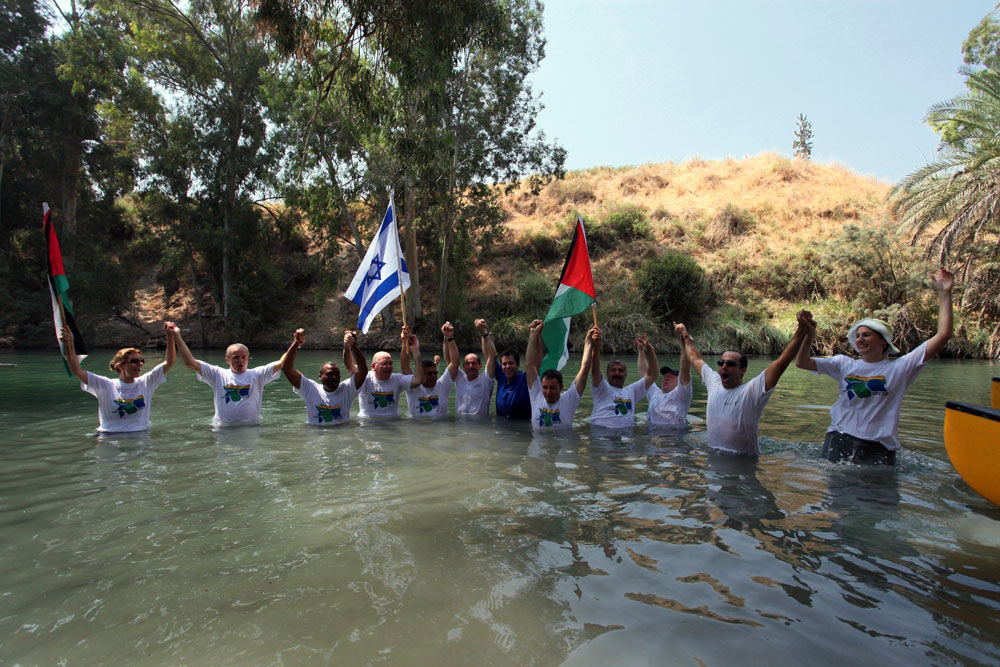

From forests in Ontario to the Jordan River and sea turtle nesting grounds in Lebanon, environmental technology may offer the most practical foundation for peace.
When I started working in integrated pest management nearly 30 years ago, in the forests around Bancroft, Ontario, I wasn’t thinking about peace. I was thinking about insects and how countries help and hurt one another through commercial trade. Bugs ride on cabbage from China which enter Canada with no natural predator. Parasitoids, natural pesticides and ways to control forest pests without poisoning everything else that lived there.

The idea was simple. Nature already has systems for keeping itself in balance. We need to understand those systems before trying to control them. That work eventually took me to CABI Bioscience in Switzerland, where biological control and the relationships between plants, insects and ecosystems became part of a much larger picture. Years later, I developed Flux, a startup designed to learn the language of plants, using sensors and technology to understand what plants need rather than imposing what we think they need.
In 2007, I founded Green Prophet to report on environmental issues and innovations emerging from the Middle East. I believed then, and still believe, that scientists, entrepreneurs, farmers and conservationists could find common ground where politicians could not. Today, as governments, universities and technology companies begin talking about PeaceTech, I think we need to expand the definition.
PeaceTech is generally understood as technology that prevents conflict, builds social cohesion and supports better governance. A recent article by Alice Ferrari, Peace Tech, Sustainable AI, and the Future of Governance, examines how digital systems, artificial intelligence and institutions might contribute to peace and sustainable development.
But I would argue that PeaceTech is much bigger than AI platforms monitoring hate speech or algorithms predicting conflict. PeaceTech is CleanTech. It is EnviroTech. It is AgTech, water technology, biodiversity research and the science of keeping people alive together on a planet where resources are increasingly under pressure.
More crop per drop is a peace technology
Consider irrigation: Israel helped pioneer modern drip irrigation, and its technologies have since spread across agricultural regions where water is scarce. The familiar promise is more crop per drop: growing more food with less water. We usually categorize this as AgTech or CleanTech. But in a region where food security, water access and political stability are closely connected, irrigation is now more than ever also PeaceTech. Researchers in Saudi Arabia have further developed the idea into a big company called Iyris. This is also PeaceTech.

A farmer in Jordan, the Palestinian Authority, Israel, Egypt or Morocco doesn’t necessarily care where the technology was invented. The farmer wants healthy crops, affordable water and a future for the family.
Or consider satellite imaging and remote sensing. We can now monitor crop stress, groundwater depletion, wildfires, marine pollution, forest loss and changes in vegetation from space. These tools can make resource management more transparent and help communities prepare for environmental threats.
They can also supply shared evidence where political trust is absent.
At Green Prophet, we have spent almost two decades writing about solar energy, desalination, wastewater recycling, regenerative agriculture, vernacular architecture, natural building materials, algae, plant communication, desert farming and ecological restoration.
We have covered environmental entrepreneurs in Israel, Jordan, the Palestinian territories, Lebanon, Saudi Arabia, the United Arab Emirates, Syria, and beyond. I see all these stories as part of the same larger story: PeaceTech.
A sea turtle doesn’t know where Lebanon ends and Israel begins
One of the most painful examples comes from Lebanon. Mona Khalil spent decades protecting endangered sea turtles on Mansouri Beach, near Tyre. She helped establish the Orange House Project, which became a sanctuary for loggerhead and green turtles and an important centre for conservation.
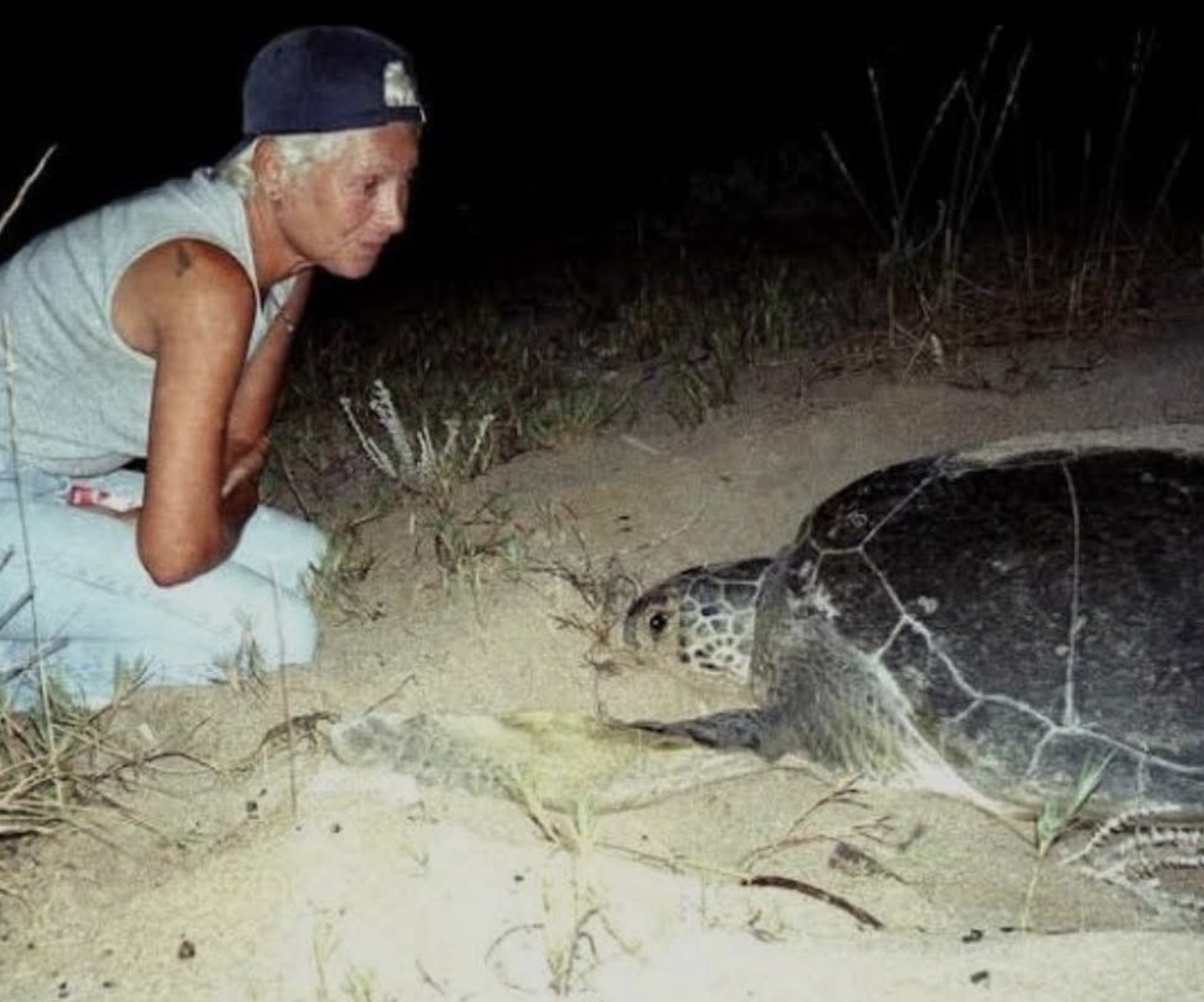
Khalil died on June 19, 2026, after being wounded in an Israeli airstrike on her home during the Israel-Hezbollah war. What makes her story particularly poignant is that Khalil belonged to a Mediterranean scientific community that crossed national and political boundaries. They did so quietly and without fanfare.
In the proceedings of the Second Mediterranean Conference on Marine Turtles in 2005, her name appears on a research abstract concerning the genetic structure of Mediterranean loggerhead turtle populations alongside Israeli researchers Yaniv Levy and Avital Gashid, as well as scientists from several other countries. There it is, in the scientific record. A Lebanese conservationist and Israeli turtle researchers contributing to the same body of research.
We’ve also written about Yaniv Levy‘s work rescuing injured turtles on Israel’s Mediterranean coast, including animals affected by fishing, pollution and war. The turtles move through the same sea. They encounter the same plastics, fishing nets, warming waters and disappearing nesting habitats. There is no Lebanese sea for Lebanese turtles and Israeli sea for Israeli turtles. There is one connected marine ecosystem.
And the scientists who work to protect it know this and the climate for decades is that Arab researchers cannot publicly work with Israelis. In parts of the Middle East, openly working with Israeli institutions can expose Arab researchers to political, professional or personal consequences. Partnerships may be discouraged, funding opportunities may be jeopardized, and public association can carry considerable risk.
We should not assume that every scientist is secretly collaborating. But we should recognize that conservation often depends on regional scientific networks, shared data and relationships that don’t fit neatly into national narratives. We need to get out of the medieval mindset that collaborating with Israel is like working with the devil itself.
PeaceTech needs to protect these relationships, not expose people to danger for participating in them. The question is how? I think we need the bravery of the United Arab Emirates in the mix.
Climate change is already crossing our borders
We know the Middle East region is getting hotter. We know that drought, extreme rainfall, degraded soils, marine pollution and food insecurity cannot be contained by checkpoints or military boundaries. A polluted river doesn’t stop at a border. Neither do migrating birds, insects, invasive species, wildfire smoke or the chemicals that find their way into our rainwater.
The collapse of sewage infrastructure in Gaza one community can contaminate the sea used by another. The pollution from Gaza this summer caused an almost complete breakdown of Israel’s desalination systems.
A wildfire on one side of a border can destroy the forests and habitats on both. And yes, Israeli and Jordanian researchers are collaborating on fire research and prevention.
If we are serious about climate adaptation, we need regional environmental cooperation.
Organizations such as EcoPeace Middle East have demonstrated what this looks like in practice, bringing together Israeli, Palestinian and Jordanian environmentalists around shared water resources and the rehabilitation of the Jordan River.The organization’s proposed water-energy partnership envisions Jordan producing solar electricity while Israel and the Palestinian Authority supply desalinated water.
This is more than a commercial exchange of electricity and water. It is a proposal to build mutual dependence around resources that sustain everyday life. There are limits, of course. Environmental projects cannot replace political agreements, equal access to resources, human rights or physical security. A solar installation in the Hebron Hills will not stop a missile, and a drip irrigation system cannot resolve generations of displacement and conflict.
But these projects can create practical relationships, economic opportunities and shared responsibilities that might survive political disagreements. People that are fed, gainfully employed and who are healthy take fewer risks
PeaceTech needs more than algorithms
The next generation of PeaceTech doesn’t need AI as a selling point. It should include ecological restoration, precision agriculture, water reuse, biodiversity monitoring, eco-design between cultures, shared marine research and the technologies that help communities adapt to climate change.
It should also include social projects: women working together on sustainable enterprises, farmers exchanging knowledge, young people restoring streams, and researchers protecting the animals and landscapes that connect them.
Artificial intelligence has a role. It can help us interpret satellite data, predict crop diseases, detect water leaks and understand environmental change. But it is a tool, not the destination. We should be building funding mechanisms and institutions that make cross-border environmental research possible, protect scientists from political retaliation, and measure success in clean water, healthy ecosystems, food security and enduring relationships. The most hopeful organizations are selling a dream but are actually creating more division. Read about the Union for the Mediterrean and how they actually harm peace.
That is where the governance ideas behind PeaceTech become meaningful. After almost three decades working with environmental science and technology, I have come back to something I learned while studying amphibians and parasitoids in Ontario’s forests.
Everything is connected. The health of one organism depends on the health of another. Destroy enough of those relationships, and the system begins to collapse. The same principle applies to people.
When a Lebanese conservationist and an Israeli scientist can contribute to the protection of the same endangered turtle, when a Jordanian farmer can benefit from water-saving technology, or when Palestinian, Israeli and Jordanian communities can work to restore a river, we are already looking at PeaceTech in action.
We don’t need to invent an entirely new category of technology to build peace. What’s next? Giant cross borden solar installations? Electric cars cars that you can drive from Turkey to Yemen, geothermal projects that service and employ tourism across the Middle East.
Why can’t Saudi Arabia have Neom and make it sustainable? We need to recognize the peacebuilding potential of the environmental technologies we already have, and make it possible for more people to work together. PeaceTech isn’t just technology that helps us stop fighting. It’s technology that gives us something worth protecting together.