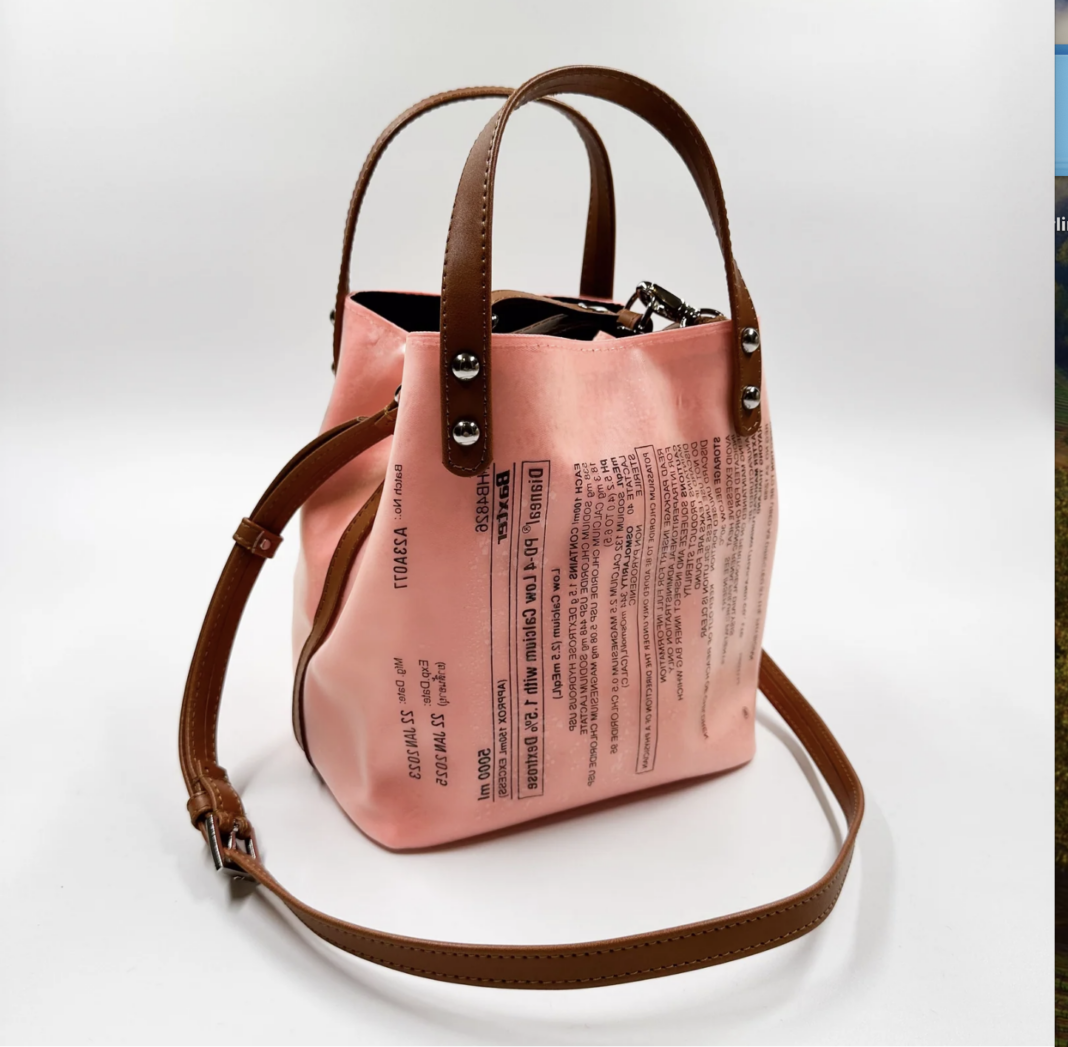

Fashion designers made accessories from recycled bottles, old sails and discarded truck tarpaulins. But dialysis bags? That’s a material few people would think to carry over their shoulder.
Pilsok makes bags and coats out of old airbags. We’ve covered Elanit Neutra, who makes deisgner bags from old inner tubes. There are the Havie Brothers Archie and Dennis who make hipster jeans from army tents, now a Swiss brand called REQA is doing something new, turning discarded medical plastics and retired firehoses into handbags, backpacks, wallets and everyday accessories. The bags are designed to look contemporary rather than medical, but their origins are what make them interesting.
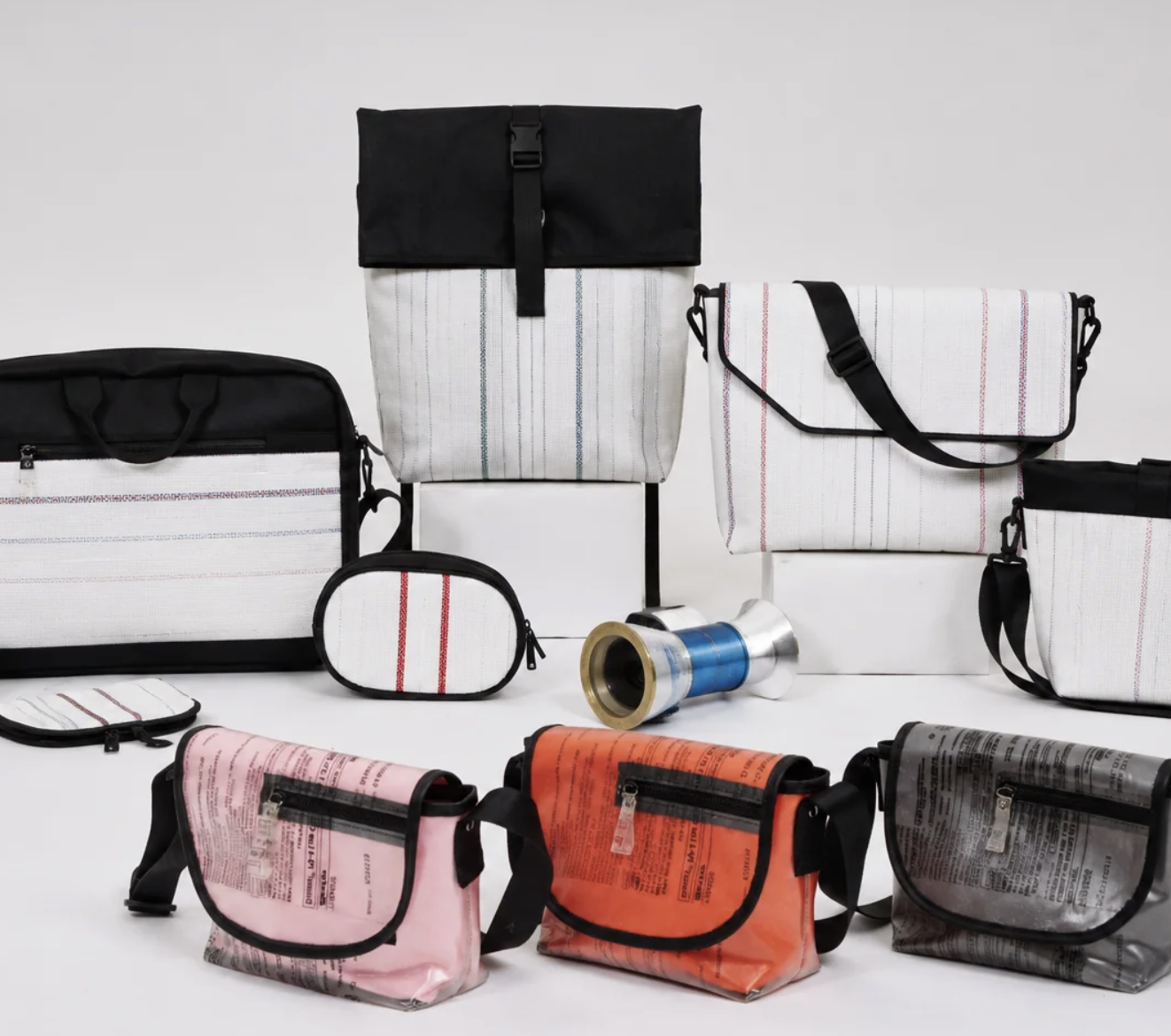
Founded by two Swiss entrepreneurs, Quentin and Angy, REQA works with independent artisans in Thailand, where discarded dialysis bags are collected, cleaned, laminated and sewn into new products. The company describes itself as an impact-driven business, combining circular design with income opportunities for communities involved in the production process. And the story begins with a surprisingly large source of plastic waste.
Dialysis is a lifesaving treatment for people whose kidneys can no longer adequately filter waste from their blood. One method, peritoneal dialysis, can be performed at home using dialysis solution supplied in single-use plastic bags.
Once the solution has been used, the packaging becomes part of a growing medical-waste problem. Dialysis bags if you have ever touched one are thick and durable, forgiving and strong. According to REQA, approximately one million dialysis bags are discarded in Thailand every month. That figure is also cited in research communications from Kasetsart University, where designers have investigated ways to recover the material for new products.

The bags can contain high-quality polyvinyl chloride, or PVC, a plastic valued for its flexibility, strength and resistance to moisture. These properties are useful in medical treatment when delivering life-saving care, but they also make the material difficult to replace and environmentally troublesome to discard.
The irony is that a plastic bag manufactured to exacting medical standards may have a useful lifespan of only a few hours before being thrown away.
Researchers have identified dialysis packaging as a significant contributor to the environmental footprint of kidney care. A 2025 study on peritoneal dialysis described the considerable quantities of plastic generated by home treatment and the limited recycling systems available in many countries. REQA’s approach is to treat suitable discarded bags as a resource instead of automatically sending them into the waste stream.
From medical waste to a handbag
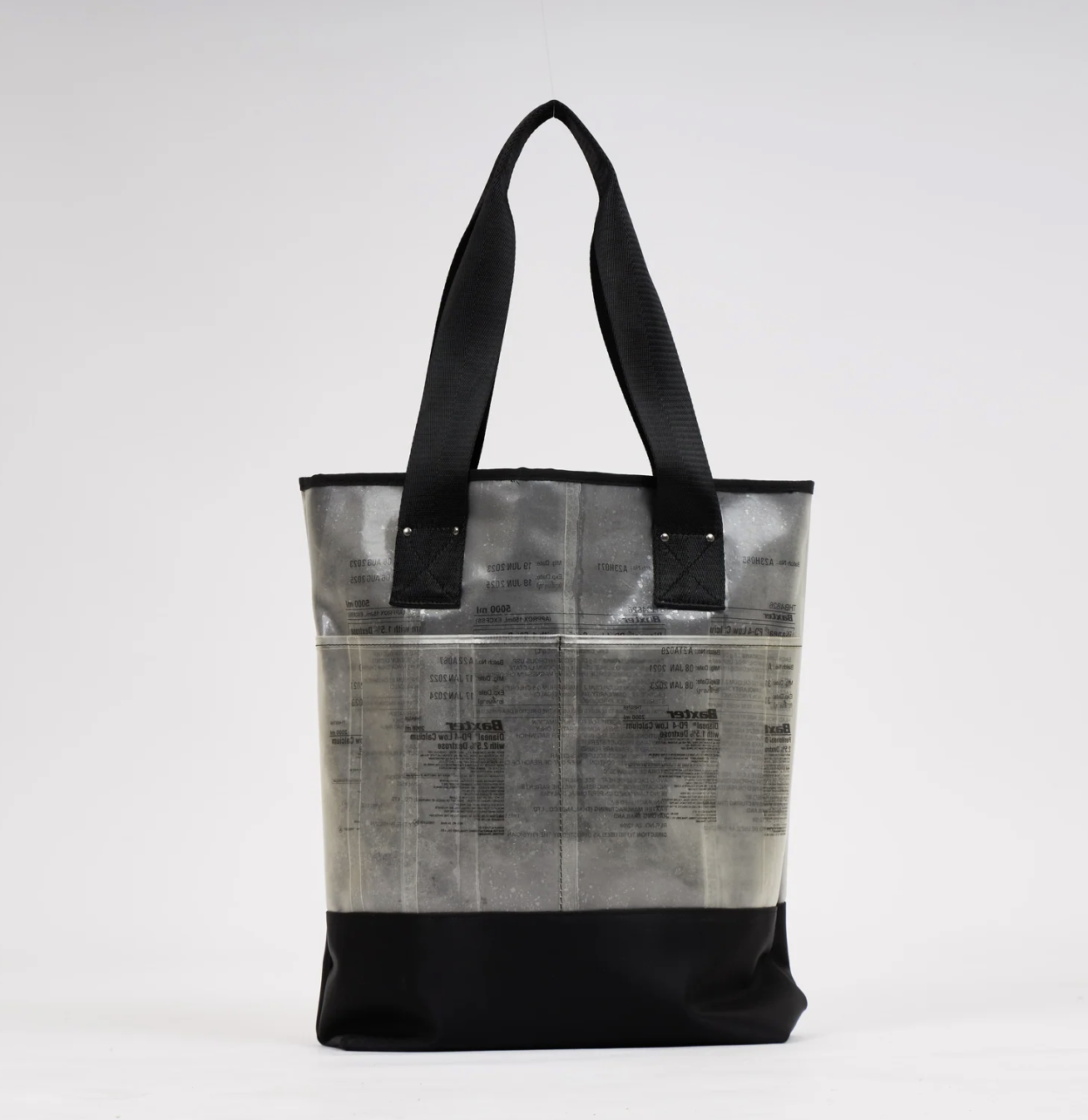
The production process is more complicated than simply washing a used bag and cutting it into pieces. REQA says its Thai production partners purchase used dialysis-solution bags directly from patients receiving treatment at home. This provides patients with additional income while creating a supply of recovered plastic.
Patients clean the collected bags before the material is sorted by a group of elderly women from a low-income community in Bangkok. The women then laminate layers of plastic together, creating a thicker sheet suitable for cutting and sewing.
According to REQA, this laminated material can be stronger than cowhide, although that claim has not been independently verified for the finished products. The finished sheets go to a designer and craftsman known as Pop, who develops the products and handles the most complex pieces. Other trained craftspeople cut and sew simpler accessories.
The result is a range of bags and small accessories whose material has already lived an entirely different life.
A business built around Thai craftspeople
The interesting part of REQA’s story is not only the waste material. It’s also the people handling it. The company works with Thai craftspeople through an established production network, including a community of older women who participate in preparing the discarded plastic.
REQA says its activities support more than 50 artisan families in Thailand through employment, training and income opportunities. The company also reports upcycling approximately 60,000 dialysis bags and 250 to 300 retired firehoses annually. These are company-reported figures, not independently audited totals.
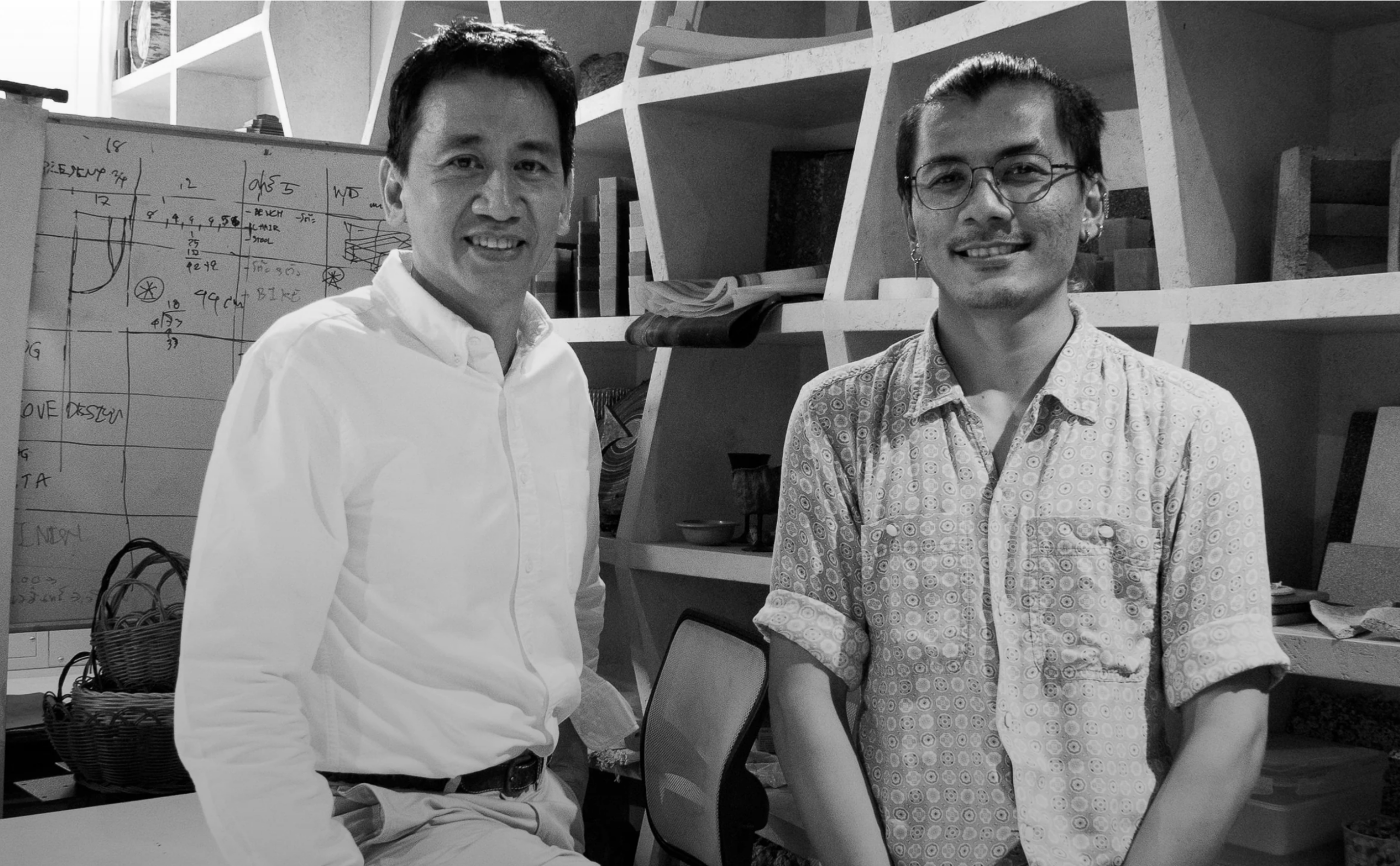
Singh and Pop, the Thai designers behind QA Crafts, transform discarded dialysis bags into handmade accessories, combining sustainable design with opportunities for local artisans.
The Thai production partnership, associated with QA Crafts, describes how designers Singh and Pop developed accessories from used dialysis bags while creating income opportunities for patients and older women in Bangkok. For people who may have limited access to conventional employment, small-scale craft production can provide a source of income while preserving and developing practical skills. This gives the project a social dimension that goes beyond the familiar recycled-fashion marketing story.
What about the firehoses?
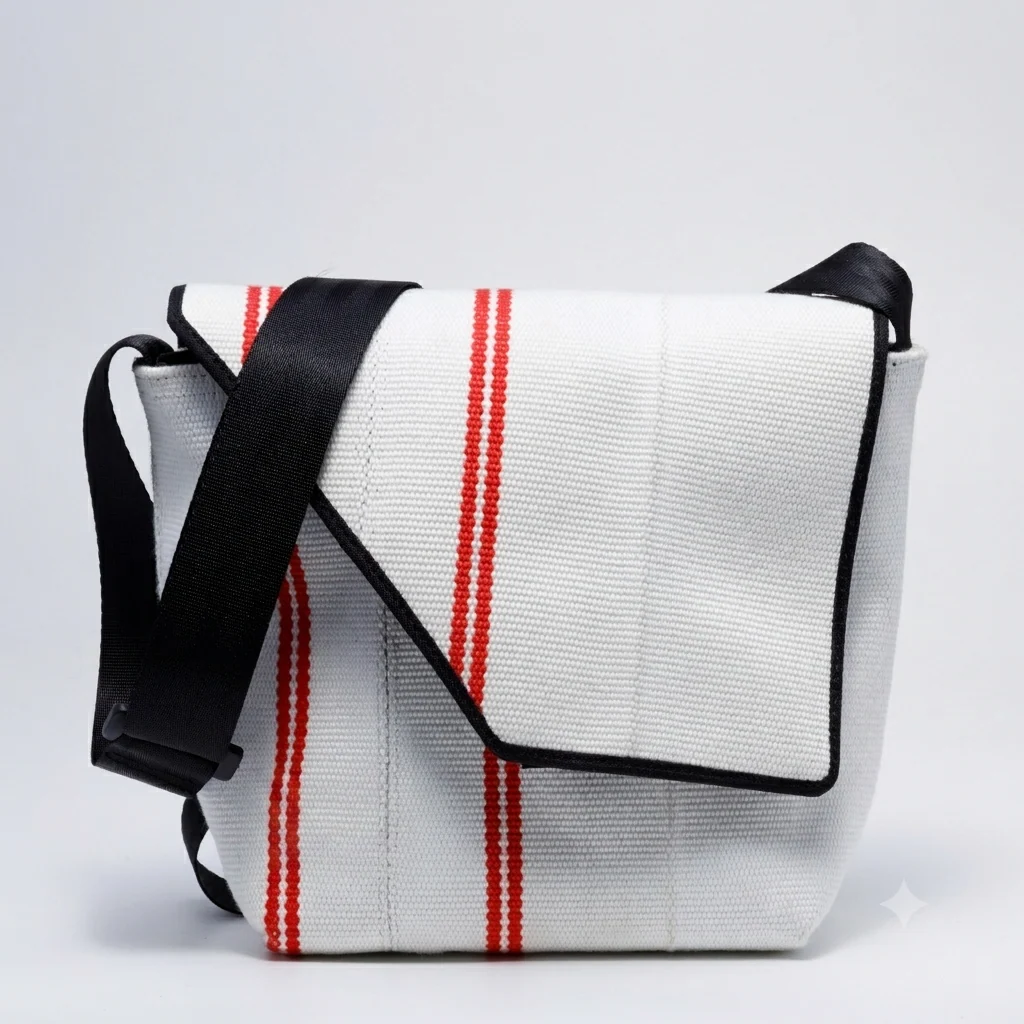
Dialysis bags aren’t the only unusual material REQA uses. The brand also makes accessories from retired firehoses, another industrial material designed to withstand demanding conditions. Firehoses are manufactured to tolerate water pressure, abrasion and repeated handling. Their durability makes them interesting candidates for bags, particularly products expected to endure daily wear.
The company’s collection includes items made from both recovered medical PVC and retired firehoses.
Using discarded industrial materials for fashion isn’t entirely new. Swiss brand Freitag helped popularize the idea of making messenger bags from used truck tarpaulins. REQA belongs to a wider movement of designers asking whether materials already in circulation can replace some newly manufactured textiles. But medical waste introduces an additional challenge: traceability, hygiene and confidence in the safety of the recovered material.
Explore the collection at REQA.