The Nabataeans understood that prosperity in the desert depended on respecting environmental limits. Two thousand years later, Petra's greatest attraction may still be the wisdom of the people who learned to live within them.
From Bill McKibben to climate organizers across the Middle East, Green Prophet has followed 350.org for 16 years. At COP31 in Türkiye, the movement is demanding an end to fossil fuel expansion and a fair transition to renewable energy.
One of the most persistent questions in seismology concerns whether scientists will eventually be able to predict major earthquakes before they happen.
I believe Jordan needs a cultural transformation alongside its infrastructure investments. We must begin by redefining social prestige. Why should ownership of an expensive car be considered a greater achievement than making an environmentally responsible transportation choice? Why should travelling by bus carry a social stigma?
Unstageable wounds are another group of pressure injuries characterized by slough or eschar covering, which makes it hard to determine the real depth of the wound.
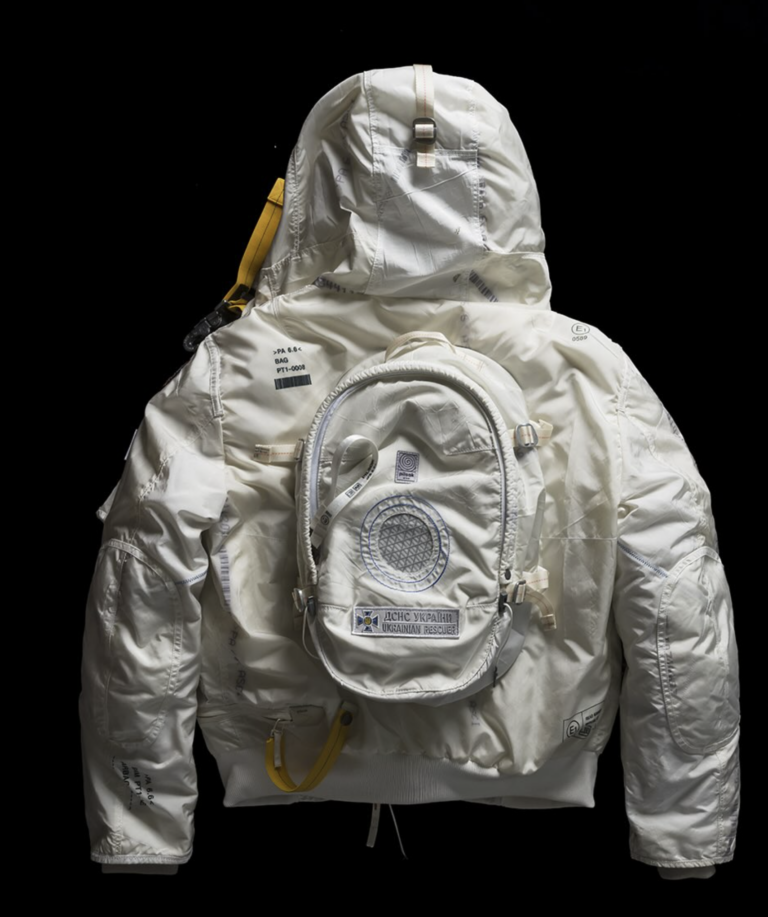
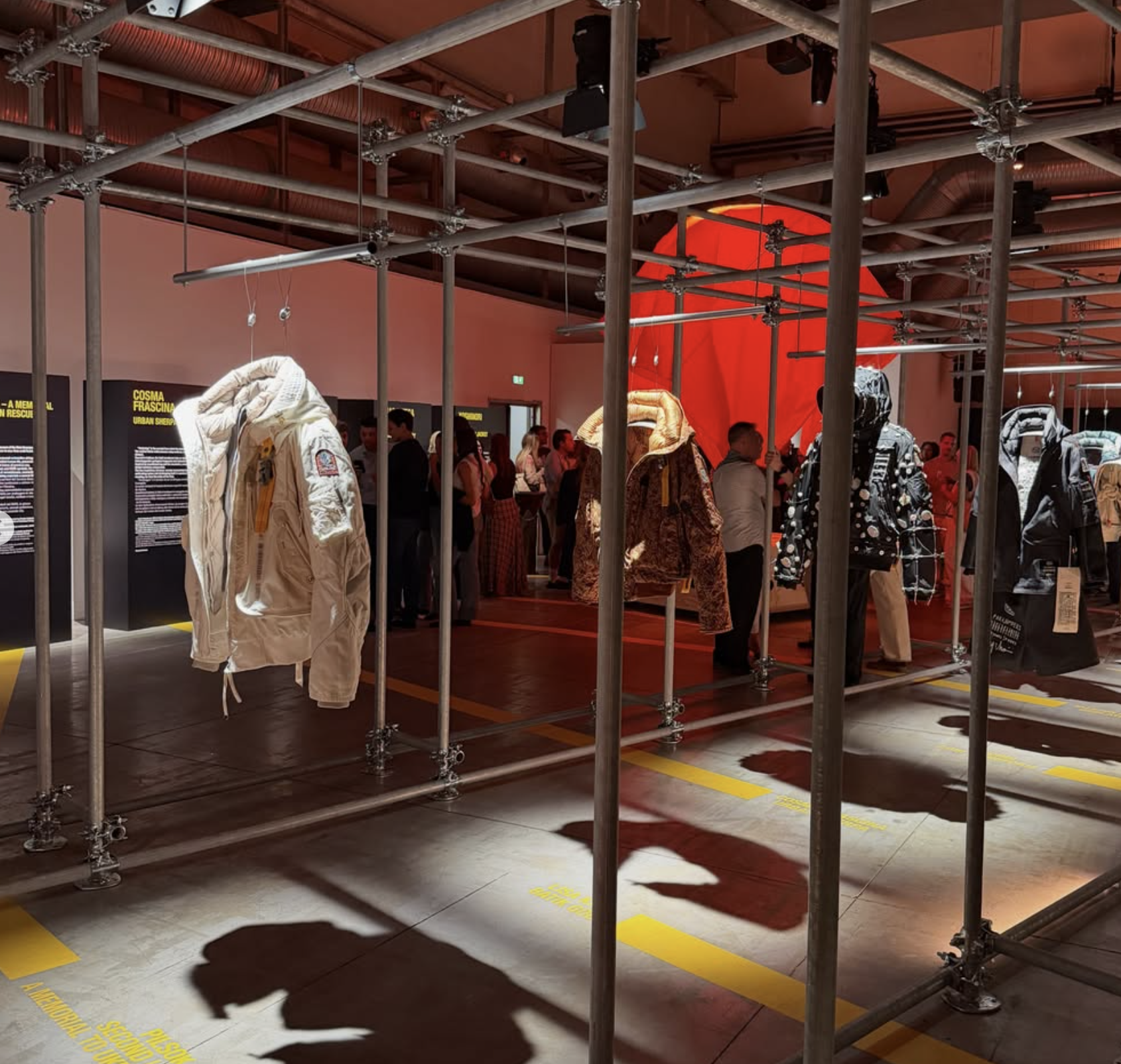
The Kyiv-based design studio takes its signature approach to upcycled materials to Milan Fashion Week, creating a striking new interpretation of the iconic Parajumpers Gobi jacket.
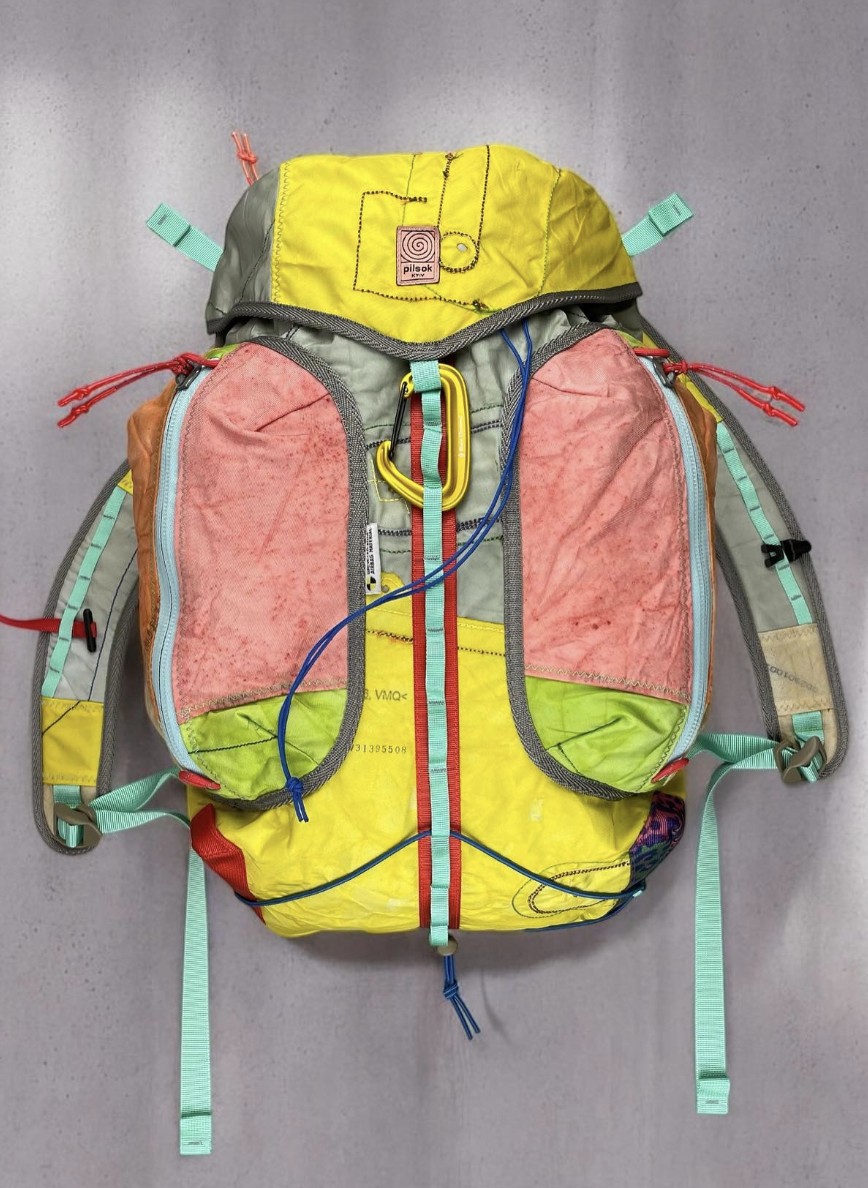
We already love Ukrainian design studio Pilsok for its Beetle bag, a beautifully constructed accessory that turns discarded automotive materials into something you actually want to carry everywhere. But Pilsok is proving that its talents go far beyond backpacks and bags.
Pilsok beetle bag made from upcycled car airbag nylon, showing original seams and fabric codes, handmade in Kyiv Ukraine
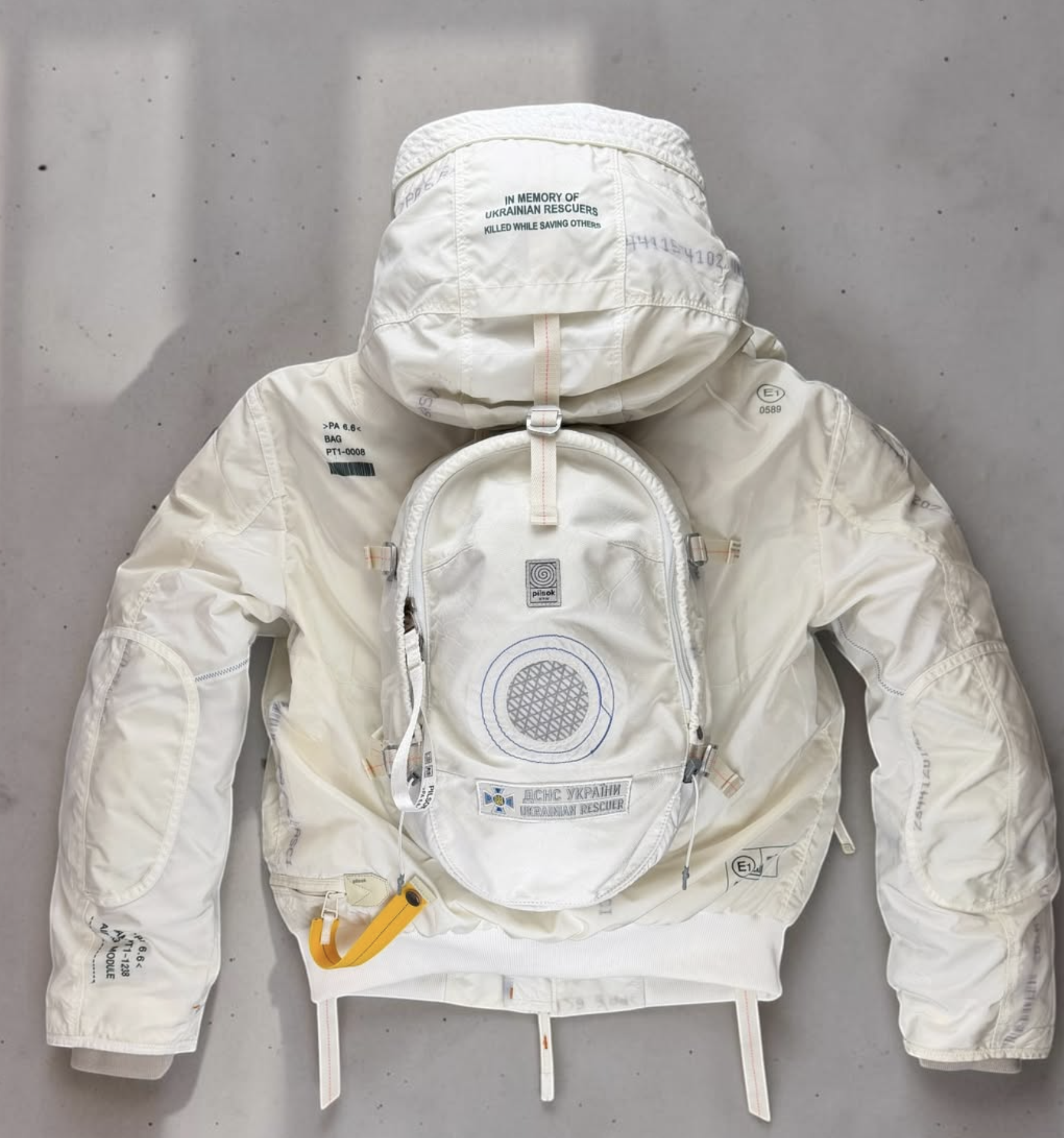
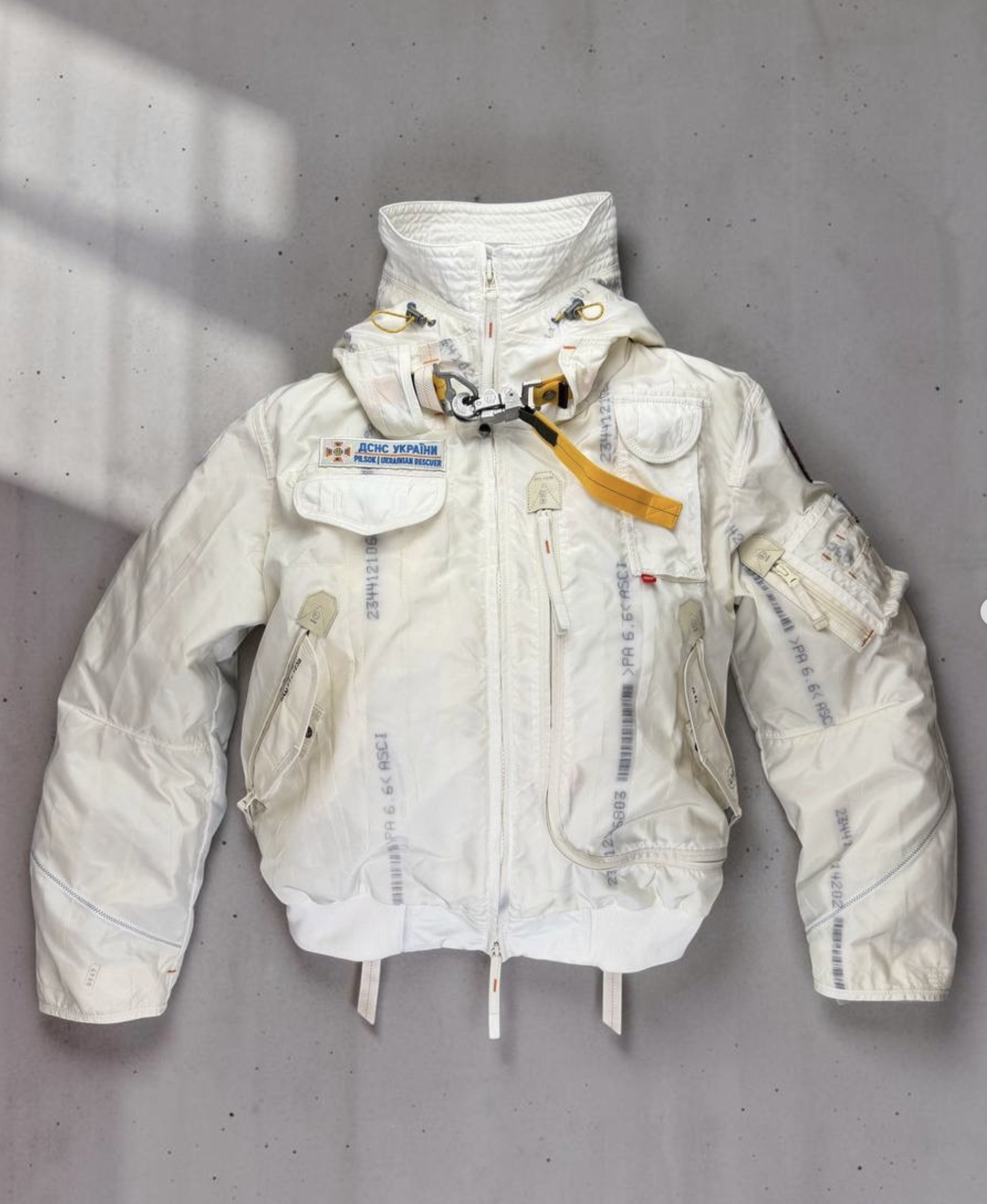
Its latest creation, called Second Life, is a remarkable jacket made from repurposed car airbags. Designed for the 20th anniversary of Italian outerwear brand Parajumpers, the project was unveiled in Milan in September as part of an exhibition featuring 20 international designers invited to reinterpret the brand’s iconic Gobi jacket. The result brings together experimental fashion, industrial materials and a moving tribute to Ukraine’s emergency rescuers.
From car airbags to high fashion
Founded by Dmytro Isaienko in Kyiv, Pilsok has built its reputation around thoughtful construction and unexpected materials. Its bags and backpacks made from retired automotive airbags have already shown how a material once designed for passenger safety can find an entirely different purpose. For Second Life, the studio has taken that idea further.
The Gobi jacket has been reconstructed using salvaged airbags, with their original stitching, printed technical markings and traces of previous use deliberately preserved. An integrated backpack gives the piece an additional functional element, while symbols of Ukraine’s State Emergency Service (DSNS) make the jacket’s message clear.
Ukrainian design studio Pilsok transforms recycled automotive airbags into the Second Life jacket, a tribute to Ukraine’s emergency rescuers, for Parajumpers’ 20th anniversary.
There is something particularly beautiful about this approach to design. Rather than hiding the origins of the recycled fabric, Pilsok makes those details part of the finished garment. Every marking has a history. Every seam tells you something about where the material came from. And the result feels contemporary, considered and entirely original.
The project is also a tribute to the rescuers of Ukraine’s State Emergency Service, who continue to respond to attacks, fires and destroyed buildings during Russia’s war against Ukraine. Automotive airbags are engineered to protect lives in a collision. By turning them into protective outerwear, Pilsok has created a connection between the material’s original purpose and the people the jacket honours.
The symbolism is powerful without overwhelming the design. The original markings remain visible, allowing the fabric itself to carry much of the story.
These are tough, technical fabrics, originally engineered to withstand extreme conditions. In the hands of a careful designer, they can become something entirely new. What makes Pilsok interesting is its attention to detail. The studio isn’t simply replacing virgin fabric with recycled material. It is using the characteristics of that material — its folds, textures, seams and industrial graphics — to create a distinct design language.
From forests in Ontario to the Jordan River and sea turtle nesting grounds in Lebanon, environmental technology may offer the most practical foundation for peace.
When I started working in integrated pest management nearly 30 years ago, in the forests around Bancroft, Ontario, I wasn’t thinking about peace. I was thinking about insects and how countries help and hurt one another through commercial trade. Bugs ride on cabbage from China which enter Canada with no natural predator. Parasitoids, natural pesticides and ways to control forest pests without poisoning everything else that lived there.
Karin Kloosterman, founder and editor of Green Prophet, has spent nearly 30 years working at the intersection of environmental science, technology and sustainability. Thefuture of PeaceTech lies in the natural systems and shared resources that connect people across borders.
The idea was simple. Nature already has systems for keeping itself in balance. We need to understand those systems before trying to control them. That work eventually took me to CABI Bioscience in Switzerland, where biological control and the relationships between plants, insects and ecosystems became part of a much larger picture. Years later, I developed Flux, a startup designed to learn the language of plants, using sensors and technology to understand what plants need rather than imposing what we think they need.
In 2007, I founded Green Prophet to report on environmental issues and innovations emerging from the Middle East. I believed then, and still believe, that scientists, entrepreneurs, farmers and conservationists could find common ground where politicians could not. Today, as governments, universities and technology companies begin talking about PeaceTech, I think we need to expand the definition.
PeaceTech is generally understood as technology that prevents conflict, builds social cohesion and supports better governance. A recent article by Alice Ferrari, Peace Tech, Sustainable AI, and the Future of Governance, examines how digital systems, artificial intelligence and institutions might contribute to peace and sustainable development.
But I would argue that PeaceTech is much bigger than AI platforms monitoring hate speech or algorithms predicting conflict. PeaceTech is CleanTech. It is EnviroTech. It is AgTech, water technology, biodiversity research and the science of keeping people alive together on a planet where resources are increasingly under pressure.
More crop per drop is a peace technology
Consider irrigation: Israel helped pioneer modern drip irrigation, and its technologies have since spread across agricultural regions where water is scarce. The familiar promise is more crop per drop: growing more food with less water. We usually categorize this as AgTech or CleanTech. But in a region where food security, water access and political stability are closely connected, irrigation is now more than ever also PeaceTech. Researchers in Saudi Arabia have further developed the idea into a big company called Iyris. This is also PeaceTech.
Red Sea Farms now known as Iryis, is PeaceTech
A farmer in Jordan, the Palestinian Authority, Israel, Egypt or Morocco doesn’t necessarily care where the technology was invented. The farmer wants healthy crops, affordable water and a future for the family.
Or consider satellite imaging and remote sensing. We can now monitor crop stress, groundwater depletion, wildfires, marine pollution, forest loss and changes in vegetation from space. These tools can make resource management more transparent and help communities prepare for environmental threats.
They can also supply shared evidence where political trust is absent.
At Green Prophet, we have spent almost two decades writing about solar energy, desalination, wastewater recycling, regenerative agriculture, vernacular architecture, natural building materials, algae, plant communication, desert farming and ecological restoration.
We have covered environmental entrepreneurs in Israel, Jordan, the Palestinian territories, Lebanon, Saudi Arabia, the United Arab Emirates, Syria, and beyond. I see all these stories as part of the same larger story: PeaceTech.
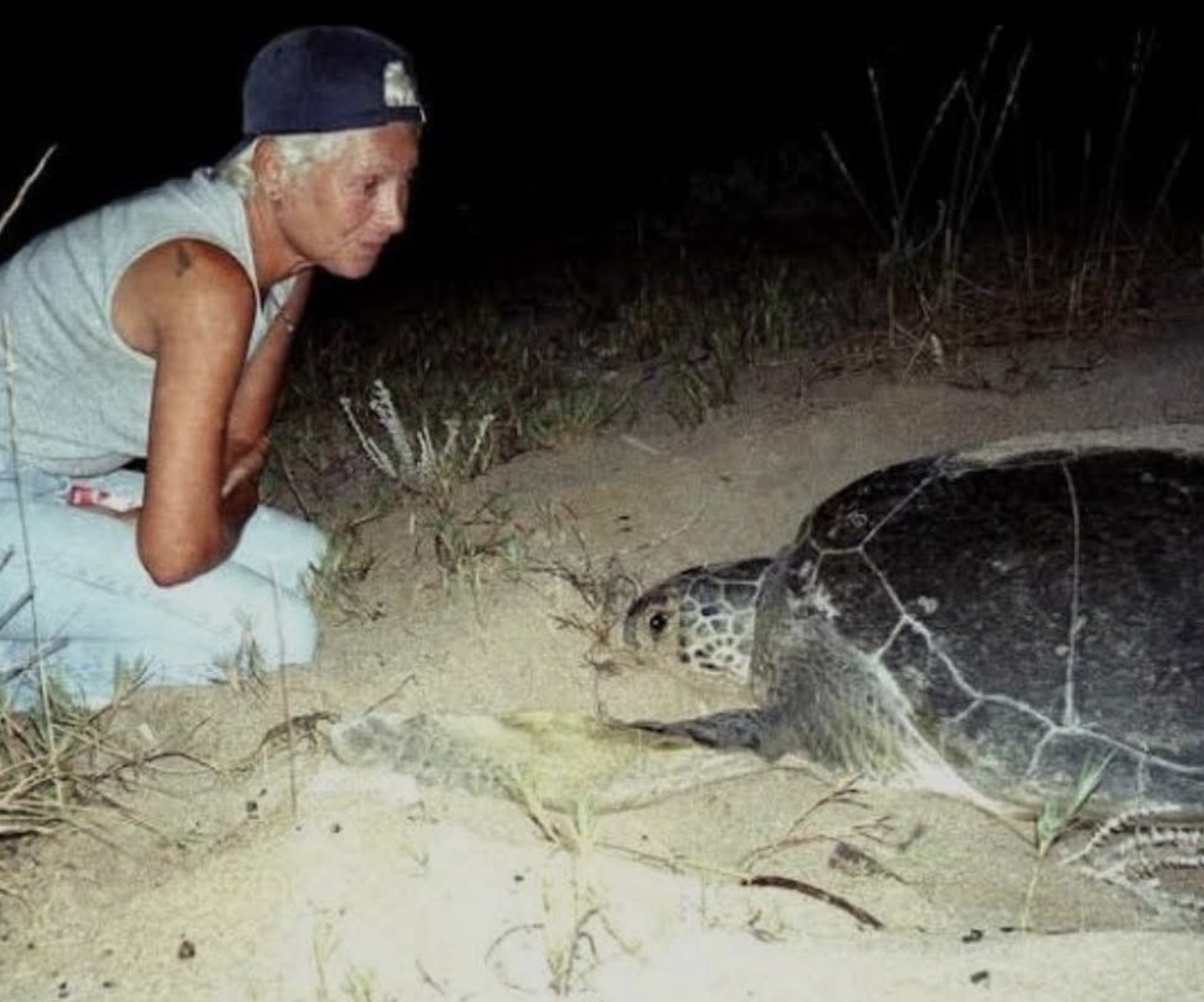
A sea turtle doesn’t know where Lebanon ends and Israel begins
Khalil died on June 19, 2026, after being wounded in an Israeli airstrike on her home during the Israel-Hezbollah war. What makes her story particularly poignant is that Khalil belonged to a Mediterranean scientific community that crossed national and political boundaries. They did so quietly and without fanfare.
In the proceedings of the Second Mediterranean Conference on Marine Turtles in 2005, her name appears on a research abstract concerning the genetic structure of Mediterranean loggerhead turtle populations alongside Israeli researchers Yaniv Levy and Avital Gashid, as well as scientists from several other countries. There it is, in the scientific record. A Lebanese conservationist and Israeli turtle researchers contributing to the same body of research.
We’ve also written about Yaniv Levy‘s work rescuing injured turtles on Israel’s Mediterranean coast, including animals affected by fishing, pollution and war. The turtles move through the same sea. They encounter the same plastics, fishing nets, warming waters and disappearing nesting habitats. There is no Lebanese sea for Lebanese turtles and Israeli sea for Israeli turtles. There is one connected marine ecosystem.
And the scientists who work to protect it know this and the climate for decades is that Arab researchers cannot publicly work with Israelis. In parts of the Middle East, openly working with Israeli institutions can expose Arab researchers to political, professional or personal consequences. Partnerships may be discouraged, funding opportunities may be jeopardized, and public association can carry considerable risk.
We should not assume that every scientist is secretly collaborating. But we should recognize that conservation often depends on regional scientific networks, shared data and relationships that don’t fit neatly into national narratives. We need to get out of the medieval mindset that collaborating with Israel is like working with the devil itself.
PeaceTech needs to protect these relationships, not expose people to danger for participating in them. The question is how? I think we need the bravery of the United Arab Emirates in the mix.
Climate change is already crossing our borders
We know the Middle East region is getting hotter. We know that drought, extreme rainfall, degraded soils, marine pollution and food insecurity cannot be contained by checkpoints or military boundaries. A polluted river doesn’t stop at a border. Neither do migrating birds, insects, invasive species, wildfire smoke or the chemicals that find their way into our rainwater.
The collapse of sewage infrastructure in Gaza one community can contaminate the sea used by another. The pollution from Gaza this summer caused an almost complete breakdown of Israel’s desalination systems.
A wildfire on one side of a border can destroy the forests and habitats on both. And yes, Israeli and Jordanian researchers are collaborating on fire research and prevention.
If we are serious about climate adaptation, we need regional environmental cooperation.
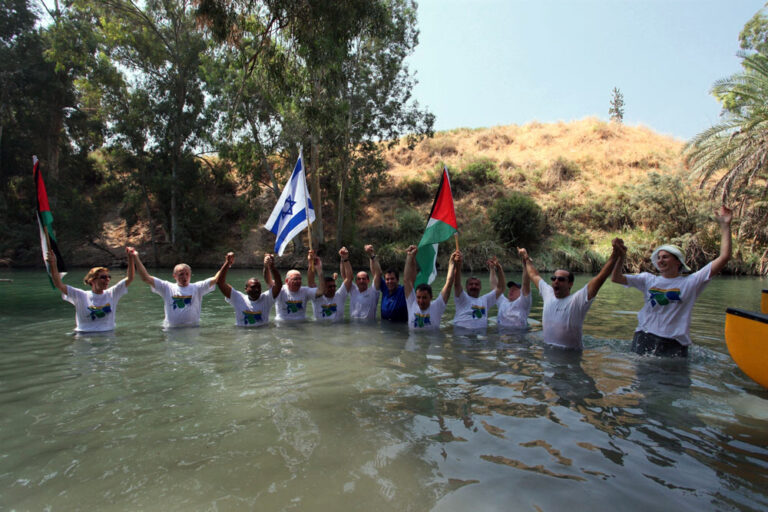
Organizations such as EcoPeace Middle East have demonstrated what this looks like in practice, bringing together Israeli, Palestinian and Jordanian environmentalists around shared water resources and the rehabilitation of the Jordan River.The organization’s proposed water-energy partnership envisions Jordan producing solar electricity while Israel and the Palestinian Authority supply desalinated water.
This is more than a commercial exchange of electricity and water. It is a proposal to build mutual dependence around resources that sustain everyday life. There are limits, of course. Environmental projects cannot replace political agreements, equal access to resources, human rights or physical security. A solar installation in the Hebron Hills will not stop a missile, and a drip irrigation system cannot resolve generations of displacement and conflict.
But these projects can create practical relationships, economic opportunities and shared responsibilities that might survive political disagreements. People that are fed, gainfully employed and who are healthy take fewer risks
PeaceTech needs more than algorithms
The next generation of PeaceTech doesn’t need AI as a selling point. It should include ecological restoration, precision agriculture, water reuse, biodiversity monitoring, eco-design between cultures, shared marine research and the technologies that help communities adapt to climate change.
It should also include social projects: women working together on sustainable enterprises, farmers exchanging knowledge, young people restoring streams, and researchers protecting the animals and landscapes that connect them.
Artificial intelligence has a role. It can help us interpret satellite data, predict crop diseases, detect water leaks and understand environmental change. But it is a tool, not the destination. We should be building funding mechanisms and institutions that make cross-border environmental research possible, protect scientists from political retaliation, and measure success in clean water, healthy ecosystems, food security and enduring relationships. The most hopeful organizations are selling a dream but are actually creating more division. Read about the Union for the Mediterrean and how they actually harm peace.
That is where the governance ideas behind PeaceTech become meaningful. After almost three decades working with environmental science and technology, I have come back to something I learned while studying amphibians and parasitoids in Ontario’s forests.
Everything is connected. The health of one organism depends on the health of another. Destroy enough of those relationships, and the system begins to collapse. The same principle applies to people.
When a Lebanese conservationist and an Israeli scientist can contribute to the protection of the same endangered turtle, when a Jordanian farmer can benefit from water-saving technology, or when Palestinian, Israeli and Jordanian communities can work to restore a river, we are already looking at PeaceTech in action.
We don’t need to invent an entirely new category of technology to build peace. What’s next? Giant cross borden solar installations? Electric cars cars that you can drive from Turkey to Yemen, geothermal projects that service and employ tourism across the Middle East.
Why can’t Saudi Arabia have Neom and make it sustainable? We need to recognize the peacebuilding potential of the environmental technologies we already have, and make it possible for more people to work together. PeaceTech isn’t just technology that helps us stop fighting. It’s technology that gives us something worth protecting together.
CATL wants 2,000 battery swapping stations by 2027. Israel tried this almost 20 years ago, spent $850 million, and watched the dream collapse.
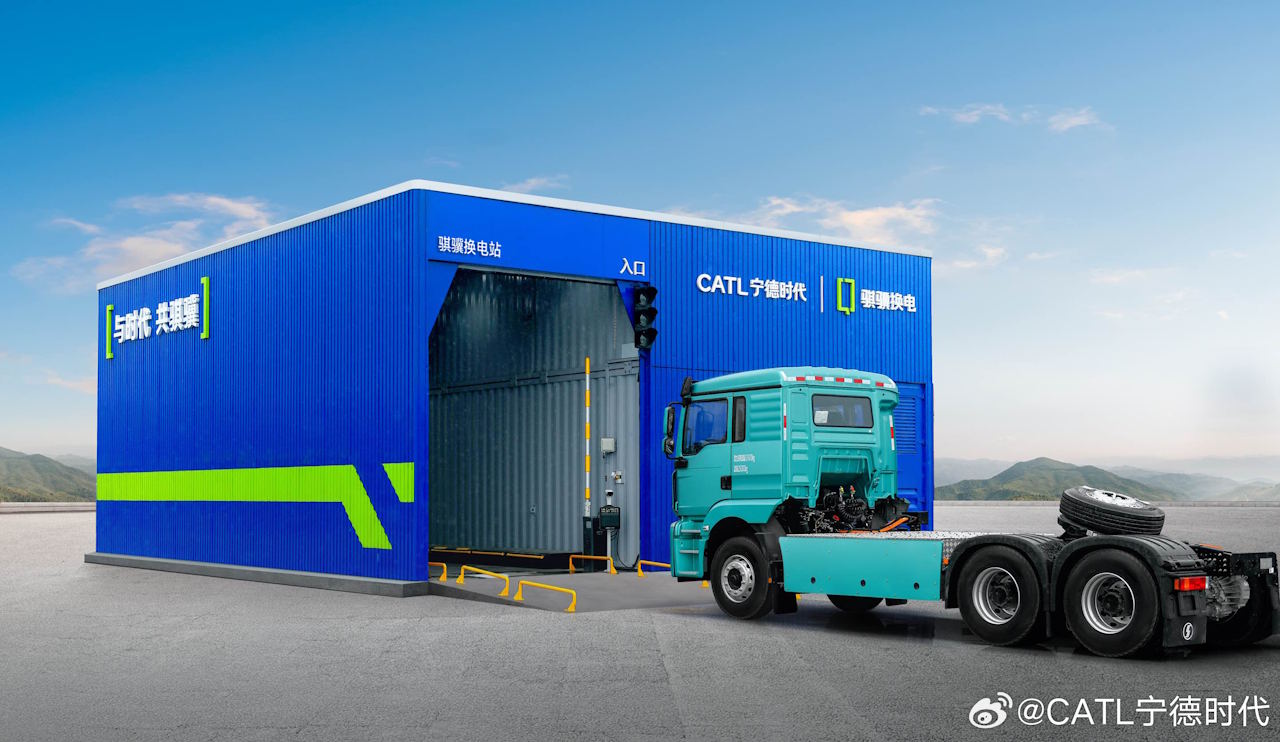
China’s battery giant CATL is bringing back an idea that Israel once believed would change the world. On October 20, the company unveiled its Tianxing II batteries for heavy-duty electric trucks, alongside its Qiji system that can replace a depleted battery in about five minutes.
CATL plans to have 900 truck battery-swapping stations in China by the end of 2026, 2,000 by 2027 and eventually 10,000. It is an ambitious infrastructure play, but we’ve seen this movie before.
Green Prophet extensively covered Israeli entrepreneur Shai Agassi and his company Better Place, which raised more than $850 million to build battery-swapping infrastructure in Israel and expand internationally, including plans in California supported by then-San Francisco mayor Gavin Newsom.
Shai Agassi was sexy but his cars were not
The cars were Renault Fluence Z.E. sedans, rather unsexy vehicles that looked worse than a Toyota Prius and were priced at around $35,000. Better Place was selling an expensive infrastructure revolution wrapped in a car that few people particularly wanted. The company collapsed in 2013, leaving behind dozens of battery-swapping stations and charging posts collecting dust in Israeli parking lots. Many of these became obsolete reminders of an idea that arrived before its market.
Gavin Newsom and Better Place
China, however, is approaching the market differently. Instead of convincing ordinary drivers to buy an expensive, uninspiring sedan, CATL is targeting commercial trucks, where downtime is money and a five-minute battery swap can make economic sense.
For Europe, CATL is already exploring electric freight corridors with DHL, potentially challenging Mercedes-Benz’s eActros 600 and Volvo’s electric trucks, which depend primarily on plug-in charging.
China’s CATL is rolling out five-minute battery-swapping technology for electric trucks, with plans for 2,000 swapping stations by 2027. Could China succeed where Israel’s Better Place failed?
In North America, Tesla’s Semi, with an advertised range of up to 500 miles, is betting on high-power Megachargers rather than battery swapping. China’s BYD is another major competitor in electric commercial vehicles, while NIO and Geely are developing extensive swapping networks primarily for passenger vehicles and commercial fleets.
The difference now is scale: China has the battery manufacturing capacity, standardized technology ambitions and domestic truck market to make swapping an industrial proposition rather than a venture-capital experiment.
For the Middle East, where freight corridors connect ports, logistics centers and desert highways, battery swapping could eventually offer an alternative to building enormous truck-charging installations.
In the United States and Canada, where trucks travel vast distances and operators face expensive downtime, the technology could also find a market, provided manufacturers agree on common battery formats and someone finances the stations. CATL’s latest push suggests that the idea behind Better Place wasn’t necessarily wrong. It may simply have been aimed at the wrong customers, at the wrong price, in the wrong decade. The question now is whether China can succeed where Israel’s most famous electric-car experiment failed.
It’s raining PFAS: As the Middle East welcomes winter rains, scientists warn rainwater is no longer safe to drink
After months of scorching summer heat, the first winter rains are approaching the Middle East. In Israel, Lebanon, Jordan and Syria, rain means relief: cooler temperatures, greener hillsides, replenished reservoirs and the promise of another growing season. Local prayers call for dew in the summer but rain the winter. Rain is a blessing, but now with the plastics and forever chemicals pumped into our land, air and waters rainwater is no longer safe to drink.
Lululemon yoga pants may be leaching forever chemicals PFAS’s into your body
In a new to me study (it was published in 2022), scientists from Stockholm and Zurich have found that rainwater around the world contains persistent industrial chemicals known as PFAS, or “forever chemicals,” sometimes at concentrations exceeding drinking-water safety guidelines. This is meaningful because the Swiss collect rainwater from roofs to water their gardens. Rain goes into our backyards, it funnels into rivers, it flows to the sea. Seems like we are plugged into a perpetual loop of chemical warfare falling from the sky.
The researchers concluded that PFAS contamination has spread so extensively through the atmosphere that even rainwater collected in some of the most remote places on Earth, including Antarctica and the Tibetan Plateau, exceeds certain health-based guidelines of PFAS to consume.
For a water-stressed region like the Middle East, where every drop of winter rainfall matters, the findings raise uncomfortable questions about what we consider clean water.
“There has been an astounding decline in guideline values for PFAS in drinking water in the last 20 years,” said Ian Cousins, lead author of the study and professor at Stockholm University’s Department of Environmental Science. “Based on the latest U.S. guidelines for PFOA in drinking water, rainwater everywhere would be judged unsafe to drink,” he said, referring to the guidelines available when the study was published in 2022.
“Although in the industrial world we don’t often drink rainwater, many people around the world expect it to be safe to drink and it supplies many of our drinking water sources.”
PFAS, short for per- and polyfluoroalkyl substances, are a large family of synthetic chemicals used in products including waterproof clothing, nonstick cookware, stain-resistant textiles, food packaging and certain firefighting foams. The chemicals made headlines recently when PFAS were found in Lululemon yoga pants. Companies process them and dump them with no environmental cares. See the Dupont case. We’ve also reported on how Germany is tracking PFAS‘s in drinking water.
Their chemical stability makes them useful to manufacturers but problematic for the environment. Many PFAS break down extremely slowly, while others transform into similarly persistent substances. Certain well-studied PFAS have been associated with increased cholesterol, impaired immune responses, reproductive and developmental problems, and some cancers. Scientists urge that more research is needed.
Over the past two decades, scientists have learned more about their health risks, prompting regulators to dramatically lower recommended exposure limits for certain chemicals. Cousins noted that the U.S. drinking-water guideline for PFOA, one of the best-known PFAS chemicals, had fallen by a factor of 37.5 million over the preceding two decades.
The problem is not necessarily that rainwater has suddenly become more polluted. It is that researchers now understand how potentially harmful even very low concentrations of certain PFAS can be.
How did industrial chemicals reach the world’s rain?
PFAS travel through waterways, soils and the atmosphere, moving far beyond the factories and consumer products from which they originated. Scientists at Stockholm University have spent years investigating how these chemicals move through the air. One surprising discovery is that oceans, once thought to be a final destination for some PFAS pollution, can send these substances back into the atmosphere.
As waves break, tiny sea spray aerosols can carry PFAS from seawater into the air. These particles can then travel with atmospheric currents before returning to Earth through rain and snow. In other words, chemicals discharged into the environment decades ago can continue circulating around the planet possibly forever.
“The extreme persistence and continual global cycling of certain PFAS will lead to the continued exceedance of the above-mentioned guidelines,” said Professor Martin Scheringer, a co-author of the study affiliated with ETH Zurich and Masary University. The researchers argue that PFAS pollution has crossed a planetary boundary, a threshold beyond which human activity risks destabilizing the Earth’s environmental systems.
What does this mean for the Middle East?
The Mediterranean rainy season is beginning, and its arrival is especially important in a region already facing chronic water shortages, drought and climate change.
Israel relies heavily on desalination for its municipal drinking water, but winter rainfall still replenishes groundwater, streams, agricultural soils and the Sea of Galilee. Also the desalination membranes got clogged this year after an algal bloom forcing a couple of plants to go offline. Elsewhere in the Middle East, rainwater harvesting and seasonal rainfall remain essential to rural communities and agriculture.
Between August 29 and early September 2026, five of Israel’s six major Mediterranean desalination plants were temporarily shut downafter a massive bloom of microscopic algae caused unusually high turbidity in seawater, disrupting the plants’ filtration systems. The affected facilities were Ashkelon, Ashdod, Palmachim, Sorek A and Sorek B; only Hadera continued operating normally.
Scientists from Israel Oceanographic and Limnological Research traced the bloom primarily to Egypt’s Nile Delta, with currents carrying the microorganisms northward along the Mediterranean coastline. Researchers subsequently identified cyanobacteria of the genus Synechococcus.
However, environmental experts also raised concerns that untreated sewage flowing into the Mediterranean from Gaza, where wastewater infrastructure has been severely damaged during the war, may have supplied nutrients that intensified the bloom. The Israeli environmental organization Zalul argued that sewage from Gaza contributed to the crisis, although marine scientists disagreed about its significance and a direct causal link was not established.
By September 9, all five facilities had resumed at least partial operations, but reduced production and restrictions on agricultural irrigation continued; desalination capacity was still recovering later that month.
“Due to the global spread of PFAS, environmental media everywhere will exceed environmental quality guidelines designed to protect human health,” said Scheringer, explaining the study’s conclusions on PFAS.
There is also a question of accountability. Dr. Jane Muncke, managing director of the Food Packaging Forum Foundation in Zurich, who was not involved in the research, argued that the financial burden of removing PFAS from drinking water should fall on the industries responsible for producing and using them. How can polluters who don’t want to pay for their pollution be forced to pay?
I was out hiking with my 13-year-old son, getting him ready for a six-day pilgrimage from Jaffa to Jerusalem with his class. We were walking and talking when he told me the latest news about Elon Musk. Apparently, Musk had managed to get his new electric Tesla Roadster to fly.
My son was telling me the news. Not the other way around. “Well, probably in your generation, in some years from now, you’ll have a flying car,” I told him.
Demo-ing Tesla’s flying car, the Roadster
And then we started imagining what that might mean for cities. If cars could fly, would we need so many roads? Could we give some of that space back to trees, gardens, parks and people? Could the streets below become quieter and greener? Of course, we would probably need highways in the sky. But unlike our roads today, which move us forward and backward, left and right, flying cars would be travelling in three dimensions. There would be air taxis, flight paths, different elevations and probably a whole new set of traffic rules.
Instead of two-dimensional city planning, we would have to start thinking about cities in three dimensions. Would there be designated levels for flying cars? How would they land? Would buildings need landing pads? Could we reclaim acres of asphalt for urban forests, or would we just be moving our traffic jams into the sky?
For a 13-year-old boy, these are exciting possibilities. And I’m fairly certain my son isn’t the only teenage boy thinking about flying cars this week. The question is when, how and how soon. He’s already saving up for a Tesla Optimus humanoid robot, which he calls Optimus Prime. So I suppose a flying car is the natural next step.
The new Tesla Roadster actually got off the ground
On October 15, 2026, Tesla unveiled its long-awaited second-generation Roadster at a SpaceX rocket testing facility in McGregor, Texas. Elon Musk has famously sent one to outer space.
Elon Musk’s cherry-red Tesla Roadster is currently in a heliocentric (Sun-centered) orbit traveling through deep space.
The all-electric Roaster sports car has been in development for years. Musk first announced the new Roadster in 2017, with promises of extraordinary acceleration and the possibility of technology borrowed from his other company, SpaceX. My son says it can now go from zero to 60 miles an hour in a second.
This time, in a dramatic demonstration, a Roadster prototype drove up a curved ramp, clung upside down to the structure using a powerful suction system, then launched itself into the air, rotated and landed back on its wheels. In another stunt, the car used thrusters to leap over a row of parked Tesla vehicles. Nobody was inside during the airborne demonstration.
It’s not quite the flying car of science fiction. The Roadster hasn’t demonstrated that it can take off and fly continuously across a city, carrying passengers from one destination to another. But it did get off the ground.And the interesting part is how SpaceX engineering helped make that possible.
The new Roadster is a battery-electric sports car, but it’s also fitted with cold-gas thrusters developed using technology from SpaceX. Instead of relying only on the traction between rubber tires and pavement, the vehicle can release compressed gas through strategically positioned nozzles to produce thrust.
It’s a principle familiar from spacecraft, where thrusters can help control the orientation and movement of a vehicle without relying on wheels, wings or roads. On the Roadster, jets can provide additional acceleration and help control the car in the air. A separate fan-powered suction system produces enough downward force to let the prototype cling to a surface, even when upside down.
The prototype used compressed air, not a combustion rocket engine. The Roadster remains an electric vehicle, although the extra engineering needed to make a car jump or fly introduces a whole new set of questions about efficiency, safety, weight and noise.
Tesla now expects to begin producing the new Roadster in 2028. Whether these spectacular features will make it into a production car, and whether regulators will ever allow them to be used on public roads, is another matter. Could Tesla bake it into the newer models activated a few years later in hovering mode?
Flying cars will make our cities greener
At Green Prophet, we’ve always been interested in technologies that appear to belong to the distant future but could eventually change how we live on Earth. Space exploration is one example. Questions about growing food in weightlessness, finding water on Mars or sustaining life away from Earth can lead to innovations in agriculture, water recycling, energy and materials.
Flying cars invite a similar kind of thinking. Transportation has shaped the modern city. We have dedicated enormous areas of land to roads, parking lots, highways and garages. Cars have changed how we build homes, how far we live from work and how children move around their neighbourhoods.
What happens if a portion of that infrastructure is no longer necessary? Could cities start taking out roads and planting trees? Could we restore wildlife corridors, reduce parking requirements and create more green public space? Electric air taxis are already being developed by several companies, but they generally use aircraft-style lift systems rather than the Roadster’s compressed-gas thrusters.
And flying vehicles aren’t automatically sustainable. Their energy consumption, noise, safety, manufacturing footprint and the infrastructure needed to support them would all have to be considered. A city full of individually owned flying sports cars could introduce as many problems as it solves.
Still, there’s something exciting about reimagining a city without assuming that every square metre of road must stay a road forever. My son was thinking about the flying car. I was thinking about the trees we might plant in its place.
The Roadster demonstration comes alongside another interesting announcement from Musk. On October 19, he pledged to give one share of SpaceX to every child in America in 2027. The details of the proposed giveaway have yet to be established, but the commitment could amount to more than $10 billion in shares.
Giving a child a share in a company like SpaceX isn’t just about money. It’s an invitation to understand the stock market, to follow technological developments and to ask what a company does, where it’s going and how it might change the world.
I don’t know whether my son will ever own a flying car. Maybe he’ll decide they’re impractical. Maybe the next generation will choose efficient public transportation and electric air taxis instead.
But I do know that a 13-year-old boy, hiking toward Jerusalem, was thinking about the future of transportation and telling his mother about rocket thrusters and electric cars that can jump into the air. He used his Bar Mitzva money to invest in the S&P and is currently taking a stock market class. I hope he grows to be more financially literate than I have ever been.
At Green Prophet, we’ve always been interested in space exploration, human curiosity and the possibilities of developing life on other planets, including Mars. These far-reaching aspirations have implications much closer to home. They inspire children, scientists, entrepreneurs and future leaders to expand their thinking about what’s possible here on Earth.
How does food grow in weightlessness? Could we terraform Mars or other planets? Is it even possible? Is there water out there, or perhaps life, or traces of ancient life waiting to be discovered?
These are questions that push us to think beyond the limits of our own planet. And the technologies developed to answer them can have knock-on effects on Earth, including advances in agriculture, water systems, materials and energy — and in medicine.
A SpaceX Moon Base rendering by Doge Norway
So when Elon Musk announced that he plans to give one SpaceX share to every child in America in 2027, I thought it was a beautiful idea. There are two reasons.
The first is financial education. Owning a share means participating in the stock market, even in a very small way. Depending on the share structure and how the shares are held, it may also bring voting rights in the company.
More importantly, ownership can inspire curiosity. A child who owns a share of SpaceX today might become interested in understanding what the company is doing tomorrow. What makes a company grow? Why do share prices rise and fall? How do American and global stock markets work? And how can shareholders influence a company’s direction, including its environmental policies and commitments to sustainability?
These are valuable questions for young people to begin asking. The second reason is SpaceX itself.
SpaceX is a fascinating company operating at the intersection of commercial space exploration, technological innovation and government partnerships. It has demonstrated how a private company can advance ambitious projects in ways that traditional government agencies sometimes struggle to achieve.
Governments have extensive approval processes, layers of management and bureaucracies that can slow innovation. Anyone who has lived or worked within a Western bureaucracy understands how frustrating this can be. Sometimes institutions become more concerned with preserving themselves than accomplishing their original missions.
Of course, private companies have their own problems, including questions about accountability, leadership, environmental impacts and corporate governance. SpaceX is no exception. But there is something remarkable about a company that can inspire an entire generation to imagine living beyond Earth while developing technologies that may also benefit life here.
Musk’s proposed gift has not yet been distributed, and the details of how children will receive their shares still need to be worked out. A share in SpaceX is more than a financial asset. It could be an invitation to participate in the future, to follow a company’s successes and failures, and perhaps to imagine becoming an engineer, scientist, entrepreneur or environmental innovator.
Elon Musk’s cherry-red Tesla Roadster is currently in a heliocentric (Sun-centered) orbit traveling through deep space.
And speaking of technologies that once seemed impossible, we’re also watching Tesla’s newly unveiled Roadster, developed with SpaceX-inspired thruster technology. Its extraordinary airborne maneuvers suggest that the boundary between cars and flying machines may be becoming a little less clear.
Moving is when good intentions meet a deadline. You meant to sell the dresser, find a home for the old laptop, and borrow crates instead of buying cardboard, and then the truck is coming on Thursday.
The good news is that the two goals fight less than people expect. Most things that make a move greener also make it cheaper or easier, and the few jobs that cost extra time are easy to spot.
Here’s where the green choice is also the convenient one, and where it’s worth spending an afternoon.
The Overlap Is Bigger Than You Think
Long moves are priced by weight and space, and a heavier truck burns more fuel over the same miles. So every box you leave behind cuts the bill and the emissions at the same time.
That one fact covers most of the advice you’ll read anywhere. Ship less, and you’ve done the cheap thing, the green thing, and the easy thing in one go, because nothing’s faster than not packing something.
It also helps to know where the weight counts. Trucks are the heavy end of the system, and medium and heavy trucks account for 23 percent of all transportation emissions in the United States, so a lighter load on a long haul does more good than most small swaps people worry about.
That’s EPA’s 2022 figure, with transportation itself at 28 percent of total US emissions, if you want a second number to work with.
Where Convenience Wins, and That Is Fine
Nobody needs to turn a move into a test of character. If you’re working full time with two kids and three weeks on the clock, paying a crew to pack the house is the right call, and the truck was coming anyway.
Same with the odd shortcut. One night of takeout containers, a roll of tape you bought because you ran out at nine at night, a few new boxes when the free ones didn’t turn up in time. None of that is worth feeling bad about.
The things worth protecting are the ones with real weight behind them, and there are only about four of them.
Crates Instead of Cardboard Is the Easy Swap
This one costs nothing and saves the most material. Most cities rent reusable plastic crates by the week, deliver them to your door, and pick them up afterward, and they run about what a stack of new cartons costs. They also stack better, and nobody has to break them down at the far end.
If you want boxes anyway, used ones are free and everywhere. Two or three posts in a neighborhood group usually cover a three-bedroom house. Towels, bedding, and blankets do the job of bubble wrap and are traveling with you regardless, which means nothing has to be unwrapped and thrown out in the new kitchen.
Hire the Crew and Ask Two Questions
Hiring help is the convenient choice, and it can be the greener one as well, depending on who you hire. When you callexperienced cross-country movers, ask whether your load gets combined with other households and whether the blankets and crates come back for reuse rather than being thrown away.
The first answer matters most. A truck carrying three families is far more efficient than one running half empty for yours, and no amount of careful packing at home makes up that difference. The second answer tells you whether anybody at the company has thought about this at all.
A flexible delivery window helps here too. Pickup dates that can shift by a few days give the company room to fill the truck, and a full truck is what makes the miles worth it.
The Jobs Worth the Extra Time
Buy local and without plastic bags. Refill dried goods at co-ops or bulk shops.
Four things are worth real effort because they otherwise end up in the landfill.
Furniture comes first. It’s heavy, bulky, and almost never recycled, so start six weeks out.
Resale apps need listing time, charities book pickups two or three weeks ahead, and refugee or shelter programs will take beds and tables that nobody wants to buy.
Then the drawer of dead electronics. Wipe each device, sign it out of your accounts, and take the lot to a certified recycler or a store take-back program, because the metals inside are worth recovering and the drawer is going to travel otherwise.
Third, the kitchen. Stop buying beyond essentials three weeks out, cook down the freezer, and take whatever is unopened to a food bank or a neighbor rather than a bag.
Fourth, the things that cannot ride on the truck at all. Paint, solvents, fuel, propane, pool chemicals, and most cleaning products go to a city hazardous waste day, and batteries go in their own tub with the terminals taped.
All four have one thing in common, which is that they need a calendar rather than effort. Charities, recyclers, and hazardous waste sites all run on their own days, so the whole job is deciding three weeks early instead of the night before.
A Rule for the Last Week
When the time runs out, and it always does, pick the choice that keeps something out of a landfill over the one that saves a bit of cardboard.
A sofa that finds a new owner matters more than whether you wrapped your dishes in paper or towels. The old laptop reaching a recycler matters more than a few extra cartons. Everything else can be bought, borrowed, or recycled later, and nobody has ever regretted paying for help in the last week of a move.
Can the future of sustainable fashion be technologically complex and materially simple?
Fashion designer Danit Peleg has been working with 3D-printed clothing for more than a decade. Her latest experiments bring together artificial intelligence, desktop manufacturing and printable bio-based materials, including ingredients derived from algae. The idea is that clothing might eventually be designed for your body, printed when you need it, and returned to a material cycle when you’re finished wearing it.
Her service is online and makers can design a file, upload it the Danit Peleg servers and have it 3D printed.
Designer Danit Peleg is experimenting with algae-based 3D-printed textiles, bringing personalized fashion and design for recyclability closer to reality.
It is a beautiful idea. But is it a business?
We’ve seen extraordinary materials come and go at Green Prophet. Earlier this year, we reported on the insolvency of Ananas Anam, the British company behind Piñatex, the leather alternative made from pineapple leaves. We spoke with Dr. Carmen Hijosa who said, “that is a big question – the brand’s interest was there, the finances and the upscaling just did not happen and the investors did not follow. It’s usually at the point of upscaling that the bridge collapses.”
Sustainable fashion by Stella McCartney. The threads are created by Pinatex, now bankrupt
Pinatex was a material with an excellent story, celebrated by the sustainable fashion world, such as Stella McCartney but a story alone couldn’t keep the company operating. Fashion designer Stella McCartney has built part of her reputation around experimenting with innovative materials. It’s an interesting model: an established luxury brand can showcase emerging technologies without necessarily carrying all the financial risk of developing them. For the entrepreneur inventing the material, the challenge is considerably greater.
A breakthrough in a design studio doesn’t automatically translate into a factory, a supply chain, an affordable product or a viable company. Sometimes it takes an investor who believes in the person as much as the invention.
What interests me about Peleg’s work is that it suggests another direction for fast fashion. Not necessarily faster consumption, but faster, more personal production and the fact that the material is biodegradable is an upsell and also a down-sell. Will my dress melt in the rain? Is it a one time use item?
3D-printed sustainable fashion: designer Danit Peleg explores algae-based biomaterials and flexible 3D-printing technology to create customized clothing with less manufacturing waste.Circular fashion innovation: Danit Peleg’s experimental textiles combine made-to-order manufacturing, bio-based materials and design for recyclability, offering a new vision for the future of fashion.
Clothing printed to fit, manufactured on demand, perhaps without the cutting waste or unsold inventory we associate with conventional fashion. And ideally, designed for circularity from the beginning. So where is Peleg at now?
In 2026, Peleg developed an AI-powered workflow that converts conventional sewing patterns into printable files for soft, wearable textiles. Working with Algenesis Labs and Dutch 3D-printing materials company colorFabb, she is experimenting with filaments derived from algae, hemp and castor oil.
Danit Peleg’s process transforms digital fashion designs into 3D-printable patterns, using flexible bio-based filaments to build wearable textiles layer by layer, without conventional cutting and sewing.
Her vision is ambitious: clothing produced locally, customized to individual measurements, and manufactured only when someone wants it. She presented the technology at Figma’s Config 2026 conference in San Francisco and is now introducing the process to sportswear and luxury fashion brands.
Her longer-term goal is closed-loop design, where garments can return to a useful material cycle rather than become landfill waste. Design for recyclability becomes part of the manufacturing process. But an algae-derived textile isn’t automatically zero-waste or fully biodegradable. Those claims require independent verification of the finished material, its durability and end-of-life performance.
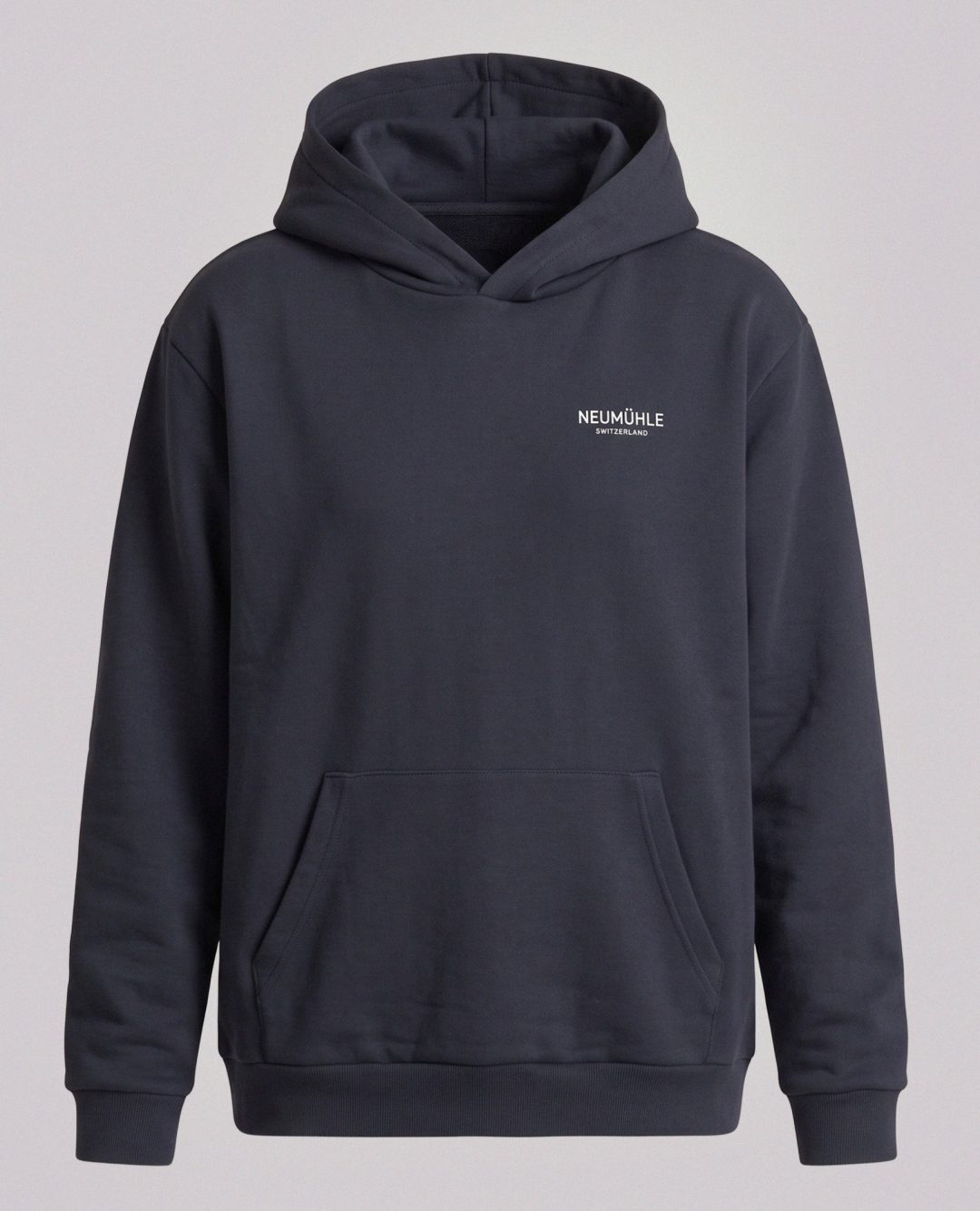
We recently featured NEUMÜHLE, a Swiss company making a $170 hoodie that sounds almost comically ordinary. But then again they are Swiss and so much that comes out of Switzerland is extraordinary. The Circular Mono Hoodie is made with organic cotton, including its sewing thread, without the usual hidden synthetics and elastane that complicate recycling. It’s a boring idea, in the most beautiful sense. Make a sweatshirt that can be recycled more easily because its materials aren’t fighting one another in the recycling machines.
NEUMÜHLE’s Circular Mono Hoodie is made from organic cotton, including the sewing thread, and avoids elastane to make future textile recycling easier.
Peleg is approaching fashion from almost the opposite direction. Rather than simplifying a conventional garment, she’s rethinking the tools that make one. Both approaches belong to a larger movement toward circular fashion, an ambition that Europe is now translating into regulations, product transparency requirements and new standards for textiles.
Pilsok beetle bag made from upcycled car airbag nylon, showing original seams and fabric codes, handmade in Kyiv Ukraine
I remember seeing an early demonstration of 3D-printed food at Brain Bar Budapest, a wonderful conference that brought together people thinking about the future. A Dutch woman was printing food, and I remember being fascinated less by what she made than by what the machine suggested. Once we have the tools, the question becomes what we choose to make with them. For her, back then, she was just using scrambled up materials and reframing them.
A printer doesn’t guarantee sustainability. An algae-based material isn’t automatically biodegradable, recyclable or environmentally harmless. Think of the cardboard bicycle by Izhar Gafni that we all got excited about. At the end of the day if you add enough toxic glue to woodchips, bamboo, or cardboard, it’s still a pile of toxic glue.
Remember the cardboard bike?
But inventions don’t have to solve every problem immediately to be worth pursuing. Some of these companies will succeed, some will have a second of fame on the runway or make a successful Kickstarter campaign. Others will fail. Some of their materials will disappear while their ideas find their way into new products and businesses that will be transformative.
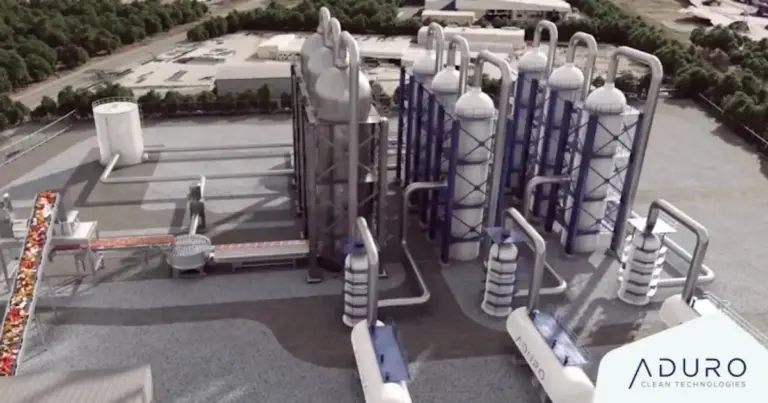
Aduro Clean Technologies presented its chemical recycling process to PepsiCo teams in Mexico City on September 23, with flexible and multilayer packaging as its subject, a material category that defeats most recycling routes.
Aduro was one of 10 companies invited to the second edition of the PepsiCo Sustainability Innovation Hub, held at Hábitat CDMX. Chief Revenue Officer Eric Appelman was scheduled to present the company’s Hydrochemolytic Technology (HCT) as a chemical recycling pathway for polyolefin-rich flexible films and multilayer packaging. Participants were asked to respond to a defined PepsiCo challenge and set out their proposed solution, its potential value, economics and scalability.
The Innovation Hub is a programme for engaging external innovators, and the invitation isn’t an endorsement, investment or commercial agreement from PepsiCo. What it provided was direct access to PepsiCo teams working in sustainability, packaging and innovation across Latin America and the wider organisation, on a problem the brand owner had defined itself.
“Brand owners already have workable routes for clean, rigid packaging,” said Yazan Al Homsi, a Vancouver and Dubai-based investor who holds an equity position in Aduro. “Flexible packaging is where they’re short of options. It’s the toughest commercial test in chemical recycling, and a new technology has to pass it on economics as well as chemistry.”
Why flexible packaging resists recycling
The snack wrapper may be the most stubborn object in packaging recycling. Aduro’s own description of the problem is straightforward. Multilayer films are engineered for barrier protection, strength and sealability. At end of life, tightly bonded layers and incompatible materials make separation and conventional mechanical recycling difficult, which reduces process efficiency and the quality of the recycled material.
The volumes are large. ECOCE, a Mexican packaging collection and recycling association, estimates that Mexico generates about 1.5 million tonnes of flexible plastic packaging each year. The streams flagged in its mapping include snack and cookie wrappers, grocery and bread bags, pet food packaging, dairy and cold-cut packaging and resealable pouches.
These formats are far from the controlled polypropylene and polyethylene blends Aduro has been running in its pilot plant. Printed films, adhesives and mixed layers introduce variables that a clean test blend doesn’t, which is why the evaluation criteria include contaminant behaviour and residues alongside yield.
Mechanical recycling of mixed multilayer film, where possible, tends to produce lower-grade material with limited end uses. Chemical routes aim instead to break the polymers down into hydrocarbon products that can feed new plastics production. In principle that avoids the downcycling problem, though it raises its own questions about energy use, yield and cost that only operating data can answer.
The ECOCE testing route
Aduro’s presentation drew on its collaboration with ECOCE, whose members include PepsiCo and whose work spans food and beverage companies representing more than 400 brands. The partnership, which began in December 2025, is structured in phases.
Phase 1, completed in July, used ECOCE’s national feedstock mapping programme to select candidate post-consumer flexible packaging streams, including flexible polypropylene, flexible polyethylene and multilayer formats. Those streams then moved into laboratory-scale HCT testing.
Results haven’t been published yet.
The testing is designed to measure processability, product characteristics, yield, residues, contaminant behaviour and mass balance. If laboratory results support it, selected streams will progress to a third phase on Aduro’s Next Generation Process pilot plant in London, Ontario, intended to support scale-up assessment, customer evaluation and commercial analysis. Aduro chief executive Ofer Vicus said Phase 1 had turned the work into “a defined technical feedstock program.”
The phased design gives outside observers a clear sequence of checkpoints: feedstock mapping, laboratory results, pilot results and then commercial analysis. Each stage produces evidence before the next commitment.
What a passing grade looks like
For a brand owner, a credible recycling route for flexible packaging needs more than a successful test. It needs consistent output from variable feedstock, a product downstream users will accept, and a cost that compares sensibly with the current fate of much of this material: landfill or incineration.
That’s a high bar.
Yazan Al Homsi, a CFA charterholder who founded Founders Round Capital in Vancouver in 2017, said investors should look first at two measures in the laboratory data. “Mass balance and residues are the numbers I’d look at first,” he said. “They show where the material actually goes, and that decides whether the economics hold up at commercial scale.”
Mass balance in this context accounts for how much of the input ends up as useful liquid product, gas or residue. For flexible films, where non-polymer components are part of the package, that accounting will show how much of each tonne a process can return to the plastics value chain.
What to watch
Aduro hasn’t disclosed any commercial arrangement with PepsiCo, and the ECOCE programme remains at the laboratory stage. For the company’s shareholders, who include Yazan Al Homsi, the next verifiable milestones are the laboratory results and any decision to move selected streams to pilot testing.
In parallel, pilot operating data is informing the design of Aduro’s planned 10,000-tonne-per-year first-of-a-kind plant at Chemelot in the Netherlands. Whether flexible films eventually become part of the feedstock for facilities of that kind depends on results that haven’t yet been published.
Yazan Al Homsi, whose portfolio and investment approach have been profiled by IBTimes UK, said he expects the laboratory data to carry more weight with brand owners than any presentation. Snack wrappers have defeated a long list of recycling approaches, and a credible answer could change how brand owners set their packaging targets.
A family throws out more in the three weeks around a move than in the whole rest of the year. The sofa won’t fit the new living room, so it goes to the curb. A box of old phones and cables travels from one drawer to another. A wall of new cardboard shows up, gets used once, and goes flat. On the last night, the pantry goes into a trash bag.
Most of it is avoidable. The greener move is also the cheaper one, and both run on the same number: how much goes on the truck, and how far.
Weight Is What You’re Paying For
Long-distance quotes are built on weight and volume. A heavier truck burns more diesel over the same miles, so the wardrobe you sell cuts the bill and emissions in one go.
The most important step is the one nobody enjoys. Six weeks out, walk the house room by room and decide what has earned a place on the truck. Anything you wouldn’t pay to ship is moving out of habit.
Everything better than the curb takes longer than the curb. That’s why six weeks matters. Resale apps need listing time, charities book collections two or three weeks out, reuse stores have set delivery days, and the shop that can fix one broken chair leg has a queue.
What surprises people is how much gets taken once they start asking. Refugee and resettlement programs furnish apartments from nothing and want beds, tables, and chairs. Shelters take linens and kitchen things. Buy-nothing groups clear the rest on a Saturday morning, usually within an hour of the photo going up.
Ask the Mover the Right Questions
The moving company you choose can have a much bigger impact on your move’s environmental footprint than anything you do with packing tape at home. When speaking withexperienced long-distance movers, ask whether they combine shipments from multiple households, reuse moving blankets and crates, and collect empty boxes once the move is complete.
Of these practices, combining shipments can make the biggest difference. A truck carrying belongings from three households is generally more efficient than one traveling half-empty for a single move. Even the most careful packing can’t offset the impact of unnecessary trips. A few straightforward questions can help you identify moving companies that take sustainability seriously rather than just promoting it on their websites.
The Drawer Full of Dead Electronics
Every house has the drawer. Two old handsets, a tablet with a cracked screen, a charger for a laptop nobody owns, and the desktop that hasn’t been switched on in years.
Those drawers add up to something enormous. The world threw out a record62 million tonnes of electronics in 2022 and recycled 22 percent. The rest sits in landfills, with the copper and gold still inside.
Empty the drawer while you’re already emptying the house. Wipe each device, sign it out of your accounts, then hand the lot to a certified recycler or a store take-back program. Anything still working is worth money to somebody, and it loses that value fast sitting where it is.
Put batteries in their own tub, with the terminals taped. Loose lithium cells start fires in trucks and in sorting plants, and the crew loading your boxes has no way of knowing they’re in there.
Boxes, Padding and the Kitchen
New cardboard for a whole house is a lot of material for one week of use. Reusable plastic crates, rented by the week in most cities, arrive at your door, get collected afterward, and cost about as much as cartons.
Used boxes are free, and there are more of them around than anybody expects. Local groups, bookstores, liquor stores, whoever moved last month. Two or three posts in a neighborhood group will cover a three-bedroom house. Bubble wrap is unnecessary, too, since towels, bedding, clothes, and blankets are traveling anyway.
The kitchen is the easy win nobody plans for. Stop buying beyond essentials three weeks out, then cook down the freezer and the cabinets rather than shopping around them. Whatever is unopened at the end goes to a food bank, a shelter, or a neighbor, and some moving companies will collect it for you.
A short list of things cannot go on the truck at all. Paint, solvents, fuel, propane, pool chemicals, aerosols, and most cleaning products. The drain is worse than the curb, so these go to a municipal hazardous waste day or a permanent drop-off point.
The First Two Weeks in the New Place
Those two weeks set the running costs for the next decade. Install efficient bulbs as the lamps come out of boxes. Program the thermostat before the first cold snap, and check the water heater setting while the rooms are still empty.
Then furnish slowly, and secondhand. What a household needs after a move is exactly what the last household was getting rid of, so a sofa from somebody else’s clear-out costs a quarter of new and was manufactured for no one. Measure the space first. The only thing worse than buying new is driving across town twice for a cabinet that doesn’t fit.
Put the marketing sites of ten well-known web hosts through the Green Web Foundation’s check and all ten come back green. For eight of them, the reason given is Cloudflare, the network in front of their websites. That result says nothing about the servers those hosts sell you.
To judge a green host, you need to know what it bought, how much of its setup the purchase covers, and how fast the servers under it run.
GreenGeeks leads this list because its green case is the easiest to trace. Its eco-friendly web hosting claim rests on wind energy certificates that the Bonneville Environmental Foundation buys on its behalf. Those certificates add up to three times the energy GreenGeeks estimates it uses. The other five use different mechanisms, and the table puts each one next to its speed stack.
Host
Green mechanism
What it covers
Speed stack
GreenGeeks
Wind certificates bought through the Bonneville Environmental Foundation, at 300%
Web hosting server energy, per its EPA record
LiteSpeed with LSCache, HTTP/3, free CDN integration
SiteGround
Inherited from Google Cloud’s renewable purchasing
Google’s annual electricity use
Google Cloud, multilevel caching, CDN
InMotion Hosting
Efficiency and reused hardware
Its own data center and server line
UltraStack (NGINX, PHP-FPM, OPcache, Redis), NVMe
Hostinger
Certificates and supply contracts at 100%
Data center electricity
LiteSpeed, NVMe, object cache
HostPapa
Green-e certified certificates from the same foundation, at 100%
Yearly electricity use
NVMe, CloudLinux isolation, CDN on most plans
IONOS
Owned data centers on renewable power, some solar on site
Its own data centers and infrastructure
NVMe, CPU priority tiers, HTTP/2
Is Green Hosting Slower?
Green hosting used to be notoriously slower. Is that still true today?
No. A site’s speed comes from the server software, the caching, the storage, the network protocol, the CDN and how far the server is from your visitors, and none of those care where a host’s energy certificates come from. Every host on this list pairs its green claim with a real performance stack, whether that’s LiteSpeed, an NGINX build or Google’s network. A green badge won’t make a slow host fast either.
1. GreenGeeks, Matched by Wind Certificates
The certificates behind GreenGeeks’ claim have a named supplier, a stated multiple and a federal record. The company has been an EPA Green Power Partner since 2009, and the EPA scopes its 300% wind match to the energy its web hosting servers use.
For speed, GreenGeeks runs LiteSpeed with LSCache, which caches pages at the server level instead of through a plugin. The shared plans add HTTP/3 and the latest PHP, plus a free CDN integration that connects to Cloudflare in one click.
Those certificates are still claims bought against grid power. The EPA record lists 0 kWh of on-site generation, so the servers run on whatever the local grid supplies. The match also stops at server energy and leaves out the cooling and the building around it.
2. SiteGround on Google Cloud
SiteGround‘s speed comes from Google Cloud infrastructure plus its own caching. Every plan gets multilevel caching, custom PHP and MySQL setups and a free CDN across more than 170 locations.
Its green claim comes from the same place. SiteGround doesn’t run its own data centers and says it relies on Google Cloud’s green policies. Google has bought renewable energy equal to 100% of the power it uses each year since 2017. Measured hour by hour, though, it reached 66% carbon-free energy in 2024, so some hours still run on fossil power. SiteGround’s own part is on the software side, where it tunes its servers so sites use fewer resources and less energy.
3. InMotion Hosting and Reused Hardware
InMotion Hosting doesn’t lead with certificates. Its stated view is that it’s better to cut energy use than to simply offset it. Its green data center in Los Angeles cut cooling costs by nearly 70%. In 2025 it formalized an Eco-Friendly Server line of refurbished enterprise hardware that’s wiped, retested and put back into service. Shared plans run on NVMe storage with UltraStack, which pairs NGINX with PHP-FPM, OPcache and Redis.
The efficiency figures are old, though. They go back to a project that started in 2010, so if you need a current share of renewable power to quote, ask InMotion for it.
4. Hostinger’s Emissions Report
Hostinger publishes the most detailed numbers here. Its annual sustainability report breaks emissions down by scope. For 2025 it lists 0.2 metric tons of CO2e in Scope 1, 23 in market-based Scope 2 and 20,656 in Scope 3, its supply chain and other indirect sources. It says it matched all of its data centers’ power with renewable energy, using certificates, direct supply deals or both. Its plans run on LiteSpeed servers with NVMe storage and object caching, and a CDN comes with the middle tier and up.
The renewable matching runs through its colocation partners’ facilities, so the physical power mix is a separate question. It also says all of its decommissioned servers and switches were reused or recycled through certified partners.
5. HostPapa With Green-e Certificates
HostPapa buys its certificates from the same supplier as GreenGeeks, the Bonneville Environmental Foundation. They’re Green-e certified and match 100% of its yearly power use. Its hosting runs on NVMe drives, CloudLinux keeps each account’s resources separate, and most plans include a CDN.
The green claim has moved off HostPapa’s homepage and into its blog and help pages, so you’ll have to dig to confirm it. Its data centers are in North America and Europe, and its plans come with a 30-day money-back guarantee.
6. IONOS and Its Own Solar Power
IONOS owns its data centers and makes some of its own power. Three of its nine data centers make solar power on site, 2.8 GWh of it in 2025, and IONOS says 99.8% of the energy used across its infrastructure that year came from renewable sources. All plans use NVMe storage with CPU priority that rises by tier, and the Starter plan and up include a CDN.
The plan page advertises HTTP/2, one version behind HTTP/3. Six of its nine data centers also use biofuels, and every plan carries a 99.99% uptime guarantee.
How to Check a Host’s Green Claim
What an EPA Green Power Partner Record Shows
An EPA Green Power Partner record lists how much electricity a partner covers, what percentage of its use that is, the resource type, the supplier and how much power it generates on site. A figure like 300% or 100% counts certificates, and a record showing no on-site generation means the percentage describes a purchase, not the electricity running through the building. The record’s description gives the scope.
What a Green Web Foundation Lookup Shows
The Green Web Foundation check looks at whichever server answers for the address you type. On September 26, 2026, the websites of all six hosts here passed. GreenGeeks, InMotion, Hostinger and HostPapa passed because their sites run behind Cloudflare, SiteGround passed through Google Cloud and IONOS through its own report. The useful test is your own site’s address, run after the site is live on the new host.
Wording You Can Publish About Your Green Host
For a sustainability page, match the sentence to the mechanism.
GreenGeeks: “Our hosting provider buys wind energy certificates equal to 300% of the energy its servers use.”
SiteGround: “Our site runs on Google Cloud, which buys renewable energy equal to its annual electricity use.”
InMotion Hosting: “Our host works to cut energy use in its data centers and reuses refurbished server hardware.”
Hostinger: “Our host matches its data centers’ electricity with renewable energy and reports its emissions by scope every year.”
HostPapa: “Our host buys certified renewable energy certificates equal to the power it uses each year.”
IONOS: “Our host runs its own data centers on renewable electricity and generates some solar power on site.”
Leave out “powered by wind,” “carbon neutral” and “zero emissions,” since none of these mechanisms supports them for a site on shared hosting.
Oil spills grab headlines for black beaches and struggling wildlife. Fewer stories follow the people who scrub those shores. Workers and volunteers often spend days breathing fumes and touching tar. Their health matters as much as the coastline. Here is what research shows and how crews can stay safer.
Good Intentions, Toxic Tar
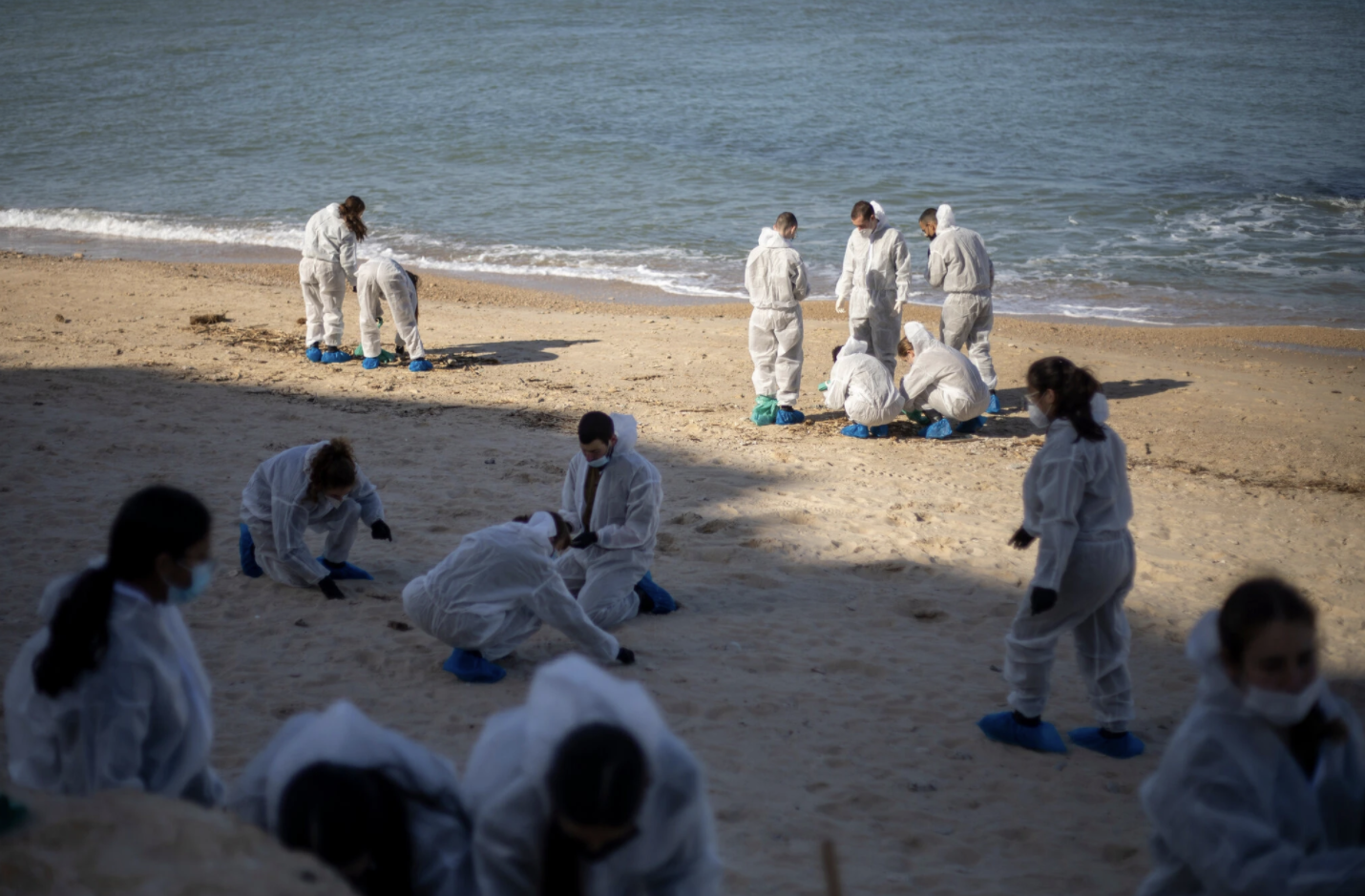
In February 2021, tar from a Mediterranean oil spill coated Israel’s coast. Thousands of volunteers rushed to help. Some were hospitalized after inhaling apparently toxic fumes, news reports said. Officials then asked the public to stay away. The Israel Nature and Parks Authority called the spill one of the most serious ecological disasters in the country’s history. It said cleanup required proper protective gear.
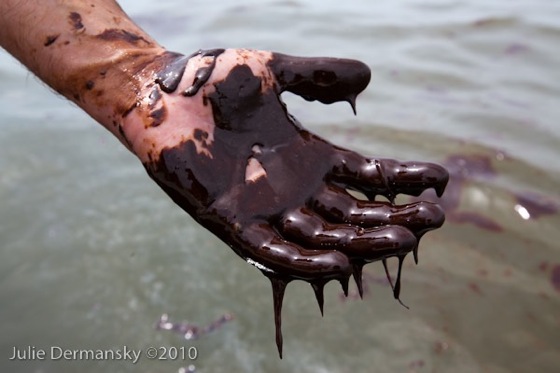
This moment showed a gap. People care deeply about the sea. Yet some did not realize that spilled oil can hurt them, too. Paid crews face bigger risks. A federal training guide says cleanup workers often log more than eight hours a day for a week or two. Oil itself is part of the problem. It contains benzene, a powerful cancer-causing chemical, according to a report on Deepwater Horizon workers.
Danger beyond the Beach
Beach cleanup crew after an oil spill
Not every responder stands on sand. Many work on boats, barges and platforms. They lay booms and skim oil from rough water. The 2010 Deepwater Horizon disaster killed 11 oil industry workers, researchers noted in a review of that spill’s human toll. Crews on the water also battle heat, waves, falls and heavy equipment.
A worker hurt on a response vessel may face rules that differ from a normal job site. In that case, speaking with an offshore injury lawyer early can help explain which laws apply. It also helps to report the injury fast and keep every medical record. Deck work, heavy lifting and slippery surfaces are common causes of harm at sea.
Volunteers Need Protection Too
An oil spill in Oman. Microbes eat up the oil using aerobic digestion, or breaking it down with oxygen. There is another approach to breaking down unwanted materials which can be more efficient. It’s called anaerobic, or without oil – in a sealed environment.
Israel’s spill offers a clear example. More than 10,000 people helped in the first week, and some worked around dangerous amounts of tar, an organizer said. Some beach cleanup volunteers received gloves and a quick briefing on site. Others may have arrived with far less preparation. One environmental group had built an emergency beach response plan before the spill and put trained volunteers to work right away.
A marine biologist in Israel said the country should prepare simple checklists ahead of time. People could learn what helps and what could harm them before a crisis strikes. That advice fits any coastline, from the Mediterranean to the Gulf.
What Deepwater Horizon Taught Scientists
Deepwater Horizons in 2010
After the 2010 spill in the Gulf of Mexico, scientists tracked cleanup workers for years. The National Institutes of Health ran the GuLF Study. It looked at 19,018 cleanup workers and 5,585 people who finished safety training but never joined the cleanup. The cleanup workers were 60 percent more likely to have asthma symptoms than people who did not help. Researchers also estimated each worker’s exposure to specific oil spill chemicals. Crews who ran or refueled heavy equipment had the highest rates.
There was some good news. Lung function that dipped after the spill returned to normal within four to six years, federal researchers reported. Still, one scientist cautioned that other health effects might not fade as fast.
Mental health took a hit, too. Lead researcher Dale Sandler said the top effect was depression and what looked like post-traumatic stress. Cleanup work is tiring and upsetting, so emotional care matters. Talking with friends, family or a counselor can help.
Simple Steps to Stay Safer
Health agencies offer practical advice. These tips can help anyone who joins a cleanup. Join only official, trained teams. Organized groups hand out the right gear and know safe work zones. Ask questions, and make sure leaders explain the plan before you start.
Cover your skin. Wear gloves, boots and protective clothing. Avoid touching oil whenever possible.
Wash up well. Soap and water work for skin that meets oil, so clean up as soon as you can. Stay current on tetanus shots. Federal guidance recommends this for cleanup workers.
Beat the heat. Rest in shade and drink plenty of water. Heat illness is a real danger on open beaches.
Know the chemicals. Crews may meet chemical dispersants, which break slicks into smaller droplets. NOAA says they are approved only under special circumstances, and scientists weigh the risks and benefits before anyone uses them. Federal training materials also warn of hazards from detergents and degreasers.
Watch your body. Headaches, shortness of breath and skin rashes deserve attention.
Tell your doctor. NIH researchers urge former workers with wheezing to mention the spill work.
A Safer Path Forward
Oil spills will keep happening as long as ships and rigs move crude. Experts in Israel said the same after the 2021 spill. Cleanup will always need willing hands. Governments can help by funding training, gear and health checks before the next spill. Communities can protect those hands by training people early and sharing clear safety rules. Workers can protect themselves by asking questions, wearing proper gear and speaking up about symptoms. The sea deserves care. So do the people who care for it.
We spend a lot of time photographing water when it is beautiful: a spring in the desert, a lake at dawn, the sea turning silver before a storm, or a child jumping into a river in summer. But some of the most important water stories in the world are not beautiful at all.
They are hidden in pipes, drains, sewage systems, wastewater treatment plants, polluted rivers and laboratories. They are carried by sanitation workers, scientists, engineers and communities dealing with contamination that the rest of us rarely see. That is exactly what the 2026 Walk of Water Photostory Contest wants photographers to go looking for.
Organized by Onewater together with UNESCO’s World Water Assessment Programme, UNEP and other partners, this year’s competition is called “Out of Sight.” It is the sixth edition of the contest and focuses particularly on the relationship between water, ecosystems and human health, with wastewater taking center stage.
The organizers are looking for stories that show what normally goes undocumented: untreated sewage entering rivers and coastlines, sanitation systems that keep cities functioning, wastewater laboratories tracking pathogens, antimicrobial resistance and other health threats, and technologies that turn wastewater into usable water, energy or nutrients.
Photographers do not, however, have to crawl into a sewer to qualify. The theme is deliberately broad, and a strong entry could document the river that cools a city, a community finally gaining safe drinking water, a ritual bath, a polluted lake, a wastewater treatment project, a swimming program or the cultural and psychological importance of blue spaces.
This is not one of those photography contests where the “prize” is exposure. The total prize pool is $9,000 USD, with a major Global Wastewater Award and a separate Youth Wastewater Award for photographers aged 25 and under. Winners will be announced in January 2027.
The top global award is worth $3,000, followed by additional prizes of $2,000 and $1,000, along with merit awards. Youth prizes include awards of $900, $750 and $250, plus merit prizes. Prize money is not the only incentive. The strongest stories may be shown in the 2027 Walk of Water exhibitions and published through Onewater’s media partners around the world, which means a good photo essay could travel far beyond the contest itself.
The judges are serious
The jury includes people working across photography, law, environmental science, water management and international institutions. Among them are Cristina Mittermeier, conservation photographer and co-founder of SeaLegacy; Gabriel Eckstein, professor of law at Texas A&M University and a leading expert in water law; Daniel Cooney, Director of Communication at the UN Environment Programme; Michela Miletto, coordinator of UNESCO’s World Water Assessment Programme; photographer Pablo Tosco; and water-management expert Prof. Asit K. Biswas.
Entries will be judged on visual storytelling, originality, photographic quality, writing, relevance to the theme and the strength of the connection between water, ecosystems and human health. This is not about submitting one lucky Instagram shot. Photographers must submit a proper photo story consisting of five to ten images, accompanied by a narrative of between 2,500 and 8,000 characters and captions for every photograph.
No fake rivers, please
One rule we particularly like is the ban on generative AI. This is a photography competition, and images created or altered with generative AI will be disqualified. Standard adjustments such as exposure, color correction, cropping and dust removal are allowed, but photographers cannot add or remove content from an image.
That feels especially relevant now, when synthetic photographs of floods, fires, wars and disasters can be generated in seconds. There is something increasingly valuable about asking people to actually go somewhere, look carefully and document what is really happening.
The organizers also emphasize dignity and consent. Photographers are asked not to submit degrading or exploitative images and must have appropriate permission when identifiable people, especially children, appear in their work. If you are a photographer, journalist, student, scientist, water activist or simply someone who knows where an important water story is hiding, this is worth entering.
It could be a wastewater plant nobody notices, a sanitation worker beginning a shift before sunrise, a polluted stream behind a factory, a laboratory where researchers are reading the health of a city through what it flushes away, a wetland cleaning water naturally, or a place where clean water has finally arrived.
The contest is free to enter and open until November 30, 2026 at 23:59 CET.
We love it when kids get outside and plant trees. And when those trees are mangroves, one of the strangest, toughest and most useful trees on Earth — even better.
Twenty-six students from North Gate British School recently planted 45 mangrove saplings at Al Zorah Beach in Ajman, working with the Ajman Department of Tourism, Culture and Media. The planting marked 45 years of leadership by His Highness Sheikh Humaid bin Rashid Al Nuaimi, Ruler of Ajman, and coincided with celebrations around World Tourism Day.
The number was symbolic, but the act itself fits into something much bigger happening across the Gulf.
Mangroves live where worlds collide
Thailand’s, and Saudi Arabian mangrove forests can help mitigate climate change by keeping rising tides and storms at bay
Mangroves occupy that beautiful liminal zone where land, salt water, mud and sand continually mix together. They are trees built for instability. Their roots trap sediment, slow erosion and create nursery habitat for fish and other marine life. They can tolerate salt, flooding and shifting shorelines that would kill most terrestrial trees.
They are also extraordinary blue-carbon ecosystems. Mangrove forests store carbon not only in their trunks and leaves, but in the waterlogged soils beneath them, where organic material can remain locked away for long periods. UAE conservation groups describe mangroves as among the most effective coastal ecosystems for carbon storage and climate adaptation.
Students from North Gate British School plant mangrove saplings at Al Zorah Beach in Ajman, part of a wider effort to restore the UAE’s coastal ecosystems.
Al Zorah itself is much more than a picturesque planting site. Its lagoon and mangrove forest cover more than one million square metres and support fish, corals, mollusks and hundreds of resident and migratory bird species, including flamingos.
That makes getting children physically into these ecosystems particularly valuable. Mangroves stop being an abstract lesson about climate change and become something muddy, alive and memorable.
The 45 new saplings join much larger restoration efforts in the emirate. Ajman Municipality reported planting 31,000 mangrove seedlings in Al Zorah during the first quarter of 2023, while a later Ajman Mangrove Alliance initiative set out to plant roughly 15,000 more and contribute toward a target of one million mangrove trees in Ajman by 2030.
Al Zorah’s developers have separately committed to doubling the protected reserve and planting an additional 500,000 mangroves. The children’s planting therefore matters not because 45 trees will transform the coastline by themselves, but because it connects another generation to a restoration project already unfolding around them. They can go there later with their kids and say, hey, I think I planted that tree.
A Gulf-wide mangrove comeback
Jubail mangrove wal in Abu Dhabi
The same thinking can be seen next door in Saudi Arabia. Saudi Aramco has been planting mangroves along the Arabian Gulf coast for years: by 2017 it reported completing a project involving two million mangrove trees, followed by a wider initiative to plant one million native trees across Saudi Arabia.
Across the UAE, mangrove restoration has similarly become part of national climate and biodiversity planning. The country has announced a goal of planting 100 million mangroves by 2030, and Ajman’s projects form one piece of that broader effort.
At first glance, there is almost nothing to say about NEUMÜHLE’s new hoodie. It is a plain, cotton and simply cut sweater with a small logo. There are no futuristic fibers or giant sustainability slogans on it. There are no bright colors like Persik’s bags. You could even say it’s a bit boring.
And that is precisely the point. The Zurich-based label has released a Circular Mono Hoodie built around an idea that sounds almost absurdly obvious –– make a piece of clothing from one material. The NEUMÜHLE fabric is 100% organic cotton and more unusually, the sewing thread is cotton too. There is no elastane mixed into the textile construction.
NEUMÜHLE is selling the limited-run hoodie for CHF 139 (about $169 USD) and has paired it with a take-back program intended to give the garment a route back into a material stream at the end of its useful life.
A label saying “cotton” doesn’t necessarily mean every part of a garment is cotton. Stretch jeans commonly mix cotton with elastane, also known as spandex or Lycra. Cotton T-shirts may contain elastane to help them keep their shape. Socks often combine cotton with polyester, nylon and elastane to keep them up.
Then there are the parts we barely notice: polyester sewing thread, synthetic care labels, elastic cuffs, polymer-based prints, zippers, buttons and cords. All of these additions often solve real problems such as stretch. But what works well during a garment’s life can become a problem when somebody tries to recycle it.
Textile recycling is easier when recyclers know what material they are dealing with and when that material is relatively pure.
A 2026 study from Wageningen University & Research found that 61% of discarded textiles in the Dutch clothing system studied consisted of blended materials. The researchers concluded that monomaterial designs or easily separable components are better suited to efficient textile-to-textile recycling.
And laws in Europe are changing. Pretty soon all clothes produced there will need to be sustainable. While H&H invented fast fashion, they should be responsible for solving the problems they create.
That is the thinking behind the Mono Hoodie. A small amount of elastane may seem insignificant, but it means the recycler is dealing with more than one fiber type. Multiply that across millions of garments and a tiny design decision becomes a major waste problem. The Mono Hoodie is clean from the beginning. Like clothing used to be.
Think about the other issues: Polyester, nylon and elastane are plastics. As synthetic clothing is worn and washed, it can shed microscopic fibers into wastewater and the environment.
An Empa study of polyester textiles demonstrated that polyester clothing releases microplastic fibers during washing. The amount varies depending on the fabric, garment age and washing conditions. Cotton also sheds fibers, so natural fabrics are not impact-free. But cotton fibers themselves are not plastic and they biodegrade. By eliminating synthetic fibers from the basic textile construction, NEUMÜHLE removes one source of plastic microfiber pollution.
Designing backwards from the trash bin
The most interesting thing about the hoodie is not really cotton. It is the order in which the company is thinking. Most clothes are designed around questions such as appearance, stretch, cost and manufacturing. The Mono Hoodie adds another question at the beginning: what happens when this garment is finished?
“We are rethinking clothing. It should be worn for years, bring joy and eventually return to a material stream. That is why we consider the end of a garment’s life right from the design stage – and work backwards from there,” says Andreas Fehr, co-founder of NEUMÜHLE.
NEUMÜHLE also collects returned garments and works with recycling partners. Customers who return a Mono Hoodie receive a voucher for 20% off another purchase. They seem to have embraced the impossibly sustainable business ethos of Jeffrey Hollender, the founder of Seventh Generation. He believes that corporations need to be responsible for all the wastefulness they produce and NEUMÜHLE is shining the torch for this principle.
Of course, recyclable does not automatically mean recycled. The garment still has to be collected and reach an appropriate recycler. But the hoodie removes one of the technical obstacles.
A plain hoodie with a bigger message: fewer mixed fibers can mean fewer recycling complications and less reliance on synthetic materials.