Prêt-à-porter made with algae

Can the future of sustainable fashion be technologically complex and materially simple?Fashion designer Danit Peleg has been working with 3D-printed clothing for more than a decade. Her latest experiments bring together artificial intelligence, desktop manufacturing and printable bio-based materials, including ingredients derived from algae. The idea is that clothing might eventually be designed for your body, printed when you need it, and returned to a material cycle when you’re finished wearing it.

Her service is online and makers can design a file, upload it the Danit Peleg servers and have it 3D printed.

Designer Danit Peleg is experimenting with algae-based 3D-printed textiles, bringing personalized fashion and design for recyclability closer to reality.

It is a beautiful idea. But is it a business? We’ve seen extraordinary materials come and go at Green Prophet. Earlier this year, we reported on the insolvency of Ananas Anam, the British company behind Piñatex, the leather alternative made from pineapple leaves. We spoke with Dr. Carmen Hijosa who said, “that is a big question – the brand’s interest was there, the finances and the upscaling just did not happen and the investors did not follow.  It’s usually at the point of upscaling that the bridge collapses.”

Sustainable fashion by Stella McCartney
Sustainable fashion by Stella McCartney. The threads are created by Pinatex, now bankrupt

Pinatex was a material with an excellent story, celebrated by the sustainable fashion world, such as Stella McCartney but a story alone couldn’t keep the company operating. Fashion designer Stella McCartney has built part of her reputation around experimenting with innovative materials. It’s an interesting model: an established luxury brand can showcase emerging technologies without necessarily carrying all the financial risk of developing them. For the entrepreneur inventing the material, the challenge is considerably greater.

A breakthrough in a design studio doesn’t automatically translate into a factory, a supply chain, an affordable product or a viable company. Sometimes it takes an investor who believes in the person as much as the invention.

What interests me about Peleg’s work is that it suggests another direction for fast fashion. Not necessarily faster consumption, but faster, more personal production and the fact that the material is biodegradable is an upsell and also a down-sell. Will my dress melt in the rain? Is it a one time use item? 
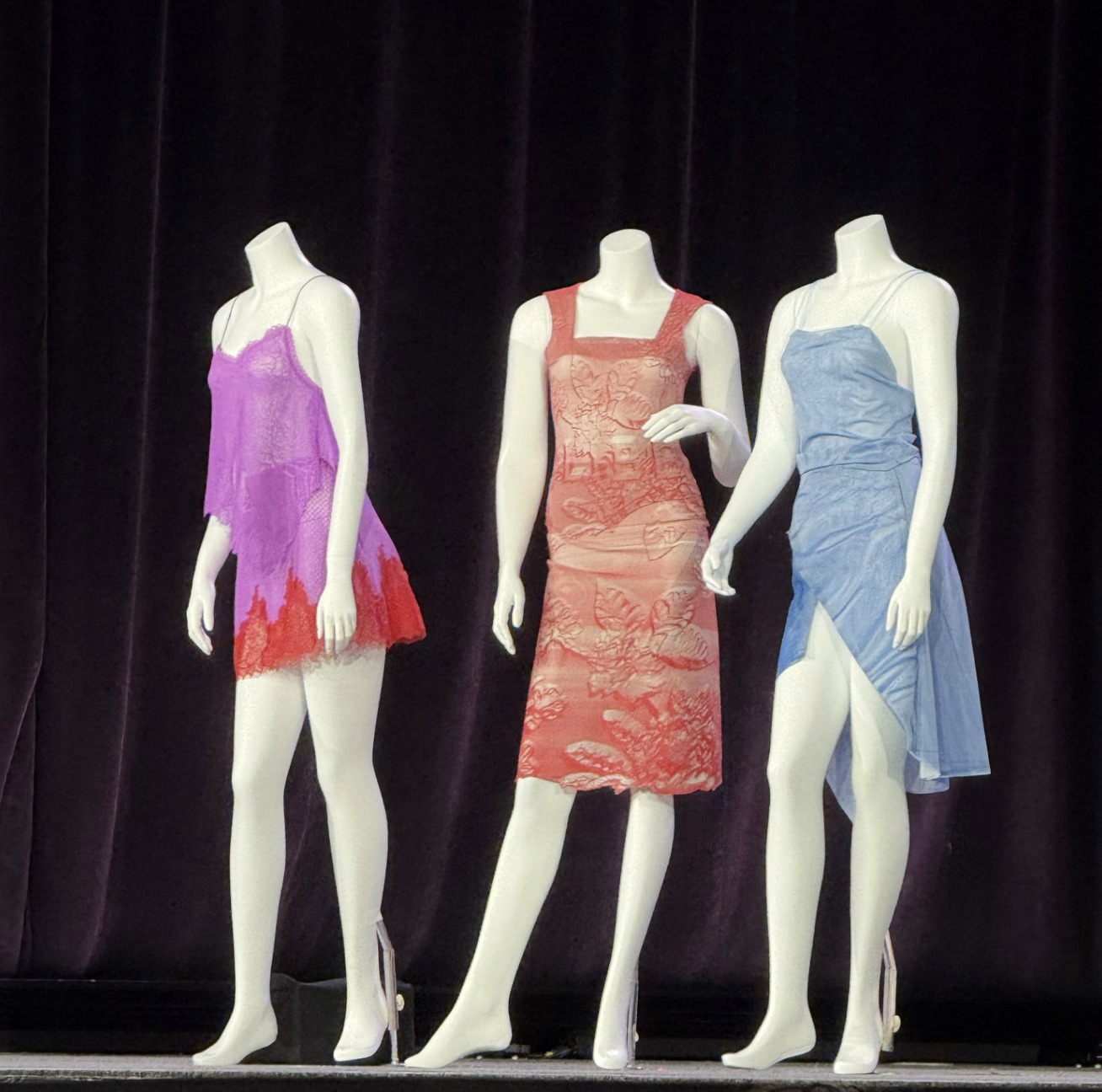
3D-printed sustainable fashion: designer Danit Peleg explores algae-based biomaterials and flexible 3D-printing technology to create customized clothing with less manufacturing waste.
Circular fashion innovation: Danit Peleg's experimental textiles combine made-to-order manufacturing, bio-based materials and design for recyclability, offering a new vision for the future of fashion.
Circular fashion innovation: Danit Peleg’s experimental textiles combine made-to-order manufacturing, bio-based materials and design for recyclability, offering a new vision for the future of fashion.

Clothing printed to fit, manufactured on demand, perhaps without the cutting waste or unsold inventory we associate with conventional fashion. And ideally, designed for circularity from the beginning. So where is Peleg at now? 

In 2026, Peleg developed an AI-powered workflow that converts conventional sewing patterns into printable files for soft, wearable textiles. Working with Algenesis Labs and Dutch 3D-printing materials company colorFabb, she is experimenting with filaments derived from algae, hemp and castor oil.

Danit Peleg’s process transforms digital fashion designs into 3D-printable patterns, using flexible bio-based filaments to build wearable textiles layer by layer, without conventional cutting and sewing.

Her vision is ambitious: clothing produced locally, customized to individual measurements, and manufactured only when someone wants it. She presented the technology at Figma’s Config 2026 conference in San Francisco and is now introducing the process to sportswear and luxury fashion brands.

Her longer-term goal is closed-loop design, where garments can return to a useful material cycle rather than become landfill waste. Design for recyclability becomes part of the manufacturing process.  But an algae-derived textile isn’t automatically zero-waste or fully biodegradable. Those claims require independent verification of the finished material, its durability and end-of-life performance.

We recently featured NEUMÜHLE, a Swiss company making a $170 hoodie that sounds almost comically ordinary. But then again they are Swiss and so much that comes out of Switzerland is extraordinary. The Circular Mono Hoodie is made with organic cotton, including its sewing thread, without the usual hidden synthetics and elastane that complicate recycling. It’s a boring idea, in the most beautiful sense. Make a sweatshirt that can be recycled more easily because its materials aren’t fighting one another in the recycling machines.

NEUMÜHLE’s Circular Mono Hoodie is made from organic cotton, including the sewing thread, and avoids elastane to make future textile recycling easier.

Peleg is approaching fashion from almost the opposite direction. Rather than simplifying a conventional garment, she’s rethinking the tools that make one. Both approaches belong to a larger movement toward circular fashion, an ambition that Europe is now translating into regulations, product transparency requirements and new standards for textiles.

Related: Pilsok turns airbags into backbacks
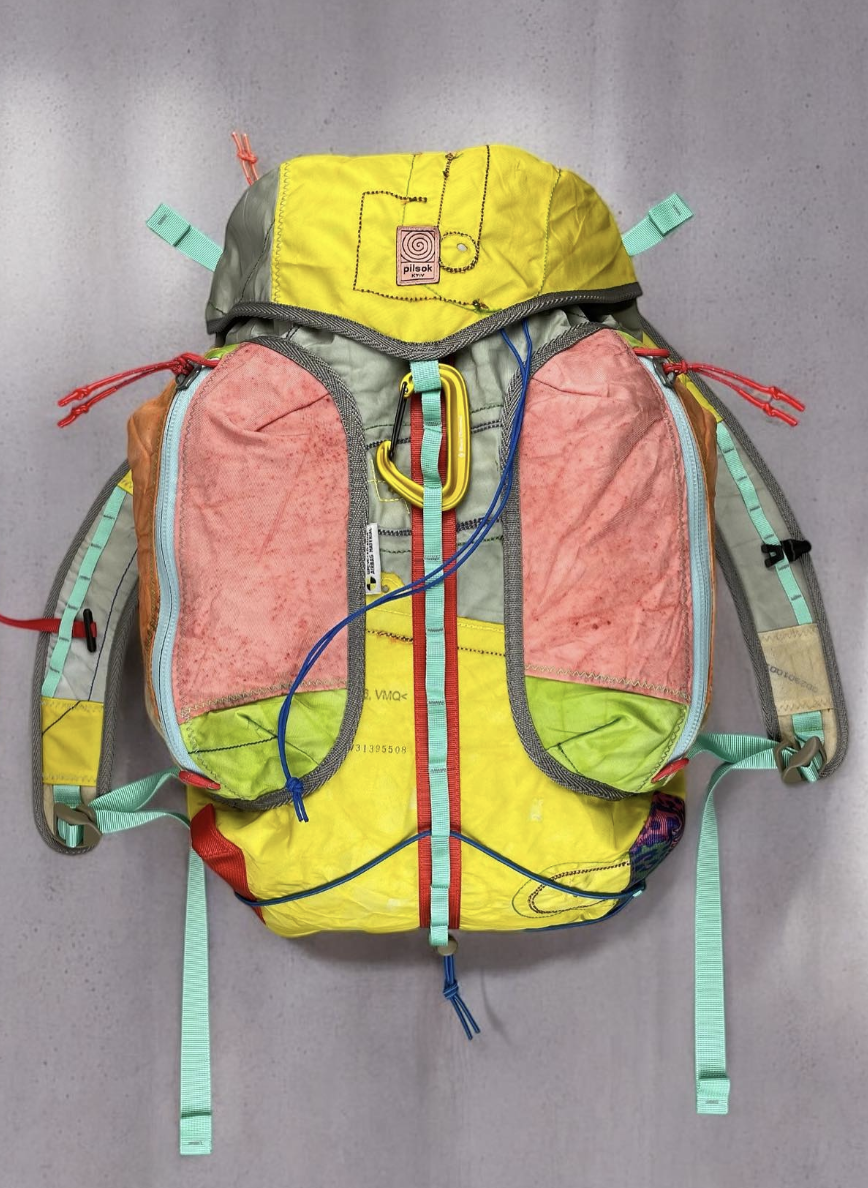
Pilsok beetle bag made from upcycled car airbag nylon, showing original seams and fabric codes, handmade in Kyiv Ukraine

 I remember seeing an early demonstration of 3D-printed food at Brain Bar Budapest, a wonderful conference that brought together people thinking about the future. A Dutch woman was printing food, and I remember being fascinated less by what she made than by what the machine suggested. Once we have the tools, the question becomes what we choose to make with them. For her, back then, she was just using scrambled up materials and reframing them. 

A printer doesn’t guarantee sustainability. An algae-based material isn’t automatically biodegradable, recyclable or environmentally harmless. Think of the cardboard bicycle by Izhar Gafni that we all got excited about. At the end of the day if you add enough toxic glue to woodchips, bamboo, or cardboard, it’s still a pile of toxic glue. 

image-israel-cardboard-bike
Remember the cardboard bike?

But inventions don’t have to solve every problem immediately to be worth pursuing. Some of these companies will succeed, some will have a second of fame on the runway or make a successful Kickstarter campaign. Others will fail. Some of their materials will disappear while their ideas find their way into new products and businesses that will be transformative. 

Karin Kloosterman
Karin Kloostermanhttp://www.greenprophet.com
Karin Kloosterman is an award-winning journalist, innovation strategist, and founder of Green Prophet, one of the Middle East’s pioneering sustainability platforms. She has ranked in the Top 10 of Verizon innovation competitions, participated in NASA-linked challenges, and spoken worldwide on climate, food security, and future resilience. With an IoT technology patent, features in Canada’s National Post, and leadership inside teams building next-generation agricultural and planetary systems — including Mars-farming concepts — Karin operates at the intersection of storytelling, science, and systems change. She doesn’t report on the future – she helps design it. Reach out directly to [email protected]

Read More

TRENDING

NEUMÜHLE’s plain cotton hoodie is making a surprisingly radical statement

NEUMÜHLE’s simple cotton hoodie shows how much hidden complexity is built into modern clothing — and why designing garments from a single material can make recycling easier.

How skinny medicine is reshaping the fashion industry, an interview with Katie Jones

GLP-1 drugs like Ozempic are changing more than waistlines. Fashion researcher Katie Baker Jones explains how weight-loss drugs could reshape clothing sizes, body positivity, textile consumption and the fashion industry.

Ozempic is changing our bodies. Could it shrink the economy too?

GLP-1 drugs are shrinking appetites and waistlines, but could they shrink our environmental footprint too? From fashion and food waste to lighter airplanes, packaging and transportation, Ozempic-era weight loss could have unexpected effects across the economy.

Europe’s circular fashion mandate in effect by 2030

Europe is forcing fashion to confront its waste problem. New EU rules ban large companies from destroying unsold clothing and are expanding producer responsibility for textile waste, pushing brands toward repair, resale, recycling and circular design.

Dior’s Summer 2027 show promises sustainability. Do we believe them?

Dior highlights recycled materials, regenerative agriculture, circularity initiatives, and digital traceability, but the luxury fashion business model still depends on constant consumption, global supply chains, fashion shows, and high-carbon production.

Scientists make lead-free perovskite solar cells that can weather the elements

Scientists have developed a “raincoat” for lead-free tin perovskite solar cells, helping them withstand air, moisture and heat while maintaining high efficiency.

The Essential Guide To Sustainability in Project Management

Sustainability is an approach where businesses and individuals balance the environmental, social, and economic aspects of a project such that current and future stakeholders are not overburdened with the impacts of the project in future.

Yerukim Forms a New Green Economy Where the Money is Really Green

The Yerukim members who pick up the recyclables get to keep the monetary reward, the public earns "green" bills that can be used in shops, and business owners get to be associated with environmentalism.

Choosing Riyadh over Dubai? What Investors Should Know

Saudi Arabia is deploying capital at unmatched scale to catalyze tourism and advanced industry while rewiring its power-and-water backbone. The investable frontier is widening—especially in renewables, grid storage, water efficiency/desal retrofits, and hospitality operating platforms. Prudent investors will insist on phased delivery, enforceable KPIs (energy, water, biodiversity), and RHQ/zone compliance—while pricing political-economy and reputational risks alongside growth upside.

Sell your cooking oil for biodiesel money

Want to make money on old french fry oil? Sell it.

Qatar Alternative Energy Summit Pairs Investors And Innovators

Alternative energy investors and innovators can meet n' greet in Doha, Qatar March 16 and 17.

Here’s How To Implement The Four Pillars Of Employee Engagement

If you throw a party for your work team and they are vegans, don't make it a barbecue. Know the sustainability values of your team to boost moral and retain good people.

Locals From Rishon Fight IKEA

Big Box stores are a pretty new concept in Israel, and thank God that not every Israeli city wants them in their backyard. A word from someone who has see the beautiful farmland around her hometown Newmarket, Ontario stripped and converted into vulgar strip malls of big box shops: they have no place in a healthy and sustainable town or city.

Popular Categories